


The discussion on AI in fintech is no longer that of experimentation; it is now that of infrastructure. What began as a mechanicalization of routine banking operations has now developed to be able to think, forecast, and operate in financial ecosystems. The future of AI in fintech sector in 2026 is not on the fringes; it is the operating system.
- The AI in FinTech Industry Is Entering Its AI-Native Phase
- Trend 1: Financial Products Are Becoming Hyper-Personalized
- Trend 2: Generative AI in FinTech Is Becoming the New Financial Interface
- Trend 3: AI Agents Are Replacing Manual Financial Operations
- Trend 4: Fraud Detection Is Becoming Predictive Intelligence
- Trend 5: Lending Is Becoming Fully AI-Driven
- Trend 6: AI Is Redefining Investment and Trading
- Trend 7: AI Is Powering Invisible Payments and Embedded Finance
- The Bigger Picture: AI Is Creating Autonomous Financial Systems
- AI in FinTech Is No Longer Optional; It’s Inevitable
- Frequently Asked Questions
AI in finance is transforming from a technology of support to a technology of decision-making, as it offers underwriting loans in seconds and can predict and stop fraud before it occurs. And it is not an incremental transformation; it is a structural change.
This is not the actual truth of the matter that AI is enhancing financial services. The truth is that financial services are being rebuilt on AI itself.
At the same time, the transformation of fintech is not happening in isolation; it is being reinforced by evolving regulatory frameworks and infrastructure-level changes. As AI integrates deeper into financial systems, governance and compliance are becoming equally important to ensure stability and trust. This growing intersection is highlighted through developments like the GENIUS Act stablecoin rules, which reflect how regulation is adapting alongside technological innovation.
We are going to start by decomposing the fintech AI trends that are driving this change and why that should be of more concern than is popularly believed.
The AI in FinTech Industry Is Entering Its AI-Native Phase
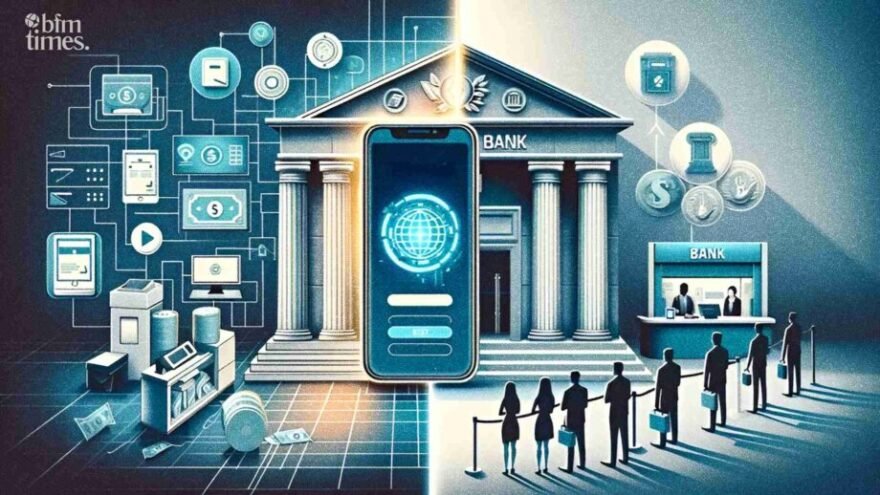
Years on, fintech was characterized by digitization, taking offline operations to the internet. In 2026, however, there is another shift: from digital-first to AI-first.
As fintech continues to evolve into an AI-native ecosystem, one of the most visible shifts is happening in the way investments are managed and optimized. Today, intelligent platforms are using data, automation, and predictive algorithms to make real-time financial decisions. This growing adoption of AI investment platforms highlights how AI is no longer just assisting financial services but actively driving them.
This shift is subtle but powerful.
Earlier:
- Humans made decisions, software executed them
Now:
- AI makes decisions; humans supervise exceptions
And this is what constitutes AI financial services today: systems that do not merely transact but are able to analyze financial behavior, risk trends, and market indicators.
In practical terms:
- Lending platforms don’t “review applications”; they continuously evaluate creditworthiness
- Payment systems don’t “process transactions”; they optimize flows in real time
- Banks don’t “analyze risk periodically”; they monitor it continuously
This transition is building a new layer of finance: autonomous decision engines.
And once finance becomes decision-driven rather than process-driven, everything downstream changes.
Trend 1: Financial Products Are Becoming Hyper-Personalized
The age of universal financial products has collapsed.
By 2026, AI in fintech will be driving financial institutions towards behavioral personalization, as opposed to demographic segmentation.
Instead of asking:
- What is the product in this category for the user?
AI systems are asking:
- What is the emerging financial behavior, and how should we deal with it in real time?
This is where AI-powered financial analytics becomes central.
What’s actually changing?
AI in fintech models is now:
- Tracking micro-spending habits, not just monthly summaries
- Detecting emotional triggers behind financial decisions
- Predicting future financial needs before users articulate them
Example:
A fintech app doesn’t just show your spending report; it:
- Detects irregular expense spikes
- Predicts upcoming liquidity gaps
- Adjusts credit offers dynamically
This is not the feature of personalization but the constant financial adjustment.
Why it matters
Hyper-personalization is shifting control:
- From static product offerings → to dynamic financial environments
Financial products are no longer fixed; they are fluid, evolving based on user behavior.
And that’s a massive shift in how AI banking systems are being designed.
Trend 2: Generative AI in FinTech Is Becoming the New Financial Interface
The finance interface is being rewritten.
Conversation-driven finance dashboards and forms will be superseded by chat-driven finance, which runs on generative AI in fintech in 2026.
Users now do not have to navigate apps to:
- Ask questions
- Get contextual understanding.
- Carry out financial activities through natural language.
What does this look like?
Users can now say:
- Do I have the money to spend 50000 in a single month?
- Rebalance my portfolio depending on the present market volatility.
And AI doesn’t just respond, it:
- Analyzes financial data
- Simulates outcomes
- Makes decisions (with or without approval levels)
This makes AI a back-office solution and a front-office financial advisor.
The deeper shift
Generative AI in fintech is:
- Lessening financial literacy impediments.
- Simplifying and condensing complicated financial analysis into dialogue understanding.
- Making fintech applications look like decision companions.
This is redefining user experience in AI financial services.
And the real implication?
Financial interfaces are going under the carpet and smarting.
Trend 3: AI Agents Are Replacing Manual Financial Operations
One of the most disruptive fintech AI trends is the rise of AI agents, systems capable of performing multi-step financial transactions on their own.
This goes beyond automation.
This is autonomous finance.
What are AI agents doing?
In 2026, AI agents can:
- Monitor accounts continuously
- Execute payments based on conditions
- Optimize savings and investments dynamically
- Handle compliance checks without manual intervention
Example:
An AI agent of business finance can:
- Track cash flow
- Project future obligations.
- Automatically assign finances.
- Agree on the payment schedules.
That is where AI automation in fintech is put into practice, rather than theory.
Why does this change everything
Manual operations used to be:
- Slow
- Error-prone
- Dependent on human bandwidth
The AI agents eliminate all these limits.
The result:
- Financial operations are transformed into real-time self-correcting systems.
And when those operations are autonomous, people cease to be a bottleneck to scalability; instead, it is data quality and model intelligence that limit scalability.
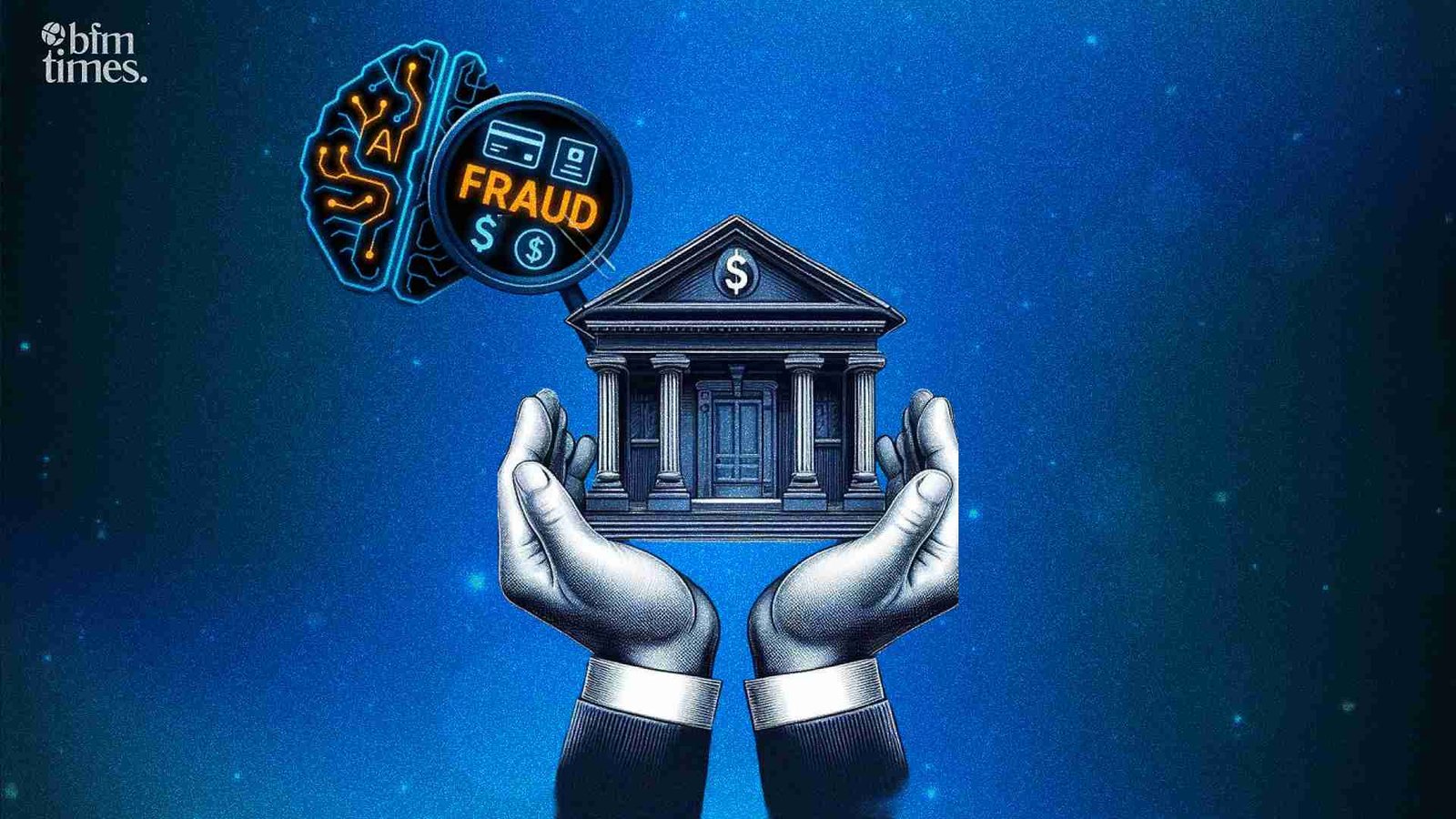
Trend 4: Fraud Detection Is Becoming Predictive Intelligence
Fraud detection is not about detecting fraud anymore; it is about preventing it.
Traditional systems:
- Reaction to anomalies arising.
AI systems in 2026:
- Anticipate fraud before its occurrence.
AI fraud detection systems drive this evolution.
What’s different now?
AI models are:
- Individual learning patterns of transaction.
- Identifying behavioral abnormalities in milliseconds.
- Matching cross-platform indicators (device, location, time, intent).
Example:
Rather than marking a suspicious transaction, AI:
- Checks the chances of fraud before initiation of the transaction.
- Reroutes or blocks it dynamically.
Why it matters
Fraud is becoming:
- Faster
- More sophisticated
- More difficult to identify with rule-based systems.
AI flips the equation:
- From reactive defense → to proactive intelligence
This is an essential aspect of AI in finance, as digital transactions broaden.
Trend 5: Lending Is Becoming Fully AI-Driven
One of the most radical changes in AI in fintech is lending.
By 2026, lending selections will cease to be made on fixed credit scores but on a continuing multi-dimensional data analysis.
This is driven by:
- AI credit scoring models
- Artificial intelligence in online lending services.
What’s changing?
AI in fintech systems now evaluates:
- Transaction behavior
- Income patterns
- Spending consistency
- Other statistics (mobile usage, digital footprints).
This creates a real-time credit profile, not a historical snapshot
Practical shift
Loan approvals are:
- Instant
- Context-aware
- Continuously adjustable
Example:
The credit limit of the user is not permanent, as it develops according to the current financial interactions.
Why it matters
This shift:
- Expands access to credit
- Minimizes the use of traditional credit infrastructure.
- Empowers micro-lending markets.
Lending has ceased to be a single choice but an ongoing financial relationship in which AI is involved.
Trend 6: AI Is Redefining Investment and Trading
Investment has ceased to be the prerogative of experts.
With AI in fintech, Investing is becoming:
- Data-driven
- Automated
- Adaptive
What’s driving this?
- AI in stock market prediction
- AI in wealth management systems
AI models now:
- Real-time analysis of large amounts of data.
- Detect trends that cannot be noticed by human analysts.
- Trade using probabilistic results.
The shift
From:
- Human intuition + delayed analysis
To:
- Machine intelligence + real-time execution
Example:
Robo-advisors are no longer static; they:
- Portfolios should continuously be balanced.
- Vary the strategies depending on the volatility of the market.
- Make investments a user goal.
Why it matters
Investment plans are taking the form of:
- Personalized
- Automated
- Scalable
This is making available advanced financial strategies that were not easily done by traditional finance.
Trend 7: AI Is Powering Invisible Payments and Embedded Finance
Finance is growing, yet payments are being eliminated.
In 2026, AI in fintech banking will allow making invisible payments, transactions that occur without a direct user action.
What does this look like?
- Dynamically adjusted subscriptions.
- Intelligent checkouts that do not require any manual payments.
- Situation-based payment triggers.
Example:
You have ridden, and you pay out no clicks, no confirmations.
This is powered by:
- Behavioral AI
- Real-time decision engines
- Embedded finance ecosystems
The deeper implication
Finance is no longer an independent activity.
It’s becoming:
- Integrated
- Contextual
- Frictionless
And this is what AI provides.
The Bigger Picture: AI Is Creating Autonomous Financial Systems
When you put all these trends together, you get a clear picture:
Finance is evolving into autonomous ecosystems.
Not just:
- Smarter apps
- Faster processes
But:
- Stand-alone systems.
- Constantly adapting systems.
- Manual-free financial outcome optimization systems.
This is the actual future of the AI in fintech.
What defines this new system?
- Continuous decision-making
- Real-time adaptation
- Minimal human intervention
The financial regime is changing to:
- Transaction-based → to intelligence-based
And that is a paradigm change.
AI in FinTech Is No Longer Optional; It’s Inevitable
As fintech continues to evolve into an AI-native ecosystem, its growth is being driven not just by innovation but by real-world adoption and expansion. Funding trends and emerging digital finance projects indicate that AI-powered financial systems are scaling rapidly across global markets. This broader momentum is reflected in developments like JPYC funding and fintech expansion, highlighting how the future of finance is being built around intelligent, automated, and highly scalable ecosystems.
Whether AI in fintech will transform finance or not will no longer be a question by 2026.
It already has.
The real question is:
- Who is designing with AI in the middle of it, and who is simply applying it to the top?
Because in this new landscape:
- AI-first companies will define the market
- Traditional players will struggle to keep up
AI in fintech is no longer a competitive advantage but the standard.
And the organizations that learn this sooner will not only survive, but they will also determine the future of the whole field of finance.
Frequently Asked Questions
1. What is AI in fintech?
AI fintech refers to the integration of artificial intelligence into financial technologies to automate, optimize, and enhance financial processes, decision-making, and user experiences.
2. How can we use AI in fintech?
AI in finance is used for real-time decision-making in areas like lending, fraud detection, and investments.
3. What are the top fintech AI trends in 2026?
Key trends include hyper-personalization, AI agents, generative AI interfaces, and predictive fraud systems.
4. Is a human replaceable by AI in fintech?
AI is reducing manual roles while shifting humans toward strategic and oversight functions.
5. What is the future of AI in financial services?
The future is autonomous, AI-driven financial ecosystems that operate with minimal human intervention.