


Classrooms are not what they once were, and that does not take place in the future; it is already occurring. Behind the veil of normal lessons, assignments, and examinations, a silent revolution is taking place. AI in education is a phenomenon that transforms the traditional classroom into a responsive, data-driven ecosystem where learning becomes real-time adaptive.
- Classrooms Are Quietly Becoming Data-Driven Learning Systems
- The Shift from One-Size Teaching to Hyper-Personalized Learning
- AI Learning Analytics: How Schools Track Student Performance in Real Time
- Inside AI-Powered Classrooms: What Students Actually Experience
- How Teachers Are Using AI to Improve Student Outcomes (Not Replace Them)
- Real Examples of AI in Schools Around the World
- AI Education Tools That Are Changing Student Performance
- The Hidden Impact: How AI Is Changing the Way Students Learn
- The Challenges Schools Are Facing While Using AI
- The Future of AI in Schools: What Comes Next?
- AI Is Not Replacing Education: It’s Redefining It
- Frequently Asked Questions
Classrooms Are Quietly Becoming Data-Driven Learning Systems
The biggest shift isn’t visible on the surface; it’s happening in the data layer.
Modern classrooms are increasingly powered by systems that track how students learn, not just what they learn. Each quiz attempt, hesitation, revision, and interaction is included in a bigger dataset. With AI in education, this data is analyzed to uncover patterns in behavior, comprehension, and engagement.
Teachers can now access dynamic insights as opposed to the usual lesson plans. Therefore, when one student continuously cannot learn fractions but does well in geometry, AI systems instantly predict this. This is where AI student performance becomes measurable beyond grades, but more behavioral, predictive, and actionable.
Schools are no longer depending on periodic tests only. They have been applying the use of continuous feedback loops driven by AI in schools so that the instruction can adjust itself to the needs of students.
The Shift from One-Size Teaching to Hyper-Personalized Learning
Traditional education assumes a uniform pace. AI breaks that assumption completely.
With AI in education, the adaptive learning platforms that are being implemented in schools in the context of AI in education adjust the level of difficulty according to the individual’s performance. A student who learns quickly is advanced, and one who requires assistance gets extra help automatically.
One of the components of this change is AI tutoring systems. These systems can replicate the one-on-one teaching, which provides succinct explanations, hints, and practice exercises that are specific to the individual learner. Such a high level of personalization did not exist on a large scale before.
Better still, AI classroom improvement is not only a matter of technology but also results. Students are not pushed into a specific schedule anymore; they study at their own pace, which makes them less frustrated and more likely to be retained.
AI Learning Analytics: How Schools Track Student Performance in Real Time
This is where things get seriously powerful.
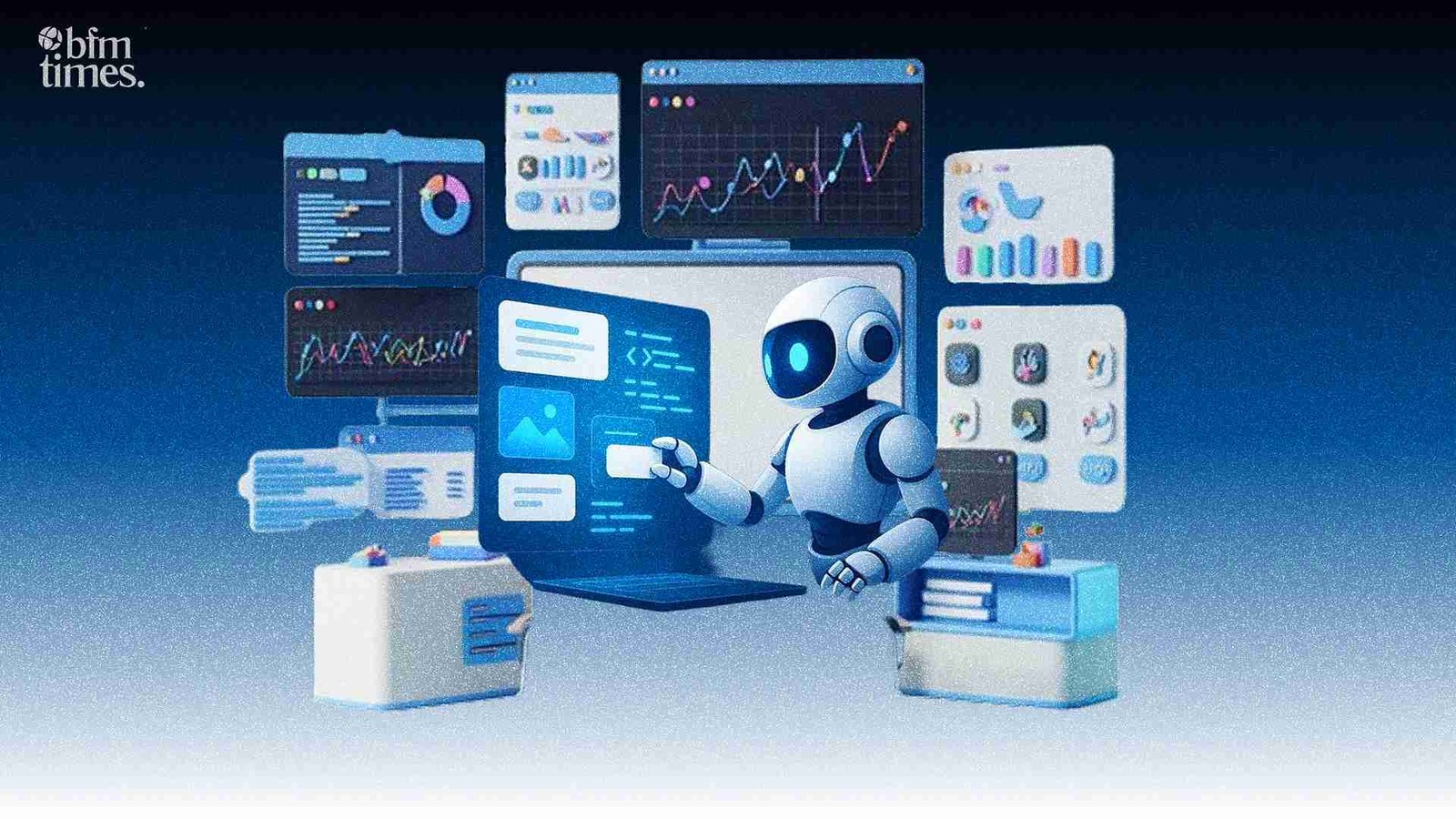
AI learning analytics will enable the schools to shift their teaching methods to proactive intervention. Rather than making students wait until the end of the exam period, teachers can track the progress in real time via dashboards that provide a visualization of performance patterns.
These systems identify:
- Reducing levels of engagement.
- Lack of knowledge in different subjects.
- Trends, which show possible dropouts.
With predictive analytics, schools can intervene early. For instance, if a student shows signs of disengagement over a week, the system alerts the teacher before it becomes a long-term issue.
It is this real-time tracking that is redefining AI in education, as it makes learning measurable at a granular level. It’s not just about “who passed or failed”; it’s about understanding why.
Inside AI-Powered Classrooms: What Students Actually Experience
As a student, AI does not seem like a buzzword; it is the experience.
Students in AI-driven classrooms communicate with smart systems in everyday life. These include:
- These are AI tutors who respond to questions immediately.
- Learning history-based smart content suggestions.
- Automated feedback systems that evaluate assignments in seconds
For example, when a student writes an essay, clarity and grammar are important. This feedback loop of improvement creates a rapid improvement process, unlike in traditional systems.
Students can be the players of the learning process and not passive consumers through the education tools offered by AI in education. It makes learning more interactive and responsive, hence more engaging.
This is where AI student performance improves, not just academically, not only in academic achievement but also in cognitive aspects; students gain more abilities in problem-solving and know themselves better.
How Teachers Are Using AI to Improve Student Outcomes (Not Replace Them)
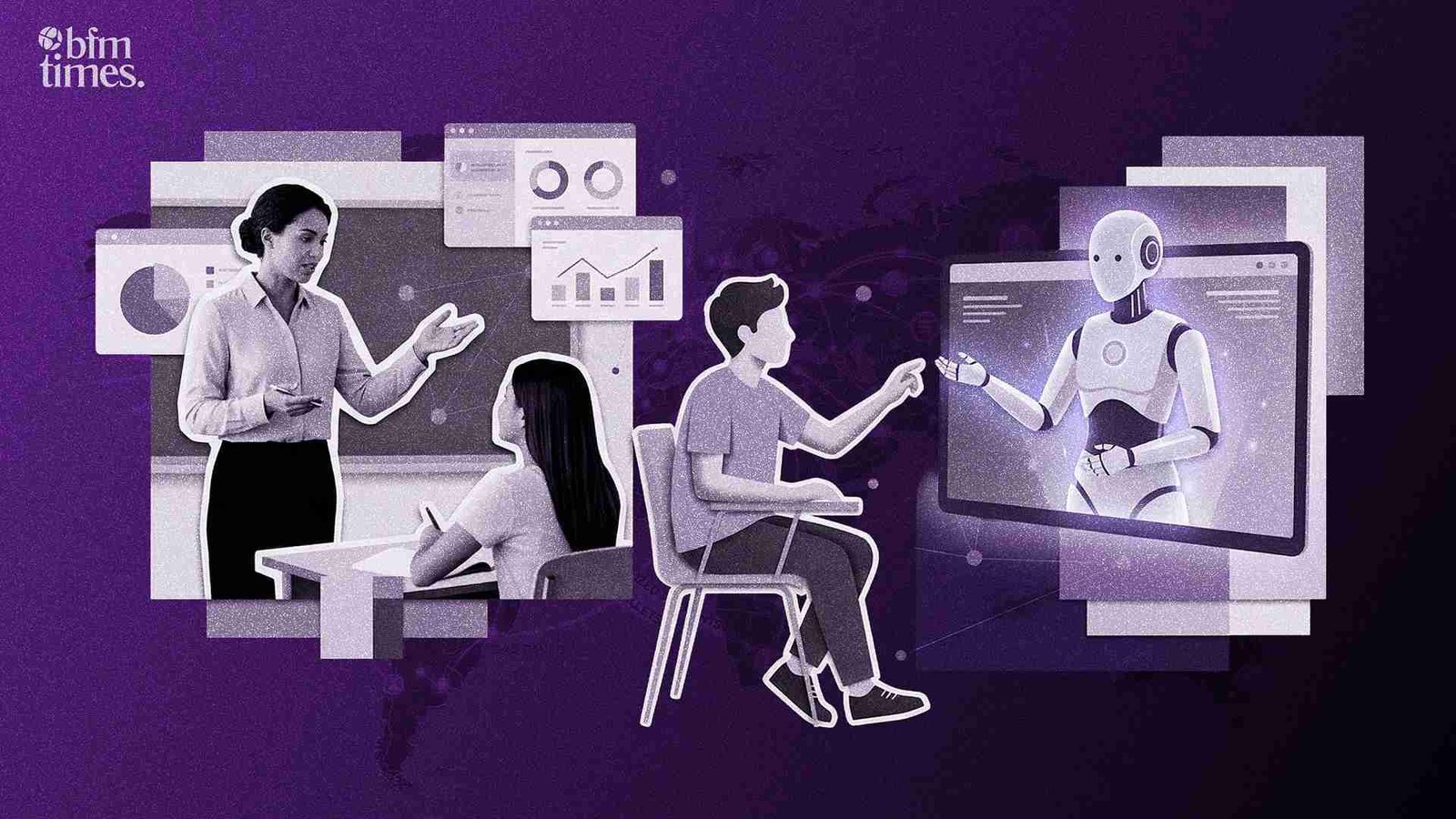
It is widely believed that AI will substitute teachers. The reality is the opposite.
Educators are using AI to revolutionize education by removing repetitive activities, such as scoring, student attendance, and administration. This liberates time to engage in what really counts, which is teaching, nurturing, and communicating with students.
Through AI in schools, teachers can:
- Spot problem children in real time.
- Customize lesson delivery
- Focus on conceptual clarity rather than rote completion
AI in education does not educate but teaches.
The decision-making process has become more accurate as teachers are using human intuition and machine intelligence together. This results in quantifiable AI classroom improvement, particularly in a mixed classroom where the needs of students differ greatly.
Real Examples of AI in Schools Around the World
This is not a theoretical change that is taking place, but it is already taking place in the world.
In other nations, such as China, AI-enabled classrooms can monitor the attention rates of the lecturers through facial recognition. Schools in the United States are also adopting AI-based systems of curriculum that learn in real time. Finland is incorporating AI literacy in the national education systems.
Rapid adoption is also being experienced in India. Both private and government educational establishments are launching smart classrooms with AI education tools.
These applications emphasize the fact that AI in education is a fundamental part of contemporary learning systems, rather than a supplement.
Governments and institutions are investing heavily in AI in schools, recognizing its potential to improve scalability and quality simultaneously.
AI Education Tools That Are Changing Student Performance
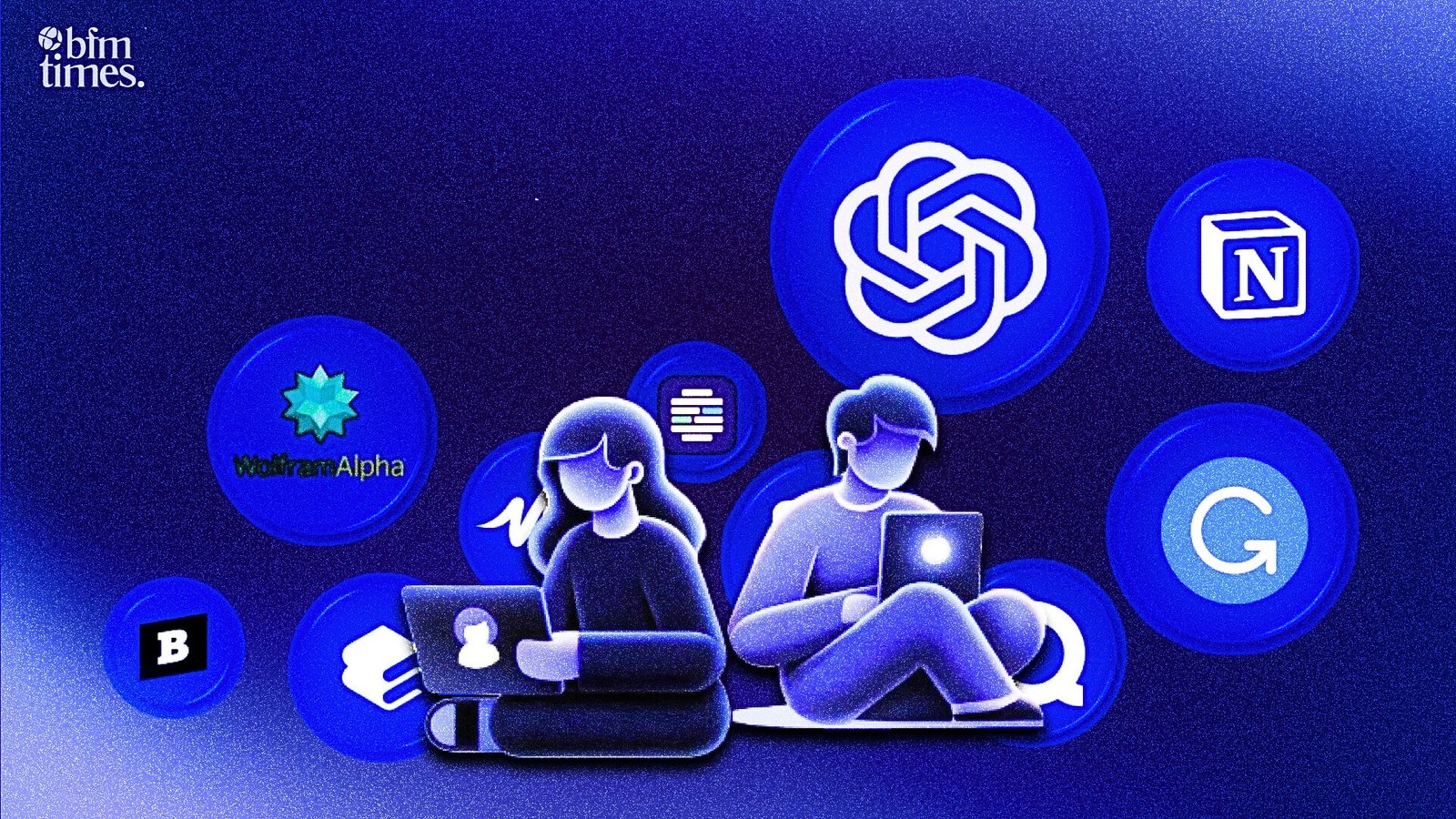
The AI in education effect can be most effectively perceived in the instruments that lead to it.
Key categories include:
- Personalized teaching simulated by AI tutors.
- Assistants in writing that will improve communication skills.
- Customized lesson-based adaptive learning.
- Progress dashboards based on analytics.
These tools are not by themselves; they are related systems that are constantly optimizing learning.
The recent trends in the world would indicate that most of the students are already engaging with some sort of AI during their studies. This mass application is increasing the AI student performance of students in various subjects and levels of competence.
The purpose of AI education tools is not only practical but also transformative. They transform the way students acquire, process, and utilize knowledge.
The Hidden Impact: How AI Is Changing the Way Students Learn
In addition to performance indicators, AI in education is transforming the aspect of learning behavior.
Students are getting increasingly independent. However, rather than waiting to get answers, they seek solutions with the help of AI in education. This brings about a change from memorization to exploration.
The concept of learning with AI in education is not about getting the correct answer, but rather a cognition of the process. AI is a learning partner, proposing ideas, challenging assumptions, and getting you thinking harder.
This transition develops creativity and critical thinking. Students do not merely consume information, but they are engaging with it.
This is the behavior change that the long-term effect of AI in schools would have. It is not simply an upgrading of grades; it is making changes to students and their approaches towards problems.
The Challenges Schools Are Facing While Using AI
Even though there are benefits associated with the adoption of AI in education, it is not flawless.
Over-reliance is one of them. Students might lose the capacity for independent thinking when they over-rely on AI tools.
Another important problem is data privacy. As data on students is accumulating in large volumes, it is necessary to guarantee protection and ethical application.
The inequality of access is also a hindrance. The use of AI in education does not have the infrastructure to be practiced in all schools, creating a digital divide.
These issues point to the fact that although AI classroom improvement is relevant, it should be carried out in a responsible way.
The Future of AI in Schools: What Comes Next?
The trajectory is clear: AI in education will underlie the educational systems of the global society.
The most probable direction of AI in the classroom in the future is to bring it to all heights, including curriculum construction and the process of assessment. AI literacy will even be a fundamental ability, like reading or mathematics.
As further developments happen, AI in education will move beyond the support mechanisms and transform into a completely immersive learning experience. Not only will schools be
centered on training to take exams, but an artificial intelligence-driven world as well.
With increased adoption, AI in schools will be at the center of defining the standards of education in the world.
AI Is Not Replacing Education: It’s Redefining It
The discourse about AI is perpetually leaning towards hyperbole and panic. The reality is more nuanced.
AI in education is not about replacing teachers or automating learning; instead, it improves it. It offers mechanisms that enhance personalization, measurement, and effectiveness of learning.
In its essence, the objective is easy: optimize AI student achievement, aid educators, and enable students.
The revolution is already taking place. Whether AI is going to influence education is not the question; the question is how well we utilize it.
Frequently Asked Questions
How is AI used in education today?
AI is used for personalized learning, automated feedback, and performance tracking in classrooms.
Does AI really improve student performance?
Yes, AI helps identify learning gaps and provides tailored support, improving outcomes.
What are examples of AI in schools?
AI tutors, learning analytics systems, and automated grading tools are common examples.
Disclaimer: BFM Times acts as a source of information for knowledge purposes and does not claim to be a financial advisor. Kindly consult your financial advisor before investing.