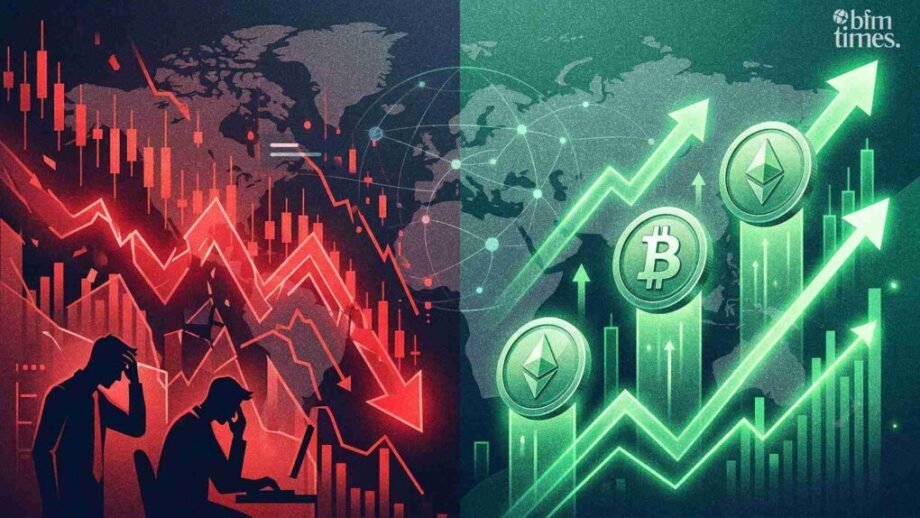



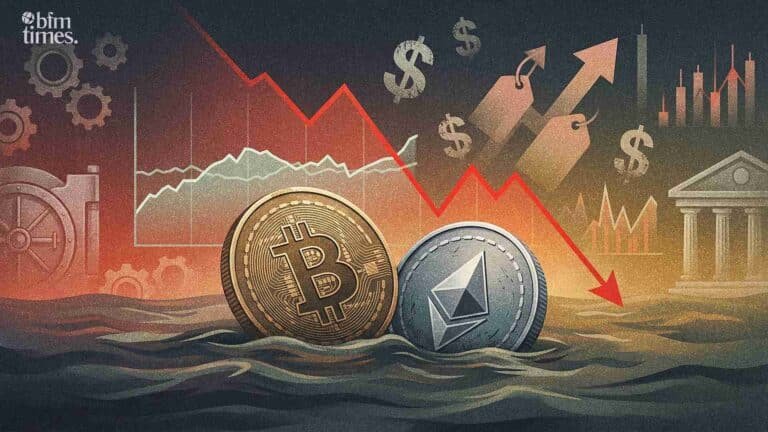
- The US is moving closer to a stagflation situation as of March 2026.
- Bitcoin has dropped below $69,000 as a result of the worsening economic climate.
- Altcoins are also falling sharply across the board.
- Investor mood has dropped into Extreme Fear territory.
- The main causes are lasting inflation, slowing economic growth & a Federal Reserve refusing to cut interest rates.
- These combined forces are putting heavy pressure on all digital assets.
- Big questions are now being raised about whether crypto has entered a long-term bear phase.
- The driving forces behind this downturn are large economic problems that the crypto industry cannot control on its own.
Are Crypto Markets Suffering Because of Stagflation in the US?
The Bitcoin price dropped under $71,000 recently after Federal Reserve Chair Jerome Powell warned that rising oil prices are creating a fresh inflation problem & this triggered a broad sell-off across both crypto markets & stocks. The Federal Reserve kept its main rate unchanged at 3.5% to 3.75% & this reinforced expectations that policy makers remain careful about cutting rates while inflation pressures continue.
- Are Crypto Markets Suffering Because of Stagflation in the US?
- What Is Stagflation & Why Does It Matter for Crypto Markets?
- How Does Stagflation Affect Bitcoin & Digital Assets?
- Has Market Mood Hit Extreme Levels?
- How Are Experts Reacting & Are They Divided Between Bears & Long-Term Bulls?
- Is the Fed Trapped Between Inflation & Growth?
- Are Tariffs & Global Tensions Adding Further Pressure?
- Is There a Silver Lining for Crypto Markets?
- Conclusion
- Frequently Asked Questions
The Nasdaq also closed at its lowest point of the day as investors came to terms with the reality that the higher-for-longer era of interest rates is far from over. It wiped over $100 billion from the total crypto markets in a single session & this was a clear sign that digital assets are no longer safe from the economic storms building in the United States.
What Is Stagflation & Why Does It Matter for Crypto Markets?
This economic condition called stagflation combines lasting inflation, slowing growth & a job market that is losing steam. It puts policymakers in a tough spot because easing risks leads to more inflation, while tightening risks crushes growth. The US has not fully confirmed a textbook stagflation situation, but it is moving closer to that level than the cleaner market story suggests. It shows inflation still above target & growth has slowed sharply from the pace seen in late 2025 & jobs data has softened & been revised lower.
The CPI index stood at 258.678 in February 2020 & reached 326.785 in February 2026, which is a total rise of roughly 26%. It means that for everyday consumers, this is the part of the picture that carries the most weight & slowing inflation from its 2022 peak never meant prices went back to earlier levels.
How Does Stagflation Affect Bitcoin & Digital Assets?
In crypto markets, the relationship between stagflation & crypto is not simple. It plays out as a two-phase shift as conditions get worse. Early in a stagflation scare, risk assets often sell off & Bitcoin can behave like a highly volatile asset sliding with stocks. These conditions change later as markets price in policy limits & falling real returns or a search for options beyond traditional money, & then the Bitcoin store of value story can come back strong & it may perform better than other assets.
It is worth noting that higher tariffs add to stagflation, which tends to be bad for returns on traditional assets & good for rare items like gold. Bitcoin was not around during past stagflation periods, but it can be seen as a rare digital item & is more & more viewed as a modern store of value. The short-term view remains deeply uncertain.
| Macro Scenario | Expected Bitcoin Range | Key Driver |
| Stagflation (tight Fed, weak growth) | $70,000 to $100,000 | ETF outflows, rising real yields |
| Base Case (slow expansion, cautious cuts) | $110,000 to $140,000 | Modest institutional flows |
| Fed Panic Easing (recession trigger) | $170,000+ | Aggressive liquidity injection |
In a stagflation setting where weak growth combines with rising inflation, the Fed would stay tight & real returns would rise. This could push Bitcoin into the $70,000 to $100,000 range with pressure from ETF outflows.
Has Market Mood Hit Extreme Levels?
The fear gripping crypto markets right now is clear & severe. The points below show what is happening across key measures.
- The Fear & Greed Index has been stuck in Extreme Fear territory for nearly three weeks & prediction market data tells a similar story. It shows Polymarket data where 62% of users believe Bitcoin will fall below $50,000 this year, which is a remarkable level of bearish thinking for an asset trading above $100,000 just months ago.
- Bitcoin broke a key level as the Fear & Greed Index hit extreme fear & over $125 million in long positions were closed in a 24-hour window. It was a 154% spike from the day before & added heavy selling pressure through a chain of forced closures.
- The Bitcoin to S&P 500 link as of March 1 shows the 30-day rolling connection between Bitcoin & the S&P 500 stands at 0.55, up from around 0.50 in October 2025. It means Bitcoin continues to move largely in step with stocks & this weakens its appeal as a shield against traditional market risk.
- ETF outflows from US spot Bitcoin ETFs saw a net loss of around $1.4 billion in a single day & brought total assets under management to $95.32 billion. It shows clear signs of big investor hesitation at current price levels.
- The total crypto markets have shed hundreds of billions of dollars from their late 2025 peak as economic headwinds grow stronger.
How Are Experts Reacting & Are They Divided Between Bears & Long-Term Bulls?
Not everyone in the crypto space is negative. They are sharply split on what stagflation means for digital assets in the long run. Shane Molidor, founder of crypto advice platform Forgd, said that the main driver of this market cycle is a money-based boost & that remains in place despite the risk of stagflation. It shows Bitcoin & crypto more broadly taking in capital as a shield against fiat loss in value & long-term financial instability.
These cautious voices are growing louder as the situation develops. It was noted by one analyst that in periods of stagflation, the demand for safe assets goes up & if rates rise & the economy slows, then many asset prices may fall & this includes Bitcoin. Kevin Crowther, Founder of KC Private Wealth, pointed out that Bitcoin’s high link to software stocks weakens its case as a shield asset in times of doubt, & so as Trump continues to raise economic doubt, continued Bitcoin weakness should be expected.
Steven McClurg, CEO of Canary Capital, told CNBC he expects Bitcoin to fall as low as $50,000 in the summer. It was stated as part of a broader view that 2026 is expected to be a bear leg to the four-year cycle. They noted that Standard Chartered has also cut its year-end target & this shows deepening doubt across major financial desks.
Is the Fed Trapped Between Inflation & Growth?
The Federal Reserve is in one of its hardest spots in decades. It was noted by Powell that nobody knows how long the energy price impact will last & the Fed has already raised its inflation forecast for 2026 from 2.4% to 2.7%. It is also worth noting that Federal Reserve Chair Jerome Powell’s term ends in May 2026 & markets may soon face a policy change that brings doubt around how money supply is managed.
This risk is one-sided as easing is more likely to come as a reaction to bad news than as a positive boost for markets. This policy freeze is exactly the setting that makes stagflation so damaging for assets like crypto. It means when the Fed can neither cut nor raise aggressively without making one side of the problem worse, investors lose confidence & pull back from risk & this includes digital assets.
Are Tariffs & Global Tensions Adding Further Pressure?
The stagflation risk is not appearing in a quiet setting. It was shown that Bitcoin fell back to $65,000 earlier this month, driven by President Trump’s announcement of new 15% global tariffs & renewed tensions in the Middle East. These events triggered a broad move away from risk assets in crypto markets across both crypto & stocks. It was also shown that US & China trade tensions stayed high, with Chinese exports to the US falling over 12% & this highlights the damage to trade flows.
It combined with softening US consumer demand & lasting inflation to increase strain on both economies. It was noted by analyst Ed Yardeni, who increased the chance of a US market breakdown to 35% for the rest of 2026 & this was a big jump from his earlier estimate of 20% & rising global conflicts were cited as a key reason.
Is There a Silver Lining for Crypto Markets?
It is clear that, despite the current troubles, the basic conditions in crypto markets are not fully broken. These signs include systemic risk measures staying contained & stablecoin funds at all-time highs & clearer rules improving in the US. They all point to the fact that the core setup of the crypto markets is more solid than price action alone suggests.
In a stagflation setting, Bitcoin could first trade in a choppy way with risk assets & then possibly perform better as crypto markets price in policy limits & falling real returns & stronger demand for rare non-government stores of value. These longer-term holders show signs of conviction, too. It was seen throughout February & into March that net selling from long-term holders dropped by 87% from 243,737 BTC to just 31,967 BTC & this is a signal that experienced investors are not walking away from their positions even in times of maximum fear in crypto markets.
Conclusion
Crypto markets suffering through this economic storm are caught in a difficult position. The very conditions that make stagflation damaging for traditional assets, like eroding buying power & policy doubt & fiat instability, are also the conditions that Bitcoin was built to address. It tells a more painful story in the short term as price action shows a hard path ahead. This period comes with inflation above target & growth slowing & the Fed frozen & global risks rising & all of these are pressing hard on digital assets. It will be the defining question for investors throughout 2026 as to whether crypto markets comes out of this as a proven inflation shield or continues trading as a high-risk bet tied to market mood.
Frequently Asked Questions
Why Are Crypto Markets Suffering in 2026?
Crypto markets are suffering due to stagflation fears in the US. It combines lasting inflation, slowing growth & a Fed refusing to cut rates. This has pushed Bitcoin below $69,000 & wiped hundreds of billions from the total market.
What Does Stagflation Mean for Bitcoin Price?
Stagflation pushes the Fed to keep rates high & this triggers ETF outflows & raises real returns. It puts Bitcoin in a tough spot in the short term. These conditions could push Bitcoin into the $70,000 to $100,000 range & some experts see it falling as low as $50,000 by summer 2026 in crypto markets.
Is There Any Hope for a Crypto Market Recovery?
It is clear that some positive signs still exist. These include stablecoin funds at all-time highs & systemic risk staying contained & rules getting clearer in the US. It was also noted that long-term holders cut their net selling by 87% & this shows experienced investors still believe in crypto for the long run in crypto markets.
Disclaimer: BFM Times acts as a source of information for knowledge purposes and does not claim to be a financial advisor. Kindly consult your financial advisor before investing.