


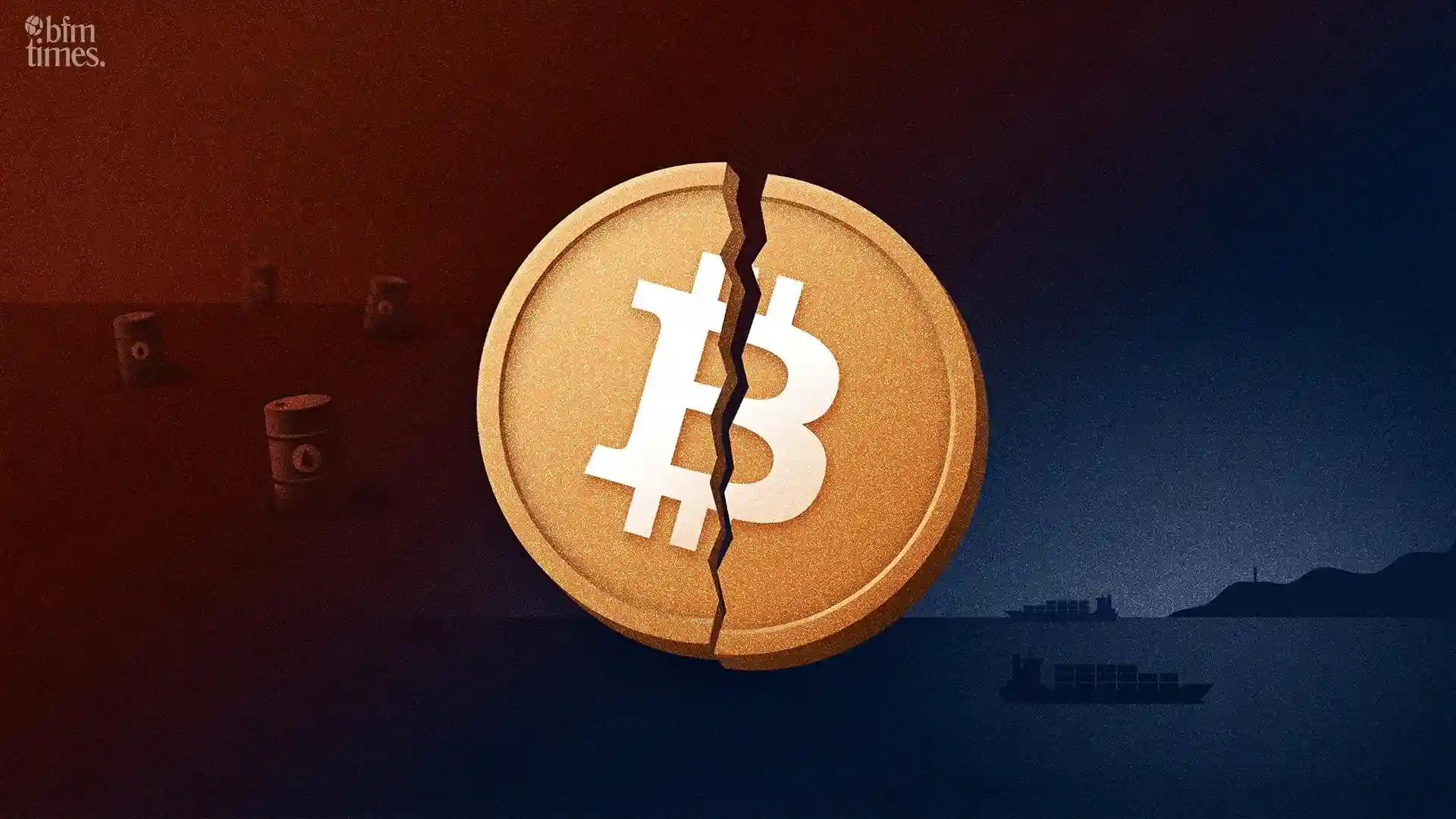
The Bitcoin geopolitical hedge concept is again being put to the test since the escalating tension in the Middle East is shaking the energy markets worldwide. As the Strait of Hormuz is under threat of a blockade, the price of oil has soared, and investors in conventional and crypto markets are reviewing their risk exposure.
- The New Reality: Strait of Hormuz Blockage and the Global Oil Shock.
- Jackson: Bitcoin Fear Gauge Performance in Crypto Market Volatility.
- Institutional Bitcoin ETF Inflows Are Reshaping Market Structure
- Safe-Haven Asset Debate: Risk Asset or Digital Gold?
- Investment Perspective: Treading the Macro Volatility.
- Conclusion
To crypto adherents, this event is not just a geopolitical news story. The question of whether Bitcoin can serve as a geopolitical hedge in times of crises is becoming a fundamental issue in light of the oil price surge in 2026 and consequent crypto market volatility. With institutional capital still flooding into the market in the form of institutional flows of Bitcoin ETFs, the behavior of Bitcoin during this period may determine the future of the debate on whether Bitcoin qualifies as a safe-haven asset.
Related: Bitcoin Rebounds 2% Amid Middle East Tensions & War Risks
The New Reality: Strait of Hormuz Blockage and the Global Oil Shock.
The Strait of Hormuz blockade situation has traditionally been considered one of the gravest challenges to the energy well-being in the world. The busy water passageway that exists between Iran and Oman is the one that carries oil in almost 20 percent of the global supply, thus becoming the most critical energy choke point in world trade.
As the U.S. Energy Information Administration reports, approximately 20-21 million barrels of oil are drained through the Strait of Hormuz each day. Source.
Even a slight disturbance of the region will soon result in a panic mode in the markets. The recent intensification has already led to the oil price surge in 2026, since traders are pricing in potential delays in shipping and increases in tanker insurance costs.
An increase in energy prices has the following effects on financial markets:
- Tightened inflation pressure in the world economies.
- Increase in transportation and manufacturing costs.
- Lateralization of potential central bank rate cuts.
- Increasing interest in safe-haven assets.
Traditionally, the U.S. dollar, government bonds, and gold are the assets that investors resort to when a geopolitical crisis strikes. Nonetheless, as the digital assets get closer to financial markets, Bitcoin is starting to enter the discourse. That is why the narrative of the Bitcoin geopolitical hedge has come back to the limelight.
Jackson: Bitcoin Fear Gauge Performance in Crypto Market Volatility.
The market structure of Bitcoin is distinctive during times of crisis in the world. Bitcoin geopolitical hedge trades 24/7, unlike the traditional markets, which shut down at night, and therefore can respond instantly to a geopolitical event.
The crypto market volatility was instant as the crypto market headlines on the conflict came into view. Bitcoin fell briefly as those who had traded the bitcoin transitioned to risk-off mode and liquidated leveraged positions.
Nevertheless, the market leveled off for a short time,e which underscores the increased maturity of Bitcoin.
CoinMetrics research indicates that Bitcoin typically responds intensely to macro shocks and then recovers in the form of a liquidity supply shock. Source.
Usually, this reaction is in the form of a pattern:
Initial Risk-Off Selling
When the uncertainty is high, short-term traders decrease their exposure.
Liquidity Stabilization
Long-term investors intervene to stock up when the market declines.
Market Repricing
The prices become stable because investors re-examine the macro environment.
Bitcoin never closes, so it tends to be the first asset to represent the global market sentiment,t and this is why analysts are now seeing it as a macro indicator.
Suggested: Why the Market Suddenly Got Seasick: Decoding the February 2026 Selloff
Institutional Bitcoin ETF Inflows Are Reshaping Market Structure
The biggest distinction between the current crypto market and the past cycles is the existence of institutional Bitcoin ETF inflows. Spot ETFs have enabled Bitcoin to be available to conventional investors in the form of a familiar financial product.
The data from Bloomberg Intelligence reveals that the inflows into Bitcoin ETFs were in the billions after they were launched, which is an indication of high demand among institutional investors. Source.
The institutional participation has various implications for the market.
Institutional Accumulation
Big money usually perceives price lows as long-term purchase prospects.
Deeper Liquidity
ETF trading enhances liquidity that assists markets in absorbing such abrupt sell-offs.
Status of Long-term Investment Horizon.
The assets are usually held longer by institutional investors in comparison to retail traders.
These are structural changes that are slowly building the point that BTC may become a Bitcoin geopolitical hedge, but the process is still going on.
Safe-Haven Asset Debate: Risk Asset or Digital Gold?
The question of whether Bitcoin is a good safe-haven asset or not is a popular discussion.
The Bitcoin argument as a Geopolitical Hedge.
Proponents believe that Bitcoin’s geopolitical hedge resembles a conventional haven.
- Fixed supply: There are now 21 million coins of Bitcoin.
- Decentralized system: No government controls the monetary policy.
- No borders: Bitcoin may be moved around the world without any banking limitations.
A study by Fidelity Digital Assets identifies the scarcity and lack of dependence on sovereign monetary systems as the reason why Bitcoin can be a macro hedge. Source.
It is these characteristics that have led some investors to term Bitcoin as digital gold.
The Counterargument
According to critics, Bitcoin continues to act like a risky asset. In times of intense stress in the market, liquid assets are sold to access cash, and this may make Bitcoin decline with equities.
These can be the March 2020 pandemic market crash, as well as large crypto leverage cycles, when risk asset correlations shot up.
Due to this reason, certain analysts think that Bitcoin is not ready yet to serve as a reliable geopolitical hedge.
Investment Perspective: Treading the Macro Volatility.
To investors, the existing geopolitical space outlines the current transformation of Bitcoin’s geopolitical hedge in the international markets.
The Bitcoin geopolitical hedge narrative is in its infancy, and a number of trends have the potential to make it stronger in the future.
Important factors include:
- Further institutional inflows of Bitcoin ETF.
- In fragmented global markets, demand for neutral assets.
- Growth of online financial systems.
- Energy market pressures on inflation rates.
Another practical examination of the strength of Bitcoin is the current Strait of Hormuz blockage and the ensuing surge in oil prices in 2026.
Also Read: Bitcoin is Stable as the U.S.-Venezuela crisis plays out in the Global Markets.
Conclusion
The recent war in the Middle East and the possible blockage of the Strait of Hormuz have caused instability in the international markets. With the inflation risks rising due to the oil price surge 2in 026, investors are again considering where to save value in case of geopolitical uncertainty.
The initial response of Bitcoin geopolitical hedge was volatility in the crypto market, though twith he introduction of institutional inflows of Bitcoin ETFs and a larger adoption rate, the market structure is changing.
Although it is still not acting like a conventional safe-haven asset, the Bitcoin geopolitical hedge story is gaining momentum as the instrument is increasingly being integrated into the global financial markets. Every macro crisis provides new facts regarding the place of Bitcoin in the future financial system.
Disclaimer: BFM Times acts as a source of information for knowledge purposes and does not claim to be a financial advisor. Kindly consult your financial advisor before investing.
Why is Bitcoin’s role as a geopolitical hedge being questioned during the Strait of Hormuz crisis?
The oil shock and global uncertainty triggered market volatility, putting pressure on Bitcoin’s safe-haven narrative.
How does the Strait of Hormuz crisis impact Bitcoin prices?
Rising oil prices and geopolitical tensions increase market instability, which can cause short-term fluctuations in Bitcoin.
Is Bitcoin still considered a hedge during geopolitical conflicts?
While often viewed as a hedge, Bitcoin can still face volatility during major global crises like the Strait of Hormuz tensions.