


In a surprising twist, Bitcoin (BTC) has proven very resilient amid growing geopolitical tensions following the U.S. military action in Venezuela, which at the time was the main story in global news in early January. While it was the consensus that in times of large-scale market conflict we would see sales of risk assets like cryptos, the world’s top digital asset has instead done well and is holding at key price points according to on-chain data and market indicators.
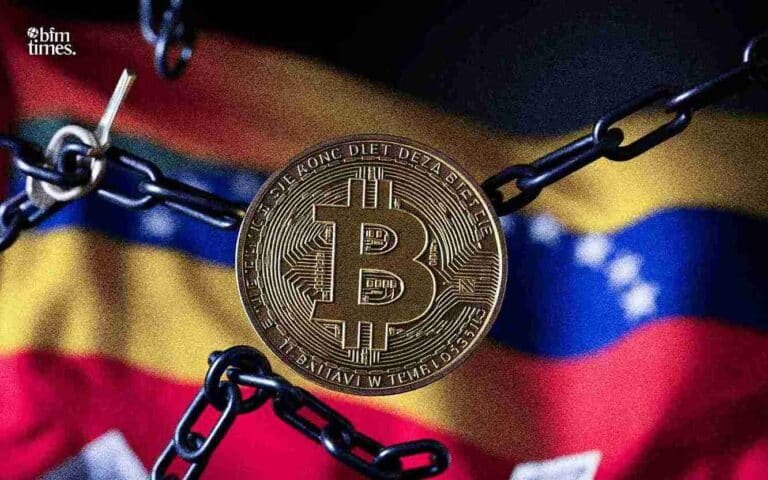
The crisis broke out when the U.S. carried out air strikes near Caracas and reported the capture of Venezuelan President Nicolás Maduro which also saw the U.S. military get into the business of what is mostly a non–interventionist region for the U.S. for many years. That which followed was a great disruption to traditional stock markets and also brought up issues of a wider than expected impact on global risk assets. But Bitcoin’s reaction was unremarkable.
Price Stability Despite Headlines
Initially Bitcoin fell to below the 90,000 range which in turn indicated that holders were not panicking. On-chain data showed that what we saw was pretty much business as usual in terms of trade volume and investor activity which is what you would see in a non-panic sell-off.
Despite what we would consider a large-scale geopolitical event, Bitcoin’s price did not see great fluctuation which report we have from a crypto market analyst. This indicates to us that investors are perceiving the issue as short-term noise and not a cause for widespread risk.
On exchanges we saw no large scale movement of Bitcoin which is what we would expect to see at the start of a sell off (when there is a rush to get out of a certain coin) or at the point when people are very confident in the coin and choose to put large sums in (which we see as a “buy the dip” mentality). That lack of large-scale action is what some analysts use as a factor to indicate the current relatively stable state of Bitcoin.
On-Chain Data: A Look at Market Psychology.
CryptoQuant and other blockchain analytics companies have reported that what is dominant in the market is confidence not fear. At the exchange level net flow was balanced and long positions outperformed bearish bets in the derivatives markets. In the immediate wake of the geopolitical news over $250 million in short positions which profit from price drops, were liquidated which indicates that the traders that put forth that Bitcoin would fall were caught off guard.
This data is in contrast to what we see in the traditional financial markets which at times see an immediate flight to safety into assets like gold or U.S. Treasuries at the onset of geopolitical tensions. Bitcoin which has at times not seen a sharp sell-off, at least not for long is put under the microscope as it is determined what role it plays as a risk asset versus a digital store of value.
Institutional Support and ETF Inflows
Adding to the stable trend we have seen recent inflows into U.S.-listed Bitcoin ETFs, coming out of a short while of outflows. Institutional players which had been on the fence last year due to large-scale macro issues have now jumped back in after they processed the latest geopolitical news. Inflow of funds into the ETFs is an indicator that larger more risk-averse capital is putting its money behind crypto.
Analysts report that we are seeing a return of institutional interest which in turn is being supported by macro-level issues like large crypto funds’ strong balance sheets and traditional markets’ support which in turn is what is enabling Bitcoin to weather current issues better than in past times of crypto-related sell-off.
Venezuela’s Crypto Context
In the wake of this crisis, what we see is an ever-deepening relationship between Venezuela and cryptocurrencies. For years we have seen economic turmoil, hyperinflation and limited access to stable traditional banking, which in turn has pushed the average person in Venezuela and large-scale businesses also to digital assets mainly stablecoins like Tether (USDT) for day-to-day transactions. In many Venezuelan cities, prices in USDT are the norm rather than the local bolívar which is to say we are seeing a bottom-up shift towards digital dollars.
Reports also over the past few years we see that the Venezuelan state and private entities have been amassing large amounts of Bitcoin which they are using to get around sanctions and dollar-based restrictions. If proven out these reserves which may run into large numbers of BTC, could in turn play a role in the market should they be put to use. At the same time we do not see at this time any sign of panic selling related to these reported holdings.
Market Interpretation: What is the Noise or what is the New Paradigm?
Financial experts still are at an impasse over what to make of Bitcoin’s action. Some put forth that the market is in fact ignoring geopolitical risk which is what we see with the little play between traditional geopolitics and decentralized digital assets. Others see in this a chance for a large-scale change in which cryptos and Bitcoin in particular are breaking away from what we expect of risk assets and in that breakaway are finding a space as a hedge or alternative store of value.
In the long term, this issue brings to light the growing complexity of crypto markets as they play out on the global political stage. What we will see in the coming weeks and months is the watchful eye of investors, regulators, and geopolitical analysts on Bitcoin’s path which is to determine if this resilience is transitory or the beginning of a new era in the digital asset world.
Disclaimer: BFM Times acts as a source of information for knowledge purposes and does not claim to be a financial advisor. Kindly consult your financial advisor before investing.