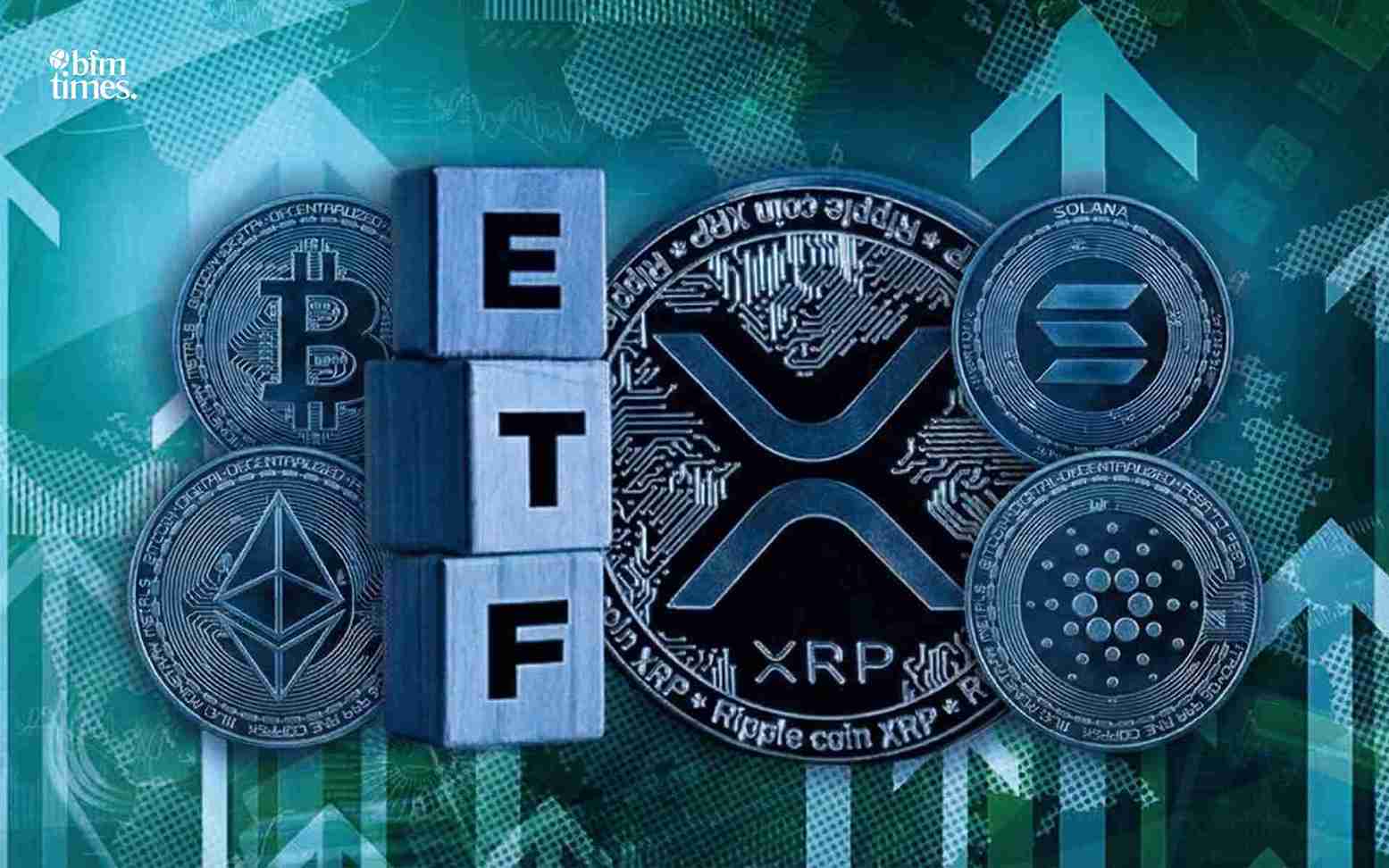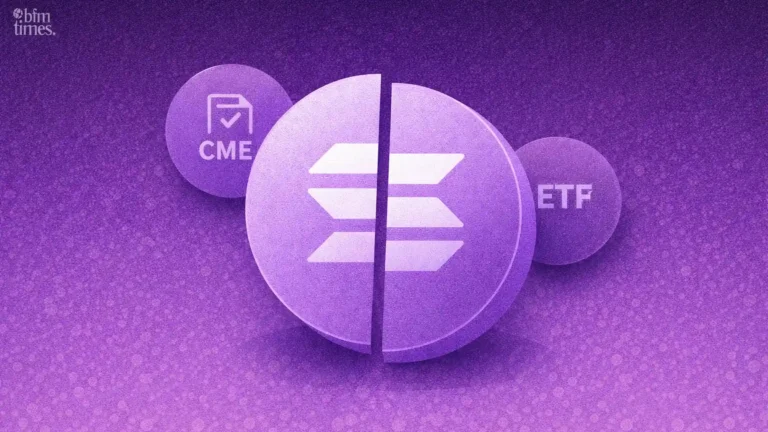
There is a growing institutional crypto adoption with CME Solana Futures going live on March 17 and BlackRock putting its Bitcoin ETF in model portfolios. Such actions indicate the increased involvement of crypto in conventional finance and may influence the way in which institutions invest money in digital assets over the next few years.
- The Catalyst
- Market Reaction
- The “So What?”: Why This Matters
- Capital Who is Institutional Is Coming in with Familiar Forms.
- ETFs are transforming Crypto into a Portfolio Asset.
- Professional Analysis: The Crypto institutional cycle.
- What to Watch Next
- Solana Futures CME Launch Date.
- Preliminary Solana ETF Speculation.
- Increase in Model Portfolio Allocations.
- Institutional Adoption Outsiders to Bitcoin.
- The End: Institutional Crypto Adoption Era
Related: Now You Can Buy Tokenized Stocks on Binance Exchange and Take Self-Custody
The Catalyst
The recent happenings have indicated the spread of institutional players to exposure to crypto in terms of regulated financial products.
The attention is being fueled by two important events:
- CME Group introduced Solana (SOL) futures, which is not the only addition to its portfolio of crypto derivatives, including Bitcoin and Ethereum.
- This is the first time that BlackRock has added its iShares Bitcoin Trust (IBIT) to its model portfolios.
The CME Solana futures contracts will comprise:
- Standard contract: 500 SOL
- Micro contract: 25 SOL
Contracts will be settled in cash, but this will enable institutions to trade exposure without holding crypto directly.
CME has already announced a massive expansion in crypto derivatives trading, which indicates an increasing institutional interest in institutional exposure to digital assets.
In the meantime, the ETF inclusion of BlackRock indicates that Bitcoin will be exiting the area of speculative allocation and will be transitioning to a tactical portfolio asset.
Now, it is a move by crypto enthusiasts toward institutionalizing their activities instead of experimentation, as the announcements declare. Source.
Market Reaction
Price Action
Traders started speculating on possible institutional crypto adoption flows into the Solana ecosystem after the news of CME Solana Futures.
Solana has a history of volatility cycles that, in most cases, are highly volatile to new infrastructure additions like the derivatives being listed or ETF speculation.
The main market observations will be:
- Listing of derivatives tends to heighten liquidity and trade.
- The institutional traders have access to instruments of hedging.
- Futures markets have the ability to affect the price discovery in the spot markets.
A key development in the history of Bitcoin futures was the introduction of Bitcoin futures in 2017, which introduced a new way to enter crypto markets by the traditional investor.
There are numerous critics who think that with the introduction of regulated SOL derivatives, similar dynamics may arise.
On-Chain Signals
Institutional trading can take place on-chain, but indirect signs of market positioning are common on blockchain analytics platforms.
These can include:
- Whale selling and buying of big wallets.
- Inflows of exchange that indicate the possible pressure to sell.
- Accumulation by the long-term holders.
Blockchain intelligence platforms analysts typically track this kind of activity to determine how institutional narratives are converted into on-chain behavior.
In the case of Solana, the growing interest in derivatives markets may draw the interest of institutional crypto adoption traders and large crypto-native funds. Source.
Suggested: Ethereum ETFs Draw In $169M, Highest Level in Two Months
The “So What?”: Why This Matters
The concurrent events of CME Solana Futures alongside the BlackRock Bitcoin ETF point to a more fundamental change in financial markets.
There is no longer a need to keep crypto in special exchanges or for retail traders.
Rather, it is becoming more and more integrated into mainstream financial infrastructure.
Capital Who is Institutional Is Coming in with Familiar Forms.
The large asset managers would choose investment vehicles that would support the traditional financial systems.
These include:
- ETFs
- Futures contracts
- Regulated trading venues
Investment products such as the BlackRock Bitcoin ETF enable financial advisors to invest in Bitcoin-based exposure without holding the actual cryptocurrency.
On the same note, derivatives exchanges such as CME enable institutions to deal in crypto without going outside of the current regulatory systems.
The history of crypto derivatives.
One of the most rapidly expanding branches of digital assets markets is crypto derivatives.
They are offering the tools that institutional investors need, which include:
- Hedging against volatility
- Leveraged trading
- Capital-efficient exposure
The opening of CME Solana Futures can be seen as the beginning of institutional crypto adoption, with investors beginning to hold Solana more like a maturing asset in the wider crypto ecosystem.
Once derivatives markets are developed around SOL, it may also enhance its position on the side of the institutional investors. Source.
ETFs are transforming Crypto into a Portfolio Asset.
It is also debatable that the fact that BlackRock introduced the Bitcoin ETF as part of model portfolios is even greater.
Model portfolio informs asset allocation choices of financial advisors with billions of dollars under their management.
When an asset gets into these structures, it is included in systematic investment plans.
Bitcoin is also gradually being considered as:
- A diversification asset
- A financial insurance policy.
- A digital store of value
This change is representative of a larger institutional crypto adoption perception change of the digital assets.
Professional Analysis: The Crypto institutional cycle.
Analysts in the market refer to the development of crypto in phases.
Retail speculation was the first phase of the industry, then it was supplanted by crypto-native funds, and now it seems they are entering an institutional adoption phase.
This shift is being caused by several macro factors:
- Global liquidity cycles
- Changing regulatory transparency.
- Institutional preference for alternative assets.
According to some investment strategists, digital assets could gradually turn into a minor and usual investment in diversified portfolios.
The allocation of 1-3 percent in large institutional crypto adoption portfolios would be a big influence on the liquidity of the crypto market. Source.
What to Watch Next
To crypto believers, these announcements are not the end.
The institutional crypto adoption could take the next step in several ways.
Solana Futures CME Launch Date.
Traders will be keen on the March 17 launch to evaluate:
- Initial trading volume
- Liquidity levels
- Institutional participation
Preliminary Solana ETF Speculation.
Traditionally, the derivatives markets have been established ahead of the approval of crypto asset ETFs.
The introduction of regulated SOL futures can stimulate more discussions about the possible Solana-based ETFs in the future.
Increase in Model Portfolio Allocations.
In case Bitcoin keeps acting as a portfolio diversifier, financial advisors might make slow additions in model portfolios.
This may bring new institutional capitals in to the crypto markets.
Institutional Adoption Outsiders to Bitcoin.
Although Bitcoin is still the leading institutional asset, other networks, such as Ethereum and Solana, can start gaining the attention of more institutions.
This would be an additional institutional crypto adoption exposure in the crypto world. Source.
Also Read: Crypto Traders Warned Against Bottom Fishing Amid Whale Moves
The End: Institutional Crypto Adoption Era
The introduction of CME Solana Futures and BlackRock Bitcoin ETF inclusion in model portfolios became a historic event in institutional crypto adoption.
Instead of viewing crypto as an esoteric asset category, big banks are starting to incorporate digital assets into the investment portfolios of stocks, bonds, and commodities.
To the crypto community, this tendency indicates that cryptocurrencies are slowly gaining a place in the world financial system.
With the emergence of new derivatives markets and the increased adoption of ETFs, institutional capital might increasingly influence the crypto market cycles.
The changes that are currently underway could eventually be recalled as the initial phases of a wider change one where crypto is no longer an alternative experiment but a legitimate asset in institutional crypto adoption finance.
Disclaimer: BFM Times acts as a source of information for knowledge purposes and does not claim to be a financial advisor. Kindly consult your financial advisor before investing.
What does CME’s launch of Solana futures indicate for the crypto market?
It signals growing institutional interest and provides regulated exposure to Solana for professional investors.
Why is BlackRock’s crypto ETF important for adoption?
BlackRock’s involvement increases credibility and opens the door for large institutional capital to enter crypto markets.
How could institutional adoption impact the crypto market?
It can increase liquidity, boost investor confidence, and potentially drive long-term market growth.