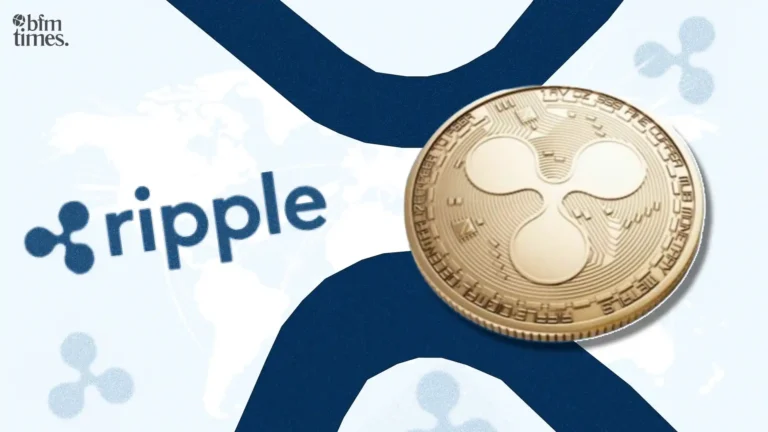
- The XRP Ledger is among the fastest blockchain settlement systems, with ripple mass adoption payment infrastructure taking transactions in 3-5 seconds and fees of less than 0.001.
- The Ripple On-Demand Liquidity (ODL) model eliminates the prerequisite bank accounts in international transfers.
- Absence of native smart contracts on the XRP Ledger is still a weakness in accordance with such ecosystems as Ethereum and Solana.
- This is being duly considered by Ripple with the development of the XRPL EVM Sidechain and the Hooks upgrade, which brings about programmable functionality.
- According to analysts, the future usage of Ripple will require XRPL to become more than a payment infrastructure, programmable or not.
- Main Prediction: Can Ripple Achieve Mass Adoption in Payments?
- Data Snapshot: Ripple vs Smart Contract Ecosystems
- Who Uses Ripple’s Payment Infrastructure?
- What Is the Smart Contract Gap in the XRP Ledger?
- When Will Ripple Introduce Smart Contract Capabilities?
- Where Ripple Faces the Most Competition
- What the Bridge Asset Debate (XRP vs. RLUSD) is All About
- What are the Expert Insights? David Schwartz: Evolution of XRPL.
- Conclusion: Does Ripple Have World Mass Adoption?
- Frequently Asked Questions
Main Prediction: Can Ripple Achieve Mass Adoption in Payments?
Ripple mass adoption has long been establishing itself as the institutional blockchain to use in making cross-border payments. Ripple has not been the only cryptocurrency with a practical mission; unlike most of the crypto-related projects, Ripple aims not at decentralized applications but at enhancing payment rails on the world map.
This system is anchored by the XRP Ledger (XRPL), which is supposed to transfer value across the world within a few seconds. The transactions are usually settled in 3-5 seconds and charge fractions of a cent, which is much faster than the traditional correspondent banking networks.
The system that drives this model is On-Demand Liquidity (ODL). Rather than holding pre-funded accounts in different locations around the world, financial institutions convert local currency into XRP and send it across the ledger and convert it back into a different currency almost instantly.
The volume of cross-border transactions that Ripple has already facilitated through its payment model has reached billions of dollars, especially in remittance corridors in Asia and North America.
The greater blockchain industry has, however, evolved. Today, programmable financial networks are the most influential ecosystems, not only payment rails.
Data Snapshot: Ripple vs Smart Contract Ecosystems
Statistics: Ripple vs. Smart Contract Ecosystems.
| Feature | Ripple (XRP Ledger) | Ethereum | Solana |
| Settlement Speed | 3–5 seconds | 12–15 seconds | <1 second |
| Transaction Fees | ~$0.0002 | $0.50–$5 | ~$0.01 |
| Primary Focus | Cross-border payments | DeFi & smart contracts | High-speed dApps |
| Smart Contracts | Limited (Hooks/sidechain) | Native | Native |
| Institutional Adoption | Strong in banking | Strong in DeFi | Growing |
This analogy points to the structural disparity between ripple mass adoption and rival blockchain ecosystems.
Ripple is the leader in payments, whereas Ethereum and Solana are the leaders in programmable finance infrastructure.
Who Uses Ripple’s Payment Infrastructure?
Financial institutions and payment providers are the major customers of Ripple.
International transfer Banks traditionally use correspondent banking systems like SWIFT. These systems provide pre-funded accounts in foreign currencies, which tie up billions of idle liquidity.
This inefficiency is removed by the solution suggested by Ripple.
With XRP as a bridge currency, the banks are able to perform a real-time conversion between currencies without having to hold several liquid assets in many different locations.
To the financial institutions, this means:
- Faster settlement
- Lower operational costs
- Enhanced liquidity effectiveness.
- Real-time global payments
This emphasis on institutions is one of the reasons why ripple mass adoption remains a relevant target for payment companies and fintech firms.
What Is the Smart Contract Gap in the XRP Ledger?
Although the XRP ledger is strong in payments, it traditionally did not support smart contracts.
Smart contracts are computer applications operating on blockchain networks and performing financial logic without an intermediary. They drive a variety of contemporary crypto innovations such as decentralized exchanges, lending protocols, and tokenized assets.
This programmable infrastructure was first introduced by Ethereum in 2015, and since that time, ecosystems of smart contracts have taken center stage in blockchain innovation.
In its absence, XRPL will have to be confined to one of its core applications, i.e., payments.
That is why the absence of smart contracts is often characterized as the largest structural weakness of Ripple.
Suggested: CLARITY Act & Crypto Banking Expansion: The New U.S. Digital Asset Framework 2026
When Will Ripple Introduce Smart Contract Capabilities?
Ripple has been carrying out various upgrades in an effort to bridge this gap.
The biggest of them is the XRPL EVM-compatible sidechain, which is created to enable Ethereum-like smart contracts to execute in the XRP Ledger.
This sidechain would enable developers to implement Solidity-based applications, which will enable decentralized applications to run in the XRPL ecosystem.
In conjunction with this project, Hooks, proposed by the ripple mass adoption developers, is a lightweight programmability capability built into the ledger.
Hooks enable small programs to be automatically executed on transactions using the network without affecting the network speed.
Collectively, the upgrades are designed to transform XRPL to be more of a programmable financial platform instead of a payment-centered one. Source.
Where Ripple Faces the Most Competition
Traditional payment networks are no longer the strongest competitors ot ripple mass adoption.
Rather, smart contract ecosystems are extended to payments and are posing more and more competition.
Ethernet leads in the field of decentralized finance and tokenization of assets, and Solana has invested in high-performance financial applications.
This is because these networks offer a combination of programmability and speed to developers who need to construct new financial infrastructure.
Unless Ripple’s mass adoption is able to expand its developer base, it will fall behind in the development of blockchain finance.
What the Bridge Asset Debate (XRP vs. RLUSD) is All About
The other debate that is emerging in the Ripple ecosystem is the launch of stablecoins like RLUSD.
Stablecoins provide stable prices, and this feature is enticing to institutions that have to make big transactions.
Yet, this also leads to one significant question: in case the banks are willing to settle in stablecoins, will XRP not become the bridging asset anymore?
Other analysts postulate that stablecoins may diminish the demand for XRP, whereas others believe that they will inject more liquidity into the XRPL ecosystem, which will indirectly reinforce the position of XRP.
The result of this debate may have an impact on the long-term economic model of Ripple.
What are the Expert Insights? David Schwartz: Evolution of XRPL.
Ripple CTO David Schwartz has stressed that the XRP Ledger was created to be efficient and reliable.
As opposed to copying the architecture of Ethereum, Ripple is working on mass adoption by incorporating programmable functionalities without compromising the speed and scalability of the network.
This is the reason why ripple mass adoption engages in sidechain and lightweight programmability upgrades, instead of sophisticated on-chain smart contract systems.
We have the long-term vision and a network that will be able to facilitate institutional payments and programmable financial services.
Also Read: Fairshake PAC 2026: The $193M Crypto Political War Chest Reshaping Washington
Conclusion: Does Ripple Have World Mass Adoption?
Ripple is also one of the most viable blockchain projects that aims at the real-world financial infrastructure.
Its advantages include the following:
- Almost immediate world resolution.
- Very, very low transaction costs.
- Strong institutional focus
- Enhancing regulation transparency.
Nonetheless, the blockchain sector is transforming quickly to programmable finance systems.
Provided that ripple mass adoption effectively implements the functionality of smart contracts with the help of sidechains and native upgrades, the XRP Ledger might transform into a hybrid platform that will be able to support payments and decentralized applications.
Otherwise, it can be a niche payment network as programmable ecosystems take over the wider digital finance economy.
Frequently Asked Questions
Is Ripple suitable for mass adoption in global payments?
Yes, Ripple’s XRP Ledger offers fast settlement and low fees, making it highly efficient for cross-border payments.
Why is the lack of smart contracts seen as a challenge for Ripple?
Because XRPL historically lacks native Turing-complete smart contracts, limiting complex DeFi and dApp development compared to networks like Ethereum.
Is Ripple working to solve the smart contract limitation?
Yes, Ripple is introducing Ethereum-compatible smart contracts through an EVM sidechain to expand programmability and developer adoption.
Disclaimer: BFM Times acts as a source of information for knowledge purposes and does not claim to be a financial advisor. Kindly consult your financial advisor before investing.