


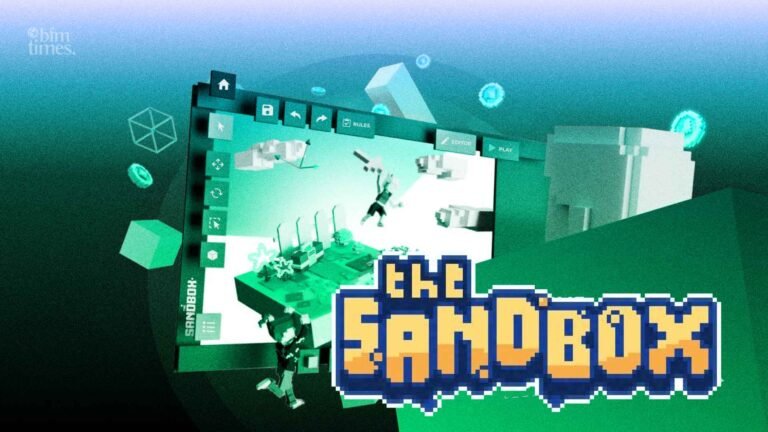
The idea of owning a piece of the internet once sounded ridiculous. Fast forward to 2026, and platforms such as Sandbox are still attempting to make such a concept a reality and not something that people invest in.
- I Spent Time Inside Sandbox: Here’s What It Actually Feels Like
- What Sandbox Really Is (And What It’s Trying to Become)
- What You Can Actually Do Inside Sandbox
- 1. Explore Virtual Worlds
- 2. Own Virtual Land (LAND NFTs)
- 3. Play User-Created Games
- 4. Attend Events & Experiences
- 5. Monetize Creations
- The Sandbox Economy: How Money Actually Moves Here
- Who Is Sandbox Really Built For? (And Who It’s Not For)
- What Sandbox Gets Surprisingly Right
- Where Sandbox Still Feels Incomplete
- Sandbox vs Other Metaverse Platforms (Reality Check)
- Is Sandbox Still Relevant in 2026?
- Should You Try Sandbox or Skip It?
- Frequently Asked Questions
But here’s the real question: is Sandbox a place where people still gather to hang out in, build in it, and earn a living, or has it simply silently become another hyped-over Web3 project that runs on past momentum?
Got to carve into it, not from a “feature checklist” lens, but from a “what does this actually feel like in real life” perspective.
Related: Binance Review 2026
I Spent Time Inside Sandbox: Here’s What It Actually Feels Like
The first thing you notice about it is that it doesn’t try to be ultra-realistic, and that’s intentional.
It borders a voxel-style world (imagine Minecraft with NFTs ), and this immediately creates the mood: it is more about creativity than the real world.
And here is where it becomes interesting.
Entering in it is not as smooth as modern games. It is not just the case of downloading and playing like Fortnite or Roblox. It has the slightest tincture of Web3 layer, wallet connections, loading assets, and waiting around.
Once you’re inside, though?
It is as though one is walking through a combination of:
- experimental game worlds
- brand-built experiences
- unfinished creative works.
Some places are vibrant and participatory. Others are in the form of digital ghost towns.
That difference makes the sandbox experience in 2026.
What Sandbox Really Is (And What It’s Trying to Become)
At its core, it is trying to be more than a game.
It is positioning itself as a user-owned virtual world, where:
- players explore
- creators build experiences
- Users have digital possessions (as NFTs).
- and all are linked together by blockchain.
But the ambition goes deeper.
It wants to be:
- A gaming platform
- A creator economy
- Property market virtual reality.
- A social metaverse
All at once.
And honestly? It is its strength and also its greatest challenge.
Because while the vision is massive, the execution still feels like it’s catching up.
What You Can Actually Do Inside Sandbox
We can eliminate the buzzwords. What do people really do in a it?
1. Explore Virtual Worlds
- You can jump into other user-created experiences, from mini-games and interactive maps.
- There are also others, surprisingly well-structured.
- The others are in the form of a prototype.
- That incompatibility is also there in the platform.
2. Own Virtual Land (LAND NFTs)
It is here that the sandbox attracted huge attention.
Users can buy LAND, essentially digital plots, and build on them.
Think of it like this:
Being a part of a virtual space of a city and determining what is there.
But here’s the reality:
The only thing that would make sense with LAND is to own it when you are using it and not hold it in the hope that its value will increase.
3. Play User-Created Games
In-game activities within the sandbox are not AAA experiences.
They’re more like:
- indie-style mini games
- quests
- experimental mechanics
Some are fun to have for a few minutes.
However, it is not profound, refined gameplay (yet).
4. Attend Events & Experiences
Events exist within a space produced by brands and creators: virtual concerts and worlds.
This is more of the exciting part, but it is again hortatory, according to:
- timing
- user turnout
- execution quality
5. Monetize Creations
As an artist, it invites you on board:
- sell property (like characters or items)
- build paid experiences
- monetize land
But here’s the catch: monetization works best if you already have:
- a community
- or a high creative ability.
Otherwise, there is no instant income.
The Sandbox Economy: How Money Actually Moves Here
Now we may mention that which most folks are wondering about.
Money.
The Sandbox ecosystem is based on the SAND token.
Here’s how it flows:
- You use SAND to buy LAND
- You use it to purchase assets
- Creators earn in SAND
- Transactions across the platform rely on it
It looks easy, yet things are more complex than that.
The Reality Check
- Asset prices and LAND prices are volatile.
- The not-all asset is not necessarily demanded in real demand.
- The revenue is based on participation and not ownership.
The fact that one owns something in the sandbox does not imply that it has value.
Value comes from:
- people interacting with it
- people paying for it
That is a massive change in the initial hype stage.
Who Is Sandbox Really Built For? (And Who It’s Not For)
That is where the score is even.
You’ll Like Sandbox If You Are:
A Creator
When you like to make worlds, create assets, or test things, it provides you with the means to do it.
A Web3 Enthusiast
In case you are convinced of the idea of owning the digital information and decentralization, this platform supports such a perspective.
An Early Adopter Mindset User
You are fine with things not being finished, as long as there is a possibility.
You Might Not Enjoy Sandbox If You Are:
A Hardcore Gamer
It will be disappointing if you anticipate refined gameplay and a high-quality mechanism.
A Passive Investor
Purchasing LAND and sitting back to earn? That is not such a sure thing these days.
Someone Looking for Instant Fun
It is not a plug-and-play entertainment platform.
Related: Phantom Wallet Review 2026
What Sandbox Gets Surprisingly Right
It does have its flaws, but there are a few things that it does very well.
1. Creative Freedom
The platform provides creators with much control.
You are not created into unbending molds; you are free to experiment.
2. Brand Collaborations
Brand invasion into the sandbox has brought credibility.
It is not only user projects ad hoc, but there are formal experiences as well.
3. Creator Tools
The construction materials are easy to use for a beginner and at the same time strong enough to be used by professional creators.
That balance matters.
4. Ownership Layer
Contrary to the old stuff, what you create or purchase in it does not have to be a possession of the company.
Still a huge point of difference.
Where Sandbox Still Feels Incomplete
Now the real talk.
1. User Experience Friction
The entry into the sandbox is not that easy.
Wallet designs, check-in, and navigation must be simplified.
2. Gameplay Depth
The majority of the experiences are shallow.
Entertainment of a couple of minutes, not something one returns to every day.
3. Adoption Gap
Sometimes the sandbox can be empty.
A metaverse needs people.
The best worlds are dead without the active users.
4. Over-Reliance on Hype Cycles
The platform has experienced waves of hype, and you can experience the contrast between the hype time and the less active time.
Sustainability is yet to be put to the test.
Sandbox vs Other Metaverse Platforms (Reality Check)
Let us draw parallels between the sandbox and the two big names.
Sandbox vs Decentraland
- It feels more game-like
- Decentraland feels more social/virtual-world focused
- It has better creator tools
- Decentraland has simpler navigation
Sandbox vs Roblox
- Roblox is much more refined and dense.
- Sandbox provides ownership (blockchain layer), in fact.
- Roblox is the winner in terms of depth of gameplay.
- Web3 innovation sandbox wins.
Is Sandbox Still Relevant in 2026?
Short answer: Yes, but differently than before.
The hype-driven phase is over.
Now, it is in its building phase.
Relevance today depends on:
- builders who keep on building.
- users actually engaging
- The platform enhances usability.
It’s no longer about “buy land early and get rich.”
It’s about:
- what you create
- how people interact with it
It is a healthier way, however, a less fast way.
Related: MetaMask Wallet Review 2026
Should You Try Sandbox or Skip It?
Here’s the honest take.
Try Sandbox. If:
- You enjoy playing with computer creations.
- You are interested in the Web3 surroundings.
- You desire to construct, not to consume.
Skip Sandbox. If:
- You desire entertainment on the spot.
- You are anticipating refined gaming.
- You just came to get quick investment returns.
Overall Verdict
Sandbox isn’t dead.
But it’s also not the fully realized metaverse it once promised to be (yet).
It’s a platform in transition.
And whether it succeeds depends less on hype and more on what people actually do inside it.
Frequently Asked Questions
What is Sandbox used for?
Sandbox is a virtual metaverse platform where users can create, own, and monetize digital experiences using blockchain technology.
Is Sandbox free to use?
Yes, users can explore it for free, but owning assets or land requires purchasing with SAND tokens.
Can you earn money in Sandbox?
Yes, creators can monetize games, assets, and virtual land within the Sandbox ecosystem.
Is Sandbox a game or an investment platform?
It is both; it combines gaming experiences with blockchain-based digital ownership.
Is Sandbox still popular in 2026?
It continues to evolve, though its popularity depends on user adoption and broader metaverse trends.
Disclaimer: BFM Times acts as a source of information for knowledge purposes and does not claim to be a financial advisor. Kindly consult your financial advisor before investing.