


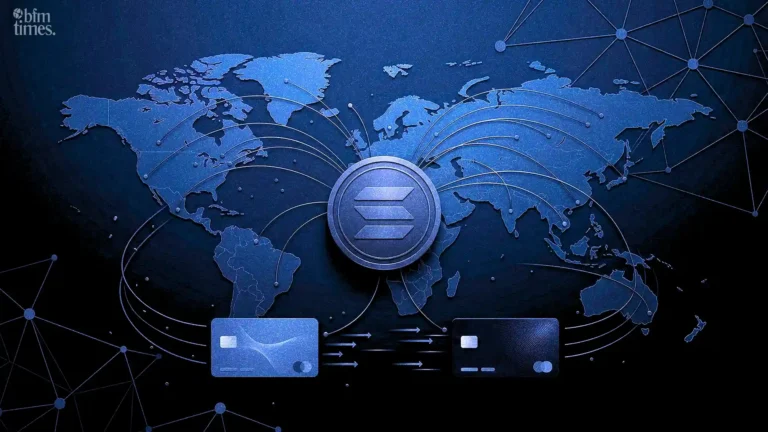
The USDPT stablecoin presented by the Western Union Solana Integration will link blockchain payments to 360,000 different cash payouts around the world. Having said that, it may redefine the nature of remittances if it is successful by integrating blockchain settlement with physical infrastructure.
- The Catalyst
- Market Reaction to Western Union Solana Integration
- The “So What?”: Why This Matters
- The Reason to Select Solana as the Settlement Layer.
- The Digital Asset Network (DAN): The Cradle between Crypto and Cash.
- What to Watch Next with Western Union Solana Integration
- Stablecoin Adoption Metrics.
- Regulatory Landscape
- Blockchain Competition in the Usage of Institutional Investors.
- Innovation in Cross-border payment.
- Conclusion: Western Union Solana Integration
Related: Solana Price Analysis 2026
The Catalyst
The Western Union Solana Integration is among the most talked-about events within the crypto markets and social sites. The remittance giant in the world has collaborated with the infrastructure provider of Web3, Crossmint, to introduce USDPT Stablecoin, the digital payment token based on U.S. dollars on the Solana blockchain.
It is also a strategic change move by Western Union, which traditionally depended on correspondent banking networks and SWIFT rails to undertake international transfers.
The main details leading to the announcement are:
Stablecoin Launch: USDPT is going to be released as a token in Solana, which is based on the U.S. dollar.
- Global Reach: Connected to the network of Western Union, 360,000+ payouts in 200 plus countries.
- Infrastructure Partner: Crossmint is the vendor of the wallet technology and payment APIs that the system operates on.
- New Ecosystem: A Digital Asset Network (DAN) between blockchain transfers and cash redemption points.
The project has an easy objective: enable users to transfer digital dollars across borders without delay and turn them into local cash within almost no time.
In a company that conducts millions of remittance transfers annually, the transition to blockchain infrastructure indicates that it is over with experimenting and into the use of digital assets. Source.
Market Reaction to Western Union Solana Integration
As the announcement continues to take place, analysts and on-chain researchers are analyzing the implications of the Western Union Solana Integration on the rest of the crypto ecosystem.
On-Chain Data Perspective
Crypto intelligence services like Arkham and Lookonchain have shed some light on the growing institutional interest in Solana due to its infrastructure capacity. Big payment integrations such as this may spur more of the network to stablecoin activity.
In the past, integrations of this type resulted in spikes in:
- Volume of transactions by stablecoins.
- Wallet creation rates
- Intercountry payment flows.
Provided that USDPT is adopted, it is possible that Solana will experience more real-life payment movement instead of speculative flows of money in the market.
Price Action Narrative
Despite the fact that Solana tends to follow the general sentiment of the market, institutional integrations are often long-term bullish indicators.
The two major indicators that market analysts usually look into after significant partnerships include:
- Network usage growth
- Smooth currency liquidity growth.
Historically, key infrastructure consumption moments, like payment integrations or institutional blockchain rollouts, have been associated with an impact on network valuation over the long term as opposed to the volatility in the short term. Source.
The “So What?”: Why This Matters
To crypto enthusiasts, the Western Union Solana Integration is not just any one of the corporate blockchain associations. It represents a change of global payment structure.
The conventional remittances systems have several issues:
- There are several agents who charge more.
- The process of transfers can last several days.
- International compliance procedures are complicated.
The possible solution is stablecoins. Stablecoins can facilitate funds to flow around the world with little friction by making fiat money on-chain.
The USDPT project of Western Union tries to integrate three strong aspects:
Blockchain Settlement
The Solana network is used to execute transactions and has a high throughput and low cost.
Institutional Infrastructure
Western Union offers regulatory compliance, liquidity, and operating expertise, built over the course of its history of over 170 years.
Physical Financial Access
Western Union has established a network of cash pickup locations worldwide, unlike the completely digital platforms of crypto.
This is a hybrid model, which is also known as Hybrid Finance (HyFi), and which may emerge as a new trend where conventional financial institutions adopt public blockchains as settlement rails.
The future of payments is increasingly thought to not be a battle between banks and crypto networks but a collaboration between the two systems.
Suggested: Solana News: XRP Tundra Integrates Solana Network for Dual-Chain DeFi
The Reason to Select Solana as the Settlement Layer.
The other controversial issue that was discussed in relation to the Western Union Solana Integration is the selection of blockchain infrastructure.
Solana has a number of technical benefits over enterprise financial applications.
High Throughput of Transactions.
Thousands of transactions per second can be processed in the network, meaning that it is an appropriate network to be used in global payment systems.
Low Transaction Costs
Transactions on Solana are usually fractions of a cent, which makes them cost-efficient.
Fast Settlement
Confirmation of transactions is near-instant when compared to the regular banking systems, where it takes other systems to be cleared.
Developer Ecosystem
The ecosystem at Solana has expanded very quickly in recent years, welcoming stablecoin issuers, decentralized finance applications, and infrastructure providers.
These features render Solana even more appealing to the companies that consider adopting blockchain-based financial rails. Source.
The Digital Asset Network (DAN): The Cradle between Crypto and Cash.
The most innovative aspect of the project can be the Digital Asset Network (DAN) of Western Union.
The system integrates blockchain operations with the global payout system of Western Union.
The process works as follows:
- A customer remits money via a wallet or fintech app.
- The money is turned into USDPT Stablecoin.
- The blockchain on which the transaction is settled is Solana.
- The recipient cashes the value at aWestern Unionn branch in local currency.
In the country where people have less access to banking services, this model may allow remittances to be crypto-powered without the need to have an actual bank account. Source.
Also Read: Western Union Disrupts $700B Remittance Market with USDPT Stablecoin Launch on Solana
What to Watch Next with Western Union Solana Integration
This initial launch of the stablecoins by the Western Union Solana Integration may have significant long-lasting ramifications.
Stablecoin Adoption Metrics.
Should USDPT start being widely used in wallets and payment systems, it may have a greater effect on Solana’s financial settlement.
Regulatory Landscape
Regulatory frameworks of stablecoins and digital asset payments are being developed by governments of countries all over the world. Regulations in the future are likely to increase or decrease institutional adoption.
Blockchain Competition in the Usage of Institutional Investors.
Other financial networks are also looking at such tactics. Bank and payment companies are trying blockchain settlement layers.
Innovation in Cross-border payment.
With the demand for remittances in the world increasingly on the rise (it is estimated that the global remittance payments are currently worth over 900 billion dollars a year), companies are competing to be the first to establish faster and cheaper payment systems. Source.
Conclusion: Western Union Solana Integration
The Western Union Solana Integration is a significant event in the history of the intersection of the traditional finance industry and the blockchain.
With the introduction of the USDPT Stablecoin and the Digital Asset Network, Western Union is bringing the speed of blockchain to the reputation and reach of its worldwide system of payments.
In case the experiment succeeds, it would show that the public blockchains, such as Solana, are able to scale to financial systems in the real world.
More to the point, it can mark the start of a new financial model in which the traditional institutions and decentralized networks work concurrently to drive the next generation of international payments.
Disclaimer: BFM Times acts as a source of information for knowledge purposes and does not claim to be a financial advisor. Kindly consult your financial advisor before investing.
Why is Western Union integrating Solana, significant for remittances?
It could enable faster and lower-cost cross-border payments using blockchain technology.
How does Solana improve global money transfers?
Solana offers high-speed transactions and very low fees, making international transfers quicker and cheaper.
What impact could this integration have on the remittance industry?
It may accelerate blockchain adoption and push traditional payment providers toward faster digital settlement systems.