The term machine learning appears very often today. The idea appears across phones & shopping apps & hospitals. This topic matters a lot in the modern world.
- What is Machine Learning?
- How Does Machine Learning Work?
- Step One – Collect Data
- Step Two – Prepare the Data
- Step Three – Train the Model
- Step Four – Test & Evaluate
- Step Five – Deploy & Improve
- What are the Types of Machine Learning?
- What are Real World Applications of Machine Learning?
- What Machine Learning Algorithms Should You Know?
- What are the Benefits of Machine Learning?
- 1. Automation of Repetitive Tasks
- 2. Better & Faster Decision Making
- 3. Personalization at Scale
- 4. Continuous Improvement
- 5. Scalability
- What are the Common Challenges in Machine Learning?
- How Can You Get Started with Machine Learning?
- 1. Learn the Basics of Python
- 2. Build a Strong Foundation in Mathematics
- 3. Explore Online Courses & Tutorials
- 4. Practice with Real Datasets
- 5. Build Small Projects
- 6. Stay Updated with the Latest Trends
- What is the Future of Machine Learning?
- Conclusion
We live in a world that creates huge amounts of data every second. The activity of clicking, searching & buying creates data again & again. This machine learning system helps computers understand this data. These systems find patterns & they make smart choices automatically.
It is simple to understand what machine learning means. The technology lets computers learn from data. The computer does not need step-by-step rules. The system studies examples & it improves with time.
In this guide, readers will gain insights into What is Machine Learning? Complete Beginner Guide featured on BFM Times.
Related: Best AI Tools for Business: A Strategic Guide to AI Tools Business Adoption
What is Machine Learning?
The field of machine learning belongs to artificial intelligence. The system allows computers to learn without direct programming for each task. The system studies data, finds patterns, & it makes decisions from learning.
This idea works like teaching a child. The teacher shows many images of cats & dogs. The child slowly learns the difference between them. The teacher does not write strict rules for the child. The learning grows from repeated examples.
The difference between traditional programming & machine learning is clear. The developer writes rules for traditional programs. The computer builds rules by studying data in machine learning.
The machine learning model improves accuracy with time. The model sees more data & it becomes better at predictions. The companies with large data sets lead this field today. The examples include large technology companies that work with huge data systems.
How Does Machine Learning Work?
The process of machine learning is simple to understand. The explanation below shows the main process used in machine learning systems.
Step One – Collect Data
The first step gathers data. The data may include text images, numbers, or audio. The quality of data plays a big role in results. The larger amount of useful data improves accuracy.
Step Two – Prepare the Data
The raw data often appears messy. The data may contain missing values, errors, or extra information. The preparation step cleans & organizes data for learning. The work in this stage often takes the most time.
Step Three – Train the Model
The system trains the machine learning algorithm with prepared data. The model studies patterns & links in the data. The model adjusts itself to reduce mistakes & improve accuracy.
Step Four – Test & Evaluate
The model receives testing with new data. The data used for testing never appears in training. The results show how the model performs in real cases. The model returns to training again if accuracy remains low.
Step Five – Deploy & Improve
The model moves into real use after strong results appear. The system makes predictions for real situations. The model continues learning when new data arrives. This process allows machine learning systems to grow stronger over time.
Suggested: Convolutional Neural Networks (CNN) Explained
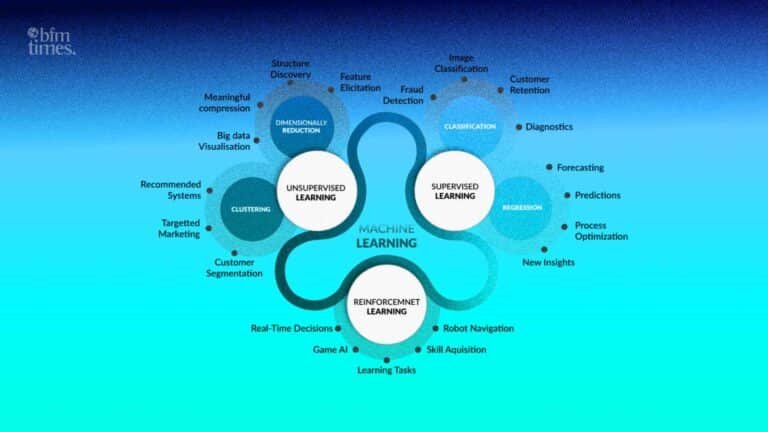
What are the Types of Machine Learning?
| Type | How It Learns | Example |
| Supervised Learning | Learns from labeled data | Email spam detection |
| Unsupervised Learning | Finds patterns in unlabeled data | Customer grouping |
| Reinforcement Learning | Learns through rewards and penalties | Self-driving cars |
Supervised Learning
The model learns from labeled data in supervised learning. The correct answers already exist in the data. The model learns how inputs connect with outputs. The method appears widely in real systems today. The examples include house price prediction, disease detection & spam email detection.
Unsupervised Learning
The model studies data without labels in this learning type. The system discovers hidden patterns or groups inside data. The method helps when the goal is unclear at first. The example includes grouping customers by shopping behavior.
Reinforcement Learning
The system learns through actions, rewards & penalties. The model receives positive results for correct actions. The model receives negative results for wrong actions. The system slowly learns the best behavior through repeated attempts. The technology appears in robotics games & driverless vehicle systems.
What are Real World Applications of Machine Learning?
The technology of machine learning exists in daily life. The users often interact with it without noticing.
1. Healthcare
The doctors & researchers use machine learning tools for early disease detection. The systems study medical images like X ray & MRI scans. The models detect cancer or other diseases quickly. The models sometimes work faster than doctors in pattern detection. The technology also helps drug discovery & patient result prediction.
2. Finance
The banks use machine learning to detect fraud. The system observes unusual activity in transactions. The system flags suspicious behavior before damage occurs. The banks also use machine learning in the credit scoring market prediction & automated trading.
3. E-Commerce
The shopping platform uses machine learning for product suggestions. The system studies the browsing history & purchase patterns of the users, then the system recommends products a user may like. The process improves the shopping experience of the users & it increases the sales.
4. Social Media
Social media platforms rely on machine learning systems. The system decides what posts should appear in the user feed. The system studies the user actions from the views, shares & comments they make. The system also powers the advertisement targeting.
5. Natural Language Processing
The assistants like Siri, Alexa & Google Assistant use language-based machine learning. The systems understand human speech & they respond instantly with their queries. The translation tools also rely on these systems.
6. Transportation
The ride-sharing platforms use machine learning to predict the demand of users based on the location. The systems also estimate travel time & then route efficiency. The driverless vehicles depend on machine learning to detect objects & even to read the traffic signals.
What Machine Learning Algorithms Should You Know?
The field uses many of the algorithms for machine learning. The choice of algorithm depends on the type of problem it is trying to solve
| Algorithm | Best Used For |
| Linear Regression | Predicting numeric values (e.g., house prices) |
| Logistic Regression | Binary classification problems (yes or no outcomes) |
| Decision Trees | Classification and easy-to-explain decisions |
| Random Forest | High-accuracy predictions with complex data |
| K-Means Clustering | Grouping similar data points together |
| Neural Networks | Image recognition and deep learning tasks |
| Support Vector Machine | Text classification and image recognition |
| Naive Bayes | Spam filtering and sentiment analysis |
The beginner does not need to master every algorithm immediately. The learner should begin with some of the basic algorithms. The student can move toward the advanced algorithms when they have experience with the basic algorithms.
What are the Benefits of Machine Learning?
1. Automation of Repetitive Tasks
The machine learning systems automate the repeated tasks. Automation saves time & even helps in reducing human mistakes. The businesses shift human effort toward creative work.
2. Better & Faster Decision Making
The machine learning models process very large data sets so quickly. These systems analyze the patterns faster than any of the human teams. The results lead to faster decisions & stronger outcomes.
3. Personalization at Scale
The machine learning systems deliver personalized experiences to many of their users. The systems recommend music products, news & other content. The systems adjust these results for each user.
4. Continuous Improvement
The machine learning models keep learning with new data. The systems improve the accuracy over time. The process helps in creating smarter software systems.
5. Scalability
The machine learning systems manage very large data sets. The systems continue working effectively as data grows. The technology suits global businesses with massive data flow.
What are the Common Challenges in Machine Learning?
The machine learning field still faces many of the challenges.
| Challenge | Description |
| Data Quality | Poor or biased data can lead to inaccurate and unreliable results |
| Overfitting | The model performs great on the training data, but fails on new data |
| Lack of Explainability | Some models are too complex to understand, even to explain easily |
| High Computation Cost | Training large models requires very expensive hardware and energy to operate them |
| Privacy Concerns | Using personal data can raise serious ethical and legal issues |
| Data Scarcity | Some industries lack enough data to train their reliable models |
How Can You Get Started with Machine Learning?
The learning journey into machine learning can begin with a few simple steps.
1. Learn the Basics of Python
The programming language Python dominates machine learning development. The language remains simple for many of the beginners & the ecosystem includes some of the powerful libraries like NumPy, Pandas, Scikit learn & TensorFlow.
2. Build a Strong Foundation in Mathematics
The knowledge of statistics, probability & linear algebra supports machine learning. The learner does not need any of the advanced mathematics. The understanding of some of the basic ideas, like mean-variance matrices & probability, supports the progress.
3. Explore Online Courses & Tutorials
The online platforms offer many of the machine learning courses. The courses teach the users with real examples & some practical exercises. The learner can start with some of the beginner-friendly programs.
4. Practice with Real Datasets
The real learning appears through practice. Platforms like Kaggle provide free data sets that users can use for their experimentation. The projects help learners gain some practical skills.
5. Build Small Projects
The beginner should also build simple projects to showcase their knowledge. The projects may include spam detection, price prediction, or some recommendation systems. The project experience builds confidence in the users.
6. Stay Updated with the Latest Trends
The machine learning field changes very quickly. Users should read blogs, research papers & online communities to share new ideas. The learning continues through active exploration in this field.
Also Read: Fine-Tuning vs Prompt Engineering: What Enterprises Should Choose
What is the Future of Machine Learning?
The future of machine learning shows us rapid progress.
- The Generative AI tools create the text images, music, & the video. Technology changes how the creative industries operate. The systems help people create content much faster.
- The edge AI systems run the machine learning directly on the users’ devices. The devices include phones, watches & the sensors. The system improves the speed, privacy & independence from internet access.
- The healthcare industry receives major benefits from machine learning systems. The personalized medicine AI-assisted surgery helps in the early disease detection & then faster drug discovery continues expanding.
- The ethical & responsible AI movement also becomes very important. The government’s researchers & the companies create rules for fairness, transparency & the safety of the users.
- The connection of machine learning with the blockchain, augmented reality, & the quantum computing opens new technology paths.
Conclusion
At last, we can conclude that the reader now understands machine learning & its influence on the modern life of the human. This technology helps detect diseases, recommend some music, & helps in improving overall daily digital experiences. Machine learning technology represents a powerful tool across industries. The system continues transforming the business, healthcare, finance, & the technology fields.
The future impact of machine learning will only grow stronger with time, not vice versa. The opportunity to learn this field exists today.
The learning journey into machine learning can start today. The knowledge helps the users in their career growth, product development, & the technology awareness. Curiosity & experimentation help people move forward in this powerful field.
Disclaimer: BFM Times acts as a source of information for knowledge purposes and does not claim to be a financial advisor. Kindly consult your financial advisor before investing.
What is Machine Learning?
Machine learning is a type of artificial intelligence that enables computers to learn patterns from data and make predictions without explicit programming.
How does machine learning work?
Machine learning algorithms analyze large datasets to identify patterns and improve their predictions over time.
Where is machine learning commonly used?
Machine learning is widely used in recommendation systems, fraud detection, healthcare and speech recognition.