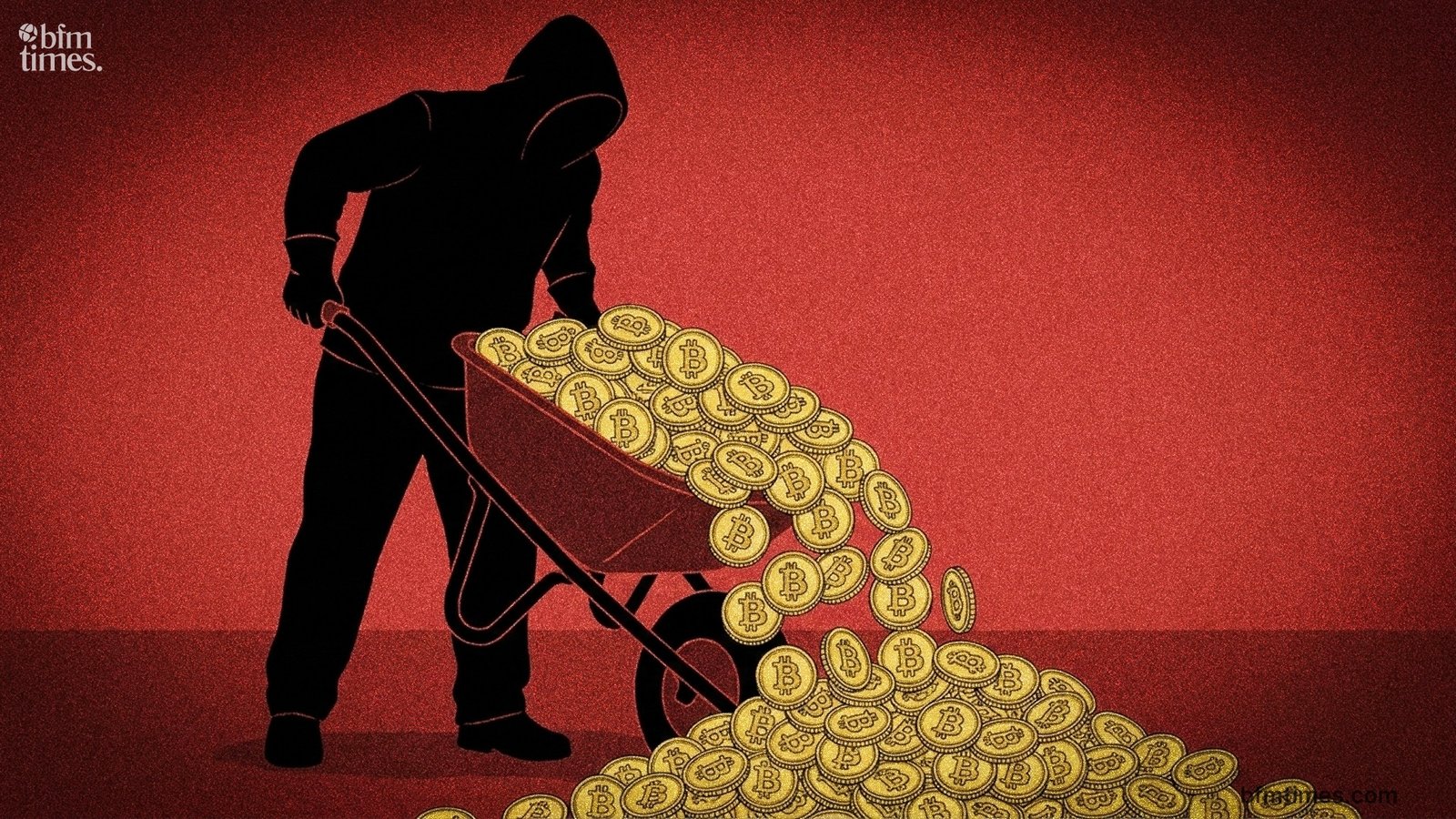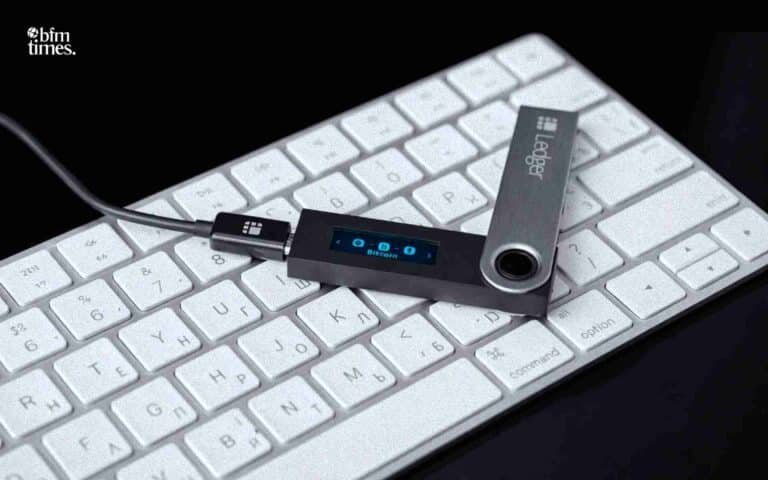
In the ever-changing crypto field, security is what it is all about. As a casual investor who puts away a little bit of Bitcoin or a serious trader who has a diverse crypto portfolio, at the top of your priority list should be the protection of your digital assets. With reports of cyber attacks, phishing scams, and exchange hacks a regularity — relying solely on online wallets or exchange storage is not safe.
- What Is a Hardware Wallet?
- Why Use a Hardware Wallet?
- Best Security.
- Defense Against Malware.
- Support of Many Cryptocurrencies.
- Safe Transaction Processing.
- Peace which is at hand.
- Best in 2026 for Hardware Wallets, which secure Crypto Storage.
- Nano S Plus.
- Why It’s Great:
- Trezor model 10.
- Why It’s Great:
- Ledger Nano S+.
- Why It’s Great:
- Why It’s Great:
- SafePal one.
- Why It’s Great:
- Coldcard MkIV.
- Why It’s Great:
- How do I choose a hardware wallet?
- Security Measures.
- Supported cryptocurrencies.
- Cost.
- Security Best Practices for Hardware Wallets
- Purchase from authorized dealers.
- Set up the Device yourself.
- Protect Your Recharge Code.
- Check every transaction.
- Watch out for Phishing.
- Keep your firmware up to date.
- Common Myths About Hardware Wallets
- Myth 1: Hardware wallets are for experts.
- Myth 2: Hardware wallets are costly.
- Myth 3: Hardware wallets are impenetrable.
- Conclusion
- Frequently Asked Questions
This is a hardware wallets physical devices that store cryptocurrency private keys off line step in. In this in-depth guide, we will look at what hardware wallets are, why you need them, and most importantly, which are the best hardware wallets you can choose in 2026 to secure your crypto with confidence.
What Is a Hardware Wallet?
A hardware wallet is what you use for cold storage of your crypto private keys. We see that they are different from software wallets, which live on your computer or smartphone (hot wallets), and are connected to the internet.
This isolation also decreases the chance of hacks, malware, and other digital issues, which in turn means that should your computer be infected, your private keys still remain protected on the device.
Key features of hardware wallets include:
- Offline storage of private keys
- Secure transaction signing without exposing keys
- PIN protection and recovery seed phrase
- Support for multiple cryptocurrencies
- Compact, portable design
Hardware wallets present a recovery seed that may be of 12, 18, or 24 words’ length. With which you may recover your crypto in case your device goes out of action. Also, this seed must be handled very securely; should someone get their hands on it, they will have access to your assets.
Why Use a Hardware Wallet?
Before we get into the top models that are available at present, let’s look at the importance of hardware wallets, which is to say, in an age of widespread scams and breaches.
Best Security.
Hardware wallets store private keys in a secure, isolated environment. As they do not connect to the Internet at all, our keys are much more secure.
Defense Against Malware.
Even though your computer or even your mobile device may have malware, a hardware wallet protects your keys, which also puts your transaction authorization in question.
Support of Many Cryptocurrencies.
Most present-day hardware wallets support a large variety of coins from Bitcoin (BTC) to Ethereum (ETH) to Solana (SOL), and also many tokens that straddle different blockchains.
Safe Transaction Processing.
When you send crypto, the hardware device signs off on the transaction, in which your private key is protected from access.
Peace which is at hand.
Knowing that your digital wealth is secure offline brings peace of mind, which is especially true during market volatility or when you have large amounts of crypto.
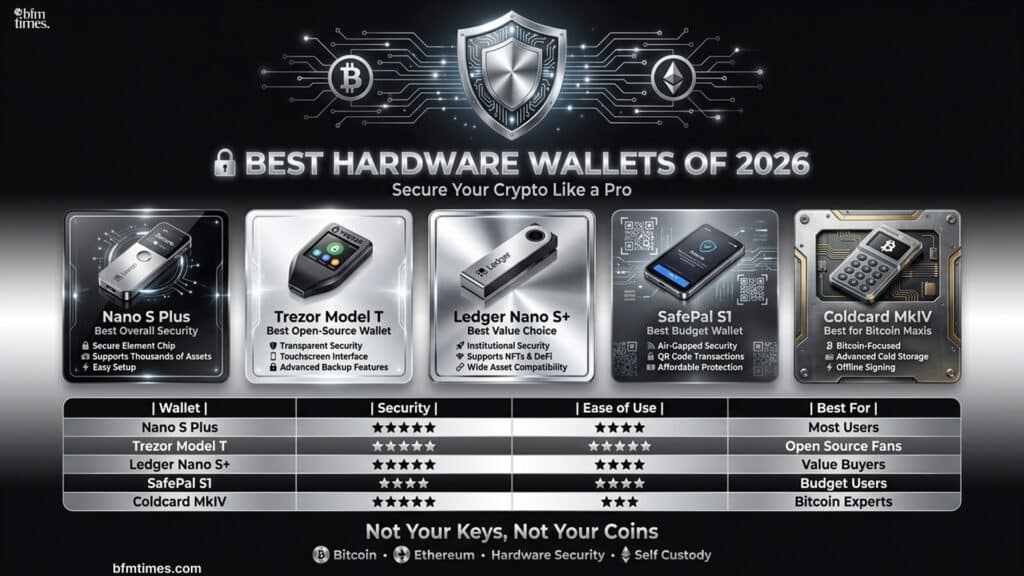
Best in 2026 for Hardware Wallets, which secure Crypto Storage.
In 2026, we take a close look at the top hardware wallets from the premium, which come with a lot of features, to the budget-friendly, which may lack in features, but still, in terms of security, they do not compromise.
Nano S Plus.
The Ledger Nano X is a favorite of many because it is a very reliable hardware wallet. It is the go-to choice for both new and experienced crypto users.
Key Features:
- Bluetooth connectivity
- Supports 5,500+ coins and tokens
- Large built-in storage for apps
- Mobile and desktop compatibility
- Secure Element chip (CC EAL5+)
Why It’s Great:
The Ledger Nano X is a standout in terms of what it does and how easy it is to use. It has Bluetooth, which means you can manage your crypto right from your phone, a feature that really plays to the mobile user’s advantage.
Pros:
- Wide coin support
- Bluetooth for mobile use
- High security
Cons:
- Slightly more expensive than other models
- Bluetooth may cause issues for some (which is encrypted).
Trezor model 10.
Trezor is known in the field of hardware wallet security, and we may note that their Model T is at the top of the line.
Key Features:
- Touchscreen interface
- Open-source firmware
- Supports 1,600+ cryptocurrencies
- Shamir Backup support
- Passphrase entry on device
Why It’s Great:
Trezor Model T’s color display is easy to use. Also, it features open source software, which in turn provides transparency that appeals to privacy and tech-savvy users.
The Model T also has support for Shamir Backup (SLIP-39), which is a progressive approach to dividing your recovery seed into many pieces for better security.
Pros:
- Easy-to-use touchscreen
- Open-source
- Strong support for many assets
Cons:
Pricier than entry-level hardware wallets
Limited in terms of app integration options compared to the Ledger.
Ledger Nano S+.
The Ledger Nano S Plus is a more compact version of the Nano X for users who prefer security but don’t require Bluetooth.
Key Features:
- USB-C connection
- Supports 5,500+ coins and tokens
- Compact and affordable
- Uses Ledger Live app
Why It’s Great:
The Ledger Nano S Plus brings top-level security at a lower price. It has many of the features of the Nano X, which it does not have in terms of wireless connectivity, great for people who prefer a wired experience.
It is available for use with the Ledger Live app on your desktop and mobile via cable.
Pros:
- Affordable
- High coin support
- Excellent security
Cons:
- No wireless connectivity
- Smaller display
- Trezor One.
Key Features:
- Supports 1,600+ cryptocurrencies
- Two-button interface
- Open-source firmware
- USB-C connection
Why It’s Great:
For a large number of first-time users, the Trezor One provides industry-grade security at a more accessible price. It may not have a touchscreen, but its simple buttons and screen, which in turn make processing and verification of transactions a breeze.
Pros:
- Affordable
- Trusted security
- Open-source
Cons:
- Smaller coin support than Ledger
- No advanced features like a touchscreen
SafePal one.
SafePal provides a hardware wallet that has a focus on air-gapped security — which means it does not connect to the internet or a computer via cable or Bluetooth.
Key Features:
- Air-gapped device
- Camera for QR code scanning
- Supports many coins
- Mobile companion app
Why It’s Great:
SafePal S1 is designed for full air-gapped security, which in turn sees it remove elements that have to do with connectivity. Transactions are signed off-line and we use QR codes for their transfer, a very secure option for crypto users that want maximum isolation.
Pros:
- 100% offline signing
- Good security model
- Competitive pricing
Cons:
- The QR code process can be slower
- Smaller ecosystem than Ledger/Trezor
Coldcard MkIV.
For those who are die-hard Bitcoin fans and at the same time advanced users who put more value in security than convenience, we present to you the Coldcard Mk4, a hardware wallet exclusive to Bitcoin that has proven itself well.
Key Features:
- Specialized for Bitcoin
- MicroSD support for offline signing
- Physical security features
- Open source design
Why It’s Great:
Coldcard is in the business of secure Bitcoin. They support offline signing with MicroSD cards and also present features like multisig setups and PSBT workflows.
Pros:
- Excellent Bitcoin security
- Great for advanced setups
- Transparent open-source project
Cons:
- Only supports Bitcoin
- Not beginner-friendly
How do I choose a hardware wallet?
With many great choices out there, how do you choose the best hardware wallet for your needs? Here are key factors to consider:
Security Measures.
Look for:
- Secure Element chips
- Offline transaction signing
- Passphrase protection
- PIN lock
- The aim is to reduce digital threats.
Supported cryptocurrencies.
If you have multiple coins and tokens, go for a wallet that has wide support. In support of that which is broad, Ledger devices do very well at this; Coldcard, on the other hand, does mostly just Bitcoin.
User Friendliness.
Beginners will tend to go for devices that have intuitive interfaces, like touch screens, or that have in-depth software support. As for the more technical users, they will sacrifice convenience for the advanced security features.
Cost.
Hardware wallets come in a range of prices from budget-friendly to high-end. Security is a must, but there is no need to break the bank if your use is basic.
Backup and Recovery Options.
Make sure that your wallet includes secure recovery options such as standard seed phrases or the more advanced methods like Shamir’s Secret Sharing.
Ecosphere and Software.
A large set of features in the form of a dedicated desktop application, which may be Ledger Live or Trezor Suite, improves the user experience by allowing you to manage your assets, see your balance, and start transactions easily.
Security Best Practices for Hardware Wallets
Buying into a hardware wallet is just the first step in the security equation — what you do with it is also important. Here are basic best practices:
Purchase from authorized dealers.
Always go to the manufacturer or authorized resellers for hardware wallet purchases. Used in other words have been altered.
Set up the Device yourself.
Never use pre-initialized wallets. For each instance, generate your own seed phrase offline.
Protect Your Recharge Code.
Treat your seed phrase like you would treat a precious gem. Put it in a very secure fireproof place, also think of making metal copies for extra safety.
Check every transaction.
Always check the transaction details on the hardware wallet’s screen, which may be different from what you see on your computer or phone.
Watch out for Phishing.
Be aware of lookalike sites that pass off as wallet providers. Also, always verify the URL and do not post your seed phrase online.
Keep your firmware up to date.
Hardware wallet makers release updates to improve security and introduce new features. Update your device, but do so only via official software.
Common Myths About Hardware Wallets
Hardware wallet use is still very much a mystery to many, including new crypto adopters. What we see is that because they put security at the forefront, these devices are thought to be complex, expensive, and the domain of the IT professional. In fact, hardware wallets are put in place to make crypto holding safe and simple for all. We will dispel some of the main myths.
Myth 1: Hardware wallets are for experts.
In the crypto space, we see a lot of what is considered to be false information. Lots of people think that hardware wallets require you to have a coding background or in-depth knowledge of blockchain. In fact, most present-day hardware wallets are designed for the average user.
Myth 2: Hardware wallets are costly.
Another is that hardware wallets put forth too high a price tag, in particular for small investors. To be sure, premium models with touch screens and advanced features do command a higher price, but there are many affordable options that provide great security.
Myth 3: Hardware wallets are impenetrable.
While hardware wallets are reported to have the best security out there, we must also note that no device is perfect. Hardware wallets do a great job at reducing attack surfaces by keeping private keys out of the digital space, but at the end of the day, user action still plays a role.
If people share out their recovery phrases, fall for phishing scams, or they secure their backups in bad ways, accounts still see compromise.
Conclusion
In a world with ever-changing digital threats, protecting your cryptocurrency is of great importance. Hardware wallets present the best in security for digital assets. We keep your private keys out of the digital loop and in your hands, which in turn gives you peace of mind.
Whether you’re:
A newbie to crypto and putting together your first portfolio.
A seasoned investor with multiple assets,
For a Bitcoin enthusiast who wants advanced security.
There is a hardware wallet for you.
Here is a look at the top picks for 2026:
Ledger Nano X — the best in class, which also has Bluetooth and large coin support.
Trezor Model T has great security, which also has a touch screen and open-source firmware.
Ledger Nano S Plus has excellent value and wide coin support.
Trezor Model One budget and reliable way in.
SafePal S1 Fully isolated.
Coldcard Mk4 only supports Bitcoin, and what power users will love.
Through the choice of the right hardware wallet and adoption of best practices, you can secure your crypto with confidence, protecting your digital wealth, present and future.
Frequently Asked Questions
What are the best hardware wallets for crypto storage in 2026?
Popular choices include Ledger Nano X, Trezor Model T, Tangem Wallet, SafePal S1, and Ledger Stax due to their strong security and offline storage.
Why are hardware wallets considered safer for crypto storage?
Hardware wallets store private keys offline using secure element chips, protecting assets from online hacks and malware.
What features should you look for in a hardware wallet in 2026?
Key features include secure element chips, multi-coin support, backup recovery phrases, and compatibility with Web3 and DeFi platforms.
Disclaimer: BFM Times acts as a source of information for knowledge purposes and does not claim to be a financial advisor. Kindly consult your financial advisor before investing.