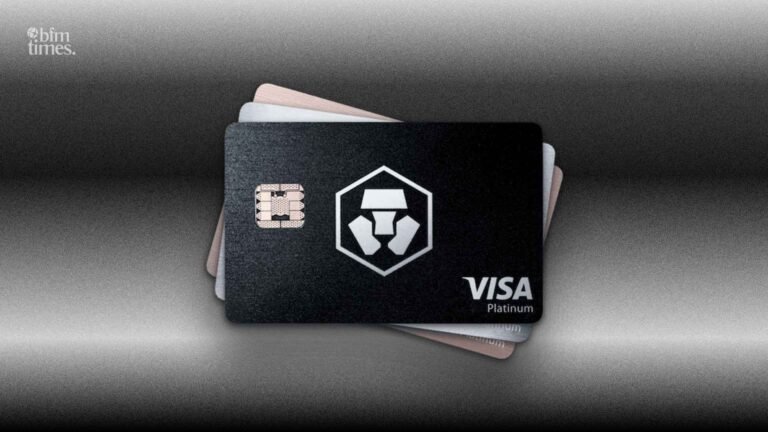
Digital spending is no longer a niche in everyday life. Crypto-linked cards enable one to buy goods, even flight tickets, from groceries to flight tickets. However, the decision between a crypto debit card and a crypto credit card is not a minor one. They work differently, have different levels of risk, and suit various financial objectives.
- Quick TL;DR (Who Each Card Is For)
- How Crypto Cards Work: Debit vs Credit
- Fees, Interest & Hidden Costs (Crypto Payment Cards Comparison)
- Common Debit Card Fees
- Common Credit Card Fees
- At-a-Glance Comparison
- Worked Example: $500 Monthly Spend
- Worked Cost Example
- Rewards, Cashback & Incentives (Crypto Spending Cards)
- Risk & Security: Collateral, Liquidation & Consumer Protections (Debit vs Credit Crypto Cards)
- User Cases: Which Card Fits Which User
- How to Choose (Crypto Finance Tools Evaluation)
- Conclusion
This guide shows how each of the two types of cards works, contrasts actual expenses and rewards, and points out the dangers, such as liquidation and conversion spreads, and provides you with a useful checklist to make your choice of the card that best fits your needs. As a potential user or a long-term owner, this Crypto Debit Card vs Crypto Credit Card breakdown is oriented at clarity, as opposed to hype.
Related: Best Crypto Cards in 2026: Top Bitcoin & Crypto Debit Cards Compared
Quick TL;DR (Who Each Card Is For)
- Crypto debit card: Ideal for all people who spend daily but wish to get access to crypto balances without a loan.
- Crypto credit card: Ideal in the case of HODLers who are interested in staying liquid without the need to sell crypto (however, they are aware of the risk of collateral and interest).
- Low-risk users: The debit is usually easier and does not involve taking on debt.
- Advanced users at ease with leverage: There is greater freedom with leverage, but at greater complexity.
In short, the crypto debit card vs. crypto credit card choice often comes down to whether you want to spend what you have or borrow against what you have.
How Crypto Cards Work: Debit vs Credit
Understanding how crypto cards work is essential before comparing benefits.
Crypto Debit Card (Prepaid or Linked Model)
The majority of crypto debit cards are prepaid or wallet-linked products:
1. You have a wallet of crypto in an exchange or custody.
2. You either:
- Pre-load fiat converting crypto, or
- Automatic conversion of crypto-to-fiat at the point of sale.
3. The card system transacts the transaction in fiat.
4. The provider charges crypto (less conversion spread).
There is no borrowing. You are using your personal money. A wide variety of cards permit Visa or Mastercard rails, which is to say they can be used wherever these networks are accepted.
Key characteristics:
- No credit check.
- You can spend as much as you have in crypto.
- Potential FX or conversion spread (between 0.5 and 2 percent based on provider and location).
Crypto Credit Card (Borrowing Against Collateral)
Cryptocurrency credit cards work differently:
- You provide crypto as security.
- The provider offers a credit facility, unsecured (in rare cases) or against your crypto.
- You spend in fiat.
- The monthly repayment is in fiat or crypto.
If collateralized, your crypto remains locked. If the market drops and your collateral value falls below a threshold, a margin call or liquidation can occur. That means the provider may sell your crypto to cover the debt.
Key characteristics:
- May credit check (particularly in the US).
- May charge APR.
- Liquidation risk is brought about by collateralization.
This is the largest structural variation in a crypto debit card vs. crypto credit card comparison.
Fees, Interest & Hidden Costs (Crypto Payment Cards Comparison)
To give an appropriate crypto payment card comparison, one would have to look past the promoted cashback.
Common Debit Card Fees
- Issuance fee (often $0–$10).
- Replacement card fee (5-20 dollars average).
- ATM withdrawal fee (may be 2 percent or a fixed fee beyond the free limit).
- FX markup (0%–2%).
- Crypto conversion spread (often ~1%)
It is not interesting, as there is no borrowing.
Common Credit Card Fees
- Annual fee (varies by issuer).
- APR interest (15% to 25 years common in the 2025 US market.
- Late payment fee.
- Cash advance fee (where necessary).
- Possible collateral liquidation penalty (platform-specific).
Suggested: How to Withdraw Crypto to Wallet: Step-by-Step Guide
At-a-Glance Comparison
| Feature | Crypto Debit Card | Crypto Credit Card | Why it matters |
| Funding model | Spend your crypto (prepaid or auto-convert) | Borrow fiat against a credit line or crypto collateral | Determines risk level |
| Approval/underwriting | Usually, no credit check | Often credit check or collateral is required | Affects accessibility |
| Fees | Conversion spread, ATM, FX | APR interest, late fees, and a possible annual fee | Impacts the real cost |
| Reward type | Crypto cashback common | Fiat or crypto cashback | Affects volatility |
| Collateral/liquidation risk | None (you spend owned funds) | Yes (if secured by crypto) | Major risk factor |
| Consumer protections | Similar to prepaid card protections | Often, standard credit dispute rights (region-specific) | Impacts fraud recourse |
Worked Example: $500 Monthly Spend
The assumption:
- Rate of conversion of debit cards: 1%.
- Credit card APR: 20%.
- The statement is paid after 30 days without grace period.
Worked Cost Example
| Scenario ($500/month spend) | Crypto Debit Card | Crypto Credit Card |
| Base purchase amount | $500 | $500 |
| Conversion spread (1%) | $5 | $0 |
| Interest (20% APR, 30 days ≈, 1.67%) | $0 | ~$8.35 |
| Total cost is paid after 30 days | $505 | ~$508.35 |
| If paid in full within the grace period | $505 | $500 |
Interpretation:
When you use a credit card to make a full payment during the grace period, it may be cheaper than a debit card, incurring a conversion spread of 1%. However, when you have a balance, interest is paid at a high rate.
It can be stated that, in a realistic crypto debit card vs. crypto credit card decision, repayment discipline will be as much of an issue as headline fees.
Rewards, Cashback & Incentives (Crypto Spending Cards)
A variety of crypto spending cards have cashback offers. But reward structure varies.
Debit Card Rewards
- Once crypto cashback (e.g., 1%-5% by tier).
- The upper levels might demand postage of platform tokens.
- Incentives stored in crypto (volatile).
Example:
You spend $1,000/month with 2% crypto cashback.
- You earn $20 in crypto.
- When the token price decreases by a quarter before you sell, then your real value will be 15.
- If the token rises 25%, the value is $25.
Volatility cuts both ways.
Credit Card Rewards
- Often, fiat cashback is 1%-3% typical.
- Others have crypto rewards, rather than points.
- Usually, no staking is required.
Credit-based models are similar to the traditional reward structure, but newer hybrid models allow selection of the reward currency (fiat or crypto).
Under the bigger crypto debit card vs. crypto credit card comparison, debit rewards could have more upside but more volatility.
Risk & Security: Collateral, Liquidation & Consumer Protections (Debit vs Credit Crypto Cards)
Risk is core to comparing debit vs. credit crypto cards.
Debit Card Risks
- Custodial risk: Money with the provider.
- Conversion timing risk: The market volatility in the course of auto-conversion.
- CDA FDIC-type insurance (except where fiat is kept in partner banks) (depending on region).
Credit Card Risks
- Risk of liquidation in case of crypto collateral decline.
- Interest compounding.
- Margin calls in times of extreme volatility.
- Equivalent locked collateral custodial risks.
Consumer Protections
- US users: The rights to dispute are usually better with credit cards.
- EU: PSD2 frameworks may apply.
- The protection of prepaid debit products can be lower.
Tax note:
Making payments in crypto may lead to a taxable situation in most jurisdictions, as it is considered to be the disposal of an asset.
Financial risk and regulatory risk should be considered in the crypto debit card vs. crypto credit card decision.
User Cases: Which Card Fits Which User
Traveler
- Debit: Form a simple global acceptance; monitor FX spread.
- Credit: Better for hotel holds and car rentals due to stronger chargeback protections.
Frequent Online Shopper
- Credit was most frequently used in dispute resolution and purchase protection.
HODL Investor
- Credit can enable spending without selling crypto, but one should take caution in regard to liquidation risk.
Occasional Crypto User
- Debit is less complicated and comprehensible.
Business User
Credit also creates accounting transparency and short-term flexibility in cash flow.
Practically, the decision to make in a scenario of crypto debit card vs. crypto credit card is the decision that depends on risk tolerance and financial discipline.
Also Read: Best Platforms for Crypto Staking in 2026: Top Places to Earn Crypto Rewards
How to Choose (Crypto Finance Tools Evaluation)
Use this as an assessment of other crypto finance products.
Before applying, check:
- Conversion spread?
- Is there an APR? What’s the grace period?
- Is payment in terms of volatile tokens?
- Is staking required?
- What would occur in case collateral reduces by 30%?
- Local supply and legality.
- Integration of mobile wallet (Apple Pay / Google Pay).
- Clear dispute process?
- Transparent fee schedule?
The way to choose the crypto debit card vs. the crypto credit card rationally, not on a marketing basis, is to have a disciplined checklist.
Conclusion
The bottom line between the crypto debit card and the crypto credit card is the question of control versus flexibility. Debit cards are more affordable and less risky. Credit cards bring about liquidity and tougher traditional credit cover, but bring interest and collateral risk.
Select depending on your expenditure patterns, repayment record, and risk of volatility. Compare the terms and know the tax implications before taking the plunge.
Disclaimer: BFM Times acts as a source of information for knowledge purposes and does not claim to be a financial advisor. Kindly consult your financial advisor before investing.
What is the main difference between a crypto debit card and a crypto credit card?
A crypto debit card spends your own crypto holdings, while a crypto credit card lets you borrow and pay later with rewards.
Which card type is better for everyday purchases?
A crypto debit card is usually better for everyday spending since it directly uses your funds without interest.
Which card is better for earning rewards?
A crypto credit card often offers higher rewards but may come with interest and fees if balances are not paid.