

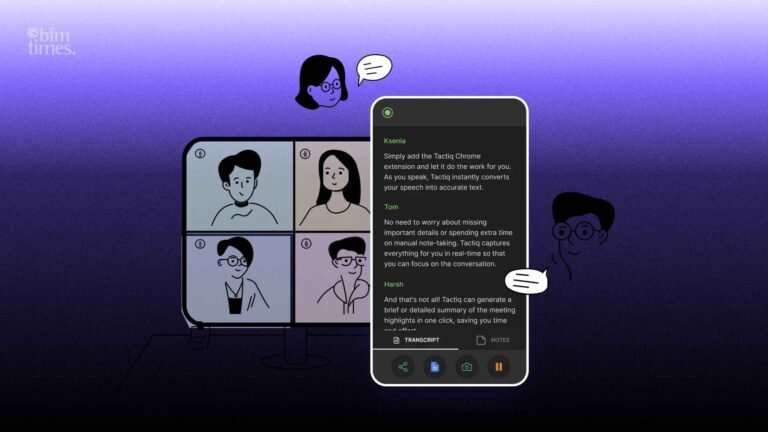
And that is precisely why AI note-taking apps will form a major part of student life in the year 2026. These tools don’t just store notes; they actively help you process, summarize, and organize information in a way that actually supports learning. However, the twist to this is that not all AI note-taking apps are created with the same kind of student in mind.
- Why Students Are Switching to AI Note-Taking Apps in 2026
- What Actually Makes a Good AI Notes App for Students
- 1. Lecture Recording Accuracy
- 2. Summarization Quality
- 3. Organization & Retrieval
- 4. Integration with Study Workflow
- 5. Pricing vs Value
- Top AI Note-Taking Apps for Students
- 1. Notion AI: Best All-in-One Study System
- 2. NotebookLM (Google): Best for Research & PDFs
- 3. Otter AI: Best for Lecture Transcription
- 4. Fireflies.ai: Best for Smart Summaries + Collaboration
- 5. Taskade: Best AI Productivity + Notes Combo
- 6. Evernote AI: Best for Organized Note Storage
- 7. Obsidian (with AI plugins): Best for Deep Thinking
- 8. Jamie AI: Best Bot-Free Note-Taking Experience
- Which AI Note-Taking Apps Should You Choose?
- Which AI note-taking apps are best for you?
- How AI Is Changing the Way Students Study
- Limitations You Should Know Before Using AI Note-Taking Apps
- Are AI note-taking apps worth it for students?
- Frequently Asked Questions
No one can leave a lecture without getting the feeling that you listened to it all but learned nothing, but you are not alone. Access to information is no longer a problem facing modern students; they are drowning in it. Amid the hurly-burly lectures, PDFs, recorded classes, and assignments, the real issue is not taking notes, but interpreting them.
At the same time, many experts are questioning whether traditional methods will remain relevant in the coming years. With intelligent tools that automate note-taking, organize information, and simplify complex topics, students are gradually shifting toward smarter learning systems. This raises an important discussion around whether AI in education can replace traditional systems, as learning becomes more adaptive, fast, and understanding-focused.
Certain ones are best used on lecture-intensive timetables, others are better suited to research processes, and some are focused on productivity-minded students who prefer to have everything under one roof. The guide is a dissection of the best AI note apps with the express focus of actual usage, so you can decide what truly suits your study preference.
Also read: Risks of AI in Finance: Security, Bias & Ethical Challenges (2026 Guide)
Why Students Are Switching to AI Note-Taking Apps in 2026
The traditional way of taking notes is slowly becoming outdated. Writing everything manually while trying to listen and understand at the same time is inefficient, and honestly, exhausting. A great deal of students either fail to capture the important points or they get disheveled notes that they do not go back to.
As AI continues to evolve in classrooms, it’s also playing a major role in improving how students perform academically. From personalized learning paths to smarter revision techniques, AI is helping students focus more on understanding concepts rather than just writing them down. This clearly connects with the growing impact of AI in education, where technology is making learning more efficient, engaging, and results-driven.
This is where AI note-taking apps are changing the game. Instead of splitting your attention, AI handles the heavy lifting, capturing, summarizing, and organizing information in real time. It enables students not only to learn the concepts but also to concentrate on them.
The student AI productivity applications available today can:
- Auto-transcribe lectures.
- Outline lengthy chapters into main points.
- Highlight important concepts instantly
- Create ordered learning content out of the raw notes.
The shift is clear: students are leaving behind note-taking and going to note-understanding.
What Actually Makes a Good AI Notes App for Students
Choosing the right tool isn’t about picking the most popular app; it’s about finding what fits your workflow. An excellent AI note-taking apps should lessen effort rather than complicate things.
1. Lecture Recording Accuracy
This is the most important factor if your classes are made up of live lectures. An effective application is one that records audio accurately, supports various accents, and can remove background noises. Bad transcription results in useless notes, which are pointless in themselves.
2. Summarization Quality
Not all AI summarization tools are intelligent. Others merely reduce the text, whereas more sophisticated tools are used to recognize important points, stress significant ideas, and develop systematic summaries. The disparity is enormous; one spares time, and the other enhances comprehension.
3. Organization & Retrieval
Students do not take notes and leave them aside, but go through them before exams. An effective application must include tagging or folders, or a system that allows linking of the data, so that you can locate the required data in the future. When your notes are disjointed, then so is your revision.
4. Integration with Study Workflow
Your note-taking application needs to fit into your current routine. Be it Google Docs synchronization, being able to record lectures, or task managers, when it all works together, it makes a huge difference in everyday life.
5. Pricing vs Value
Most AI productivity apps for students offer free versions, with high-end features usually offered at a cost. The trick here is to balance price with what you need; do not buy more than you need.
Top AI Note-Taking Apps for Students
Now let’s break down the tools, not just what they do, but who they’re best for.
1. Notion AI: Best All-in-One Study System
Notion AI is like a digital study hub where everything lives in one place. It integrates writing notes with it, task management, and AI writing support, all on a single platform. This will be tremendously powerful to those students who prefer orderly working sequences.
You can take messy class notes and instantly turn them into organized summaries. You can also make assignment, deadline, and study plan dashboards in it, so it is not merely a notes app.
Best for: Students who love organization and structured systems
What works well:
- Combines notes, tasks, and AI in one place
- Strong summarization and writing support
- Great for long-term planning
Where it falls short:
- Can feel overwhelming at first
- Requires setup to unlock full potential
2. NotebookLM (Google): Best for Research & PDFs
NotebookLM is designed to meet the needs of students who read extensively and conduct research. It does not simply store notes in it, but it knows your documents and lets you manipulate them.
You can add PDFs, articles, or research content, and the AI will respond to questions according to those sources. This is such a handy tool when it comes to assignments, thesis work, and serious studying.
Best for: Students who do a lot of research.
What works well:
- Deep understanding of documents
- Context-based answers
- Excellent for academic work
Where it falls short:
- Not designed for live lectures
- Limited productivity features
3. Otter AI: Best for Lecture Transcription
Otter AI focuses on one thing: capturing lectures accurately. It takes notes and translates them into written form as they go, which means that students can concentrate on the listening process rather than writing.
This can be particularly helpful when it is a fast-paced course, and it is hard to follow notes. You have the option of going through the transcript later on and marking important parts.
Best for: Lecture-based learning
What works well:
- Real-time transcription
- Easy to use
- Great for revision
Where it falls short:
- Limited summarization depth
- Not ideal for structured note systems
4. Fireflies.ai: Best for Smart Summaries + Collaboration
Fireflies.ai is best used in groups. It captures group discussions, summarizes them, and derives action points, and is thus best suited to group projects or study sessions.
It is not the taking of notes individually, but rather the recording of common knowledge gained during discussions.
Best for: Group study & collaboration
What works well:
- Smart summaries
- Action-based insights
- Strong integrations
Where it falls short:
- Not necessary for solo students
- Designed more for meetings
5. Taskade: Best AI Productivity + Notes Combo
Taskade is a productivity and visual thinking note-taking application. It enables students to draw mind maps, workflows, and structured plans as well as notes.
This is particularly handy with students who like studying visually and through interactive means.
Best for: Visual learners
What works well:
- Mind maps + AI workflows
- Clean interface
- Collaborative features
Where it falls short:
- Not ideal for deep research
- Less focused on traditional notes
6. Evernote AI: Best for Organized Note Storage
Evernote is also one of the most trusted tools for storing and arranging notes. It now summarizes and cleans up content, also with AI features included.
It is not the most sophisticated AI tool, yet it is good at maintaining all the things in order and readily available.
Best for: Long-term note management
What works well:
- Strong organizational system
- Reliable performance
- Easy search
Where it falls short:
- AI features feel basic
- Less innovative compared to newer tools
7. Obsidian (with AI plugins): Best for Deep Thinking
Obsidian is created to attract the students who love to think and relate the ideas. It does not create a series of individual notes; instead creating a web of connected ideas.
It is a potent knowledge system with AI plugins, yet it needs to be configured and trained.
Best for: Advanced learners
What works well:
- Concept linking
- Knowledge graph
- Highly customizable
Where it falls short:
- Steep learning curve
- Not beginner-friendly
8. Jamie AI: Best Bot-Free Note-Taking Experience
Jamie AI is concentrated on simplicity and privacy. It does not make use of intrusive bots to join the meetings like several tools. Rather, it captures and handles the notes in the background.
This makes it a great choice for students who want a distraction-free experience.
Best for: Simple, private usage
What works well:
- Clean interface
- Privacy-focused
- No interruptions
Where it falls short:
- Limited integrations
- Smaller ecosystem
Which AI Note-Taking Apps Should You Choose?
| App | Best For | AI Features | Ease of Use | Pricing |
| Notion AI | Productivity + notes | Writing, summaries, organization | Medium | Free + Paid |
| NotebookLM | Research | Document AI, Q&A | Easy | Free |
| Otter AI | Lectures | Transcription | Very Easy | Free + Paid |
| Fireflies.ai | Collaboration | Summaries, action points | Easy | Free + Paid |
| Taskade | Visual learning | Mind maps, workflows | Easy | Free + Paid |
| Evernote AI | Storage | AI cleanup, summaries | Very Easy | Paid |
| Obsidian | Deep study | AI plugins, linking | Hard | Free + Add-ons |
| Jamie AI | Simple notes | AI summaries | Easy | Paid |
Which AI note-taking apps are best for you?
When you think about what you really need rather than features, you will find it much easier to choose the right tool.
- For lectures → Otter AI
- For research → NotebookLM
- For productivity → Notion AI
- For deep thinking → Obsidian
- For visual learning → Taskade
- For simplicity → Jamie AI
The most efficient application is the one that suits your job, not the most advanced one.
How AI Is Changing the Way Students Study
AI Note-Taking Apps are transforming the way students learn completely. Students no longer have to spend hours writing notes, but can focus on the learning and application of concepts.
This change leads to:
- Faster revision cycles
- Increased concentration in lectures.
- Improved retention
AI is not some tool anymore; it is a learning partner that helps to study smarter.
Limitations You Should Know Before Using AI Note-Taking Apps
Although it is strong, AI tools do not make everything perfect and must be utilized with caution.
1. Over-Reliance
Overuse of summaries may minimize profound knowledge. Students have yet to be exposed to original work.
2. Accuracy Issues
Transcriptions can not work in noisy places or where the language used is too complex.
3. Privacy Concerns
Some tools store recordings and data, and this is why it is essential to glance through privacy settings.
Are AI note-taking apps worth it for students?
AI note-taking apps are all worth it; however, only when one uses them deliberately. They save time, cut down effort, and enhance efficiency, yet they do not substitute real learning.
The smartest students use AI to:
- Capture information quickly
- Organize notes effectively
And then focus on:
- Understanding
- Practicing
- Applying knowledge
That’s where real academic success happens.
Also read: AI for Homework in 2026: How Students Can Use AI for Assignments the Right Way
Frequently Asked Questions
What are the best AI note-taking apps for students?
Notion AI, NotebookLM, Otter AI, and Taskade are among the top choices depending on the use case.
Can AI apps take notes during lectures automatically?
Yes, tools like Otter AI can record and transcribe lectures in real time.
Are AI study note tools accurate?
They are generally accurate but may require manual review for complex topics.
Which AI note-taking apps are best for research students?
NotebookLM is highly effective for research and document-based learning.
Are AI note-taking apps free?
Many apps offer free plans, while advanced features are available in paid versions.
Disclaimer: BFM Times acts as a source of information for knowledge purposes and does not claim to be a financial advisor. Kindly consult your financial advisor before investing.