The Real Problem in Web3 Was Never Technology.
- AgoraX: Building Infrastructure Where Trust Is Not Optional
- Why Auctions Needed Reinvention in Web3
- The Architecture of Trust: How AgoraX Actually Works
- Raj Kapoor’s Perspective: A Blueprint for the Industry
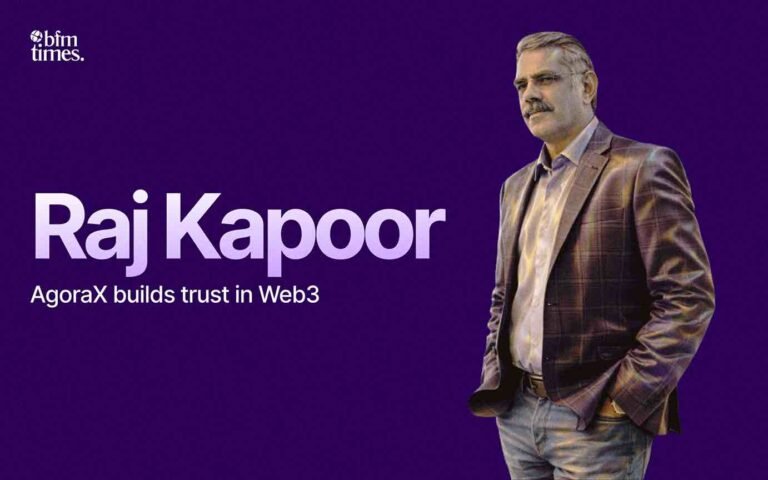
- Raj Kapoor’s at AgoraX: More Than an Advisor
- Why This Collaboration Matters for the Future of Web3
- The Bigger Vision: From Blockchain Hype to Real Utility
- Trust Will Define the Next Era of Web3
- Frequently Asked Questions
The proper infrastructure has been misapplied at the wrong time. This one thought sums up so many issues that came with Web3’s early days. The Web3 industry was never failing due to a lack of technological capabilities, far from it; it was growing incredibly fast. Blockchains got faster, better, and more composable. Cryptography improved. Decentralization advanced. And yet, despite everything, there was still something missing.
In its earlier days, Web3 had been relying on decentralization to generate trust. Trust cannot be generated automatically; it takes alignment, which means alignment between the proper infrastructure, its purpose, and the way people use it. However, Web3 did not benefit from any of these; it relied on immature technologies that could have addressed unclear needs, with speculation over real-world problems.
What resulted was not an inability to build capabilities; rather, it was an inability to create context. With a lack of structures guaranteeing fairness, security, and verification, the most sophisticated technology failed to achieve lasting credibility. This was the irony: technologies designed to remove trust dependencies became dependent on the blind faith of their users.
It is here where the next wave of developers is trying to make a difference. Among them is AgoraX, which marks a step forward from mere Web3 experimentation toward fixing the fundamental issues.
AgoraX: Building Infrastructure Where Trust Is Not Optional
AgoraX does not want to be another Web3 network. It aims at answering a more profound issue: what does it require to make trust the basis of the digital infrastructure? With AgoraX, trust becomes a mandatory component in a system that had taken it for granted instead of building it from scratch.
At the core of AgoraX is its Auction-as-a-Service Web3 model. In no way does this offering represent just a product or service provided; on the contrary, it represents an infrastructure layer that caters to digital auctions requiring utmost secrecy and reliability. This approach is essential because a system without the necessary features is ineffective.
This platform works under the following principles: privacy in blockchain transactions, transparency in actions, and proof of results. All three are an integral part of the system and not additional features. Each transaction will allow you to get a full audit without revealing any private data. Each result can be proved independently of third parties.
And this means an entirely new ecosystem: a trust-free one. Users trust the platform, but it ensures the process’s integrity from the start.
Why Auctions Needed Reinvention in Web3
Auction systems are one of the earliest forms of value discovery but still one of the least developed aspects within digital economies. Whether in-person or online, the traditional auction system has always been prone to exploitation, opacity, and information imbalance. Individuals would rely on the intermediary, who may not share their goals, to transact without full knowledge.
Web3 was supposed to transform this space. Web3 provided the opportunity for decentralized auctions that would be both transparent and immutable. But the promise did not come true. Most Web3 auction systems paid attention to the aspect of decentralization while ignoring other aspects of privacy and strategy. Sometimes transparency itself ended up becoming a problem for these systems.
AgoraX, unlike other methods, recognizes that auctions need a balance of transparency and confidentiality. The participants need to know that the whole operation is going smoothly while, at the same time, protecting their information from early release.
It is in this light that we arrive at the next stage of the evolution of decentralized auctions. It is no longer simply a question of taking away the intermediary but also changing the entire way trust works inside the network.
In doing so, AgoraX is not just improving auctions; it is redefining its role within Web3 infrastructure.
The Architecture of Trust: How AgoraX Actually Works
AgoraX’s advantage is its architectural design. Unlike other systems, which consider trust as an overlay, trust is built into AgoraX’s system design itself. Privacy comes first, and the system protects sensitive information during the entire process of the auction without compromising the transparency of results.
Execution is decentralized, which means that the system does not depend on any single player. The process is immune to manipulation by any party, and there are no central vulnerabilities. At the same time, there is an independent way to check the results of the system. This combination creates a framework where participants do not need to rely on trust in any individual actor.
What makes this approach compelling is its simplicity at the user level. Even if the mechanisms are intricate, the process itself is quite straightforward. The user engages with the network, recognizing that the code, not words, guarantees the principle of fairness. It is a very delicate, yet very fundamental, shift.
In effect, AgoraX shows that the trust in the Web3 ecosystem does not rely on taking away control from users; it relies on distributing it in an efficient manner while being accountable for each action.
Raj Kapoor’s Perspective: A Blueprint for the Industry
The presence of Raj Kapoor broadens the perspective in the discourse on Web3 infrastructure. His perspectives indicate his profound understanding of technology and the implications associated with it. Instead of viewing Web3 technology in isolation, his perspectives contextualize it within the broader framework of governance and policy.
His perspectives are aligned with the AgoraX framework, as he has always stressed the importance of responsibility and purpose in technology. This is especially true in the case of Web3 technology, where there are no established structures of governance.
The initial pitfalls of Web3, as identified by Kapoor, apply perfectly to the development of this platform. The problem here is not capability; rather, it is direction. With an emphasis on the need for trust in the utilization of Web3, AgoraX embodies the mature vision of its application.
In many respects, Kapoor’s thoughts form a framework for the entire industry to follow. They urge a transition from exploration to a purposeful approach.
Raj Kapoor’s at AgoraX: More Than an Advisor
Raj Kapoor’s position on the advisory board at AgoraX goes well beyond that of an advisor. He can be considered a link between technological development and actual implementation. His involvement in spearheading blockchain projects at the national level in India, participation in the G20 summit, and promotion of ethical AI make him a unique figure in the community.
It allows him to look at the technology in the context of regulation and its societal implications. He understands the difficulties associated with implementing technological solutions outside the small community of enthusiasts.
It also shows his dedication to developing responsibly. This is because he recognizes that having infrastructure alone will not do anything; the system needs policy and user buy-in, too. His involvement means that the project is part of a larger ecosystem and not operating independently.
Thus, he does not simply provide advice to the project. Instead, he acts as an enabler in achieving its goals.
Why This Collaboration Matters for the Future of Web3
This partnership between AgoraX and Kapoor reflects a perfect alignment of two critical ingredients, infrastructure and adoption. AgoraX offers the technical infrastructure that enables the building of a system capable of fostering trust among Web3 users. Kapoor contributes the expertise required to implement these technologies in concrete use cases.
In doing so, they have solved the fundamental problem associated with Web3, the trust problem. This is a multi-layered issue that encompasses technical, psychological, and institutional aspects of Web3 applications. Trust is crucial for the user, who needs confidence in the application. Trust is equally important for regulators, who require transparency about the application’s workings.
Through the synthesis of technological discipline with strategic expertise, this partnership sets out a path for Web3 to evolve beyond its experimental stage. It facilitates the process of transitioning from individual applications to scalable systems.
This marks the emergence of Web3. The emergence of Web3 occurs not through refinement, but through transformation.
The Bigger Vision: From Blockchain Hype to Real Utility
The story about Web3 has changed. Where there was initially talk of possibilities and disruption, today we see an increasing shift towards practicality and reliability. Technology alone does not make a difference. It is important how technology is being used.
AgoraX represents such a change in approach. This initiative marks a departure from the use of technologies for purely speculative purposes and a move towards practical uses. One area of practical application is auctions, a key component of economic life.
The other thing is that this way of thinking also sheds light on another important trend. The strength of their underlying system, not the number of different platforms and tokens, will drive future developments in Web3. Trustworthy, private, and verifiable infrastructure will be the base of this new chapter.
In such a way, AgoraX is not only an ordinary player in the world of Web3 technologies.
Trust Will Define the Next Era of Web3
The future of Web3 won’t be written by those who create the most complex products but by those who create the most trustworthy ones. As the ecosystem develops, the focus will gradually shift from technological capabilities to actual reliability.
And AgoraX gives us a preview of that future. In addressing one of the most pressing issues that the world of Web3 is currently facing, AgoraX changes the very notion of how trust should be built in a system.
At the end of the day, the success of Web3 will boil down to whether it earns trust and keeps it. It takes transparency, responsibility, and an emphasis on practical applications to do this. It means going past mere possibilities and creating technology that inherently demands trust.
Web3’s future isn’t based on what’s possible, because it’s based on what can be trusted.
Frequently Asked Questions
1. What is AgoraX and how does it improve trust in Web3 infrastructure?
AgoraX is a Web3 infrastructure platform designed to enhance trust through decentralized validation, transparent data handling, and secure identity mechanisms, reducing reliance on centralized intermediaries.
2. Why is trust a major challenge in Web3 ecosystems?
Trust remains a challenge in Web3 due to issues like smart contract vulnerabilities, lack of regulation, and anonymous participants, making reliable infrastructure solutions like AgoraX essential.
3. How can AgoraX shape the future of decentralized applications (dApps)?
AgoraX can strengthen dApps by providing scalable, secure, and trust-minimized infrastructure, enabling wider adoption and more reliable user experiences.
Disclaimer: BFM Times acts as a source of information for knowledge purposes and does not claim to be a financial advisor. Kindly consult your financial advisor before investing.