The gaming industry is growing faster than ever before. There are over 3.22 billion gamers worldwide. Delivering a smooth & flawless game is no longer optional. It has become a strict requirement. This is where AI-based game testing is changing everything. It helps the developers find bugs faster & also to ship better games. It reduces costs & saves a lot of development time for the developers
- Why Does AI-Based Game Testing Matter in 2025?
- How Do AI Game Testing Tools Actually Work?
- Which Are the Top AI Game Testing Tools You Should Know?
- How Does Bug Detection AI Find Issues Faster?
- What Does Automated Game Testing Actually Cover?
- Does It Handle Performance Testing?
- How Does It Manage Regression Testing?
- Can it test gameplay balance, too?
- Does It Cover Security Testing?
- What About Cross-Platform Compatibility Testing?
- How Are AI Debugging Tools Used in the Real World?
- What Are the Key Benefits of AI QA Testing in Gaming?
- What Are the Challenges in AI-Based Game Testing?
- What Does the Future of AI Game Testing Look Like?
- Conclusion
- Frequently Asked Questions
This guide gives readers a clear look at AI-Based Game Testing & Bug Detection: The Complete Guide as featured on BFM Times.
Why Does AI-Based Game Testing Matter in 2025?
Games today are more complex than they ever were before. They have massive open worlds & with the multiplayer systems. They also have advanced physics engines & the real-time rendering. Manual testing alone cannot keep up with this level of complexity. Traditional QA teams struggle to cover every scenario. They miss rare bugs & the edge cases regularly.
AI-based game testing smartly solves this problem. It automates most of the repetitive tasks & speeds up the entire QA cycle. It also helps teams focus on creative & much more complex problems. The global gaming market is projected to reach $188.8 billion in revenue. This means quality assurance is now a top business priority for everyone.
How Do AI Game Testing Tools Actually Work?
AI game testing tools use machine learning & the deep learning algorithms. These systems learn from past testing data, & it improve over time. They simulate thousands of gameplay scenarios automatically. They also detect the patterns that humans are likely to miss.
The core technologies behind AI QA testing in gaming include:
- Machine Learning (ML): The ML algorithms analyze large sets of gameplay data. They identify the patterns that point to bugs or can cause performance drops.
- Neural Networks: These systems predict the player’s behavior with high accuracy. They also detect cheating & then it helps optimize the game mechanics.
- Natural Language Processing (NLP): The NLP reads the player reviews & forum posts. It collects all the feedback to help the developers understand the real user concerns.
- Reinforcement Learning (RL): The RL agents explore the game environments on their own. They find defects faster & they are more accurate than human testers.
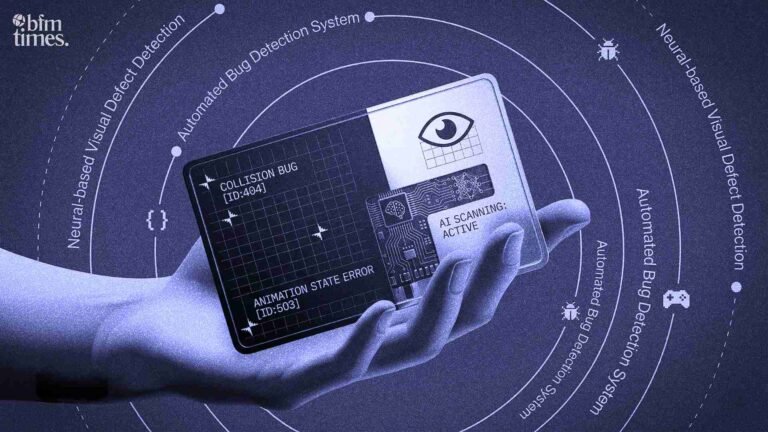
- Computer Vision: The AI models scan every frame of gameplay visually. They catch graphical glitches & the misaligned UI elements instantly.
Which Are the Top AI Game Testing Tools You Should Know?
The market now has several powerful AI game testing tools available. Each tool offers unique features for different testing needs based on the type of game.
| Tool | Key Feature | Best For |
| Testers.ai | Automates visual & functional bug detection | Mobile & console games |
| Applitools | ML-based UI accuracy checking | UI/UX testing |
| Appsurify | Automated testing & performance issue detection | Agile game development |
| GameBench | Real-time performance monitoring via AI | Frame rate & GPU analysis |
| PlaytestCloud | ML-based player feedback analysis | Player experience testing |
| AptivQA | Detects visual & functional bugs with detailed reports | Rapid bug reporting |
| GameDriver | Cross-platform automated functional testing | Multi-platform QA |
These AI game testing tools cover a wide range of testing scenarios. They help teams reduce manual effort & increase accuracy at the same time.
How Does Bug Detection AI Find Issues Faster?
Bug detection AI is one of the most powerful parts of modern game QA. It works by analyzing data from thousands of play sessions at the same time. It then pinpoints the exact location & condition of each bug.
Traditional bug detection relies on manual log analysis. Developers have to watch hours of gameplay footage to find issues. Bug detection AI removes this bottleneck completely. It scans massive amounts of data in seconds & flags problems automatically.
The system also continuously learns from each testing session. Every new bug it detects makes it smarter. It becomes better at recognizing similar issues in future builds. This means the longer you use it, the more effective it gets.
A great example of this in action comes from Ubisoft. They used AI bots to explore hard-to-reach areas in open-world games. These bots triggered mission scripts & evaluated collision detection in a structured way. They also generated heatmaps to show developers where bugs were most likely to appear.
What Does Automated Game Testing Actually Cover?
Automated game testing powered by AI handles many critical areas at once. It goes far beyond simple pass/fail checks.
Does It Handle Performance Testing?
The AI monitors frame rates, CPU usage & GPU load in real time. It identifies memory leaks & performance bottlenecks early. This is especially useful for online multiplayer games where server efficiency matters greatly.
How Does It Manage Regression Testing?
Every update or patch can break existing features. Automated game testing runs regression checks automatically after each build. It ensures that new changes do not reintroduce old bugs. This keeps the game stable even during rapid development cycles.
Can it test gameplay balance, too?
The AI simulates over 1000 gameplay scenarios at once. It tests level difficulty, character abilities & control mechanics. It then checks if the game offers a fair & balanced experience to all players. This is critical in competitive multiplayer games.
Does It Cover Security Testing?
AI debugging tools also help with security. They detect unusual patterns in gameplay & network traffic. They identify cheating attempts & hacking in real time. This keeps online games fair & secure for every player.
What About Cross-Platform Compatibility Testing?
The AI checks if the game runs smoothly on all platforms. It tests desktop, console & mobile versions at the same time. It ensures the experience stays consistent across all devices.
How Are AI Debugging Tools Used in the Real World?
AI debugging tools have already proven their value in major game studios.
EA used AI in its FIFA game development pipeline. The system identified ball trajectory errors & animation glitches automatically. It also detected AI defensive behavior issues that previously went unnoticed. This helped EA maintain quality across patches & updates.
DeepMind built the SIMA agent to test 3D game environments. SIMA 2 integrates Gemini & improved its task success rate by 2 to 3 times. It operates using only visual input & natural language instructions. It requires no source code access at all.
Convolutional Neural Networks are now used for graphical glitch detection. Research shows that trained CNNs can match human reviewer accuracy. They detect clipping, texture loss, Z-fighting & frame drops with great precision.
What Are the Key Benefits of AI QA Testing in Gaming?
AI QA testing in gaming delivers clear advantages to development teams worldwide.
- Faster Testing Cycles: The AI completes tests much faster than any human team could.
- Better Coverage: The AI can explore millions of scenarios that manual testers would never reach.
- Early Bug Detection: Issues are found early & fixed before they become expensive problems.
- Lower QA Costs: Automating repetitive tasks reduces the need for large QA teams.
- Continuous Improvement: The AI systems learn from every test & get better over time.
- Proactive Quality Assurance: The AI predicts where problems might occur before they actually happen.
What Are the Challenges in AI-Based Game Testing?
AI-based game testing is powerful, but it does come with some limitations that are worth noting. It lacks human judgment on emotional factors. Only human testers can evaluate pacing, engagement & the overall fun. The AI also needs large amounts of training data to work effectively. Games with limited historical data may produce less accurate results. There is also a shortage of skilled professionals who can manage these AI systems properly. This makes adoption harder for the smaller studios with limited budgets.
The best approach is to combine AI tools with experienced human testers. This hybrid model gives you both speed & the quality at the same time.
What Does the Future of AI Game Testing Look Like?
The future of AI-based game testing is extremely promising. Deep learning is making AI smarter at handling complex scenarios. The NLP is allowing AI to analyze the player feedback from social media & the forums automatically.
LLM-driven testing agents are emerging as a major new trend. These agents can reason about game rules & then conduct targeted functionality testing. The DeepMind SIMA 2 already shows what is possible with this approach.
Smaller & independent studios will also benefit greatly from these. The AI-powered pipelines will allow indie developers to compete with AAA-level quality. Game development cycles will shrink as AI takes over more testing tasks automatically.
Conclusion
AI-based game testing is no longer a luxury for the large studios. It is a necessity for every developer who wants to stay competitive in this field. It speeds up bug detection & improves game quality across all platforms. It also reduces the costs & helps teams focus on building better player experiences. From AI game testing tools to automated regression systems, the technology is mature & is ready to use. Combining these tools with smart human oversight gives the best results. The studios that invest in AI-based game testing today will be the ones delivering the best games tomorrow to their community.
Frequently Asked Questions
What is AI-based game testing & how does it work?
It is the use of artificial intelligence to automate & also to improve the game QA process. It uses machine learning & the neural networks to simulate gameplay, detect bugs & also to analyze performance data faster than any human team can do.
Which are the best AI game testing tools available today?
These include Test.ai, Applitools, Appsurify, GameBench & the PlaytestCloud. Each tool specializes in different areas such as visual bug detection, performance monitoring, & the player feedback analysis.
Can AI replace human testers in game QA completely?
It cannot replace human testers fully. The AI cannot judge emotional factors like fun, pacing, & the engagement. The best approach is a hybrid model where AI handles repetitive tasks & humans focus on the complex creative evaluation.
Disclaimer: BFM Times acts as a source of information for knowledge purposes and does not claim to be a financial advisor. Kindly consult your financial advisor before investing.