


The world of gaming is changing at a rapid pace. AI in the field of game development is no longer just a concept. It is happening & it is reshaping how we used to play & experience these games. The global AI for the gaming market was valued at $3.28 billion back in 2024. It is projected to cross over $51 billion by 2033. These numbers just show how big this shift really is & it is moving at a very fast pace. The most exciting part about this is how AI is being used to build these realistic game environments in less time. These are the worlds that feel alive & they respond to every move a player makes in real-time.
- What Is AI in Game Development & Why Does It Matter?
- How Are AI Game Environments Redefining Immersion?
- How Is Procedural Generation AI Building Infinite Worlds?
- How Did Procedural Generation Evolve From Simple Terrain to Complex Ecosystems?
- How Is AI Making Level Design Smarter?
- What Are AI Game Design Tools & How Are They Changing Development?
- How Are These Tools Speeding Up Development?
- What Can AI Game Design Tools Actually Do?
- Which AI Platforms Are Changing Game Creation?
- How Is Realistic Game Graphics AI Blurring the Line Between Real & Virtual?
- How Are Neural Networks Improving Visual Quality?
- How Is AI Powering Character Animation?
- How Is AI Handling Facial Animations & Dialogue?
- What Are the Key Benefits of AI in Game Development?
- What Challenges Do Developers Face With AI?
- What Does the Future of AI Game Environments Look Like?
- Conclusion
- Frequently Asked Questions
This article gives readers a clear look at AI in Game Development & Realistic Game Environments as featured on BFM Times.
What Is AI in Game Development & Why Does It Matter?
The industry has changed a lot in recent years. A 2025 study with 615 game developers found that 97% believe that generative AI is reshaping the industry. The study also revealed that 90% of the developers are already using some form of AI in their workflows to improve their efficiency. This is not just a trend anymore. It is a full industry shift that we are seeing. Developers are using AI to cut costs & save time & focus on other things while AI does these things. AI in game development has proven to reduce the overall development expenses by 20 to 30% & the result is better games that are built faster & are more efficient.
How Are AI Game Environments Redefining Immersion?
What Makes a Game Environment Feel Real?
The environment of a game is more than just a background. It includes weather systems, terrain features, lighting, NPC behavior & much more. Traditional game environments were pre-built & mostly static. Players would walk through the same streets & see the same trees every time. AI game environments are completely different. They are dynamic & they respond to player behavior in real time. Players are seeking games that feel more alive & more dynamic. They expect smarter & more adaptive non-player characters. AI is making all of this possible at a scale never seen before.
How Do Dynamic Worlds React to Players?
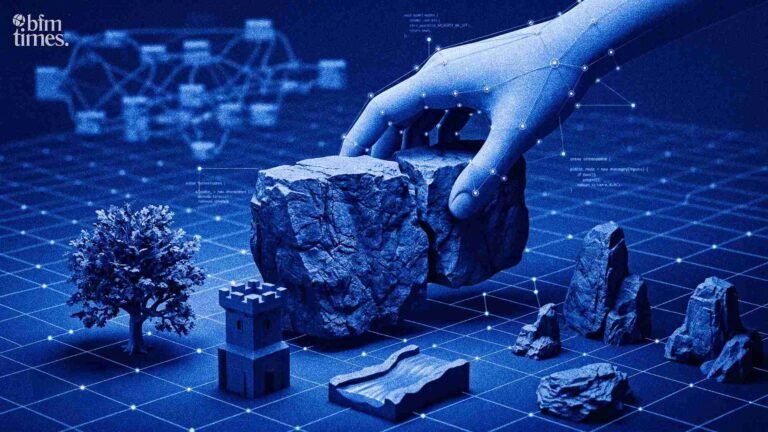
The biggest leap in AI game environments is the ability to build worlds that change. AI is changing in-game world-building in a big way. Procedural generation now enables the creation of entire ecosystems, cities & quests that adapt to player behavior. This means no two gameplay sessions feel the same. The world shifts & evolves based on what the player does. It creates a deeper & more satisfying experience.
How Is Procedural Generation AI Building Infinite Worlds?
How Did Procedural Generation Evolve From Simple Terrain to Complex Ecosystems?
Procedural generation AI has come a very long way. Procedural generation has been used since the 1980s to create vast game worlds within technical limits. AI is now making procedural generation dramatically more powerful & controllable. The old method used simple rules to create random terrain. The new method uses machine learning to create detailed & believable worlds. These are worlds that have logic & follow real patterns.
How Is AI Making Level Design Smarter?
Modern machine learning models can learn the design language of human-created content & apply those principles to procedurally generated elements. This means procedural cities that feel well designed, dungeons with logical layouts & natural environments that follow realistic ecological patterns. The key change here is that developers can now communicate with AI in simple language. A developer can specify a dark, foreboding forest with ancient ruins & receive fitting results. This saves enormous time & opens up creative possibilities.
What Are AI Game Design Tools & How Are They Changing Development?
How Are These Tools Speeding Up Development?
Élisa Interactive provides an AI-assisted plugin that accelerates 3D level design by 50 times and makes it much faster. It reduces the typical scene-building tasks from 17 minutes down to less than 20 seconds. This is a massive leap forward. Developers can now focus on creative decisions instead of these repetitive tasks. An overwhelming 95% of developers say that AI is reducing repetitive tasks & they are freeing them up to focus on more strategic & creative concerns.
What Can AI Game Design Tools Actually Do?
These tools cover a wide range of tasks. They can build textures & also the backgrounds automatically. They can generate music that matches the mood of a scene. They can also spot & fix bugs in code within seconds. AI-powered tools are streamlining the work. AI can auto-generate these textures, backgrounds, or even whole cities. AI debugging tools can find bugs in seconds, which manually can take hours. AI can even create music that adapts to the vibe of a game. The result is that indie developers can now compete with the major studios. The gap between small teams & big studios is closing very fast.
Which AI Platforms Are Changing Game Creation?
Dreamlands is an AI world-creation platform that lets anyone describe a 3D environment in their own words & receive a complete world in minutes. The platform was built by a team from Ubisoft, Unity & Meta. This kind of tool puts the power of world-building into the hands of creators at every skill level. It removes the technical barriers & lets ideas come to life faster and properly.
How Is Realistic Game Graphics AI Blurring the Line Between Real & Virtual?
How Are Neural Networks Improving Visual Quality?
The role of AI in creating stunning visuals is growing every day. Deep neural networks can improve the visual quality by improving details & also by reducing aliasing. They also keep a smooth frame rate & make the visuals appear soft & much more natural. The result is a much better visual experience for the player. The graphics feel more lifelike without requiring massive hardware upgrades.
How Is AI Powering Character Animation?
Realistic game graphics AI goes beyond just the static scenery. It also applies to how these characters move & interact. NVIDIA Neural Motion Fields can generate natural & physically believable movement for the characters navigating complex environments, climbing obstacles, or interacting with these objects. These neural animation systems understand the biomechanics of real movement. They can adapt a character movement to slopes & terrain they were never specifically animated for.
How Is AI Handling Facial Animations & Dialogue?
Rather than animating every line of dialogue by hand, which could take so much time, developers can use AI to generate the baseline facial animations to speed up their process. These are then refined by human animators for critical story moments. This hybrid approach balances speed with keeping the quality. The final output looks natural & are believable. Players feel more connected to the characters they can interact with.
What Are the Key Benefits of AI in Game Development?
| Benefit | Impact |
| Reduced Development Costs | 20 to 30% savings in studio budgets |
| Faster World Building | 50x acceleration in level design tasks |
| Smarter NPCs | Real-time learning & adaptive behavior |
| Personalized Gameplay | Dynamic difficulty & the content adaptation |
| Better Visuals | Neural networks enhancing graphics quality |
| Infinite Replayability | Procedurally generated maps & quests |
These benefits show us why AI in game development is not just optional anymore. It is becoming the standard way games are going to be built.
What Challenges Do Developers Face With AI?
How Do Studios Balance Creativity & Automation?
The rise of AI game design tools brings up the real questions about creative ownership. There were concerns about how the automation might reduce the opportunities for junior designers. These are roles that traditionally involve repetitive asset creation or early-stage work. The concern is valid. Studios need to find the right balance between using AI to speed up work & also to keep human creativity at the center.
Is AI Ready for Full Production Use?
Certain barriers still exist in this space. The capabilities shown across these systems point toward meaningful changes in how the games get made. The timeline for the widespread adoption depends on many factors beyond just pure technical progress. The technology is promising, but they are still evolving. Developers need to use AI carefully & then invest in AI-based game testing before shipping them.
What Does the Future of AI Game Environments Look Like?
The future looks incredibly exciting for gaming. Research into these Interactive Generative Videos puts forward the frameworks for game engines that can create content, environments & the gameplay logic on their own. Generative AI is now being applied to build these entire mini-games or storylines from a simple prompt & this cuts down time to concept & it then increases the overall speed of it. The idea of describing a full game world & then watching it come to life is no longer science fiction.
It is a technology that is being actively built & are bring tested today. Over 20% of games released in 2025 on Steam report using the generative AI assets. This is up nearly 700% year on year. This growth tells us that what feels like an experiment now will feel normal very soon. The studios that invest in this technology early will have a major competitive advantage. The AI in the game development space is only getting bigger & are becoming more powerful every day.
Conclusion
The way games are built & are experienced is changing at an incredible pace. AI in game development is at the center of this transformation. From dynamic AI game environments to powerful procedural generation AI & stunning realistic game graphics AI, the technology is delivering results that were not imaginable just a few years ago. The best AI game design tools are giving small teams the power to build worlds as rich as those from the biggest studios.
AI in gaming is making every session feel fresh, personal & more alive. The future belongs to developers who embrace this shift early. The era of truly intelligent & immersive game worlds has already begun & AI in game development is writing every chapter of that story.
Frequently Asked Questions
What is AI in game development used for?
AI in game development is used to build realistic game environments, power smarter NPCs, generate game content automatically, & it also improve visual quality. It helps studios to reduce costs & build better games faster and more efficiently.
How does procedural generation AI work in games?
Procedural generation AI uses machine learning to create game content like maps, terrain, dungeons, & the quests automatically. It follows the rules set by developers & then it creates unique content each time a player starts a game session.
Are AI game design tools replacing human developers?
AI game design tools are not replacing any of the human developers. They are removing the repetitive tasks & are giving developers more time to focus on creativity & storytelling. Human input remains essential for direction, quality & the emotional depth in game design.
Disclaimer: BFM Times acts as a source of information for knowledge purposes and does not claim to be a financial advisor. Kindly consult your financial advisor before investing.