AI SaaS Tools Are No Longer Optional; They’re the Backbone of Modern Businesses
A change is taking place in the operation of modern business, and it is no longer understated. What previously was a manual process, heavy in time, and required a big team is currently being automated by smart systems that learn, adapt, and execute quicker than ever.
- AI SaaS Tools Are No Longer Optional; They’re the Backbone of Modern Businesses
- What Defines a Great AI SaaS Platform in 2026
- AI SaaS Tools for Marketing & Content Growth
- AI SaaS Platforms for Sales & CRM Automation
- AI Tools for Customer Support & Experience
- AI SaaS Tools for Operations & Productivity
- AI SaaS Platforms for Data & Analytics
- AI Tools for Development & Automation
- How Businesses Actually Use AI SaaS Tools
- The Truth About AI SaaS Tools
- How to Choose the Right AI SaaS Tool for Your Business
- The Future of SaaS AI Tools in 2026 and Beyond
- Which AI SaaS Tools Should You Start With?
- Frequently Asked Questions
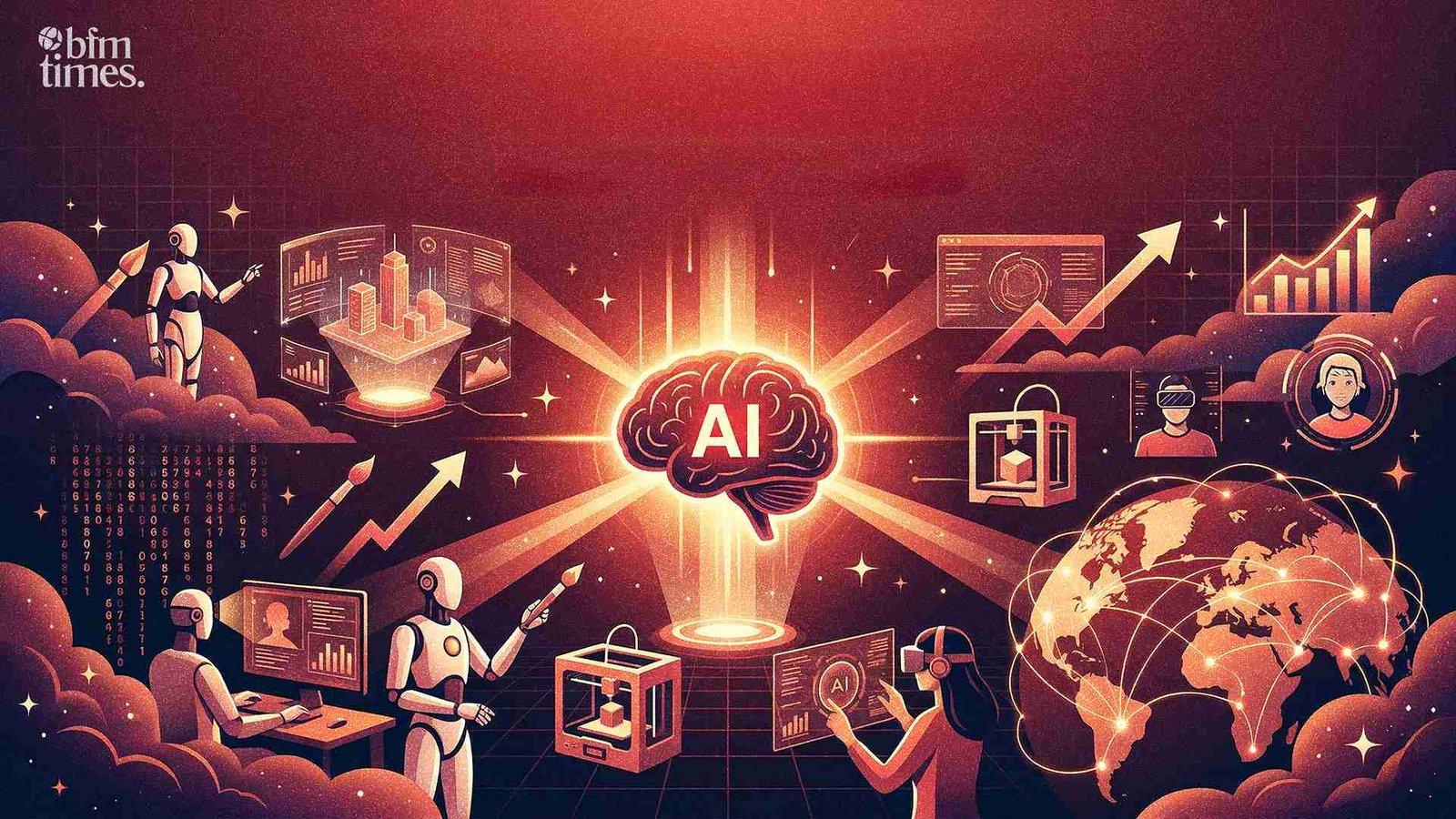
In 2026, AI SaaS tools will no longer be an add-on layer. They are deeply embedded in how companies function daily. From generating marketing campaigns to predicting sales outcomes and automating customer support, AI is quietly becoming the infrastructure behind business growth.
What is so potent about this change is not only automation but also the speed of decisions. Businesses are no longer waiting to receive reports, approvals, or manual inputs. Real-time activities are possible on AI SaaS tools that operate based on data, trends, and forecasts.
Big companies are not always the fastest-growing companies in the present times. It is they who have figured out how they could use business AI tools as force multipliers in departments.
What Defines a Great AI SaaS Platform in 2026
Not all AI tools are worthy of your business stack. The market is already saturated, and the majority of the platforms promise change but facilitate superficial automation.
Filtering tools are being filtered differently as a serious business in 2026. And they are not impressed with features; they’re focused on how deeply the tool integrates into their workflow and how much time or revenue it actually saves.
The typical ways of a strong AI SaaS platform are its manifestation today. To begin with, it not only helps with something, but it also automates the entire process. Second, it fits perfectly with existing systems, be it CRM, marketing tools, internal dashboards, etc. Third, it is frictionless when your team grows.
And perhaps most importantly, it delivers measurable ROI within weeks, not months.
When evaluating AI SaaS platforms, businesses are quietly asking:
- Does this replace work or just assist it?
- Can my team adopt this without friction?
- Will this still be useful when we scale?
That’s the difference between tools that look impressive and tools that actually stay in your stack.
AI SaaS Tools for Marketing & Content Growth
One of the departments that is being transformed by AI completely is marketing. Not as the majority of people believe.
It is not only about quicker generation of content but also about steady, scalable content production without overworking departments.
Tools like ChatGPT, Jasper, Copy.ai, and Canva AI are now being used as execution engines. Companies are constructing complete content pipelines around them, including blog postings and advertisement copying, social creatives, and campaign brainstorming.
A typical high-performing marketing team in 2026 doesn’t rely on a single tool. They instead integrate several AI SaaS tools to develop a system. An illustration is a tool that creates longer content, a tool that optimizes ad copy, and a tool that produces design and visual work.
What’s interesting is that AI hasn’t replaced creativity; it has exposed weak strategy. As the businesses depend on the raw AI output too much, the content form becomes repetitive and generic. The brands with the most remarkable results are those with AI-based speed without human direction and positioning.
In practice, these tools work best in scenarios like:
- Scaling blog production without increasing team size
- Running multi-platform ad campaigns quickly
- Creating consistent social media content
The limitation is clear, though: AI can generate content, but it doesn’t inherently understand brand nuance unless guided properly. That layer still belongs to humans.
AI SaaS Platforms for Sales & CRM Automation
Sales has ceased to be intuition-based but an intelligence based sales. The sales pipeline of today is no longer constructed based on guesswork; it is based on data, patterns, and predictive scoring.
Platforms like HubSpot AI, Salesforce Einstein, and Apollo AI are transforming how businesses approach lead generation and conversion. Instead of manually tracking prospects, these systems analyze behavior, prioritize leads, and even suggest the next best action.
The effectiveness of these AI tools for companies lies in their ability to reduce the amount of time it takes to make a decision. A sales team does not have to spend hours before determining which leads to follow. The highest probability of conversion is already noted in the system.
In real-world usage, this looks like:
- Automated lead scoring based on behavior and engagement
- Personalized outreach generated at scale
- Smart follow-ups triggered without manual intervention
However, there’s a catch that most businesses realize late: AI in sales is only as good as the data it receives. Poor data leads to poor recommendations. So while these tools are incredibly powerful, they require clean systems and structured processes to deliver results.
AI Tools for Customer Support & Experience
The area that has seen one of the most observable changes through AI was customer support. The old system, which was characterized by tickets, queues, and waiting periods, is quickly being substituted by real-time AI-driven customer interaction.
The Intercom AI, Zendesk AI, and Freshdesk AI are not merely processing queries but entire support ecosystems.
The businesses are discovering that speed is no longer sufficient. Customers want a quick and precise reaction, and AI is the only one that can provide it.
These are tools that are usually used to:
- Resolve repetitive queries instantly
- Provide 24/7 support without increasing team size
- Route complex issues to the right human agents
- Maintain consistency in responses across channels
The impact is measurable. Response time, support costs are decreased, and customer satisfaction increases. But there is a fine line that has to be taken.
Excess automation may depersonalize it. Support teams are not being removed by the best companies; they are simply being augmented so that humans are able to deal with the complex and high-value interactions.
AI SaaS Tools for Operations & Productivity
Operations is where AI quietly delivers some of the highest ROI. It’s not flashy, but it’s transformational.
Such tools as Notion AI, ClickUp AI, and Taskade are becoming the place where planning, execution, and documentation all occur simultaneously.
The teams are not moving between various platforms, but they are centralizing workflows into AI-driven environments that help in thinking, organizing, and implementing.
In a typical setup, AI helps teams:
- Summarize meetings instantly
- Convert ideas into structured plans
- Automate repetitive task management
- Maintain organized knowledge bases
It is here that SaaS AI tools in 2026 are developing at the most rapid pace. They are no longer tools, but they are becoming team operating systems.
The shift is subtle but important:
Teams are moving from “using tools” → to working inside AI-powered systems.
AI SaaS Platforms for Data & Analytics
Information to be displayed in dashboards and awaiting interpretation. AI is currently making the interpretation itself.
Platforms like Tableau AI, Power BI AI, and MonkeyLearn are helping businesses move from raw numbers to actionable insights almost instantly.
These tools are important because it is not only about visualization but also about understanding. You do not have to have a special analyst to mine data to derive meaning. AI is able to detect trends, anomalies, and opportunities within seconds.
Businesses are exploiting these platforms to:
- Predict trends before they happen
- Generate automated reports
- Ask questions in plain language and get insights
- Make faster strategic decisions
This is particularly strong in the larger organizations, where decision-making previously was tedious because of the complexity of data.
The real shift here is clear:
Information is no longer an asset; it is a decision-making machine.
AI Tools for Development & Automation
AI has made software development a bit faster. What took weeks to be completed can now be completed in days and even in hours.
GitHub Copilot, Replit AI, and Zapier AI tools are also empowering developers and non-developers to build, automate, and scale systems more quickly.
Use of these tools is concerning:
- Writing and optimizing code
- Automating workflows across platforms
- Building internal tools without heavy engineering effort
- Connecting apps and services seamlessly
In the case of startups, this is a big plus. It makes it less dependent on big tech teams and enables quicker experimentation.
But there’s a practical limitation: AI-generated outputs still need validation. Businesses that blindly trust automation often run into issues with scalability or security.
How Businesses Actually Use AI SaaS Tools
There is no difference between the average companies and high-performing companies in the number of tools they use, but there is in the way they interrelate them.
An average workflow of the contemporary world is not in isolation. It’s interconnected.
Content creation is created through marketing tools and is fed to CRM systems. That is turned into revenue using sales tools. After-sales experience is taken care of by support tools. Internal control is maintained by operational tools.
These tools establish a chain of performance and feedback as opposed to operating in isolation.
That is the true strength of AI SaaS tools; they develop systems, not solutions.
The Truth About AI SaaS Tools
There’s a lot of noise around AI, and most of it is overly optimistic.
The reality is more nuanced.
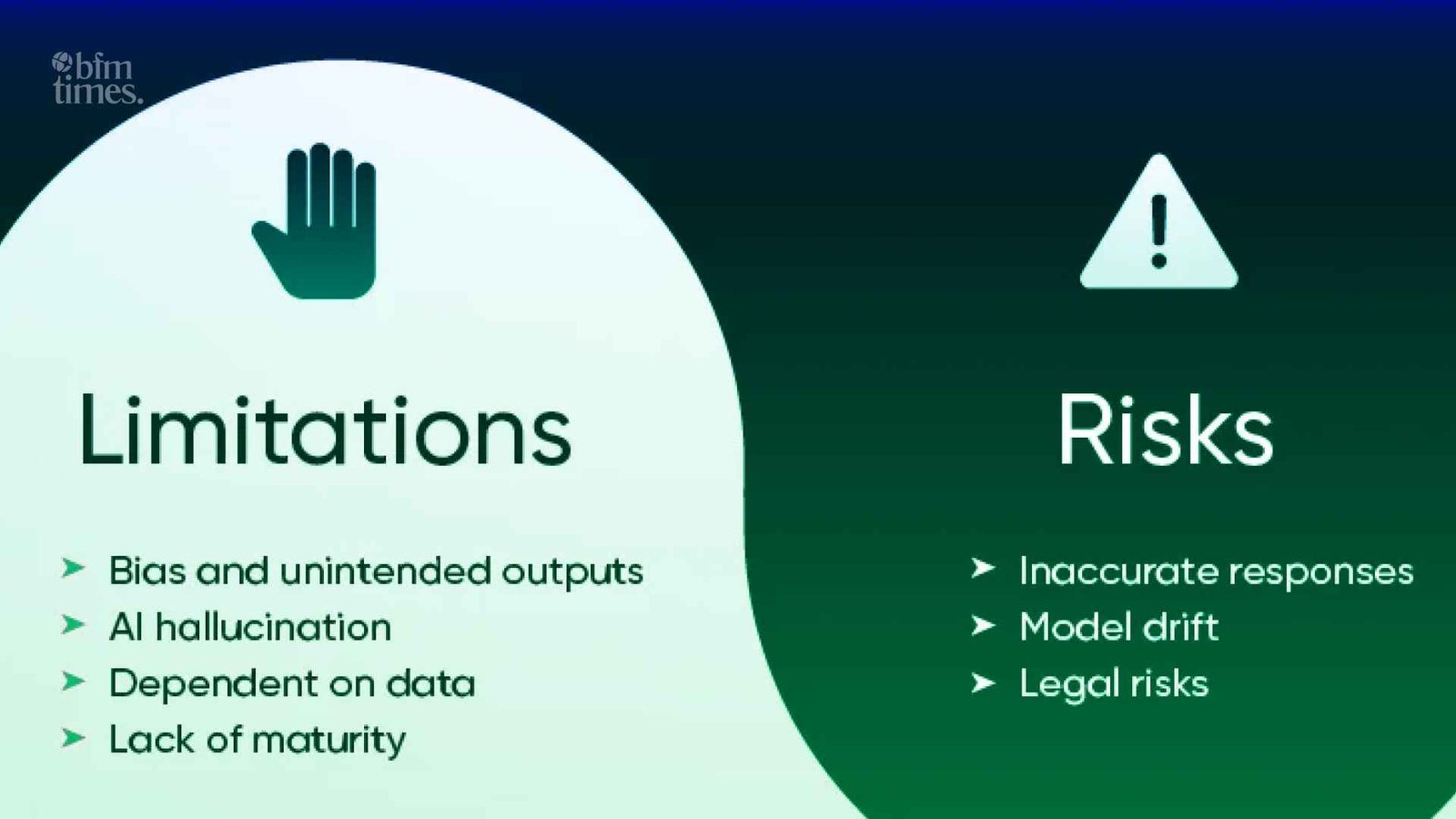
AI tools are powerful, but they are not plug-and-play miracles. They require setup, context, and ongoing optimization. Without that, they either underperform or create more noise than value.
Some important realities businesses learn over time:
- AI output still needs human direction
- Over-automation can damage quality and brand voice
- Not every tool fits every business model
Businesses that are seeing tangible results are those that are developing targeted, effective systems rather than chasing every new tool.
How to Choose the Right AI SaaS Tool for Your Business
Choosing the right tool is less about exploration and more about clarity.
Businesses must determine where they are losing time, where there are inefficiencies, and what procedures can truly be enhanced by AI before implementing any platform.
Gradual is the best course of action. Start with one or two tools, properly integrate them, assess the results, and then add more.
What works best in practice:
- Define one clear use case
- Test tools in real workflows (not demos)
- Measure time saved or revenue impact
- Scale only when results are proven
This approach prevents tool overload and ensures that every addition to your stack actually contributes to growth.
The Future of SaaS AI Tools in 2026 and Beyond
The next stage of AI SaaS tools is already emerging, and it is not only going beyond the realm of assistance, but it is also going to autonomy.
We are already starting to witness systems that do not respond to inputs but operate independently. The use of AI agents that can manage workflow, perform tasks, and optimize results without human intervention is getting increasingly widespread.
Meanwhile, no-code ecosystems are also increasing access. Companies do not require extensive technical knowledge to create strong AI-based systems.
The direction is clear:
AI SaaS systems are becoming less of a tool and more of a self-directed business infrastructure.
Which AI SaaS Tools Should You Start With?
The most intelligent strategy to deal with AI in 2026 is not to do it all but to do it according to your present level of progress.
In the case of smaller teams, productivity and content-creating tools bring direct value.
Businesses that are marketing-oriented take advantage of automation tools in content and campaigning. CRM intelligence and data platforms are more beneficial in larger organizations.
It doesn’t matter what category it belongs to, but rather what it is used to do.
Start with what removes friction in your business today. Once that’s optimized, expansion becomes obvious.
Also Read: Best AI Marketing Tools for Modern Businesses
Frequently Asked Questions
What are AI SaaS tools?
AI SaaS tools are cloud-based platforms that use artificial intelligence to automate business processes and improve efficiency.
Which AI SaaS tools are best for businesses in 2026?
Tools like ChatGPT, HubSpot AI, Salesforce Einstein, Notion AI, and Power BI AI are widely used across industries.
Are AI SaaS tools expensive?
Most platforms offer flexible pricing, making them accessible for startups as well as large enterprises.
Can AI SaaS tools replace employees?
They automate repetitive tasks but still require human creativity, decision-making, and oversight.
How do businesses choose AI tools?
By identifying their needs, testing tools in real workflows, and focusing on ROI and scalability rather than just features.
Disclaimer: BFM Times acts as a source of information for knowledge purposes and does not claim to be a financial advisor. Kindly consult your financial advisor before investing.