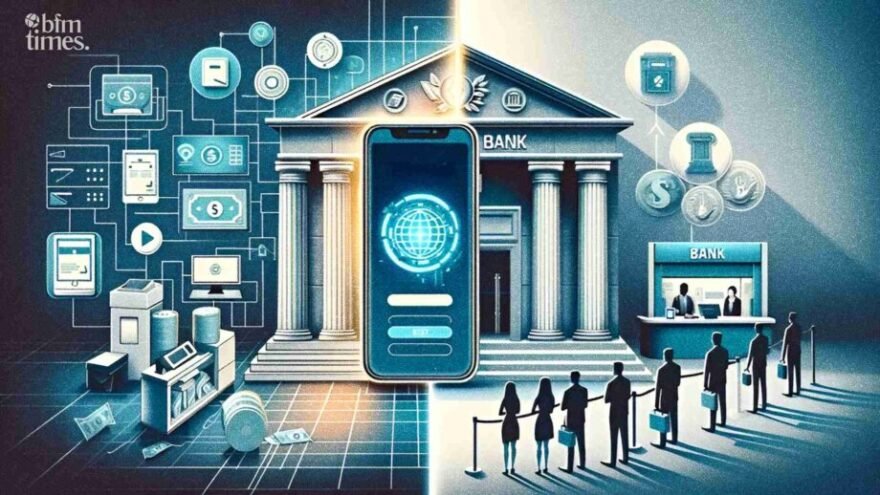



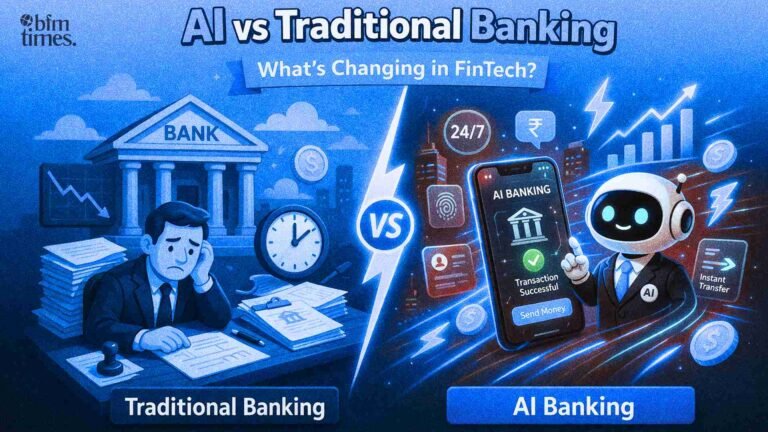
The financial world is changing faster than ever. New technologies are reshaping how people manage money. The AI vs traditional banking debate is now one of the biggest conversations in the FinTech space. On one side, some banks have existed for decades. On the other hand, there are AI-powered platforms that are faster, smarter & more accessible.
- How Is AI Rising in the Banking Sector?
- What Are the Key Differences Between AI and Traditional Banking That You Should Know?
- How Is AI Transforming Customer Experience?
- What Is the Shift From Generative AI to Agentic AI?
- How is AI-Powered Fraud Detection a Game Changer?
- How Are Neobanks & FinTechs Leading the Charge?
- What Are Traditional Banks Doing in Response?
- What Is Embedded Finance & How Does It Mean Banking Without a Bank?
- How Are Real-Time Payments & AI-Driven Cash Flow Changing Finance?
- What Does the Future Look Like: Working Together or Competing?
- Conclusion
- Frequently Asked Questions
In this article, readers will gain insights into AI vs Traditional Banking: What Is Changing in FinTech featured on BFM Times.
Also read: Robo Advisors: How AI Manages Your Investments
How Is AI Rising in the Banking Sector?
Artificial intelligence is no longer a future idea. It is actively changing how financial services work today. The technology is doing tasks that once took hours or even days in areas like fraud detection & loan approvals.
The global fintech market was valued at $394.88 billion in 2025. It is projected to reach $1,126.64 billion by 2032, growing at a CAGR of 16.2%. These numbers tell a clear story. AI-driven financial technology is growing at a massive pace.
Traditional banks are feeling this pressure. They are now rushing to adopt AI tools before they fall behind. The gap between AI-first fintechs & legacy banks is becoming more visible every year.
What Are the Key Differences Between AI and Traditional Banking That You Should Know?
| Feature | AI Driven FinTech | Traditional Banking |
| Speed of Service | Real-time & 24/7 | Business hours & delayed |
| Loan Approval | Minutes via AI models | Days or weeks |
| Fraud Detection | Predictive & automated | Reactive & manual |
| Customer Support | AI chatbots & always on | Branch staff & limited hours |
| Personalization | Data-driven & hyper-personal | Generic & one size fits all |
| Cost | Lower operational costs | High overhead expenses |
| Innovation Speed | Rapid & continuous | Slow & compliance-heavy |
The table above makes it clear. AI-powered systems perform better than traditional banks in almost every area of customer experience & efficiency.
How Is AI Transforming Customer Experience?
Customer experience is where AI vs traditional banking becomes most visible. Traditional banks offer standard service during fixed hours. AI platforms are available around the clock.
The PwC research found that 73% of consumers put customer experience first when deciding to buy from a company. This means banks that fail to upgrade their experience risk losing customers fast.
How Are AI Chatbots & Virtual Assistants Changing Support?
The AI chatbots allow users to quickly check balances & process transactions & transfer funds simply through conversation. They assist users with tasks like setting up new accounts & routing more complex issues to the right department. These solutions are available around the clock & work at any time without rest.
Traditional banks rely on staff for these tasks. The approach is slower & more costly. They handle these tasks instantly & at scale with AI tools.
What Is the Shift From Generative AI to Agentic AI?
The latest step forward in AI banking goes beyond chatbots. We are now seeing agentic AI take over.
The big change of 2026 is the move from generative AI to agentic AI, which are self-running systems that can finish multi-step tasks without human input. Financial institutions are increasingly moving from AI assistants to AI operators.
The agentic AI is different from old automation because it can plan & reason & take multi-step actions without being told each step to follow.
This is a massive leap forward in how systems work. Traditional banking systems simply cannot compete with this level of automation. AI-driven platforms can handle complex workflows without human involvement.
What Are the Top Processes Where AI Agents Are Used in Banks?
The 2025 GlobalNewsWire Report found that the top processes for running cloud native AI agents at scale in banks include fraud detection at 64% &, loan processing at 61% & customer onboarding at 59%.
These numbers show how deeply AI has entered core banking work.
How is AI-Powered Fraud Detection a Game Changer?
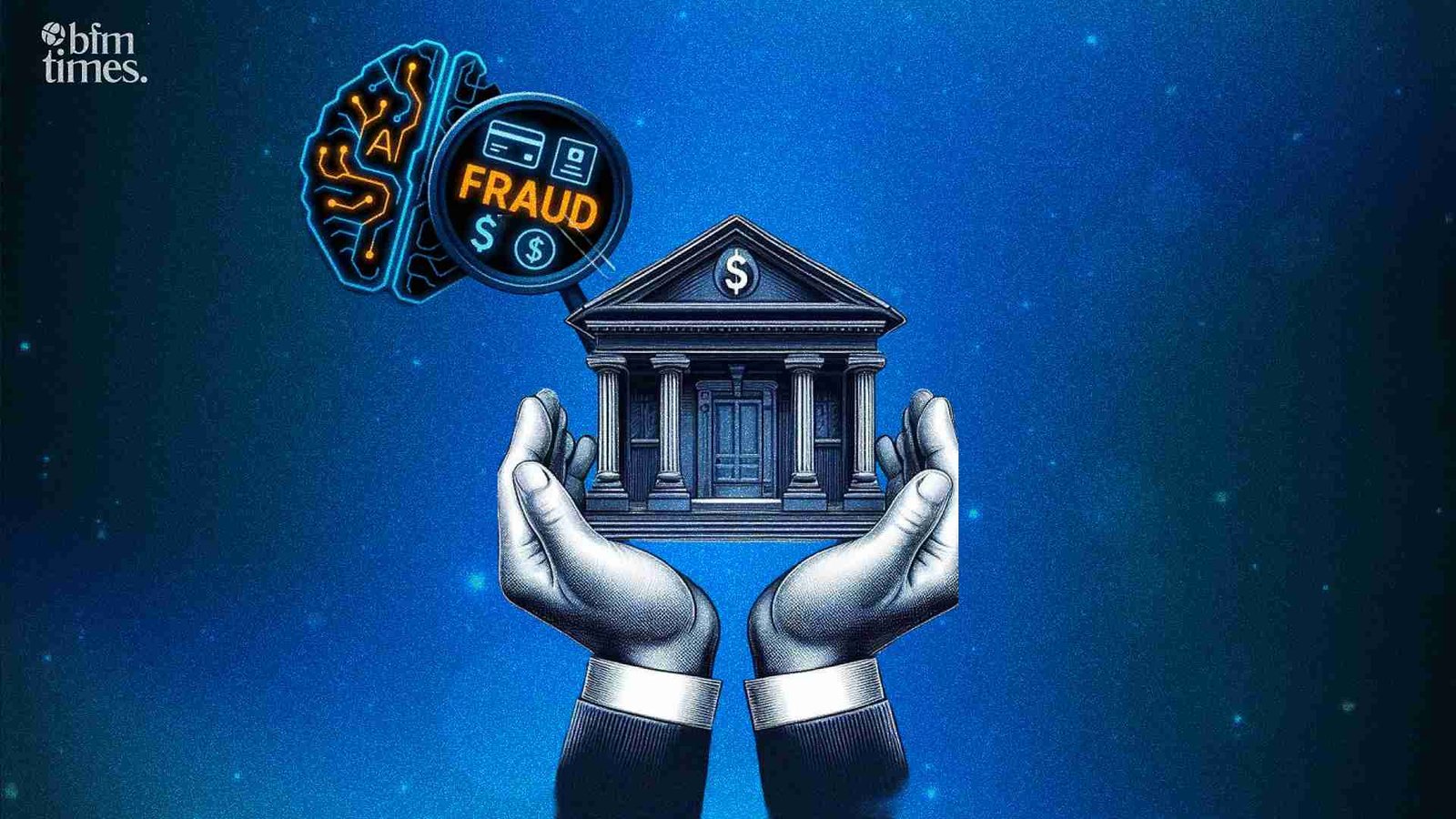
Security is a top concern in banking. Traditional systems often catch fraud after it has already taken place. The AI approach changes that entirely.
Financial firms find it hard to spot unusual activities like fraud & account takeovers & money laundering. Traditional security steps simply cannot keep up with new threats like fake identity fraud. The Gartner survey found that 34% of organizations are either using or in the process of putting in place AI-driven security tools to deal with risks tied to generative AI.
The AI tools look at patterns in real time. They learn & grow to stay ahead of new threats. Traditional banking systems cannot do this without a huge amount of manual effort.
How Are Neobanks & FinTechs Leading the Charge?
Neobanks show the clearest example of AI vs traditional banking in action. They operate fully online. They use AI at every layer of their service.
The year 2026 sees neobanks & buy now pay later leaders keep expanding into a full range of consumer banking firms & gaining significant ground over older banks.
The neobanks showcase smooth & easy offerings that match what customers expect in a more AI-influenced & deeply personal service. This puts customer loyalty & brand reputation at risk for traditional institutions.
Traditional banks are being pushed to modernize or risk losing their customer base entirely.
What Are Traditional Banks Doing in Response?
Traditional banks are not standing still. Major institutions are making big moves to bring AI into their work.
Dozens of leading banks pushed ahead with artificial intelligence adoption in 2025. Wells Fargo & Truist & UBS appointed new leaders to oversee AI development. Bank of America highlighted the number of AI & machine learning models it is using. Goldman Sachs wants to fully reimagine processes with AI.
The generative AI could add $200 billion to $340 billion annually to the global banking industry, primarily through efficiency gains. This is too large a number for any bank to ignore.
Big Banks Are Playing Catch-Up
The fintechs are moving faster than older institutions on AI. They must look beyond efficiency to create new income-generating applications that unlock growth & redefine customer engagement.
The challenge is that most traditional banks still rely on old infrastructure. Updating these systems is costly & takes a long time.
What Is Embedded Finance & How Does It Mean Banking Without a Bank?
One of the most exciting shifts in AI vs traditional banking is embedded finance. This is the idea of getting financial services directly inside non-banking apps.
The year 2026 sees embedded finance bring financial tools like lending & insurance & savings & payroll & wealth management directly into user experiences across platforms that are not traditional financial institutions.
The idea of getting a loan approved from AI vs traditional banking inside a shopping app is now a reality. The ability to manage savings from a ride service platform is also part of this shift. Traditional banks are not set up to work this way & at least not yet.
How Are Real-Time Payments & AI-Driven Cash Flow Changing Finance?
Speed of transactions is another key area in AI vs traditional banking.
The real-time payments are becoming the core of modern financial systems, driven by the global growth of instant payment systems & AI powered management. The rise of request to pay models, cross-border real-time settlement, & AI driven cash planning are helping businesses make the most of working capital in real time.
In AI vs traditional banking, Traditional banks often take 1 to 3 business days to process transfers. The AI-powered FinTechs process payments in seconds. The speed makes a big difference for both businesses & individuals.
What Does the Future Look Like: Working Together or Competing?
The debate around AI vs traditional banking does not have to be a fight with only one winner. Many experts believe the future is about working together.
In AI vs traditional banking, the banks are adopting flexible structures that let them partner with fintechs & bring in new capabilities through open APIs & event-driven systems while keeping control of core customer ties.
Traditional banks bring trust & regulatory strength & an established customer base. The FinTechs bring speed & new ideas & AI capabilities. They could build a more powerful financial system by working together.
The fintech will not replace traditional finance, as it will improve it. The banks will bring their stability & fintechs their speed & together they will make finance more intelligent & inclusive & human.
Conclusion
The shift is clear. The AI vs traditional banking topic is not just a tech trend. It is a deep transformation of how finance works. The AI is making banking faster & smarter & safer & more personal. Traditional banks must grow & change or risk becoming outdated. The FinTech revolution is already here. The customers & investors & banking professionals who understand AI vs traditional banking will be better prepared for what comes next. The financial world of tomorrow is being built today & AI is the one building it.
Also read: Top AI Budgeting Apps for Indians in 2026
Frequently Asked Questions
What is the main comparison between AI vs traditional banking?
The AI-driven banking works around the clock & gives real-time decisions on loans & fraud detection & customer support. The traditional banking depends on staff & fixed hours & manual steps that take much longer.
Are traditional banks going to disappear because of AI & FinTech?
The traditional banks are not going to disappear. They bring trust & regulatory strength that fintechs do not have. The future is about partnership, where both work together to build smarter financial services.
How does AI make banking safer for customers?
The AI tools spot unusual activity in real time before it causes harm. They detect threats like fake identity fraud & account takeovers at a speed that traditional security steps cannot match.
Disclaimer: BFM Times acts as a source of information for knowledge purposes and does not claim to be a financial advisor. Kindly consult your financial advisor before investing.