


Hardware crypto wallets store your private keys offline, detaching them from any internet-connected device that could be attacked by malware, phishing, or browser vulnerabilities. For anyone whose crypto value is significant, transitioning to hardware crypto wallets is a sensible long-term measure for self-custody and risk minimization.
- Crypto hardware wallet comparison
- What are hardware crypto wallets, and why do they matter
- How to evaluate the best hardware wallet 2026
- Top hardware crypto wallets
- 1. Ledger Nano X
- 2. Trezor Model T
- 3. Coldcard Mk4 (Bitcoin-only)
- 4. SafePal S1
- 5. Ellipal Titan
- 6. BitBox02
- Offline hardware crypto wallets best practices
- Secure bitcoin wallet device features to prioritize
- How to choose the right hardware wallet for your needs
- Middle-of-article note on hardware crypto wallets
- Practical security reminders (prose, not a heading)
- Frequently Asked Questions
- Which hardware wallet is best for cryptocurrency?
- What is the most reliable cold wallet for crypto?
- What is the difference between a hardware wallet and a cold wallet?
- Conclusion
This guide provides the working base of these devices, what needs to be looked at in 2026, and how to make safe selections based on different budgets and experience levels. We will discuss security design (secure element chip, isolated signing, air-gapped modes), usability, firmware transparency, supported assets, and ecosystem tools. You can also compare side by side the best practices for setup and recovery and the clear advantages/disadvantages of the leading models, so you can make a calm, informed decision and not get hyped up.
Crypto hardware wallet comparison
| Wallet | Security features (secure element, air-gap) | Supported assets | Connectivity | Screen | Price range (snapshot) | Best for |
| Ledger Nano X | Secure element; isolated signing | Broad multi-asset | USB-C, Bluetooth | Small OLED | Mid-premium | Mobile multi-asset users |
| Trezor Model T | No secure element (design); on-device verification | Broad multi-asset | USB | Color touch | Premium | Open-source fans |
| Coldcard Mk4 | Secure element; PSBT air-gap | Bitcoin only | microSD (offline), USB | Small screen | Premium | Bitcoin-only security |
| SafePal S1 | Secure element; QR air-gap | Broad multi-asset | Camera QR (no data USB) | Small screen | Budget | Air-gap on a budget |
| Ellipal Titan | Secure element; fully air-gapped | Broad multi-asset | Camera QR (no ports) | Large touch | Mid-premium | Air-gapped durability |
| BitBox02 | Secure element; verified firmware | Multi-asset / BTC-only | USB-C | Small display | Mid | Compact security |
What are hardware crypto wallets, and why do they matter
Hardware crypto wallets are tangible machines that are used to produce and store private keys in an offline way. Rather than signing the transactions through a computer or a phone connected to the internet, the process occurs within the phone or computer. The signature is then sent back to the application to send to the network. This cold storage crypto wallet design has less exposure to the common vectors of attacker attacks, including keyloggers, malicious browser extensions, and hacked operating systems.
Why they matter:
- Offline key custody: Never leave the device. You authorize transactions on the device display.
- Seed phrase recovery: A recovery phrase (seed phrase) allows you to reclaim money if you lose or destroy the device.
- Clear trust boundary: There is a graphical confirmation of addresses and amounts on the device screen.
- Defense in depth: Defense in depth mechanisms, such as PIN protection, passphrases, tamper resistance, and secure element chips, provide additional defenses over and above software wallets.
Cold storage does not work miracles, but it significantly reduces risk provided it is used in collaboration with excellent operational hygiene.
How to evaluate the best hardware wallet 2026
The best hardware wallet in 2026 will be determined by your threat profile and the use of crypto.
Focus on these pillars:
Security design
- Secure element chip: A hardened chip used to hold secrets.
- Isolated signing/air-gapped: Continue offline signing; there are devices with QR codes.
- Tamper resistance: Metal casing or epoxy is used to prevent physical attacks.
- PIN protection & optional passphrase: This provides a second layer of seed phrase protection.
Firmware & transparency
- Firmware updates: Unambiguous policy and frequency of security patches.
- Open-source firmware (where applicable): Allows community inspection; not every vendor is open-source.
- Verified boot/display verification: This checks that it is what you see on the device that you are signing.
Asset breadth & ecosystem
- Multi-currency: Coins, tokens, and major chains that you actually use.
- Companion apps: Desktop/mobile/WebUSB/WebHID compatibility.
- Wallet integrations: Support of known third-party wallets and dApps.
Usability & durability
- Screen size/controls: Touchscreen or buttons; address checks.
- Connection: USB vs. Bluetooth vs. QR air gap.
- Quality of the building: Portability vs. travel ruggedness.
Price & availability
- Snapshot pricing is different in different locations; do not buy devices that are too cheap, and only purchase from official channels.
Top hardware crypto wallets
A short list of the major devices popular in 2026 is provided below. The profiles will provide an overview of the best-known device, security posture, asset support, UX, and trade-offs.
1. Ledger Nano X
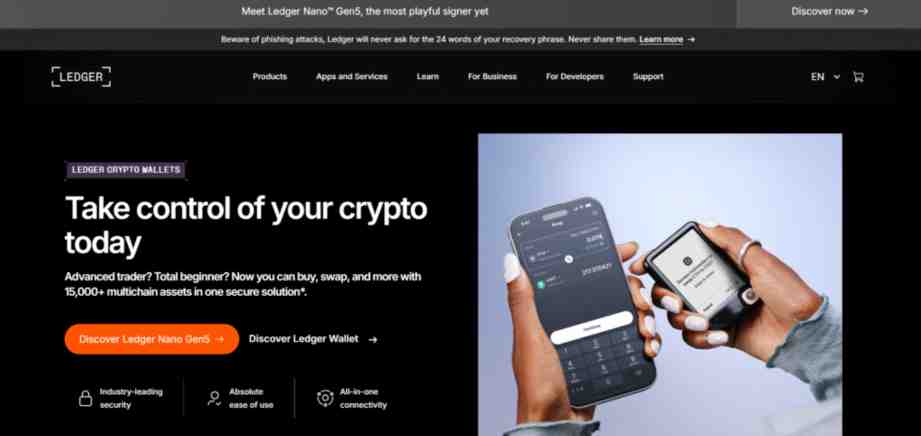
Most known for: Multi-asset everyday wallet, Bluetooth-enabled, and portable.
Key features: chip with a secure element, USB-C and Bluetooth, small screen, and support in a mobile application.
Security profile: PIN, seed phrase, secure element, on-screen verification.
Assets & ecosystem: Supports many currencies; mobile/desktop companion apps; expansive integrations with third parties as a wallet.
Ease of use: Easy installation, mobile connection, and frequent software updates.
Pros:
- Strong multi-asset coverage
- The convenience of Bluetooth to mobile users.
Cons:
- Address verification is done on a smaller screen.
- Wireless features require careful pairing hygiene
Best for: Multi-asset users and travelers who require using it on a mobile first.
You’ll find the full details on their official site: https://www.ledger.com/
2. Trezor Model T

Most known for: Touchscreen UX, solid open-source firmware ethos.
Key features: Color touchscreen, USB connectivity, transparent approach to firmware.
Security profile: PIN & passphrase; seed phrase; on-device verification; no proprietary secure element (design choice)
Assets and ecosystem: Extensive support of coins/tokens, desktop/web wallets, and well-established community tooling.
Ease of use: The touchscreen is easy to use; firmware updates are easy.
Pros:
- Superior on-screen checking using a touch screen.
- Transparency Open-source firmware.
Cons:
- None of the element chips is safe (design).
- Entry models vs. premium price.
Best for: Customers who appreciate open-source firmware and on-screen confirmations.
You’ll find the full details on their official site: https://trezor.io/
3. Coldcard Mk4 (Bitcoin-only)
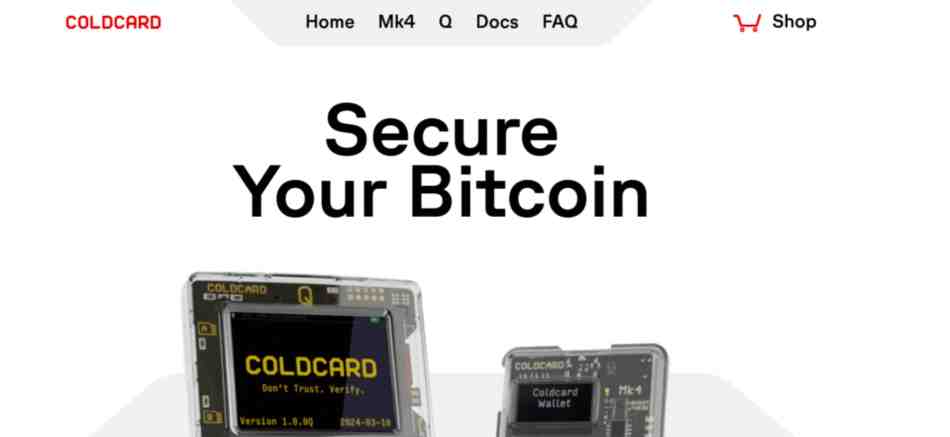
Most known for: Bitcoin-maximalist security air-gapped workflows.
Key features: Secure element; microSD workflows; no Bluetooth; QR/PSBT signing.
Security profile: Excellent PIN policies, duress features, seed phrase and passphrase, and tamper resistance.
Assets & ecosystem: Bitcoin-only; works with popular desktop wallets in Bitcoin.
Ease of use: Stronger yet higher learning rate.
Pros:
- Sturdy air-gapped and PSBT processes.
- Complex security measures of high-end users.
Cons:
- Bitcoin-only
- Less beginner-friendly UI
Best for: This wallet is the best choice among Bitcoin holders who do not need extra functionalities but would like limited offline storage.
You’ll find the full details on their official site: https://coldcard.com/
4. SafePal S1
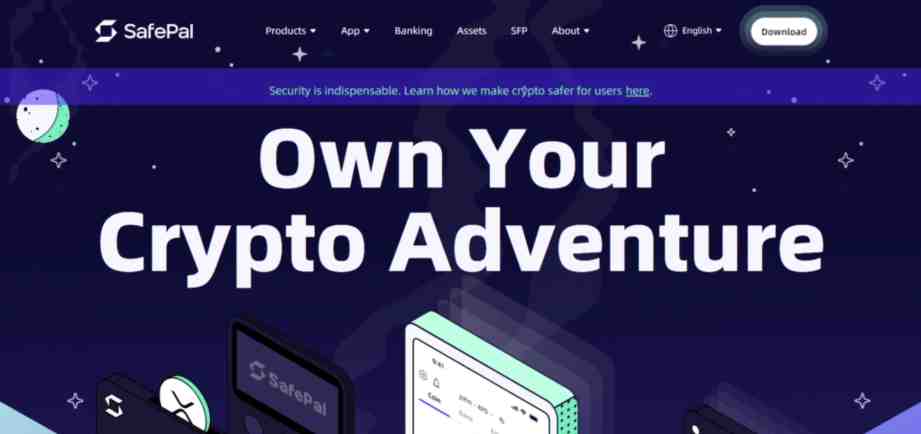
Most known for: QR air gap using cameras, and it is low-cost.
Key features: secure element, QR signature through camera, and no USB/Bluetooth to use.
Security profile: PIN protection, seed phrase, isolated signing, air-gapped operation
Assets and ecosystem: Extensive coverage of assets; mobile companion application.
Ease of use: App-directed flows; QR scanning is introduced to add steps but restricts the attack surface.
Pros:
- Low-cost access to air-gapped signing.
- No direct data cable connectivity.
Cons:
- Smaller screen
- Plastic construction and premium metal devices.
Best for: The wallet is a cold air-gap QR crypto wallet that is affordable enough to be used by someone with a limited budget.
You’ll find the full details on their official site: https://www.safepal.com/en/
5. Ellipal Titan
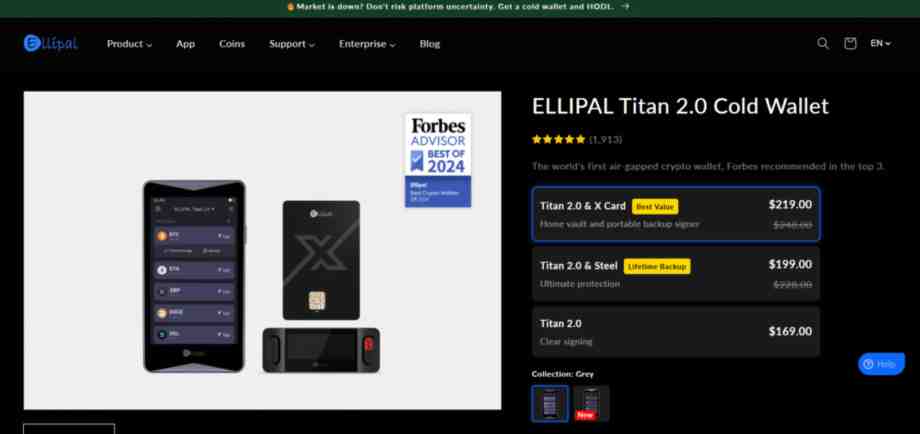
Most known for: Metal-sealed, fully air-gapped hardware device.
Key features: Touchscreen, QR workflow camera, metal enclosure, no data ports.
Security profile: Secure element; tamper resistance; PIN + seed phrase; offline signing.
Assets and ecosystem: Integration of the multi-chain wide, mobile app integration.
Ease of use: big screen is easier to verify; QR flows are not that complex and slower than USB.
Pros:
- High physical resistance to tampering.
- Address entry on the big screen comfortably.
Cons:
- Heavier, less pocketable
- QR can slow down the process of frequent traders.
Best for: Long-term users who are concerned with air-gapped safety and physical longevity.
You’ll find the full details on their official site: https://www.ellipal.com/
6. BitBox02
Most known for: Minimalist design, secure element & open-source firmware.
Key features: USB-C, touchscreen, and 32GB microSD backup.
Security profile: Security element; PIN; verified firmware; seed phrase.
Assets and ecosystem: Multi-asset (there is also a Bitcoin-only version); desktop application.
Ease of use: user-friendly interface; fast update.
Pros:
- Considerate security defaults.
- Compact and durable
Cons:
- No Bluetooth
- Smaller screens as compared to touchscreen models.
Best for: Users looking to have a small, security-focused device that has no hidden practices in firmware.
You’ll find the full details on their official site: https://bitbox.swiss/
Offline hardware crypto wallets best practices
Use your device as a vault key. Your seed phrase will not be replaced; the device will.
- Make your devices offline: write your seed phrase into a machine without cameras and screens.
- Backups: Store backups in hard copy in different secure places; write the recovery phrase on durable media.
- PIN policies: Use a strong PIN; use passphrases when you are aware of the trade-offs of recovery.
- Firmware updates: Just use official tools; read release notes prior to upgrading.
- Transaction hygiene: It is always good practice to check addresses and amounts on the device display.
- Compartmentalize: Use distinct wallets for long-term money and day-to-day expenses.
Secure bitcoin wallet device features to prioritize
In case Bitcoin is your primary asset, a secure Bitcoin wallet device ought to highlight:
- Display verification: The complete address and amount can be seen on-device.
- Open-source firmware (where possible): Community auditability.
- Secure element chip: Secrets strongroom.
- Air-gapped or PSBT workflows: Voluntary offline signing paths.
- Multi-factor checks: PIN + passphrase + device authentication.
- Deterministic backups: Counterintuitive seed phrase and recovery.
How to choose the right hardware wallet for your needs
Use this quick checklist:
Beginners
- Make the screen and system simple.
- Powerful companion application on desktop/mobile.
- Wide multi-currency coverage.
Long-term hodlers
- Air-gapped or PSBT workflows.
- Resistant to building and to tampering.
- Simple backup plan of seed phrase.
Multi-asset users/DeFi users.
- Large chain support and wallet integrations.
- WebUSB/WebHID browser wallet compatibility.
- Regular updates of firmware and tooling of ecosystems.
Travelers
- Compact form factor
- Convenience of Bluetooth (with high hygiene of pairing)
- On-the-go visibility of screens.
Bitcoin-only maximalists
- Barebone bitcoin-based systems have no external components.
- PSBT and offline workflows
- Slow pace of implementing firmware updates.
Middle-of-article note on hardware crypto wallets
Hardware crypto wallets can dramatically decrease the attack surface on the web, but they cannot prevent errors on the part of the user. Seed phrase exposure, fake firmware, or social engineering is responsible for most of the losses in the real world. The device and your habits are what constitute your security posture.
Practical security reminders (prose, not a heading)
Always keep your seed phrase or recovery phrase secret, and do not type it on web pages or in applications purported to fix wallet issues. Store backups in safe offline locations, preferably at different locations. Purchase equipment in official stores; check packaging and counterfeit checks. Be cautious of phishing that resembles software updates or companion applications. Only official tools should be used to install firmware, and unauthorized changes should be avoided, despite the possible additional capabilities.
Frequently Asked Questions
Which hardware wallet is best for cryptocurrency?
The best hardware wallets in 2026 include Ledger Nano X / Ledger Stax, Trezor Model T / Model One, Tangem, and SafePal X1/S1 for offline key storage and top security.
What is the most reliable cold wallet for crypto?
The most reliable cold wallets for crypto storage are air-gapped hardware options like Tangem, Trezor, and Ledger devices that keep private keys completely offline and immune to online hacks.
What is the difference between a hardware wallet and a cold wallet?
A hardware wallet is a physical device that stores keys offline, while a cold wallet is any wallet that keeps keys completely offline; many hardware wallets are cold wallets.
Conclusion
An excellent cold storage infrastructure incorporates robust equipment security, open firmware activities, and peaceful working customs. The decision on the best hardware crypto wallet in 2026 will depend on the assets, frequency of transactions, and the level of friction you are willing to trade in order to have an extra level of protection. Compare displays, connections, air-gap, firmware policies, and ecosystem support, then exercise restrained seed phrase management.
Disclaimer: BFM Times acts as a source of information for knowledge purposes and does not claim to be a financial advisor. Kindly consult your financial advisor before investing.