


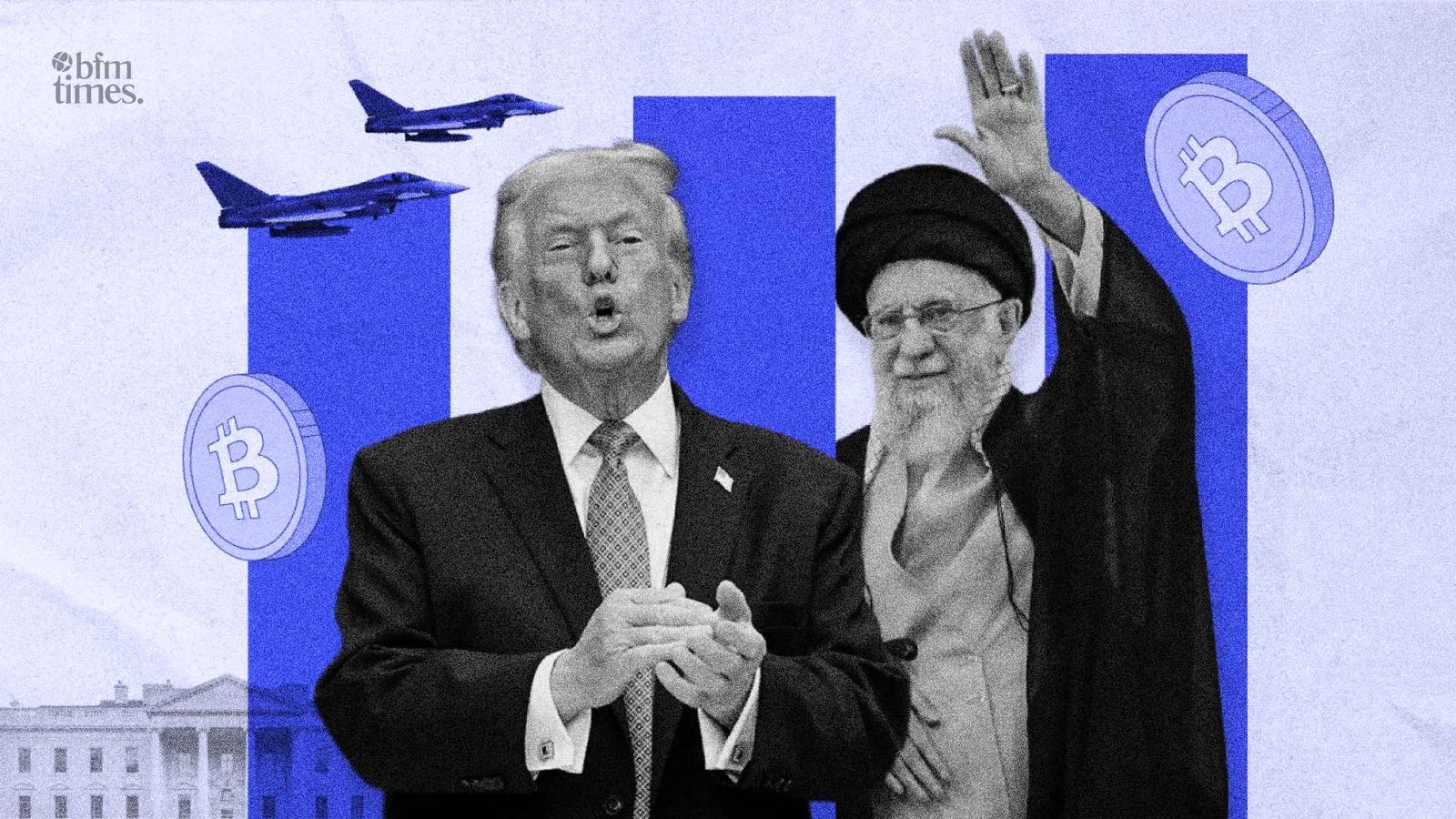
The crypto world is active right now. We see a strong Bitcoin rebound that has surprised many of the traders. It surged nearly 2% after days of the sharp decline. This move comes as Middle East tensions continue to rise. These war fears between the US, Israel & Iran have shaken the global markets. They have pushed the investors to quickly decide where to place their money. The Bitcoin rebound signals that buyers are stepping back in. We see that, despite the uncertainty, crypto is showing signs of strength.
- What Triggered the Recent Bitcoin Rebound?
- How Are Middle East Tensions Driving BTC Volatility
- What Is Bitcoin’s Historical Pattern During Geopolitical Crises?
- What Does the BTC Surge Data Show?
- Is Bitcoin a Safe Haven or a Risk Asset During War Risks?
- What Does Geopolitical Crypto Sentiment on Social Media Show?
- What Could Happen Next for BTC?
- Why Is Institutional Demand a Reason for Optimism?
- What Key Factors Are Traders Watching Right Now
- Conclusion
In this article, readers will gain insights into the Bitcoin Rebounds 2% Amid Middle East Tensions & War Risks featured on BFM Times.
Related: Massive Spot Bitcoin ETFs Inflows Reveal Powerful Institutional Shift Toward Bitcoin Recovery
What Triggered the Recent Bitcoin Rebound?
The date February 28, 2026, marked joint strikes by the United States & Israel inside Iran. We saw military sites & the senior leadership locations targeted. It led Iran to respond with missile & drone attacks on Israel & the US facilities across the Gulf region. This response sent shockwaves through financial markets. They pushed Bitcoin toward 63000 dollars as billions in market value disappeared within minutes. The sell-off did not last long. We saw that the BTC climbed back to around 69571 dollars, which was up nearly 5.77% intraday. It showed that buyers stepped in after the first shock. These short squeezes & the rapid repositioning likely helped in the recovery. The move was the Bitcoin rebound traders had been waiting for.
How Are Middle East Tensions Driving BTC Volatility
The Geopolitical Crypto Connection
The Middle East tensions have always influenced byt the financial markets. We now see that the crypto is feeling the pressure, too. It was once seen as separate from geopolitics but is now tied to financial strategy & the risk associated with it. These online talks about a possible World War 3 surged to levels last seen in mid of the 2025 also. They pushed the social volume & dominance sharply higher in late February 2026. The fear dominated the crypto discussions online.
War Risks Push Traders Into Action
The scope of the confrontation made control efforts harder. We saw that the missile impacts were reported in Dubai, Kuwait & Bahrain. It pointed to a wider regional war instead of a limited exchange & it unfolded in economically sensitive areas. These rising war risks are forcing the crypto market buyers to react quickly. They triggered panic selling followed by fast repositioning. The Bitcoin rebound we are seeing now is partly the result of that shift.
What Is Bitcoin’s Historical Pattern During Geopolitical Crises?
The reaction pattern is not new. We have seen that history shows a clear setup already. We have seen that during the earlier Middle East escalations, Bitcoin dropped at the first shock & then recovered once all the traditional markets got adjusted. This same pattern appeared during Iran’s retaliatory strikes on Israel in April 2025. They repeated during earlier tensions in 2020. The month of June 2025 brought the coordinated US-Israel strikes on Iran, which pushed Bitcoin from $104000 to $100945 within a few hours, even before the recovery. The Bitcoin rebound pattern remains consistent. We see that the panic comes first & then the buyers return after.
What Does the BTC Surge Data Show?
| Event | Bitcoin Price | Movement |
| Before the U.S.-Israel strikes on Iran | ~$70,000 | Stable |
| Immediately after the strikes | ~$63,000 | Sharp Drop |
| Post-shock Bitcoin rebound | ~$69,571 | +5.77% intraday |
| Current BTC resistance level | ~$67,650 | Key level to watch |
| Downside of the support level | ~$65,800 | Critical floor |
Is Bitcoin a Safe Haven or a Risk Asset During War Risks?
The debate remains intense right now. We see that Bitcoin is often described as thedigital gold, but it has traded more like a risk asset during any of the crises. It reacted very quickly when headlines about US strikes on Iran appeared over the weekend. This move pushed the Bitcoin below $64000 even before stabilizing. This showed behavior closer to a liquid risk asset than the traditional gold. The gold price moved higher toward $5376 per ounce as buyers sought safety. We then saw the Bitcoin rebound shortly after, which added a new angle to the debate. It lost nearly 4% in 24 hours while ETH dropped close to 10%. These losses were followed by a quick recovery, which is often linked to safe-haven behavior. They suggest Bitcoin stands between a risk asset & then a store of value.
Suggested: Custodial vs Non-Custodial Wallets Explained
What Does Geopolitical Crypto Sentiment on Social Media Show?
The mood on social platforms shows a strong story. We saw that the market intelligence platform Santiment reports a spike in mentions of WW3 & related phrases. It highlighted strong volatility during both conflict periods on its chart. These periods included June 2025, when Bitcoin fell sharply before stabilizing as a ceasefire reduced the tensions. They show fear dominating online talks right now. The fear also creates buying chances for bold traders. It proves that smart traders watch sentiment data closely. These patterns often show that when fear peaks, recoveries follow.
What Could Happen Next for BTC?
Scenario: If Tensions Ease
The battle staying contained & the oil stabilizing around 80 dollars could support a Bitcoin rebound of 10% to 25% over 60 days. We could see BTC move above the 80000 dollar mark in that case. It would improve the overall market mood & then attract fresh buyers.
Scenario: If War Risks Escalate
The tensions dragging on & oil staying between 90 dollars & 100 dollars could weaken the market backdrop. We would see that the inflation fears return & the policy easing is delayed. It would widen the Bitcoin range between negative 15% & positive 10%. These next few weeks remain critical for the Bitcoin rebound story.
Why Is Institutional Demand a Reason for Optimism?
The large investors are still moving the funds into Bitcoin. We saw that the institutional demand showed signs of optimism last week. It recorded spot Bitcoin ETF inflows of 787.31 million dollars after five straight weeks of outflows. These inflows continue & then growing could support a recovery in the coming weeks. They show that the institutions do not panic like retail traders. The continued buying during war risks supports the view that the Bitcoin rebound could hold if geopolitical pressure eases.
Also Read: Why the Market Suddenly Got Seasick: Decoding the February 2026 Selloff
What Key Factors Are Traders Watching Right Now
The market direction depends on many of the several forces shaping Bitcoin’s next move.
- Middle East tensions are a key driver since any of the new escalation could trigger another sell-off.
- Oil prices because rising oil prices increase inflation fears & increase the risk assets.
- US Federal Reserve rate decisions, which are affecting the crypto liquidity.
- ETF inflows remain important because strong institutional buying can steady the BTC surge.
- The Strait of Hormuz, since any disruption there could impact global markets quickly.
Conclusion
At last, we can conclude that the Bitcoin rebound is clearly visible in the current price action. We saw BTC surge nearly 2% & touch higher levels after initial panic selling driven by war news. It still faces an uncertain road ahead as the Middle East tensions remain high. These war risks have not disappeared & the geopolitical crypto landscape keeps shifting quickly. They require traders to stay alert & also to avoid any of the emotional decisions. The Bitcoin rebound shows that real buyers are willing to step in during fear. We also see that BTC remains sensitive to global events. It depends on what happens next in the Middle East. These oil prices, ETF flows & then the social sentiment remain key signals to watch. The Bitcoin rebound story continues to Bitcoin Rebounds 2% Amid Middle East Tensions & War Risksunfold & the next phase could bring even larger moves.
Disclaimer: BFM Times acts as a source of information for knowledge purposes and does not claim to be a financial advisor. Kindly consult your financial advisor before investing.
Why did Bitcoin rebound during Middle East tensions?
Bitcoin rebounded about 2% as some investors turned to crypto as an alternative asset during geopolitical uncertainty.
How do global conflicts affect Bitcoin prices?
Global conflicts can increase market volatility and sometimes push investors toward assets like Bitcoin for diversification.
Is Bitcoin considered a safe haven during war risks?
Some investors view Bitcoin as a digital safe haven, but its price can still remain highly volatile.