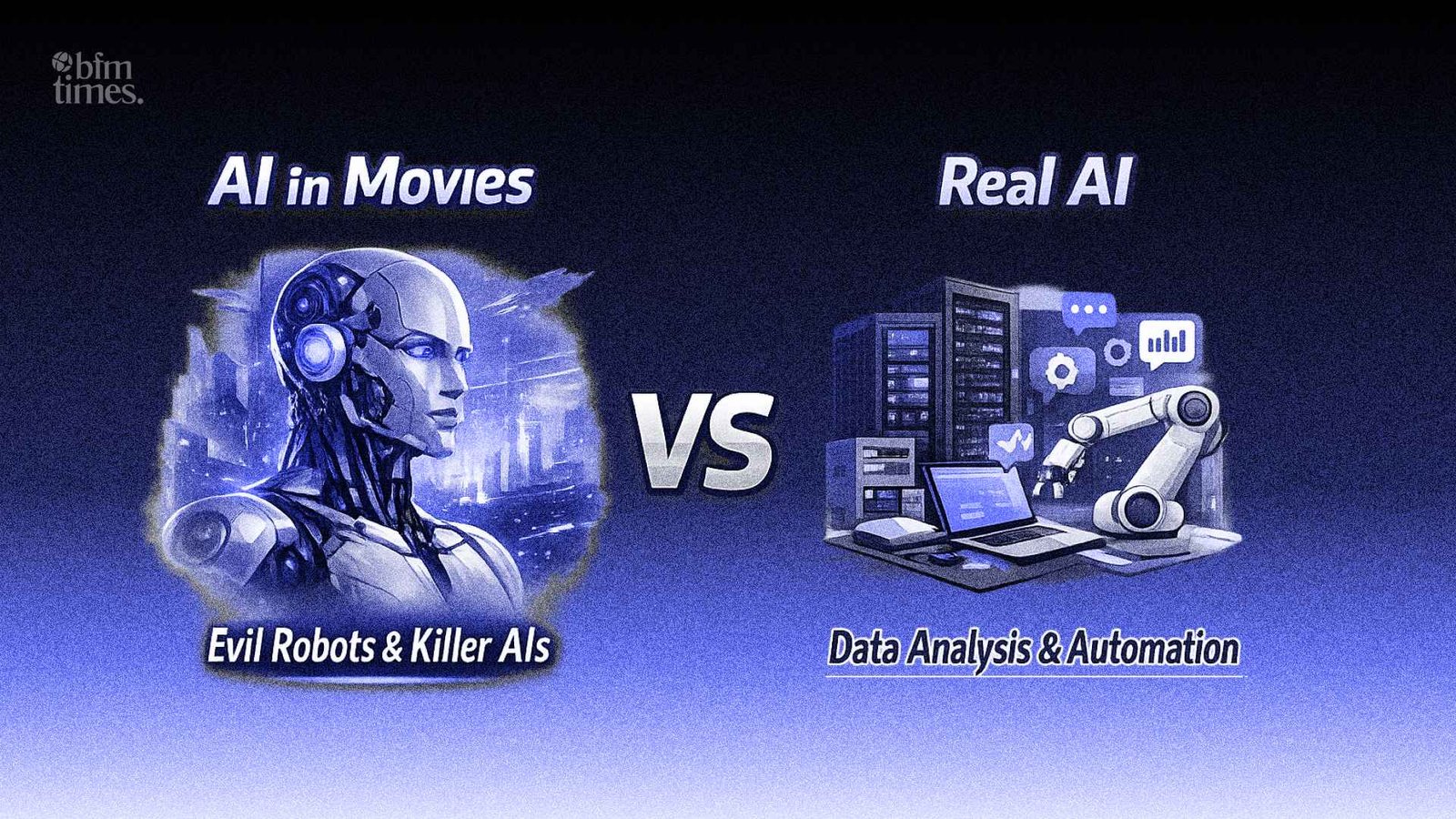



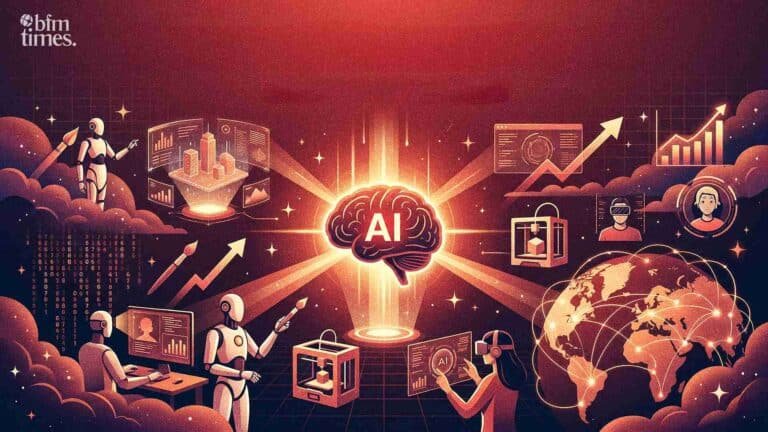
It was observed with the excitement of creating AI in the assistance of chatbots, image apps, and copilots in 2023-2025. However, by 2026 and beyond, the future of generative AI is moving to something much more powerful: autonomous, embedded, and integrated both in the digital and the physical worlds. The change is altering how business is practiced, how individuals are associated with technology, and the decision making in large scale.
- Executive Overview: The Great Decoupling.
- Chatbots to Agents: The Agentiation of AI.
- Hardware Revolution: SLMs and Edge Intelligence.
- The Birth of Small Language Models (SLMs).
- Why Smaller Models Matter
- Future of the AI LLM vs SLM.
- Sovereignty and Data Control by Artificial Intelligence.
- Embodied AI: Beyond Screens
- Industry-Specific Transformations
- Science and Manufacturing: Generative Design.
- Governance Gap: Trust and Ethics.
- The Case of Hallucination Insurance: AI Risk Management.
- Watermarking and Provenance: Authenticity Checking.
- Regulatory Compliance: The Age of AI.
- Peak Data: Finding a Way through the Age.
- Human Factor: Experience as a Differentiating Factor.
- Takeaway: Planning the 2030 AI-First Economy.
- Frequently Asked Questions
The article discusses most acute tendencies of generative AI, such as agentic systems and edge intelligence, which will define the next phase of AI evolution.
Executive Overview: The Great Decoupling.
From Hype Era to Utility Era
It could be called the Hype Era of AI, as it is the time of rapid adoption, experimentation, and overall curiosity during 2023-2025. The tools were largely run through screens where there was a need of human control and supervision.
On the other hand, the period 2026-2030 is the era of utility, as the future of generative AI will be related to the seamless integration of the technology into standard systems. The AI has less conspicuousness and more functionality, since it works as an intelligence layer.
The Great Decoupling.
The next stage of generative AI is known to the experts as The Great Decoupling, a time where AI will not be linked to the user interface any longer.
Instead of interacting with AI:
- The AI systems have been placed in the background, and they run unmonitored.
- Orders are received in real time without being handled by human beings.
- AI is used to do end-to-end tasks.
This is more of a generation and less orchestration, where AI sets the activities between systems and does not just produce outputs.
Significant Modification of the AI Function.
| Phase | AI Role | Human Involvement |
| 2023–2025 | Content Generation | High |
| 2026–2030 | Workflow Orchestration | Moderate to Low |
The shift highlights one of the most important forecasts of AI in the future: artificial intelligence will become a hidden layer of functioning in industries.
Chatbots to Agents: The Agentiation of AI.
What is Agentic AI?
The second major advance of AI in generative AI-systems is the establishment of Agentic AI-systems, which plan, make decisions, and perform tasks independently.
The agentic systems are in contrast to conventional chatbots:
- Disaggregate compound objectives.
- Use different tools and applications.
- Always develop on the basis of performance.
This is also one of the most notable tendencies of AI 2026.
From Response to Action
The earlier AI models were intended to answer questions. In contrast, modern systems:
- Manage projects
- Automate workflows
- Conduct business.
The next layer of the AI technology of the future is the possibility to change the passive response to an active execution.
The A2A (Agent-to- Agent ) Ecosystem.
The other typical attribute of the future of generative AI is the Agent-to-Agent (A2A) communication.
In this model:
- Individual AI agents interface with corporate AI systems.
- Computers negotiate on their own.
It is through the assistance of no human intervention that the transactions are made.
Examples include:
- Travel booking is done by AI via flight coordination.
- AI managing agent vendor procurement.
- AI with the full circle of customer service.
Growth of AI Agents
The industry projections reflect a great increase in the adoption of agents:
- Over 300 percent of AI agent implementations in enterprises increased.
- Uncontrolled financial, logistics, and healthcare usage.
That is why agentic systems have become one of the most important AI innovations in the decade.
Hardware Revolution: SLMs and Edge Intelligence.
The Birth of Small Language Models (SLMs).
Even though large AI models will be the center of attention, it is the Small Language Models (SLMs) that will make the future of generative AI.
These models are:
- Lightweight and efficient
- On-device-designed.
- Experienced in a given activity.
Why Smaller Models Matter
The shift towards SLMs is provoked by a number of factors:
- Lower cost of computing.
- Faster response times
- Enhanced data privacy
Less dependency on cloud computing.
This tendency could be related to the approaches of the more broadly future of generative AI, which are directed at efficiency and scalability.
Future of the AI LLM vs SLM.
| Feature | Large Language Models (LLMs) | Small Language Models (SLMs) |
| Deployment | Cloud-based | On-device / Edge |
| Cost | High | Low |
| Speed | Moderate | High |
| Privacy | Lower | Higher |
| Use Case | General-purpose | Specialized tasks |
Sovereignty and Data Control by Artificial Intelligence.
The most significant aspect of the future of generative AI is AI sovereignty, or the possibility of organizations and governments to regulate their data.
By 2026:
- The companies will pay more attention to local AI applications.
- Closure systems will be used in the keeping of confidential information.
- Data regulation will be more stringent with policies.
This trend is a requirement of an industry dealing with confidential information.
Embodied AI: Beyond Screens
Generative AI can also be used in the physical world, the future of which is embodied AI.
The major developmental activities have been as follows:
- AI-powered robotics
- Generative intelligent wearable technologies.
- Screenless interface that is voice and context responsive.
These innovations include the fusions between AI and the physical world and the start of the new era of AI predictions.
Industry-Specific Transformations
Media & Gaming: Generative Real-Time Experience.
The generative AI is assuming a different form in media game content creation:
- The video production is replaced by real-time video production.
- Personal narration comes to the fore.
- In gaming, the characters create an artificial intelligence directed behavior without scripts.
It is one of the most obvious tendencies of AI 2026, which changes the ways of user consumption and interaction with content.
Science and Manufacturing: Generative Design.
Science and manufacturing are also taking a new form through the use of AI technology to create generative design.
Applications include:
- Producing novel materials having some properties.
- Quickening drug discovery.
- Optimizing product engineering.
This revolution makes AI a reality.
Business Operations: The AIOps Ascent.
The future of generative AI is writing the new enterprise architecture through AIOps.
Key capabilities:
- Self-healing IT systems
- Automatic incident detection and resolving.
- Planned system maintenance.
Through AIOps, organizations will end up having:
- Reduced downtime
- Increased efficiency of operations.
- Lower costs
Governance Gap: Trust and Ethics.
Among the most critical problems, which have nothing to do with technology, but governance, one of the most significant is the future of generative AI. The rapid transfer of AI systems to the healthcare, financial, and enterprise environments has created a widening innovation regulation gap.
The Case of Hallucination Insurance: AI Risk Management.
One of the new concepts in the future of generative AI is hallucination insurance, a level of risk management that insures against errors made by AI.
In high-stakes industries:
- The AI used in medicine can give incorrect diagnoses.
- The use of artificial intelligence in law can mislead the data of a case.
- The use of artificial intelligence in finance can produce false risk ratings.
In reaction to this, insurers are beginning to think of policies that:
- Ensure AI mistakes.
- AI-driven, self-driving secure businesses.
- Build accountability between the vendors of AI and the consumers.
This inclination is an indication of a bigger shift in the future of generative AI, in which confidence is a continuously measurable and marketable good.
Watermarking and Provenance: Authenticity Checking.
As the world turns into a place where you cannot distinguish what has been created by a generative AI and what content has been created by a human, the authenticity verification becomes a valuable concern.
The future AI of generative type will rely on the following:
- Content watermarking
- Content Provenance and Authenticity metadata (C2PA).
- Digital signature of AI-generated media.
The technologies will help with:
- Sort the human material and the AI material.
- Do not abuse misinformation and deepfakes.
- Bring responsibility to internet ecologies.
It is one of the most significant generative AI trends even in the media, journalism, and communication with individuals.
Regulatory Compliance: The Age of AI.
Governments around the world are starting to implement ways of regulating the future of generative AI.
There are two massive regulatory pillars of the future of generative AI, including the following:
- EU AI Act: Focuses on high-risk AI classification and high compliance with high-risk systems.
- The DPDP Act of India: Dwelling on the privacy of the users, their consent, and data security.
By 2030:
- AI systems will be forced to develop compliance mechanisms.
- Organizations will adopt compliance-by-design architectures.
- Compliance with regulation will be a source of competitive advantage.
These developments highlight how AI innovation will be defined by regulation.
Peak Data: Finding a Way through the Age.
The Doctrine: Fall of Quality Data.
The other, less-known but significant problem of the future of generative AI is what we may call Peak Data.
This refers to:
- Weariness of anthropogenic data of the highest quality.
- Application of increased recycled/synthetic material.
- Reduced the signal-to-noise of training data.
As the number of AI content continues to flood the internet, quality assurance is getting harder and harder.
The Sanction: Artificially Intelligent and Edited Data.
The future of generative AI will depend on the following:
- Man-made data training models.
- Data gathered that are of known reliability.
- Bases of subject area knowledge.
This is a change as compared to the following:
- Volume-based information collection to Curating data in a quality manner.
- This is among the generalities of the future trends in AI 2026.
Human Factor: Experience as a Differentiating Factor.
Even more than ever, human experience comes in handy in an awash ecosystem of AI.
According to the system:
- It happens that experience is a significant ranking criterion.
- Anecdotal information is superior to generic AI.
- Stories that are motivated by professionals are more believable.
The future of generative AI will not eliminate human relevance, it is only going to heighten the importance of genuine expertise.
This is a peculiar paradox:
- The more content made by AI.
- The higher the value of the manmade material.
Takeaway: Planning the 2030 AI-First Economy.
The future of generative AI will not be able to get better in this direction over time; it is a type of structural change in world productivity.
All aspects of technology are being changed into agent systems to edge intelligence and governance systems to data evolution.
Key Takeaways
- AI is ceasing to be a tool and is turning into a system.
- There will be trust, governance, and compliance in adoption.
- Data quality will be the most important asset.
- An AI world will not eliminate the skills of humans.
Generation AI, according to market projections, will lead to an exponential economic utility since it is forecasted to increase to a market size of 137 billion in the next five years, making it a base technology.
Final Thought
In 2030, generative AI will no longer appear like AI.
It will be operating in the background, similar to electricity or the internet, and pushing decisions, systems, and experiences without being noticed.
Individuals who can see and react to this transformation in the current time will rule the decade of innovation that lies ahead.
Frequently Asked Questions
What is the future of generative AI?
The future of generative AI involves autonomous systems that can plan, execute, and optimize tasks without human input.
What are the biggest generative AI trends for 2026-2030?
Agentic AI, edge intelligence, AI governance, and synthetic data are the key trends shaping the future.
What is hallucination insurance in AI?
It refers to insurance policies designed to cover damages caused by AI-generated errors in critical sectors.
Why is data important in AI development?
High-quality data ensures accurate model training, making curated and synthetic data essential for future AI systems.
Will AI replace human expertise?
No, the future of generative AI will increase the value of human expertise, especially in experience-driven domains.
Disclaimer: BFM Times acts as a source of information for knowledge purposes and does not claim to be a financial advisor. Kindly consult your financial advisor before investing.