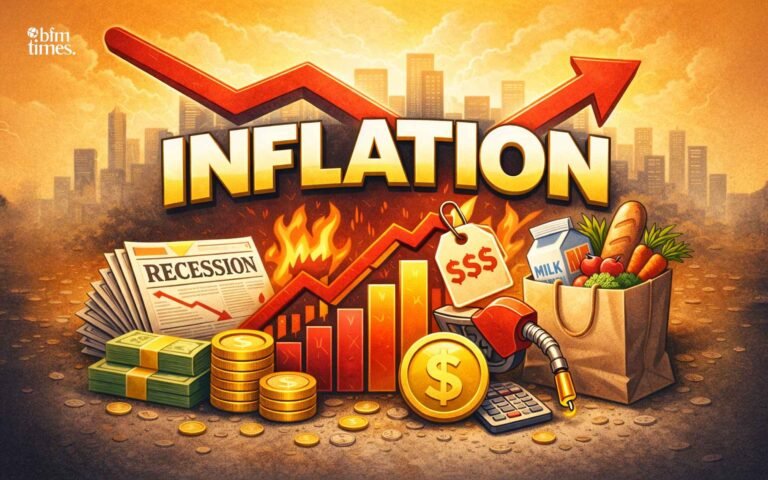
The price of groceries goes up. The cost of rent rises every year. The money in your pocket buys less than it did before. It all comes down to one powerful economic force. What is inflation? It is one of the most important questions anyone can ask about money & the economy. It touches every part of daily life from food & fuel to savings & salaries. This blog explains what inflation is & how it works in the real world today.
What is Inflation?
Inflation is the general rise in the price of goods & services over time. It means the same amount of money buys less than it did before. The value of money goes down as prices go up. It is a natural part of most economies around the world.
The Federal Reserve Board defines inflation as a general increase in the overall price level of goods & services in the economy. It is measured using tools like the Consumer Price Index or CPI. The CPI tracks the prices of everyday items like food, fuel, rent & clothing. It gives a clear picture of how fast prices are rising.
In April 2026 the US CPI rose 3.8% over the past 12 months. This means the average American is paying 3.8% more for the same goods & services compared to last year. It is a real impact that every household feels every single day.
What are the Main Types of Inflation?
It is not enough to just know what inflation is. It is also important to know the different types that cause prices to rise. These are the three main types of inflation that economists track.
- Demand Pull Inflation
This type of inflation happens when people want to buy more goods than are available. The high demand pushes prices up. It often occurs when the economy is growing fast & people have more money to spend.
- Cost Push Inflation
This type of inflation happens when the cost of making goods goes up. It could be due to higher energy prices or rising wages for workers. These higher costs get passed on to buyers in the form of higher prices.
- Built In Inflation
This type of inflation happens when workers expect prices to keep rising. They then ask for higher wages. The higher wages raise the cost of production & this pushes prices even higher. It becomes a cycle that is hard to break.
What Causes Inflation?
Inflation does not happen for just one reason. It is driven by many forces working at the same time. These are the key causes of inflation that matter most right now in 2026.
- Rising Energy Prices: The energy index rose 3.8% in April 2026 alone. It was linked to ongoing global tensions affecting oil supply routes. It pushed up the cost of transportation & production across all sectors.
- Shelter & Housing Costs: The shelter index rose 0.6% in April 2026 & is up 3.0% over the past year. High mortgage rates near 6% are keeping housing costs elevated. It is one of the most persistent drivers of inflation today.
- Tariff Effects: Rising import tariffs are pushing up the cost of goods made abroad. Businesses pass these costs to consumers in the form of higher prices. It adds to the overall pressure on household budgets.
- Strong Consumer Demand: When more people spend more money on the same supply of goods it pushes prices up. The global economy continues to see strong consumer activity in many regions.
- Supply Chain Pressure: Global supply bottlenecks in tech & transport are raising production costs. Rising import & transportation costs are putting upward pressure on prices of many goods.
How is Inflation Measured? Understanding CPI and PCE
It is important to know how inflation is tracked & reported. The two most widely used tools are the CPI & the PCE.
The Consumer Price Index or CPI is the most widely used measure globally. It is published by the US Bureau of Labor Statistics. It tracks price changes across hundreds of everyday goods & services.
The Personal Consumption Expenditure or PCE is the Federal Reserve’s preferred tool. It is published by the Bureau of Economic Analysis. The PCE gives a broader view of spending & price changes across the economy.
What is a Healthy Inflation Rate?
It is a common question people ask about inflation. The answer is that a small amount of inflation is actually good for the economy. Most central banks around the world aim for an inflation rate of around 2% per year.
The US Federal Reserve targets a 2% inflation rate. The global median inflation rate stood at around 3.1% across 163 countries in 2026. It is above the ideal target but much better than the peak of 9.6% seen in September 2022. Global inflation has been falling since that peak & is now stabilizing in many regions.
How Do Governments & Central Banks Fight Inflation?
The primary tool against inflation is interest rates. When inflation spikes, central banks hike rates to make borrowing costlier, slowing spending and eventually cooling prices.
The Federal Reserve cranked up rates aggressively from 2022 to 2023, tackling inflation which had hit a 40-year high. By 2026, rates stabilized at 3.50% to 3.75%, and the Fed is monitoring inflation data for clues on future rate moves.
Besides tweaking rates, governments cut spending to dampen economic demand. They also use trade policies and supply-side changes to gradually ease price pressures.
Conclusion
At last we can conclude that It is one of the most powerful forces shaping the economy today. It is the rise in prices that reduces the value of money over time. It affects what we pay at the store & what we earn at work. It shapes the decisions of governments, businesses & every household.
The US inflation rate hit 3.8% in April 2026 & the global picture remains complex with energy costs & supply chain pressures still driving prices higher. Understanding what inflation is & how it works gives everyone the tools to make smarter financial decisions. It is not just an economic term. It is a daily reality that deserves every person’s attention.