



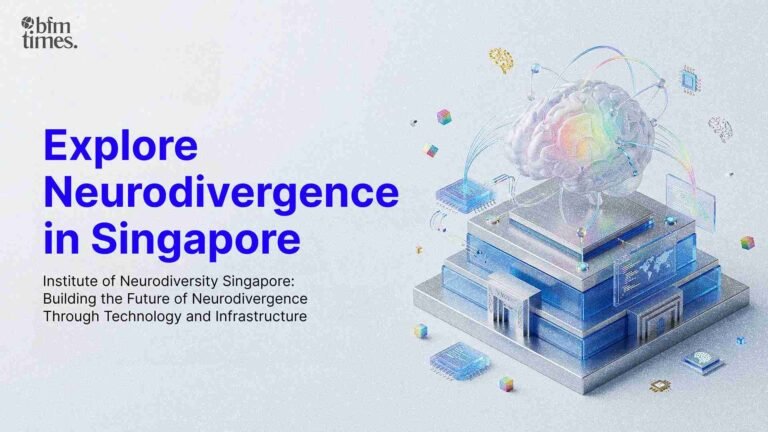
Institute of Neurodiversity Singapore highlights how World Autism Awareness Day has long symbolized the importance of acknowledging neurodiverse people. It shows that as the global discourse around the topic grows, there is a clear need to move beyond awareness. Although awareness campaigns have improved visibility, they have not created real change in frameworks related to work, education, healthcare, and social integration.
- The Institute of Neurodiversity Singapore: A System-Level Approach
- Understanding Neurodivergence: The Scale and the Gap
- Technology as Infrastructure: Not Just Innovation
- The Neurodiversity Web3 Ecosystem: A New Model for Inclusion
- Where This Model Actually Works
- Who is Raj Kapoor?
- His Role in Shaping the Neurodiversity Ecosystem
- Why This Approach Changes the Future of Neurodivergence
- From Awareness to Architecture: A Structural Shift
- The Future of Neurodivergence Will Be Built, Not Discussed
It is evident that existing systems still exclude neurodiverse individuals from opportunities in education, employment, healthcare, and essential social services. The challenge is no longer about recognition but about building systems that are designed to include diverse cognitive needs.
The Institute of Neurodiversity Singapore: A System-Level Approach
The Institute of Neurodiversity Singapore (ION Singapore) represents a significant departure from traditional approaches to inclusion. In other words, unlike most of the organizations working on the issue of inclusion, the Institute of Neurodiversity Singapore does not focus on specific programs or interventions. Instead, the Institute of Neurodiversity Singapore focuses on building ecosystems that foster the long-term sustainability of the concept of inclusion.
In terms of a review, the main difference between the Institute of Neurodiversity Singapore and other organizations is their focus on infrastructure instead of initiatives. Institute of Neurodiversity Singapore prioritizes the design of ecosystems that promote better inclusion, unlike many organizations that aim to “fix” individuals with neurodiversity issues. Such designs involve developing digital infrastructure, institutional structures, and ethical designs.
The Institute of Neurodiversity Singapore model, by nature, is a long-term one. It is laying the groundwork for the neurodiversity ecosystem, which emphasizes continuity and interoperability. Focusing on infrastructure allows it to transcend the constraints of program-centric models and create a world where inclusion becomes part and parcel of the social structure.
Understanding Neurodivergence: The Scale and the Gap
It is also important to acknowledge that neurodiversity is far more common than many believe. The current statistics indicate that around 20% of all people belong to the neurodiverse spectrum. However, the system has not been able to adapt to the needs of neurodivergent individuals on any considerable level.
The situation becomes especially problematic when it comes to education and employment. In traditional educational settings, the standardized approach prevails, and there is no room for personalized learning. Therefore, many neurodivergent individuals fail to unlock their full potential in such environments. Employment is similarly challenging, as the rate of unemployment among neurodivergent individuals remains significantly higher than average.
In fact, the neurodiverse individuals have unique skills that include the ability to think analytically and creatively. The problem, therefore, arises from the inability of the system to match such abilities with the systems required for utilizing these skills. Neurodiversity, therefore, indicates system design failure.
Technology as Infrastructure: Not Just Innovation
Technology is always portrayed as an instrument of innovation; however, technology has to be perceived through a different lens in light of neurodiversity. It is not just about creating innovative solutions but rather building the foundation for the creation of accessible systems.
In that regard, artificial intelligence is instrumental in the process of change. Artificial intelligence is important as it makes it possible to make personalized adaptations of educational materials and workplace settings based on one’s unique cognitive needs.
Blockchain adds yet another dimension of functionality, specifically in terms of identity and trust. The blockchain for inclusion will allow neurodiverse people to have full ownership of their credentials, accomplishments, and data through decentralized and verifiable systems. This issue becomes especially pertinent when traditional systems do not acknowledge alternative routes.
Taken together, these technologies constitute the basis for the infrastructure of neurodiversity. These technologies allow us to develop tech for good systems that are innovative, equitable, and sustainable.
The Neurodiversity Web3 Ecosystem: A New Model for Inclusion
At the core of the Institute of Neurodiversity Singapore’s vision is the development of a neurodiversity Web3 ecosystem. It is an altogether different concept of inclusion, which is based not only on one technological solution but also on many layers of technologies that work in harmony with each other. Unlike platforms, ecosystems help people through all stages of their lives.
AI technologies become the foundation of personalization in such a neural ecosystem. With their help, machine learning models can change education paths in accordance with users’ needs. The result will be the customization of educational processes and the departure from existing curricula, which is great for neurodiverse students.
The blockchain system also supplements this strategy with a system of credentials and identities. Using verified digital records, people are able to present a unified and reliable identity of their skills and experience. This is especially useful in professional settings where conventional credentials cannot provide an adequate reflection of someone’s abilities.
The use of decentralized systems makes the platform more accessible and inclusive. With Web3 technologies, people do not need to rely on central authorities to make decisions. As a result, neurodivergent people will be able to take an active role in designing these systems.
This results not in a one-time platform but rather in an ecosystem for life. The system includes education, work, healthcare, and socializing in an integrative fashion. The model is a whole-systems solution that represents a giant step forward in managing neurodivergence.
Where This Model Actually Works
This approach is not just theoretical. There are numerous successful organizations, like the Institute of Neurodiversity Singapore, that have shown the power of neurodivergent employees with the help of proper systems. Companies like SAP, Microsoft, JPMorgan, and EY have launched dedicated initiatives for hiring neurodivergent employees within their organizations.
This approach has shown some impressive results. Based on research and reports, the Institute of Neurodiversity Singapore teams may perform 30 to 48 percent better at work in particular positions. This is because neurodivergent people have abilities such as strong attention to detail and innovative thinking that contribute to increased productivity.
Such cases show an important point: neurodivergent thinking is not only a question of social responsibility but also economic gain. The challenge lies in scaling these achievements from individual cases to comprehensive solutions. It is precisely what the Institute of Neurodiversity Singapore aims to do.
Who is Raj Kapoor?
Raj Kapoor plays an important role in determining the nexus between technology, policies, and neurodiversity. Raj Kapoor is currently working as a consultant for the Institute of Neurodiversity Singapore and is the founder of the India Blockchain Alliance and chairman of the India AI Alliance. He has been actively involved in several advisory committees and policy frameworks, which make him an ideal person who is able to link emerging technologies and their practical application in everyday life. His contributions can be explored further through his LinkedIn profile, the India Blockchain Alliance (IBA), and BFMTimes, where his thought leadership continues to influence the evolution of tech-enabled ecosystems.
His Role in Shaping the Neurodiversity Ecosystem
The engagement of Raj Kapoor in the neurodiversity community goes beyond just having a concept-based approach. He focuses on implementation and scaling, converting technological breakthroughs into systems. He ensures the development of responsible AI models that guarantee fairness, transparency, and inclusiveness.
On matters related to blockchain technology, his efforts focus on ensuring trust and verification. He ensures the construction of infrastructures that empower people without compromising accountability through his efforts in advocating for decentralization. This aligns closely with the goals of the Institute of Neurodiversity Singapore, particularly in building systems that are both innovative and ethical.
His approach is characterized by system-level thinking. Rather than addressing isolated challenges, he seeks to align multiple components into cohesive ecosystems. This perspective is critical in advancing the neurodiversity ecosystem, where the integration of technology, policy, and practice is essential.
Why This Approach Changes the Future of Neurodivergence
Institute of Neurodiversity Singapore’s approach represents a fundamental shift in addressing neurodivergence. It moves away from fragmented systems, where support is inconsistent and often temporary, toward connected ecosystems that provide continuity across life stages.
This shift has far-reaching implications. First, by harmonizing education, job creation, and healthcare, it offers consistent support to people along the entire trajectory of their lives. Second, it facilitates the creation of a network of talents worldwide in which neurodiverse individuals can work together.
Decentralized learning systems further enhance this vision by offering flexible ways to learn new skills. It helps in overcoming present shortcomings and equips people for future challenges; that’s what the team of the Institute of Neurodiversity Singapore thinks.
From Awareness to Architecture: A Structural Shift
The move from awareness to architecture marks a key step forward for the neurodiversity movement. Awareness may have laid the groundwork, but architecture will determine the success of any push toward inclusion.
The initiatives by the Institute of Neurodiversity Singapore show how this trend is being reflected. By concentrating on capability and infrastructure, it tackles the problem of exclusion at its source and not its effects. It understands that only sustainable solutions can lead to an inherently inclusive society.
This new approach considers the importance of neurodiversity more seriously. It acknowledges that inclusion cannot be brought about by fragmented approaches but by designing inclusive systems.
The Future of Neurodivergence Will Be Built, Not Discussed
Today, the Institute of Neurodiversity Singapore stands as one of the most progressive entities. The emphasis put on infrastructure, technology, and ecosystem creation by the organization makes it a significant part of future development for neurodivergents. It is an innovative and scalable approach that goes far beyond conventional methods.
The contributions of leaders like Raj Kapoor further strengthen this vision, bridging the gap between theory and practice. Together, they represent a shift toward systems that are not only inclusive but also sustainable and impactful.
The future of neurodivergence will not be defined by awareness alone. What will define that future is the infrastructure we create, the system we create, and our dedication to making spaces where all minds can flourish.
1. What is the role of the Institute of Neurodiversity Singapore in inclusion?
It builds long-term systems and infrastructure to support neurodivergent individuals across education, work, and healthcare.
2. Why is neurodiversity considered an infrastructure issue?
Because current systems are not designed for diverse cognitive needs, requiring structural and systemic changes.
3. How do AI and blockchain help neurodivergent individuals?
AI enables personalized learning and work setups, while blockchain ensures secure identity and credential management.
Disclaimer: BFM Times acts as a source of information for knowledge purposes and does not claim to be a financial advisor. Kindly consult your financial advisor before investing.