


Key Insights
- NFTs prove real ownership of digital items through blockchain technology.
- Artists, gamers and even brands can use NFTs to sell and verify unique assets.
- Despite market ups and downs, NFTs have changed how digital value works.
NFTs have changed how people see digital property. They help verify who owns a specific digital item, from art to music or even virtual land.
Before NFTs, anyone could copy a file and claim it as their own. Now, blockchain technology makes it possible to track and prove true digital ownership.
What Makes an NFT Unique?
An NFT stands for “Non-Fungible Token.” The word “non fungible” means that the item cannot be exchanged 1:1 with something else because it is unique.
To further explain fungibility, think of money. One $10 bill is always worth the same as another. The same goes for cryptocurrencies like Bitcoin or Ethereum. Each unit holds equal value.
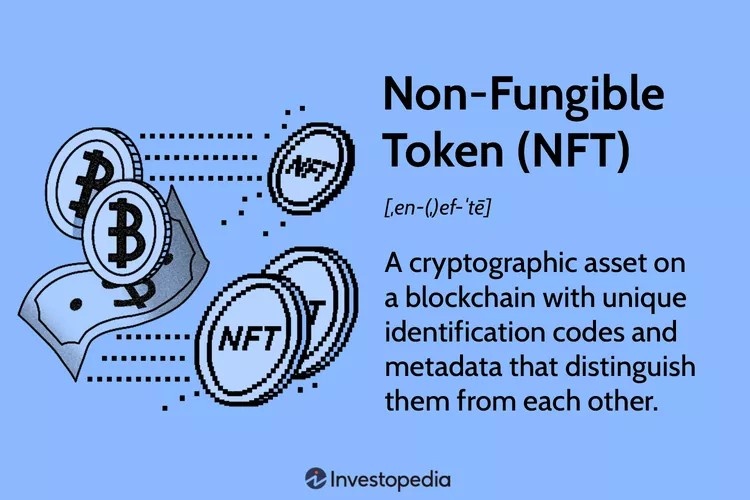
What an NFT is | source: Investopedia
Meanwhile, other valuable items like Art, real estate and collectables are non-fungible. A painting by Picasso or a rare baseball card has unique traits and history that set it apart.
NFTs apply this same idea to the digital world.
When you buy an NFT, you get a digital certificate that is stored on a blockchain. This token proves that you own the original version of a digital asset, even if copies exist everywhere online.
How Blockchain Allows Digital Ownership
Digital files like images, songs and videos can be copied endlessly. That makes it hard to know which one is the original. NFTs solve this problem by linking ownership to a blockchain.
To create a non-fungible token, the owner “mints” it. Minting means uploading data to a blockchain like Ethereum. That data includes a unique token ID and metadata which usually points to the digital file. The non-fungible token then lives inside a digital wallet owned by the creator or buyer.
Every NFT is stored on a public blockchain ledger. Anyone can see who owns it and when it was sold.
If you download an image linked to a non-fungible token, you still do not own it unless the token is in your wallet. This kind of proof is what separates true ownership from a simple copy.
Changing How People Create and Trade Value
NFTs are not just for art collectors. They have created new opportunities across different fields.
Digital creators have gained more control over their work through non-fungible tokens. Artists can now sell their art directly to buyers without going through galleries or streaming platforms.
Non-Fungible Token can include something called programmable royalties. That means that artists earn a small percentage each time their NFT resells on another marketplace.
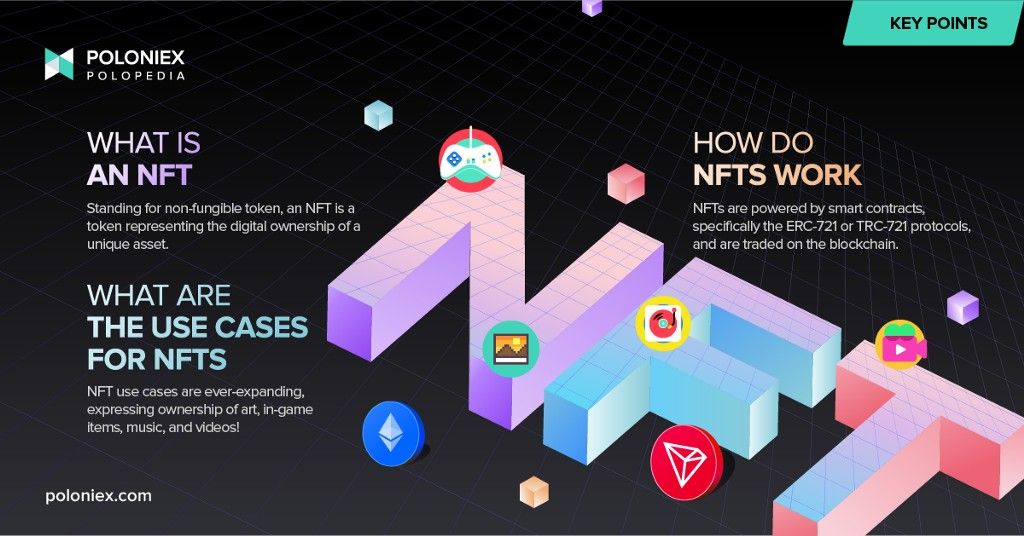
More info about NFTs | source: Poloniex
For example, a creator might set a 5% royalty that pays automatically every time the non-fungible token changes hands. This gives artists a steady income and makes sure that their work keeps rewarding them long after the first sale.
Another use case is with gaming.
Players spend billions on in-game items that they cannot truly own. If a game ends or their account is banned, those items vanish. Non-fungible tokens fix this by letting players own items on the blockchain instead of on company servers.
A sword, a skin or a piece of virtual land stored as an Non-Fungible Token belongs to the player, not the game studio. That item can be sold, traded or even used across other compatible games.
NFTs for Identity, Tickets and Certificates
Non-Fungible Token also help prove authenticity in other areas. Event organisers use them for digital tickets that cannot be faked. Universities can use them to test for diplomas that are impossible to forge.
Property deeds, club memberships and certifications can all live on the blockchain as NFTs.
This approach makes verification fast, secure and transparent. For example, the Bored Ape Yacht Club uses NFT ownership as a digital pass to its private community and exclusive events.
Ongoing Issues Around NFTs
The NFT space still faces several issues. Prices can fluctuate and many NFTs lose value once hype fades. There have also been disputes over copied art and stolen images.
Energy use was another concern when NFTs mainly used the Proof-of-Work system (like Bitcoin). However, many blockchains (including Ethereum) have moved to Proof-of-Stake models that use much less energy.
It is important to separate the NFT technology from the assets linked to it.
The NFT system that records ownership is secure but the item it represents can still lose market value.
Why NFTs Matter for the Future
NFTs stand as a major change from an internet that was built on sharing, to one that is built on verified ownership. This change affects areas like art, gaming, identity and even business.
Whether the market rises or falls, the idea behind NFTs will stay relevant.
This technology gives creators a new level of independence and helps it to define value in a space where copies used to rule. NFTs show that digital things can finally belong to someone in a traceable and verifiable way.
Disclaimer: BFM Times acts as a source of information for knowledge purposes and does not claim to be a financial advisor. Kindly consult your financial advisor before investing.