Artificial intelligence is now part of daily work life. Millions of people use AI tools every single day. They do not know how to write good prompts that would give them the best results. This is exactly where a prompt engineering guide becomes essential. It can transform a basic AI tool into a powerful assistant. The wrong prompt wastes your time & it also gives useless outputs.
- What Is Prompt Engineering?
- Why Is Prompt Engineering a Must-Have Skill in 2026?
- What Are the Core Elements of a Perfect AI Prompt?
- Which Prompt Engineering Techniques Must You Know?
- Zero Shot Prompting
- Few-Shot Prompting
- Chain of Thought Prompting
- Role or Persona Prompting
- Prompt Chaining
- What Are the Common Prompt Engineering Mistakes to Avoid?
- How Do Weak Prompts Compare to Strong Prompts?
- How Do You Write AI Prompts for Different Use Cases?
- What Are the Advanced Prompt Engineering Tips for Better Results?
- How Does Prompt Engineering Work Across Different AI Platforms?
- What Does the Future of Prompt Engineering Look Like?
- What Are the Prompt Engineering Best Practices?
- Conclusion
- Frequently Asked Questions
This prompt engineering guide will teach you everything you need to know. We will cover ChatGPT, Claude & Gemini all of these in full detail. We will show you how to write clear, effective, & the perfect AI prompts. These lessons will help you get better results every single time you use this AI to generate things.
In this article, readers will gain insights into the Prompt Engineering Guide: Write Perfect AI Prompts featured on BFM Times.
What Is Prompt Engineering?
The skill of writing inputs for AI models is called prompt engineering. These inputs are known as prompts. Our goal is to get the best possible output from these AI.
It is like giving the instructions to a new employee. The instructions being vague leads to poor work. The instructions being clear led to excellent results.
Prompt engineering is a new discipline for developing & also to optimizing prompts to efficiently use language models for a wide variety of applications & the research topics.
It is not just about writing questions. It is about designing your communication with AI. It covers structure, tone, context, & the format all at once.
Why Is Prompt Engineering a Must-Have Skill in 2026?
AI is no longer optional in the workplace. It is deeply embedded in how we code, write, analyze & then create.
Following prompt engineering best practices is becoming as important as writing clean code or managing version control of your software. This is especially true as AI tools are now deeply present in daily work.
Here is why learning prompt engineering matters right now:
- It saves hours of back & forth with the AI tools.
- We can get accurate & the relevant answers on the first try.
- It helps us to automate tasks with greater precision.
- These skills help you stand out professionally in your field of work.
The way you ask matters more than what you ask. This means your prompting skill directly shapes your AI results.
What Are the Core Elements of a Perfect AI Prompt?
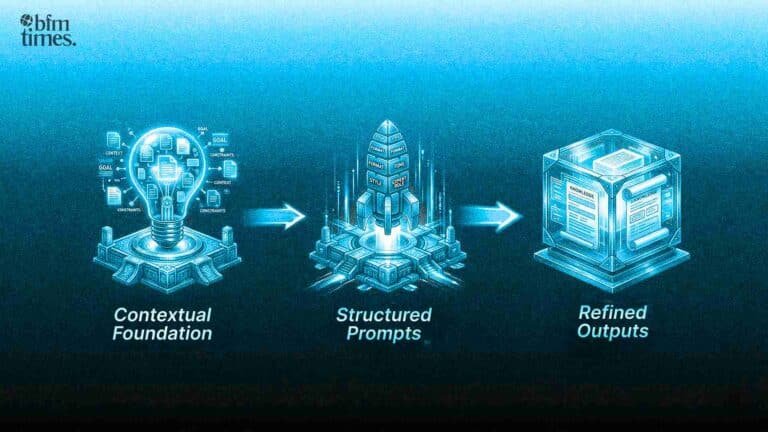
Every great prompt has specific building blocks. Understanding these will instantly improve your results. This section is the foundation of any of the solid prompt engineering guide.
Role
The first step is to tell the AI who it should be. Assigning a role gives the AI a clear frame to work within the context.
Example: Act as a senior marketing strategist.
Supplying clear context, such as “You are a data analyst” or “You are an academic editor,” immediately improves the accuracy & also the relevance.
Task
The next step is to clearly state what you want the AI to do. We must be direct & be more specific. The use of vague language must be avoided in order to get a good result.
Example: Write a 500-word blog post about electric vehicles.
Context
The AI needs background information to work well. We should tell the AI who the audience is. It also helps to explain any of the special conditions or preferences.
Format
The output format must be specified clearly. We can ask for a list, a paragraph, or a table. The AI needs to be told clearly what format is needed so it can generate the context based on it.
Constraints
Adding limits keeps the AI focused. Word count limits, tone requirements & the language rules all count as constraints.
Constraints do not restrict creativity. They give it form. The best prompt engineering practices rely on the constraint-based design to make AI outputs sharper & be much faster.
Which Prompt Engineering Techniques Must You Know?
There are several well-tested techniques in any of the strong prompt engineering guides. These methods work across all of the major AI platforms.
Zero Shot Prompting
The AI is given a task with no examples. We can simply describe what we want.
Example: Summarize this article in three sentences.
This works best for simple tasks that are much more straightforward.
Few-Shot Prompting
We give the AI a few examples before asking for the real output. These examples teach the AI the preferred style or format.
Example:
- Input: The sky is blue. Output: Tone: Factual, Simple.
- Input: Write a sentence about the ocean. Output:?
This is one of the most powerful techniques in prompt engineering.
Chain of Thought Prompting
We ask the AI to think step by step. This helps when we encounter complex problems, math, or logical reasoning.
Example: Solve this problem step by step: If a train travels 60 km/h for 3 hours.
The key techniques include zero-shot prompting, few-shot prompting, chain of thought prompting, tree of thought prompting, role or persona prompting, prompt chaining, meta prompting, & it then reflection prompting to guide reasoning & the output quality.
Role or Persona Prompting
The AI is assigned a specific persona. This shapes the tone, depth, & the focus of the output.
Example: Act as a financial advisor with 20 years of experience.
Prompt Chaining
The big task is broken into smaller steps. Each prompt builds on the last one.
Prompt chaining allows us to link multiple prompt parts together to guide the model through complex tasks step by step. It is especially useful when we need to break a big problem into smaller parts or for creating outlines before writing any of the full drafts.
What Are the Common Prompt Engineering Mistakes to Avoid?
Even experienced users make these errors. We should avoid them to get better results.
Being Too Vague
The vague prompt gives a vague answer. We must always be as specific as possible.
Bad prompt: Tell me about the marketing. Good prompt: Explain three digital marketing strategies for small businesses in 2026.
Overloading the Prompt
Too many instructions confuse the AI. We should keep each prompt focused on just one clear goal.
Skipping Context
The AI guesses your intent when context is missing. We must always explain who the audience is & what the purpose of it is.
Not Specifying Format
The AI will choose a format on its own if we do not ask for one. It might not be what we need.
Prompt engineering best practices focus on being specific, providing clear context, examples & the data, defining the output & giving instructions on what to do.
How Do Weak Prompts Compare to Strong Prompts?
Here is a table showing the difference between the weak & the strong prompts. We can use this as a reference whenever writing our own.
| Weak Prompt | Strong Prompt |
| Write about AI. | Write a 400-word guide to AI in simple language. |
| Fix my code. | You are a Python expert. Fix this code & explain each change. |
| Give me marketing tips. | List 5 Instagram marketing tips for a food brand targeting millennials. |
| Summarize this. | Summarize this article in 3 bullet points for a non-technical audience. |
| Write a story. | Write a 300-word mystery story set in Mumbai with a twist ending. |
| Explain machine learning. | Explain machine learning to a 10-year-old using a fun analogy. |
The difference is clear. Strong prompts are specific, clear, & they are well formatted. Weak prompts leave too much to chance, and it sometimes confuses.
How Do You Write AI Prompts for Different Use Cases?
The best prompt engineering guide covers all the common use cases. Here is how to write prompts for the most popular tasks.
Writing & Content Creation
The prompt must be specific about tone, audience, word count & goal.
Example: Act as a content writer. Write an engaging 600-word blog post about remote work for professionals aged 25 to 40. We want a conversational tone & three actionable tips.
Coding & Development
The programming language, the problem & the expected output must always be mentioned.
Example: You are a senior Python developer. Write a function that reads a CSV file & returns the average of a specific column. It must include comments in the code.
Data Analysis
The format of the data must be shared with the AI. We need to explain what insight is needed.
Example: Analyze the following sales data. It should identify the top-performing product & the month with the lowest sales. These findings must be in a short paragraph.
Customer Support
The AI needs a persona & clear guidelines. We must specify the tone & limits.
Example: Act as a friendly customer support agent for a software company. Respond to this complaint in a polite & kind tone in under 100 words.
Learning & Education
The AI can teach through examples, simple comparisons, or step-by-step explanations.
Example: Explain blockchain technology using a simple real-world comparison. We want it written for someone with no tech background.
What Are the Advanced Prompt Engineering Tips for Better Results?
These advanced tips will take your skills higher once the basics are clear.
Use Evaluation Criteria
The AI can be asked to rate its own output. This leads to more accurate & thoughtful responses.
Example: After writing the email, rate it on clarity (0 to 5), professionalism (0 to 5) & tone (0 to 5).
Simulate Multiple Perspectives
The AI can be asked to consider different viewpoints before giving a final answer.
Example: Consider this business idea from the perspective of a customer, an investor & a competitor. Then give your final recommendation.
Iterate & Refine
The first try will not always be perfect. We should test prompts, make small changes & track what works.
Strong results from large language models come from iterating on prompts, testing variations, understanding model limitations & refining inputs based on the quality & consistency of results.
Build a Prompt Library
The best performing prompts must be saved. We should organize them by task or industry. They can be reused & refined over time.
Each time a prompt works well, we should save it. These prompts can be organized by field, such as writing, coding, education, design, research & business. It will slowly build into a personal prompt bank we can use for clients, job applications, or internal projects.
How Does Prompt Engineering Work Across Different AI Platforms?
Different AI tools respond in slightly different ways to prompts. Here is what we need to know about the major platforms.
| AI Platform | Prompt Style That Works Best |
| ChatGPT | Role-based prompts, structured outputs, and code tasks |
| Claude | Clear instructions, ethical tasks, and long documents |
| Gemini | Context-heavy prompts, research tasks, multimodal inputs |
| Midjourney | Visual description prompts, style references, detail tags |
| Copilot | Code-specific prompts, inline comments, and function descriptions |
Clear structure & context matter more than clever wording. The difference between good & poor results usually comes from unclear prompts. Different models respond better to different formatting patterns & there is no single best practice for all.
We must always test prompts on the specific tool being used. Each platform has its own strengths.
What Does the Future of Prompt Engineering Look Like?
Prompt engineering is evolving fast. It is no longer just a skill for developers or tech experts.
In 2026, prompt engineering is no longer just about asking questions. It is now about designing the types of questions that will guide models toward the accurate & useful outputs.
Here is what the future holds:
- AI tools will get smarter & the prompts will still guide them.
- Companies are hiring dedicated prompt engineers as full-time roles.
- Prompt templates will become standard in business workflows.
- Context engineering & the prompt chaining will grow in importance.
Prompt engineering is product strategy in disguise. Every instruction written into a system prompt is a product decision.
This means learning prompt engineering today puts you ahead of the curve tomorrow.
What Are the Prompt Engineering Best Practices?
We can use this table as a fast reference whenever writing a new prompt.
| Best Practice | Why It Matters |
| Be specific & clear | It reduces guesswork for the AI. |
| Assign a role to the AI | It improves tone, depth & relevance. |
| Define the output format | It ensures we get what we need. |
| Add constraints | It keeps responses focused & useful. |
| Provide examples (a few shots) | It guides the AI toward the preferred style. |
| Break complex tasks into steps | It reduces errors in multi-step outputs. |
| Iterate & refine prompts | It improves consistency over time. |
| Save effective prompts | It builds a reusable personal prompt library. |
Conclusion
Writing perfect AI prompts is a skill that anyone can learn. It does not require a degree or technical background. It only requires practice, structure & a clear understanding of what you want.
This prompt engineering guide has covered everything from the basics to advanced techniques that the user should know. We now know the core elements of a great prompt. The top techniques, like few-shot prompting & the chain of thought, are now clear. We know that the mistakes to avoid & the platforms to use them on.
The most important thing is to start applying this prompt engineering guide right now. We should pick one AI tool. Then we write a structured prompt using the role, task, context, format, & with constraints. The difference compared to the old prompts will be very clear.
Every expert was once a beginner. The only thing separating good results from great results is how well we communicate them with AI. We now have the complete prompt engineering guide to do exactly that.
Frequently Asked Questions
What is prompt engineering in simple words?
It is the skill of writing clear & specific instructions for AI tools. The better the prompt is, the better the result will be.
Do I need coding skills to learn prompt engineering?
No coding skills are needed at all. We just need to understand the structure of a good prompt & apply it with practice.
Which AI tools work best with prompt engineering techniques?
These techniques work well across ChatGPT, Claude, Gemini & Copilot. We just need to test & refine our prompts on the specific tool we use.
Disclaimer: BFM Times acts as a source of information for knowledge purposes and does not claim to be a financial advisor. Kindly consult your financial advisor before investing.