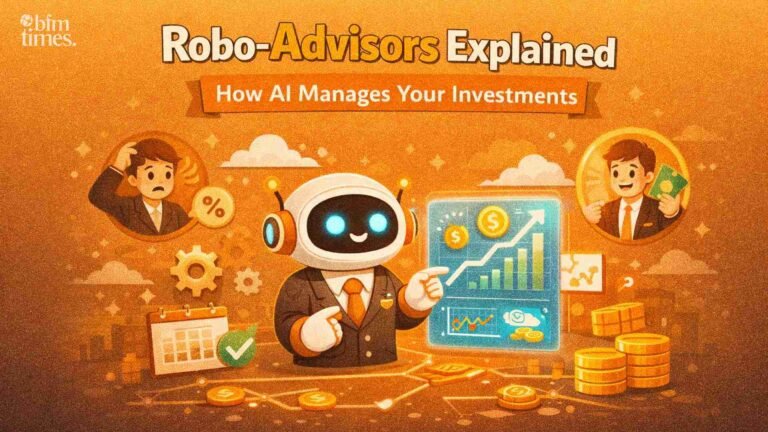
The task of managing money has never been easy. Most people lack time, knowledge & resources to invest wisely. This is exactly where robo-advisors step in to help. These robo-advisors are AI-powered platforms that manage your investments automatically. They analyze your financial goals & build a personalized portfolio for you. It requires no human advisor at all. The platforms also charge no hefty fees. This smart technology works around the clock for you. In 2026, the global robo-advisors market is projected to reach $16.79 billion. This number tells a very clear story. The world is seeing more & more people trust AI with their money. It is a great time to understand how robo-advisors work.
- What Are Robo Advisors & How Do They Function?
- How Do Robo-Advisors Actually Work Step by Step?
- What Are the Key Benefits of Using Robo-Advisors?
- Low Cost & High Accessibility
- Personalized Investment Strategies
- Diversification Made Easy
- Emotion Free Investing
- Which are the most popular robo-advisor platforms in 2026?
- Who Should Use Robo-Advisors & Why?
- What Is the Role of AI & Machine Learning in Investment Management?
- How Do Robo-Advisors Make Real-Time Portfolio Adjustments?
- What Are the Challenges & Limitations of Robo Advisors?
- Lack of Human Touch
- Data Privacy Concerns
- Limited Customization for Complex Situations
- Regulatory Challenges
- What Does the Future Hold for Robo Advisors?
- Conclusion
- Frequently Asked Questions
In this article, readers will gain insights into Robo Advisors: How AI Manages Your Investments featured on BFM Times.
Also read: AI in Loan Approval: How Banks Use Machine Learning for Credit Scoring (2026 Guide)
What Are Robo Advisors & How Do They Function?
These robo-advisors are digital platforms that use smart programs to manage investments. They ask you a few simple questions about your financial goals. It also reviews your risk tolerance & investment timeline. These inputs help the platform build the right portfolio for you. It invests your money in stocks, bonds & ETFs automatically. The system does all the heavy lifting on your behalf. There is no need to check the market every single day.
How Are Robo-Advisors Different from Traditional Advisors?
The traditional financial advisors are human experts. They charge high fees, often between 1% & 2% of your total assets annually. These high charges make them costly for most people. Most robo-advisor platforms charge between 0.20% & 0.50% per year. This difference in cost is very large over time. The platforms are also available 24/7 through your smartphone or computer. A traditional advisor works limited hours & may not always be reachable.
How Do Robo-Advisors Actually Work Step by Step?
The process is simple & easy to follow. It runs in five clear steps.
Step 1: Onboarding: The first step is to sign up on the platform. It asks you questions about your age, income, financial goals & risk appetite.
Step 2: Portfolio Creation: The AI analyzes all your inputs carefully. It then builds a well-spread investment portfolio that fits your profile.
Step 3: Automatic Investing: The system invests your money across different assets like stocks, bonds & ETFs. It also rebalances your portfolio regularly.
Step 4: Tax Optimization: The platform offers a useful feature called tax loss harvesting. It sells losing investments to offset your gains & reduce your tax bill.
Step 5: Monitoring & Adjusting: The AI checks market conditions on a continuous basis. It makes changes to keep your portfolio aligned with your goals.
This entire process runs on its own. It only requires you to fund your account & let the technology do the rest.
What Are the Key Benefits of Using Robo-Advisors?
There are many strong reasons why millions of investors are switching to automated platforms.
Low Cost & High Accessibility
The low cost is one of the biggest advantages of robo-advisors. These fees are much lower than what traditional advisors charge. Many platforms also allow you to start investing with very small amounts. Some let you begin with as little as $1. This makes investing easy & open to everyone, including young adults & first-time investors.
Personalized Investment Strategies
These modern robo-advisors use advanced AI to personalize portfolios. They consider your financial behavior, spending patterns & future goals. It has been reported that AI-driven personalization features have increased user satisfaction by nearly 40% in recent years. The user gets a portfolio built specifically for their own needs.
Diversification Made Easy
The concept of diversification is key to reducing investment risk. It helps to spread money across many asset classes to protect your portfolio during market downturns. These robo-advisors handle this step automatically. There is no need to research individual stocks or calculate allocations manually.
Emotion Free Investing
Many human investors make poor decisions based on emotions. These emotions, like fear & greed, can lead to buying high & selling low. The robo-advisors remove emotions from the process entirely. They stick to data & programs, making smart & rational decisions at all times.
Which are the most popular robo-advisor platforms in 2026?
| Platform | Minimum Investment | Annual Fee | Key Feature |
| Betterment | $0 | 0.25% | Tax loss harvesting & goal planning. |
| Wealthfront | $500 | 0.25% | Financial planning tools & cash management. |
| Charles Schwab Intelligent Portfolios | $5,000 | 0% | No advisory fee & broad asset classes. |
| Vanguard Digital Advisor | $100 | ~0.20% | Low-cost ETFs & retirement focus. |
| Acorns | $0 | $3/month | Round-up investing is great for beginners. |
| SoFi Automated Investing | $1 | 0% | No management fee & career coaching. |
Who Should Use Robo-Advisors & Why?
These robo-advisors are not just for tech enthusiasts. They are designed for a wide range of investors.
Millennials & Gen Z Investors
The studies show that nearly 75% of robo advisory users belong to the Millennial & Gen Z groups. These groups prefer digital ease & the convenience. They want fast, clear, & with the low cost financial solutions. It is notable that over 64% of Gen Z investors actively prefer digital investment tools over traditional methods. These robo-advisors are a great fit for this group.
First Time Investors
It can feel very overwhelming to start investing for the first time. These robo-advisors simplify the entire process completely. They handle everything once you answer a few simple questions. There is no need to study any of the complex financial markets or pay expensive advisors.
Busy Professionals
Many professionals want to invest, but they lack the time to manage their portfolios actively. These robo-advisors offer a fully hands-off approach. The investments are managed automatically every single day. It does require no extra effort from your side at all.
Women Investors
The women investors represent approximately 40% of robo advisory users as of recent data. These platforms are increasingly focusing on inclusivity & the targeted financial education. They provide a safe & much fairer environment where anyone can grow their wealth confidently.
What Is the Role of AI & Machine Learning in Investment Management?
The AI technology is the engine that powers robo-advisory platforms. It plays a key role in improving how the investments are managed every single day.
Real Time Portfolio Adjustments
The AI can process very large amounts of market data in a few seconds. It finds patterns & then it rebalances your portfolio in real time. This level of speed & the accuracy is impossible for human advisors to match. It has been reported that AI-driven real-time adjustments have improved investment accuracy by about 35%.
Tax Loss Harvesting
This is one of the most powerful features that AI brings to investing. The tax loss harvesting method involves selling the underperforming assets in a smart way. This step reduces your taxable gains for the year. It should be noted that one major platform executed over 1.3 million trades & it then harvested hundreds of millions in tax savings through the fast programs alone.
Hyper Personalization
The latest group of robo-advisors goes beyond basic portfolio management. They analyze your spending habits, income trends & the behavioral data. This information helps them provide timely & the highly useful investment tips. The result is a truly personal wealth management experience.
ESG & Sustainable Investing
Many investors today care deeply about where their money goes. The ESG (Environmental, Social & Governance) investing has gained huge interest & the momentum. It has been found that about 45% of platforms now offer ESG portfolio options to their users. The rise of ESG-focused robo-advisors has led to a roughly 25% rise in sustainable investment inflows recently.
How Do Robo-Advisors Make Real-Time Portfolio Adjustments?
The growth of the robo-advisory industry is nothing short of impressive in itself.
- The global robo advisor market was valued at approximately $10.09 billion in 2025.
- It is expected to grow to over $133 billion by 2035 at a CAGR of nearly 29.51%.
- The assets under the management by robo advisors are projected to reach $1.97 trillion in 2025.
- The number of global users is expected to touch 37.3 million by the end of 2030.
- The North American market leads with a 42% share, followed by Europe at 28% & Asia Pacific at 22%.
These figures confirm that automated investing is not a passing trend. It is the future of one’s personal finances.
What Are the Challenges & Limitations of Robo Advisors?
These robo-advisors have many benefits, but they are not yet perfect. It is important to know their limits before putting in your real money with them.
Lack of Human Touch
Some investors need emotional support during the market ups & downs. A robo-advisor cannot guide you through a financial crisis personally. The data shows that about 44% of investors still value the human interaction, especially during some of the uncertain economic times.
Data Privacy Concerns
These robo platforms collect large amounts of personal & also the financial data. It is found that about 46% of users express concerns about data security & also about privacy. We recommend choosing those platforms with strong data protection & with clear, open policies.
Limited Customization for Complex Situations
Some financial situations are very complex, such as running a business, managing an inheritance, or even dealing with a divorce. A robo-advisor may fall short in these cases. These situations often need a personal human expertise that programs cannot fully copy & then execute.
Regulatory Challenges
The industry faces growing regulatory checks. It is seeing some new rules around AI bias testing & the transparency being introduced globally. These platforms must follow all of these rules, which can raise their operating costs significantly.
What Does the Future Hold for Robo Advisors?
The future looks very bright for AI-powered investment management. These key trends are shaping the next phase of their growth.
Hybrid Advisory Models: The most popular new model combines AI with human advisors. These hybrid platforms captured over 60% of the industry revenue recently. This model gives users the best of both worlds, with cost efficiency & with personal guidance.
Cryptocurrency Portfolios: The data shows that about 38% of platforms now include cryptocurrency investment options. This appeals strongly to the younger investors who are comfortable with all of the digital assets.
Super App Integration: In the Asia Pacific, robo-advisory features are being built into the bigger financial apps. These apps let users manage their banking, insurance, & even their investments all in one place.
Retirement Planning: These robo-advisors are increasingly targeting retirement planning. The global opportunity in retirement-focused automated investing is estimated at around $3 billion, & with the growing rapidly.
Voice & Chatbot Features: The AI chatbots & the voice tools are becoming common on these platforms. They make investing even easier & it then opens for users who are not very tech savvy.
Conclusion
The rise of the robo-advisors marks a big turning point in personal finance. They have made investing simple, affordable & even smart for everyone. The platform works well for a young professional, a busy parent, or a first-time investor. The technology continues to grow rapidly. It is getting smarter as portfolios become more personal & the fees are getting even lower. The assets under management are expected to cross trillions in the coming years & the robo advisors are clearly here to stay. It is the perfect time to explore automated investing if you have not yet done so. The AI should work for your financial future, as smart investing should be open to everyone.
Also read: How AI Detects Fraud in Banking Systems
Frequently Asked Questions
Are Robo Advisors Safe to Use for Investing?
The robo-advisors are generally safe to use. They are regulated by financial authorities in most countries. These platforms use strong data encryption to protect your personal & financial information. It is always best to choose a platform that is registered & has a clear privacy policy. The money you invest is also often protected under investor protection schemes.
How Much Money Do You Need to Start with a Robo Advisor?
The starting amount depends on the platform you choose. Some platforms like Betterment & Acorns allow you to start with as little as $0 or $1. These low entry points make robo-advisors very accessible to new investors. A few platforms, like Charles Schwab, require a minimum of $5,000 to get started. It is best to compare platforms before choosing the right one for your budget.
Can a Robo Advisor Replace a Human Financial Advisor?
The robo advisors are great for simple & regular investment needs. They manage portfolios automatically at a very low cost. It is a smart choice for first-time investors & busy professionals. A human financial advisor is still better for complex financial situations like business planning or estate management. The best approach is to use a hybrid model that combines both AI & human guidance.
Disclaimer: BFM Times acts as a source of information for knowledge purposes and does not claim to be a financial advisor. Kindly consult your financial advisor before investing.