Blockchain fragmentation has been a significant barrier to blockchain adoption. Several attempts have been made to bridge the gaps existing between these chains, such as the Cross Chain Interoperability Protocol (CCIP), yet these solutions themselves are application-specific.
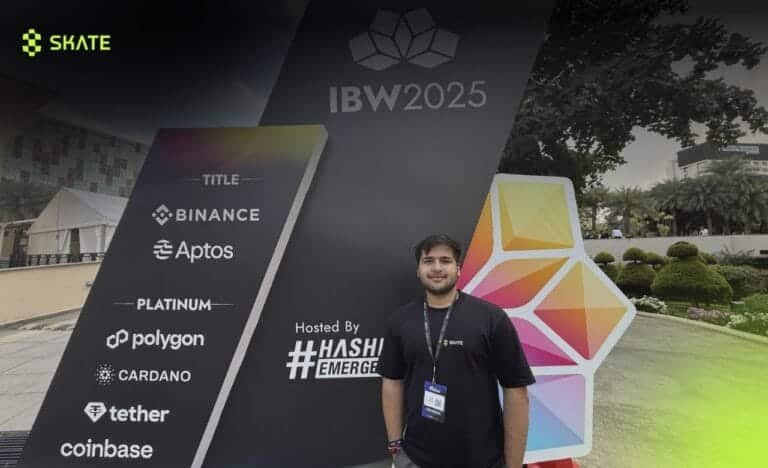
Speaking at the India Blockchain Week, Parth Nath Chauhan, DevRel for Skate, shows a unique and comprehensive approach to improve cross-chain communication for once and for all. Skate offers a multi-chain development protocol that lets developers launch decentralized applications across multiple chains without having to code from scratch. What adds further is that Skate allows users to share the liquidity pool across these chains for each project.
Skate: A Universal Application Layer for the Multi-Chain Era
Skate brings a unique and comprehensive approach to solving blockchain interoperability without leaving any issues for the future.
Parth described S-Chain as a blockchain built as a unique application layer for all decentralized applications willing to go multi-chain, without having to code multiple versions of the same dapp for these chains.
It helps developers to create a decentralized application once and share it across multiple chains without having to build everything from scratch. Further, it also allows projects to maintain a single global state of their application across all chains. This unique solution also lets projects share liquidity across all chains, ending the era of blockchain fragmentation.
To make it simple, Skate allows projects to create a single decentralized application and publish it across multiple chains, such as Ethereum, Solana, TON, and others. All of these are working with the same code, the same backend, the same logic, and even sharing the same liquidity across multiple chains. Even more surprisingly, everything is done without going through the traditional way of bridging or fragmentation.
How Skate Works: Hub-and-Spoke, Reinvented for Web3
Parth explained in detail how Skate works its magic via the Hub-and-Spoke Model, where the Hub Chain (S-Chain) holds the code and logic and maintains a global state for the applications. In this mode, Spokes are the live Smart Contracts that are then created for each blockchain on which the project plans to deploy its decentralized applications.
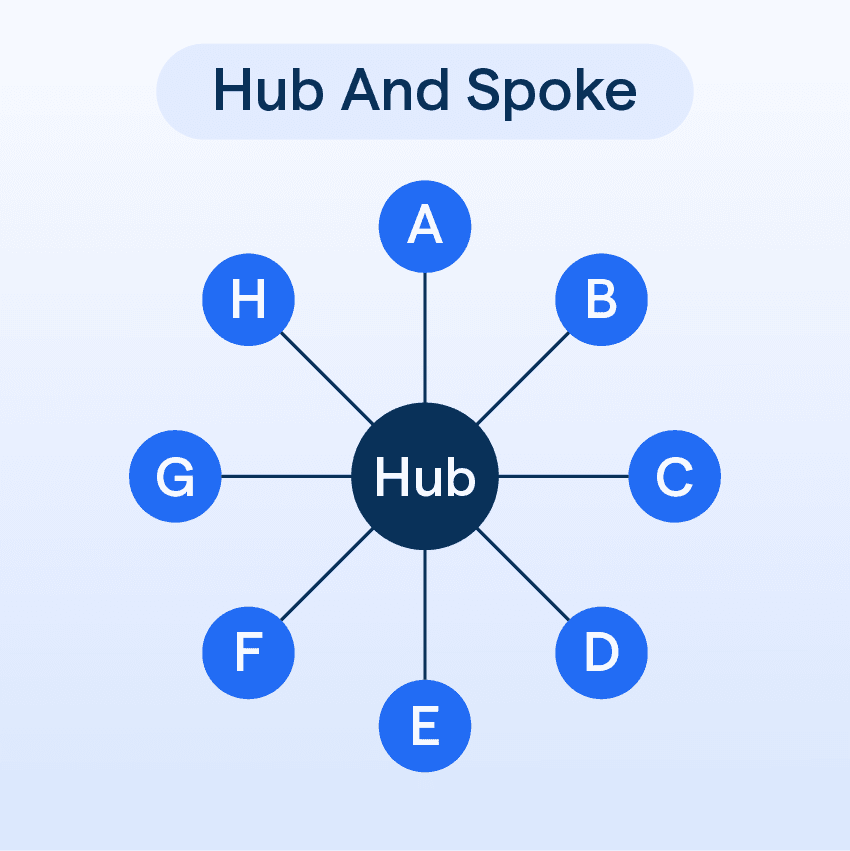
So, as a developer creates a single global decentralized application on the S-Chain, they can then share it across chains such as Ethereum, Solana, and TON via Periphery Smart Contracts. Each chain holds a project smart contract that is truly synchronized with the main application hosted on SkateChain.
When a user interacts with the application, it sends a request to the SkateChain application, which verifies it and then forwards it to all the individual smart contracts across multiple chains.
In the India Blockchain Week meet, Parth explains that this solution will act as the most comprehensive one to date for multi-chain applications.
Skate Shapes the Future of Web3 Interoperability
Web3 interoperability has been a challenging frontier for blockchain developers. Even the most successful projects have integrated only a limited set of technologies, such as CCIP. However, this ends soon, with SkateChain paving the way for further developments.
To date, it has been considered almost impossible to maintain a single global state for any application. Even the successful cross-chain applications, like multi-chain wallets, have existed only as a loose umbrella over fragmented chains.
Benefits of Building on a Skate
- Single Unified Interface: Users see a single unified interface for all chains.
- Developer Convenience: Easy for developers to build once and deploy everywhere.
- Easy Version Control: Developers only need to make changes to their main SkateChain application, and those changes are reflected everywhere.
- Liquidity Consolidation: All dapp liquidity is shared across multiple chains.
- Chain Agnostic: Skate works perfectly fine even for totally incompatible blockchains.
Disclaimer: BFM Times acts as a source of information for knowledge purposes and does not claim to be a financial advisor. Kindly consult your financial advisor before investing.