







Supply and demand are very basic yet very important elements of economics. It puts forth how prices are determined in a market and also how buyers and sellers carry out their transactions. From the price of your morning coffee to that of the latest smartphone, the law of supply and demand plays a role in almost all of our daily economic experiences. By grasping this concept we see how individuals, businesses, and governments can make better informed decisions.
Definition
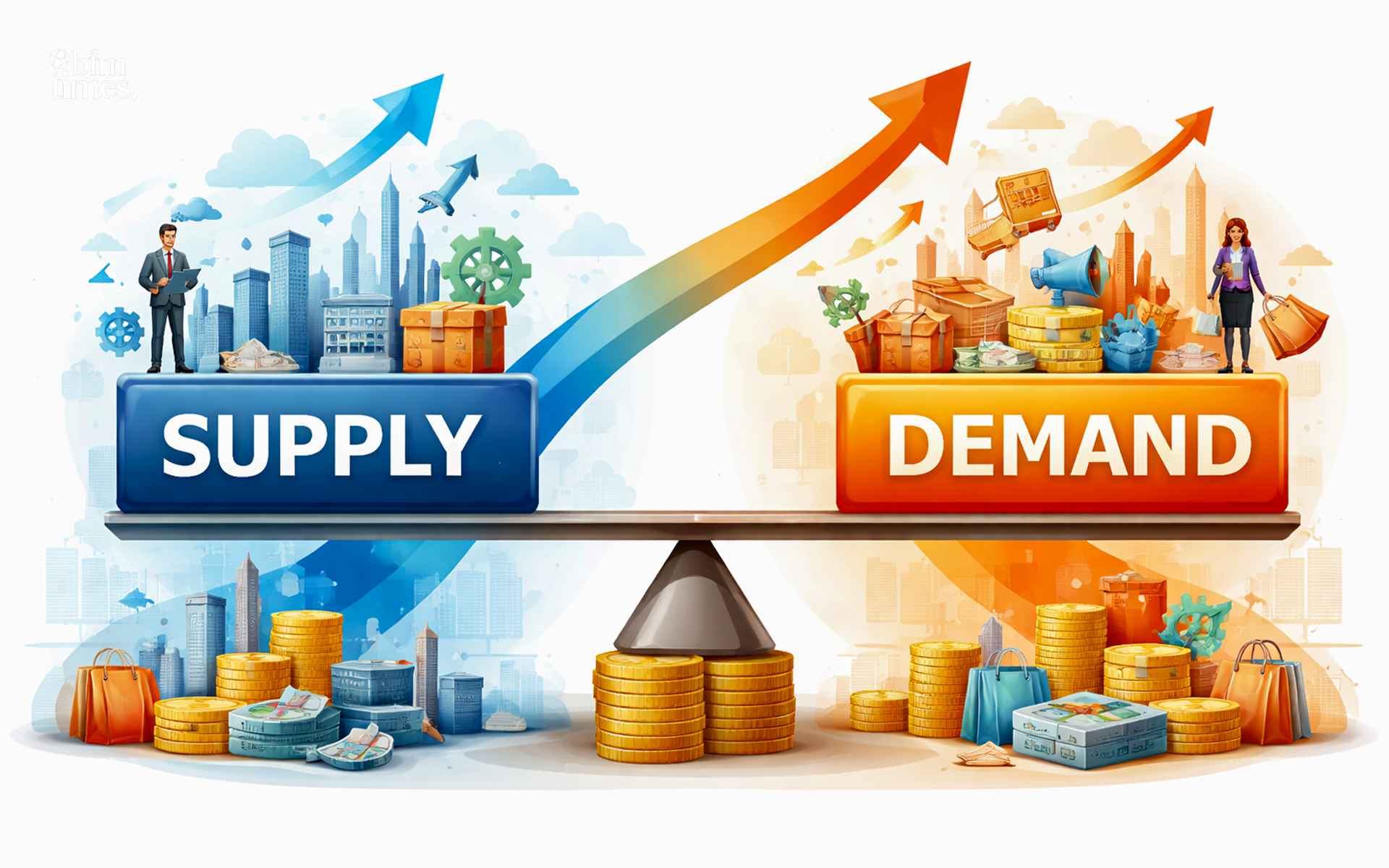
Supply and demand is a model that puts out the relationship between what is available of a product or service (supply) and what consumers want to buy it for (demand). Supply is what producers are willing to put out there of a product at varying prices, and demand is what consumers are willing and able to pay at those prices. When supply and demand balance out they determine the market price and quantity of which products sell. At this point we see market equilibrium.
Significance
Supply and demand as a concept is that it allows us to see how markets run without outside intervention. It is a tool for which we see how changes in consumer behavior or production levels play out. For example, when demand goes up while supply stays the same, prices tend to go up. Also, if supply goes up but demand remains the same, as it was, prices usually will drop. This ever-changing system is what keeps markets at equilibrium and efficient over time.
Importance
Supply and demand are key concept which forms the base of a free market economy. It tells producers what to manufacture and in what quantity to put out. Also at the same time it allows consumers to determine what to buy based on price and what is available. Also we see this in play when governments make economic policies like setting tax rates, minimum wage, or price floors and ceilings. Without a knowledge of supply and demand it is hard to predict how the economy will do or to solve out-of-the-gate issues in the market.
Usage
Supply and demand is a very flexible concept which is applied in many fields. In business companies use it to set prices, manage stock levels, and predict sales. In economics it helps us to study market trends and consumer behavior. In government and public policy supply and demand is used to study the results of subsidies, taxes, and regulations. Also in everyday life we use this concept without thinking — for example going out to buy products during sales or in times of shortage.
Examples
In the housing market we see a common supply and demand play out. When home buyers outnumber sellers (high demand low supply), prices go up. Also we see in the case of seasonal products like winter wear. In winter as demand for jackets goes up, so do the prices. In the summertime demand drops which in turn causes prices to fall. Also with the release of a new smartphone, we see demand is high and supply is low which causes prices to rise greatly.
Benefits
One large benefit of supply and demand is that it allocates resources very efficiently. Resources go to the products and services that do best with consumer value. Also it puts great pressure on innovation and competition as businesses try to better meet consumer wants. Also this system puts out price signals which in turn help producers and consumers to make better decisions. For example high prices are a sign for producers to increase supply and low prices are a sign for consumers to purchase more.
Disadvantages
Despite that there are benefits to it, supply and demand also have issues. We see in equality play as at times essential products may run out and thus go up in price which leaves some out. Also markets that are based solely on supply and demand can see either overproduction or underproduction which in turn causes waste or shortage. Also we have external issues like monopolies, government interference, or natural disasters can throw off the natural supply and demand balance which in turn causes market failure.
Conclusion
In the end supply and demand are very important concept which puts forth how markets function and what determines prices. It affects businesses, consumers and governments in equal measure and plays a key role in which economic decisions are made. Although it does have some issues, in terms of promoting efficiency, balance and growth it is a fundamental element of economic theory. We see that supply and demand improve economic knowledge which in turn helps individuals make better choices in the everyday world.
Disclaimer: BFM Times acts as a source of information for knowledge purposes and does not claim to be a financial advisor. Kindly consult your financial advisor before investing.
Disclaimer: BFM Times acts as a source of information for knowledge purposes and does not claim to be a financial advisor. Kindly consult your financial advisor before investing.