The world of cryptocurrency is expanding at a much faster rate than ever before. It is attracting millions of new investors around the globe. The crypto industry in 2026 has matured and has become more inclusive than ever before. There are also Spot crypto ETFs which have made it easier for institutions to invest in cryptocurrency. It is therefore the best opportunity for beginners who are looking to invest in the top 7 crypto for beginners in 2026. This article covers the best choices for beginners based on market strength and practical use.
Why Crypto Investing Matters in 2026?
The crypto industry in 2026 has matured and has become more inclusive than ever before. There are also Spot crypto ETFs which have made it easier for institutions to invest in cryptocurrency. It is therefore the best opportunity for beginners who are looking to invest in the top 7 crypto for beginners in 2026. This article covers the best choices for beginners based on market strength and practical use.
What Makes a Crypto Beginner-Friendly?
The most important first step is choosing the right crypto. The key points which help the beginners make smart choices are:
- Having a strong market cap & liquidity.
- Having a clear use case & real-world utility.
- An active developer community & regular upgrades.
- The availability on major exchanges.
- The history of surviving the market downturns.
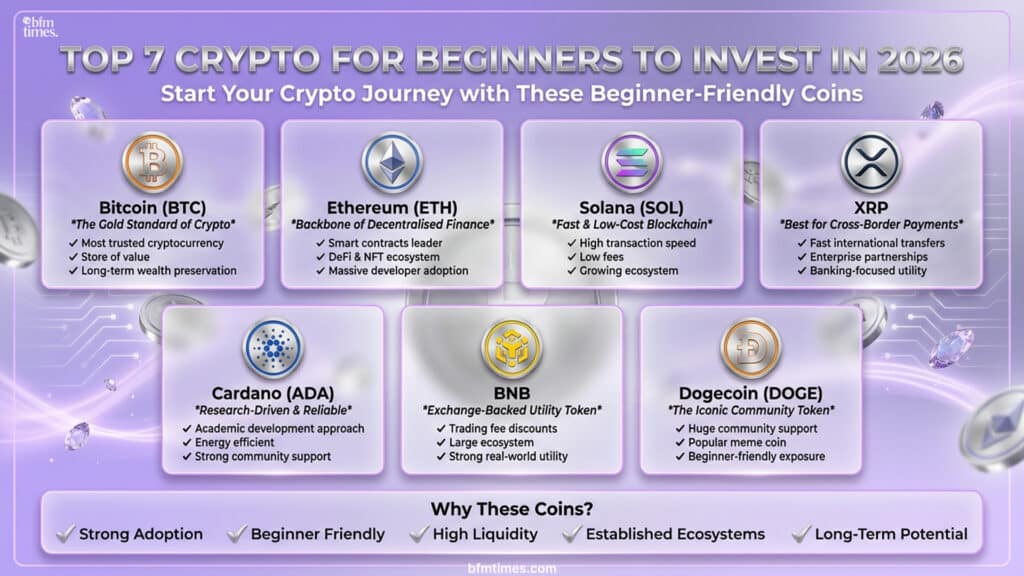
What are the Top 7 Crypto for Beginners to Invest in 2026?
- Bitcoin (BTC): The Gold Standard of Crypto
The world knows Bitcoin as the first & biggest cryptocurrency. It holds the top spot by market cap with a Bitcoin dominance of over 56% in June 2026. It is the safest entry point for anyone new to crypto. The JPMorgan analysts have forecasted that the Bitcoin could reach up to $170,000 in 2026. The supply of Bitcoin has been capped at 21 million coins. This makes it a strong store of value over time. Its proven track record makes it the top crypto for beginners to invest in 2026.
Ethereum (ETH): The Backbone of Decentralised Finance
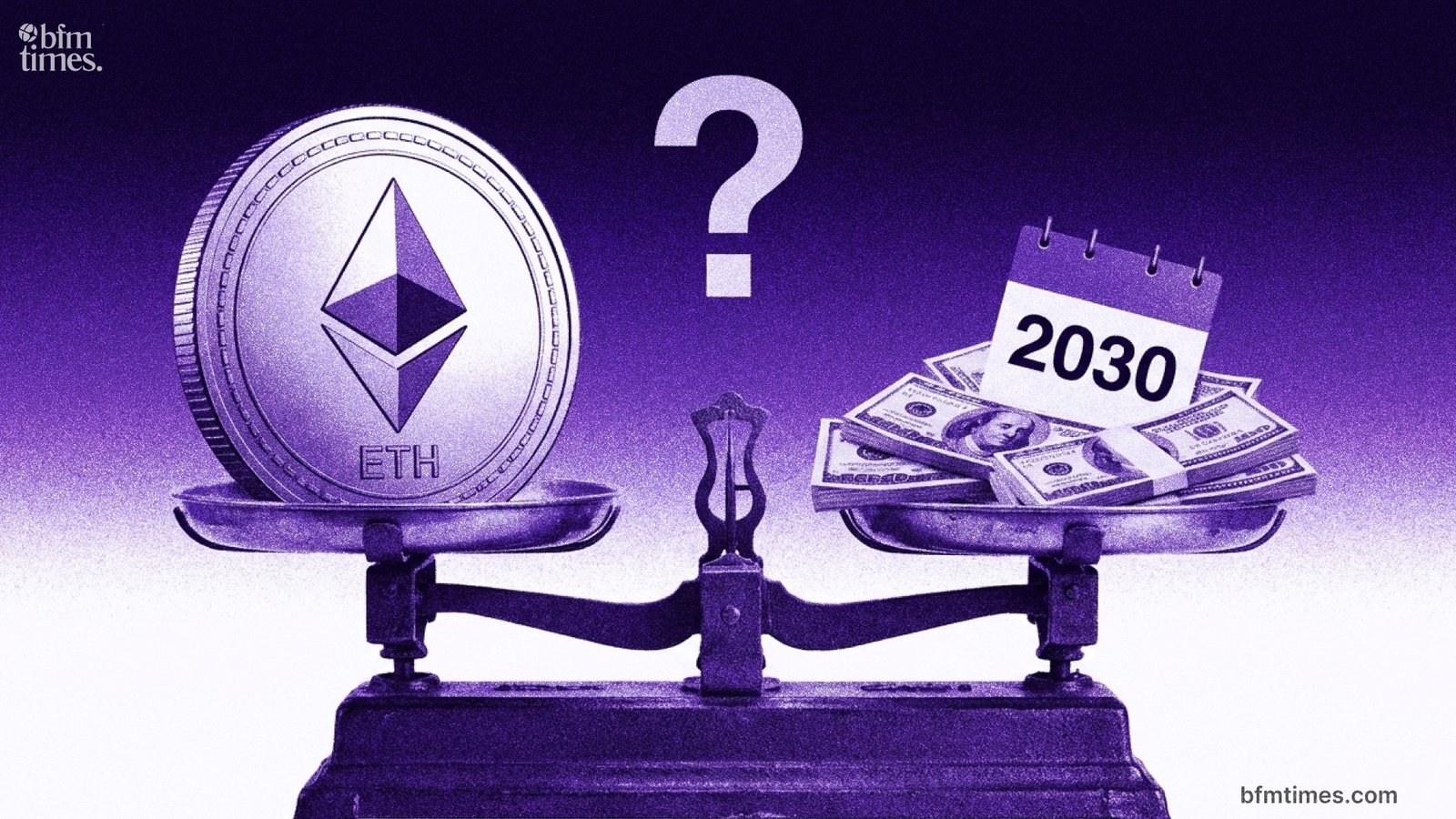
The Ethereum network drives most of the DApps present around the globe. The network is best suited to support the DeFi and NFT systems compared to all other blockchains. The upgrade of the scaling solution called Fusaka will lead to significant reduction in costs and increase in throughput. The target price of the Ethereum has been set to $8,000 by 2026 as per the prediction of the Standard Chartered bank. It continues to be a great choice for the newbies because of its smart contracts system.
- Solana (SOL): Fast & Low-Cost Blockchain
The Solana network is designed for its speed & low transaction costs. It has surpassed Ethereum in terms of transaction volume in recent periods. The new Alpenglow protocol upgrade aims to replace its current consensus system. This upgrade will make the Solana even faster & more efficient. The Solana ETFs attracted $476 million in net inflows over 19 consecutive days. It is ideal for the beginners who want exposure to a high-performance blockchain.
- XRP: The Best Crypto for Cross-Border Payments
It is designed to support instant and affordable global payments. The transactions are settled within a few seconds on this platform. The increased SEC transparency and approval of the XRP ETFs have enhanced its reputation. The central bank of Singapore has even conducted its financial settlement tests using the XRP Ledger. This is indeed a huge step towards the wider acceptance of XRP across the globe.
- Cardano (ADA): Research-Driven & Reliable
The Cardano blockchain operates under a research-based development framework. This blockchain employs a proof-of-stake model and also allows the creation of smart contracts. In addition, Cardano always features among the top ten largest cryptos based on the market capitalization. The crypto is based on sound research work and has a well-established development team. Such attributes mean that Cardano is a safe bet for newbies considering the blockchain project.
- BNB: The Exchange-Backed Token with Utility
The BNB token powers the Binance ecosystem. It is used to pay trading fees & access various platform features. It offers real utility to anyone already using the Binance exchange. The Binance Smart Chain is home to many decentralized apps. It makes it easy for novices to get started with DeFi and token staking. Users can also enjoy reduced fees by paying in BNB.
- Dogecoin (DOGE): The Iconic Community Token
Dogecoin has emerged from its humble beginnings as a joke currency to become an asset that should be taken seriously. Dogecoin boasts of having one of the biggest and most active online communities in cryptocurrency. The currency is also cheap and can be obtained from any exchange platform anywhere in the world. The currency is still among the highest trading assets by volume. The Dogecoin has endured many market cycles and still keeps attracting new users.
What are the Tips for Beginners Before Investing?
The right strategy matters more than the right coin alone. The tips that help beginners invest wisely are as follows:
- One should always start with small amounts & increase gradually.
- In order to reduce timing risk one should use dollar-cost averaging.
- One should diversify across two or three coins at minimum.
- Assets should be stored on a secure & trusted platform.
- Before putting any money in one should research every project thoroughly
What are the Risks Every Beginner Must Know?
The crypto market is highly volatile by nature. It can drop sharply due to macro factors & regulatory news. Even the top coins can lose their value in short periods. The best approach is to invest only what you can afford to lose. They should also avoid chasing short-term hype or unproven new coins. This mindset will protect beginners from costly mistakes.
Conclusion
2026 provides wonderful chances for the beginner investors. There are many things about the crypto market that are better compared to other years. This article highlights the top 7 crypto for beginners to invest in 2026. There is a combination of safety and growth. First are the Bitcoin and the Ethereum, which are to be considered the basis of any novice’s cryptocurrency portfolio. Next are the Solana and the XRP, which have very promising applications. These currencies have practical applications in the real world, and their popularity is increasing around the world.