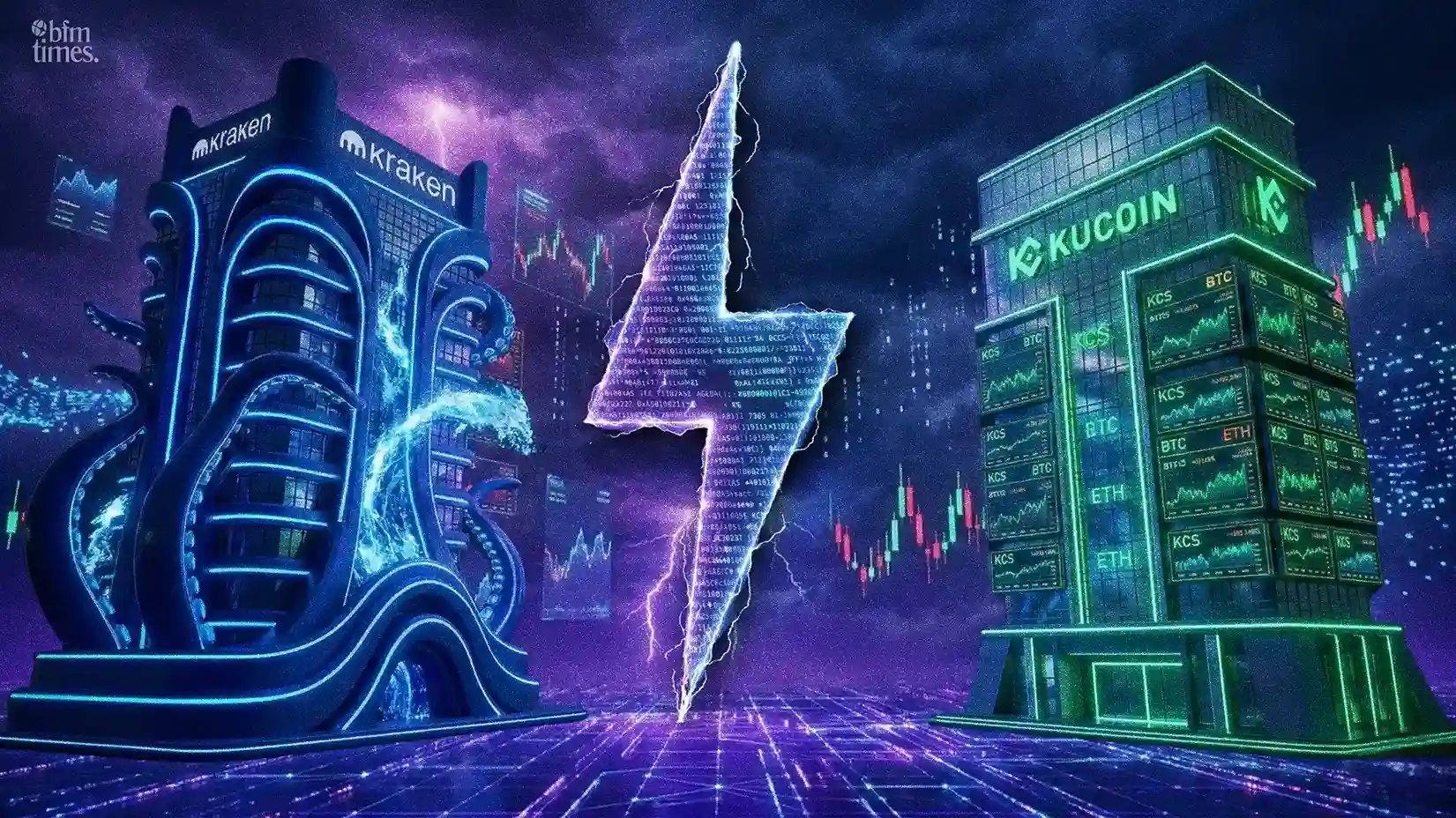
The DeFi sector has undergone tremendous changes since the “DeFi Summer” in 2020. However, the primary driver in this change has been the creation of a new sector in the cryptocurrency world called Decentralized Exchanges, where users are able to trade their digital assets in a decentralized manner. For most users, the choice between the two most popular exchanges is between Uniswap and SushiSwap.
- The Origin Story: Innovation vs. The Vampire Attack
- Core Technology and AMM Models
- Uniswap vs SushiSwap Fees: A Detailed Breakdown
- Uniswap vs SushiSwap Liquidity and TVL
- Governance and Tokenomics: UNI and SUSHI
- User Experience and Features
- Security and Audits
- Verdict: Which One Should You Use?
- Summary Table: DeFi Exchange Comparison
- Conclusion
The Uniswap and SushiSwap comparison is a comprehensive guide to the technological differences, transaction costs, and overall user experience, helping you decide which is the best fit for your strategy in 2025.
Related: What Are DeFi Protocols, and How Do They Work?
The Origin Story: Innovation vs. The Vampire Attack
In order to understand the rivalry between Uniswap and SushiSwap, it is imperative to go into the history of these two DeFi giants. While Uniswap, founded by Hayden Adams in 2018, was the first in the Automated Market Maker model that enabled the swapping of tokens in a decentralized manner, it replaced the order book system with the liquidity pool system, in which the user could swap the tokens directly from their digital wallet.
SushiSwap was launched in August 2020 as a “hard fork” of Uniswap. However, the founder, Chef Nomi, was behind the infamous “Vampire Attack,” in which Uniswap liquidity providers were incentivized to provide liquidity on the SushiSwap platform in return for SUSHI tokens. Uniswap was forced to develop its own governance token, UNI, in response to the “Vampire Attack” by SushiSwap.
Although the Decentralized Exchange platforms of Uniswap and SushiSwap were similar in terms of their underlying code, they have now evolved into two different DeFi ecosystems.
Core Technology and AMM Models
Both platforms use the AMM model, but the way it has been implemented has made the liquidity model vastly different from each other.
Uniswap: The Efficiency King (v3, v4)
Uniswap has moved from a simple v2 model to a “Concentrated Liquidity” model, which was introduced in v3. This model gives liquidity providers (LPs) the option to choose the price at which they would like to provide liquidity. This means that instead of spreading out the liquidity from 0 to infinity, they can provide liquidity at a specific price at which they expect maximum trading volume.
In 2025, Uniswap released a new feature called “Hooks” in v4, which gives users the option to create a variety of pools using these plugins. This makes it the capital efficiency king of all DeFi exchanges.
SushiSwap: The Community Multi-Chain Hub
SushiSwap has traditionally followed a broader model. Although it has followed a similar model to Uniswap v3, it has focused a lot on becoming a “super-app” for DeFi. This means it has expanded to more than 30 different blockchains, including Arbitrum, Polygon, Base, etc.
The architecture of the SushiSwap protocol tends to favor usability and cross-chain access over the hyper-optimized, albeit somewhat complex, engine employed in the most recent Uniswap versions.

Uniswap vs SushiSwap Fees: A Detailed Breakdown
One of the most important considerations that any trader needs to take into account is the cost of engaging in the markets. In the Uniswap vs SushiSwap fees discussion, it is immediately noticeable that the systems are geared towards different types of traders or investors.
Uniswap Fee Tiers
Uniswap, in its most recent versions, v3 and v4, does not charge a single, flat fee. Rather, it has several different tiers, each of which is optimized based on the volatility of the different pairs:
- 0.01%: Optimized for stable pairs, e.g., USDC/USDT, where the volatility is minimal.
- 0.05%: Optimized for the most liquid non-stable pairs, e.g., ETH/USDC.
- 0.30%: Standard tier, applicable to the majority of altcoin pairs.
- 1.00%: Optimized for exotic pairs, e.g., pairs with higher volatility, where the liquidity provider requires a higher premium in return for the risk of impermanent loss.
A critical consideration is that on Uniswap, 100% of these fees is passed on to the liquidity providers, except in the case where the “Fee Switch” has been activated in the governance system.
SushiSwap Fee Structure
SushiSwap has a standard 0.30% fee for most swaps. However, the way the fees are distributed is what sets SushiSwap apart from the competition:
- 0.25% of the trading fees go to the liquidity providers.
- 0.05% of the trading fees are used to buy back SUSHI tokens and distribute them to the xSUSHI stakers.
SushiSwap might be more expensive for stablecoins compared to Uniswap’s 0.01% tier for traders. However, for SUSHI token holders, SushiSwap provides the unique ability to earn a “dividend” from the platform’s global trading volume, something Uniswap is only now beginning to explore with their “UNIfication” series of updates.
Uniswap vs SushiSwap Liquidity and TVL
In the world of DeFi, liquidity is key. Liquidity is the measure of the assets available for trading within the protocol. More liquidity means less slippage, which is the difference between the expected rate for a trade and the rate at which the trade is executed.
Deep Liquidity on Uniswap
Uniswap currently holds the top spot for Total Value Locked (TVL) and trading volume. This is because of their unique concentrated liquidity model. This model allows even a less-liquid pool on Uniswap to execute larger trades with less slippage than a more liquid pool would allow on other DEXs. In 2025, Uniswap continues to handle over 1 trillion dollars in trading volume annually, making it the best DEX for whale trades and large-scale trading operations.
Niche Liquidity and Cross-Chain Liquidity on SushiSwap
SushiSwap might not hold the top spot in Total Value Locked (TVL), but they often dominate the competition in certain markets. This is because SushiSwap is deployed across so many different chains, making it the go-to place for trading brand-new tokens on brand-new Layer 2 networks before they make their way into the dominant pools on the Ethereum mainnet.
For the average user, the Uniswap vs SushiSwap liquidity levels are more than sufficient for most users conducting standard trades (under $10,000). However, for users conducting million-dollar swaps, Uniswap’s deep pools are the way to go.
Suggested: What Is DeFi? A Beginner’s Guide to Decentralized Finance
Governance and Tokenomics: UNI and SUSHI
The way these exchanges are governed is a huge part of their overall sustainability and value.
The UNI Token
The primary purpose of the UNI token is governance. It gives the holder the right to vote on upgrades, treasury, and fees. For a long time, there was no way to accrue value with the UNI token. However, in late 2024 and early 2025, the Uniswap Foundation rolled out “UNIfication.” It gives the protocol the power to allocate a percentage of the fees towards the buyback of the UNI token or active stakers.
The SUSHI Token
Unlike the UNI token, the SUSHI token was made to give back to the community. By staking the SUSHI token and getting the xSUSHI, the user gets a percentage of every swap fee on the entire SushiSwap network. This has made the community of users very loyal, focusing on the passive returns rather than the overall trading benefits of Uniswap.
User Experience and Features
When comparing these exchanges, the user experience and features are a huge part of the overall success or failure, especially for a newcomer.
Simplicity vs. Complexity
Uniswap’s UI is the epitome of simple. They focus primarily on the “Swap” and “Pool” features, making it incredibly simple for a newcomer to the space to use the platform. Their documentation is also considered the best in the DeFi space, providing newcomers with guides and visual tools for understanding complex concepts like IL.
SushiSwap, meanwhile, is an “izakaya-themed DeFi Kitchen.” They provide users with many more native features within one platform, including:
- BentoBox: A vault that holds assets and allows users to utilize their assets across multiple dApps simultaneously.
- Kashi: A lending and borrowing platform.
- Miso: A launchpad for new projects.
Although SushiSwap provides many more “one-stop-shop” features for users, its UI is cluttered and overwhelming for newcomers compared to the simple experience of Uniswap.
Security and Audits
Uniswap and SushiSwap are both considered some of the most audited and battle-tested projects in the history of crypto.
- Uniswap is considered the more conservative and “secure” option because the underlying protocol is immutable (i.e., cannot be modified) and has a heavily capitalized core team.
- SushiSwap has had more “drama” in its history, but its underlying protocol has been remarkably resilient, and its DAO has come of age since its initial days.
Verdict: Which One Should You Use?
Ultimately, the choice between Uniswap and SushiSwap depends entirely on your needs.
Use Uniswap if:
- You are a high-volume trader who needs the lowest slippage.
- You want to trade stablecoins with the lowest possible fees (0.01%).
- You are a sophisticated LP who wants to use concentrated liquidity to earn the best yields.
- You want a simple, no-frills, highly secure trading interface.
Use SushiSwap if:
- You are an active yield farmer who wants to earn rewards by staking the native SUSHI token.
- You are an active user of “alternative” chains like Polygon, Arbitrum, or Base, and want a consistent experience across all of them.
- You want one platform that allows you to “swap,” “lend,” and “borrow” in one place.
- You want to participate in a highly active DAO.
Also Read: Pepecoin: Full Profile, Tokenomics & What Investors Should Know
Summary Table: DeFi Exchange Comparison
| Feature | Uniswap | SushiSwap |
| Launch Year | 2018 | 2020 |
| Primary Model | Concentrated Liquidity (v3/v4) | AMM (v2) & Concentrated (v3) |
| Native Token | UNI | SUSHI |
| Standard Fee | Flexible (0.01% to 1.00%) | Flat 0.30% (mostly) |
| Fee Recipient | 100% to LPs | 0.25% LPs / 0.05% Stakers |
| Number of Chains | ~13 Chains | 30+ Chains |
| Best For | High-volume traders | Yield farmers & Multi-chain users |
Conclusion
The debate between Uniswap and SushiSwap serves to underscore the beauty of the DeFi space: competition spurs progress. While Uniswap continues to raise the bar for capital efficiency and technical prowess, SushiSwap continues to fight the good fight for community ownership and multi-chain support.
As we look at the DeFi space in 2025, Uniswap stands as the undisputed champion of liquidity and transactional volume, but SushiSwap has secured its permanent place as the most flexible and rewarding community exchange.
Regardless of your preference for the depth of liquidity on Uniswap or the breadth of rewards on SushiSwap, both exchanges represent the pinnacle of what decentralized finance can achieve.
Remember, while decentralized, DeFi exchanges carry risks, including smart contract risks. Always do your own research, and don’t invest more than you can afford to lose.
Disclaimer: BFM Times acts as a source of information for knowledge purposes and does not claim to be a financial advisor. Kindly consult your financial advisor before investing.
What is the main difference between Uniswap and SushiSwap?
Uniswap focuses on simplicity and liquidity, while SushiSwap offers additional DeFi features like staking and rewards.
Which platform has higher liquidity, Uniswap or SushiSwap?
Uniswap generally has higher liquidity and trading volume compared to SushiSwap.
Is SushiSwap cheaper to use than Uniswap?
SushiSwap can sometimes offer lower fees and extra incentives through yield farming and staking rewards.