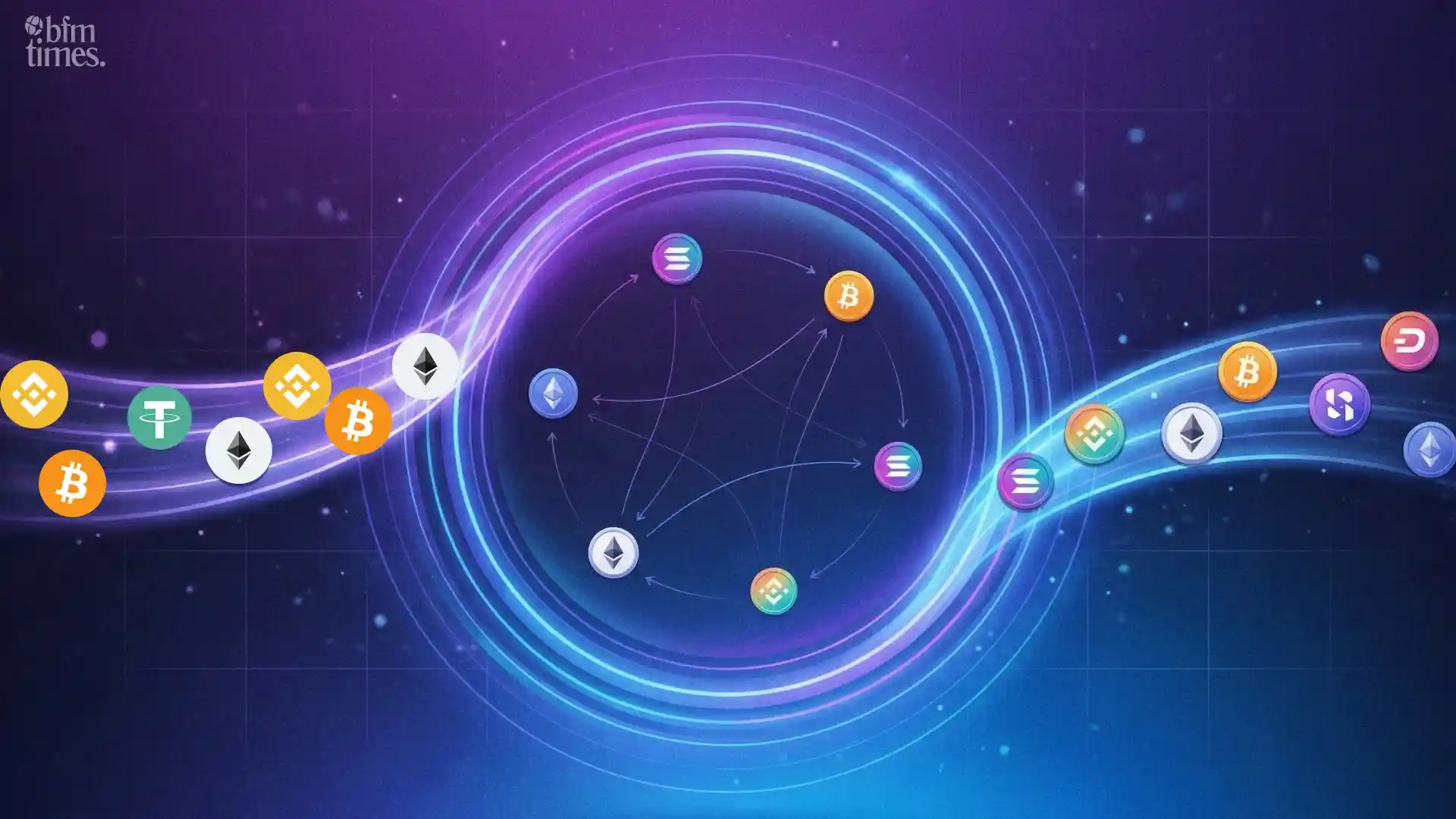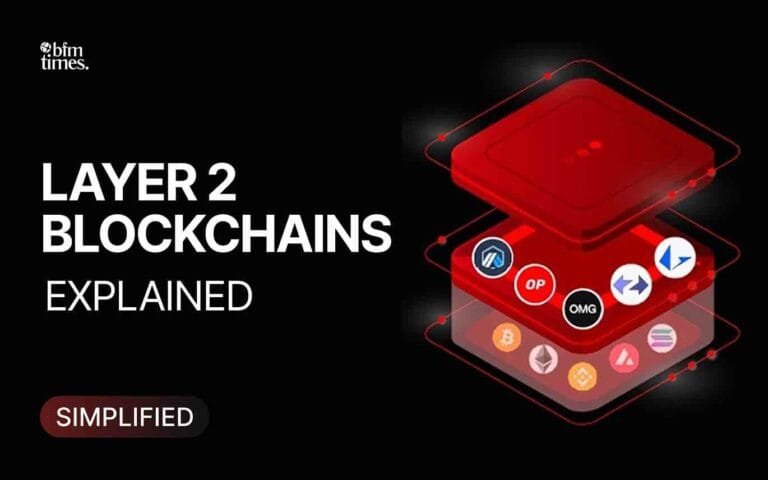
Layer 2 technology is also referred to as a secondary layer or second layer; it is a new layer built on top of a primary blockchain (Layer 1). Doing so enables Layer 2 networks to operate faster and more cheaply while still leveraging the L1 chain’s security. As a result, the transaction throughput of Layer 2 networks is often dramatically increased, e.g., from Ethereum’s 15 TPS to thousands of TPS on L2, hence making blockchain adoption possible for DeFi, gaming, and even daily payments.
- How Does Layer-2 Work?
- 1. Off-Chain Execution
- 2. Bundling or Sequencing Transactions
- 3. Posting Proofs Back to Layer-1
- 4. Settlement on the Main Chain
- What Makes Layer-2 Transactions so Cheap?
- 1. Less On-Chain Data
- 2. Transaction Batching
- 3. Off-Chain Computation
- 4. Enhanced Network Architecture
- Top Layer-2 Blockchains (2025)
- Here’s a clearer comparison:
- Conclusion
How Does Layer-2 Work?
Layer-2 networks use off-chain transactions and computations while still being backed up by Layer-1 security. The final transaction data, proofs, or state changes are submitted back to L1 for verification.
1. Off-Chain Execution
L2 networks do not execute all transactions on the Layer-1 blockchain; instead, they use a separate environment for their own transactions.
This way, the pressure on the L1 network is alleviated, and the overall system capacity is increased.
2. Bundling or Sequencing Transactions
L2 networks combine multiple transactions through either sequencers or validators.
This results in a single, compact transaction or proof that is directed toward Ethereum or some other base chain.
The batching process significantly reduces costs and improves efficiency.
3. Posting Proofs Back to Layer-1
Different Layer-2 solutions employ different proof mechanisms:
Optimistic Rollups anticipate transactions to be correct unless a dispute is raised.
ZK–Rollups (Zero-Knowledge) concoct cryptographic proofs that establish transaction correctness.
These proofs not only take care of the security and data availability but also leave a very small footprint on the L1 layer.
4. Settlement on the Main Chain
When proofs or batches get submitted, the final state of the Layer-1 blockchain is updated.
As a result, this immutability, trustlessness, and fraud resistance are guaranteed since the L1 is the final security layer.
What Makes Layer-2 Transactions so Cheap?
The main reason why Layer-2 transactions are much more economical comes from a mix of technical and economic reasons:
1. Less On-Chain Data
Only the compressed data or cryptographic proofs are sent to Layer-1 and not the entire transaction details.
This leads to a reduction in the gas cost for each transaction.
2. Transaction Batching
All users bear the gas cost, as the cost is shared through the bundling of thousands of transactions into one L1 submission.
If, for instance, the cost of one L1 transaction is $5 and it contains 1,000 L2 transactions, the average user pays only a small part of a cent.
3. Off-Chain Computation
Validation, ordering, and state change, the most time-consuming tasks in computation, take place off-chain in the L2 environment.
Thus, it allows us to clear L1 resources, reducing congestion and, in turn, lowering gas fees.
4. Enhanced Network Architecture
Numerous L2 networks are benefiting from high-performance virtual machines (such as zkEVMs) and advanced compression technologies, which further reduce their operational costs.
As the L1 is only employed for security and settlement, the end users get the advantage of high speed, low cost, and strong security at the same time:
Heavenly speed + Bearable price + Unbreakable trust.
Top Layer-2 Blockchains (2025)
A few Layer-2 networks dominate the blockchain world with their ability to process large volumes of transactions, attract large developer communities, and receive strong ecosystem backing.
1. Arbitrum
This is one of the most used implementations of Optimistic Rollup solutions.
Arbitrum offers a great playground for transactions at almost no cost, with very quick finality and a much larger DeFi ecosystem that includes GMX, Radiant, Camelot, etc.
An up-to-date EVM and high scalability support its position as a complete choice for decentralized applications.
2. Optimism
Optimism underpins the Superchain concept, which joins many blockchains, and the shared OP Stack is the reason for it.
The L2 ecosystem built around it has grown into one of the largest due to low fees, generous developer funding programs, and its connection to Coinbase’s Base chain.
3. Base
Created by Coinbase, the Base network has very low fees and easy onboarding via the Coinbase exchange, which is the only requirement.
It is going to be a rapidly expanding ecosystem across the domains of Web3 gaming, DeFi, and social applications in the near future.
4. Polygon zkEVM
Polygon zkEVM employs ZK-Rollup technology that combines high security with lightning-fast proofs.
It is perfect for large-scale enterprise DApps, as it supports Ethereum smart contracts at the native level.
5. zkSync Era
zkSync is a zk-rollup with strong developer support and fast, secure transactions.
It focuses heavily on account abstraction, lower gas, and seamless onboarding, making it ideal for large consumer apps.
Layer-2 vs. Layer-3: What Is the Difference?
Layer-3 (L3) is a concept that is gradually taking shape and is built on Layer-2.
While Layer-2 serves as a scalability solution for Layer-1 blockchains, Layer-3 is mainly about scaling and customising the application level.
Here’s a clearer comparison:
Layer-2
- Purpose: General scalability for Layer-1
- Examples: Arbitrum, Optimism, Base, zkSync
- Function: Consolidates a large number of transactions and submits them to L1
- Best For: DeFi, gaming, big dApps, NFT markets
- Security: Inherits from L1
Layer-3
- Purpose: Customised scaling for certain applications
- Examples: Starknet Appchains, zkSync Hyperchains
- Function: Built above L2 networks
- Best For: Lightning-fast games, enterprise blockchain, custom executions
- Security: Often inherits from L2 instead of directly from L1.
Conclusion
The solution is to use Layer-2 networks that are extremely important for the blockchain to be quick, cheap, and capable of high throughput. They ensure the ideal mix of security and productivity by executing off-chain transactions and eventually settling on Layer-1. As the demand for Layer-3 and growing adoption come together, the future of blockchain scalability becomes more versatile and powerful than ever.
Disclaimer: BFM Times acts as a source of information for knowledge purposes and does not claim to be a financial advisor. Kindly consult your financial advisor before investing.