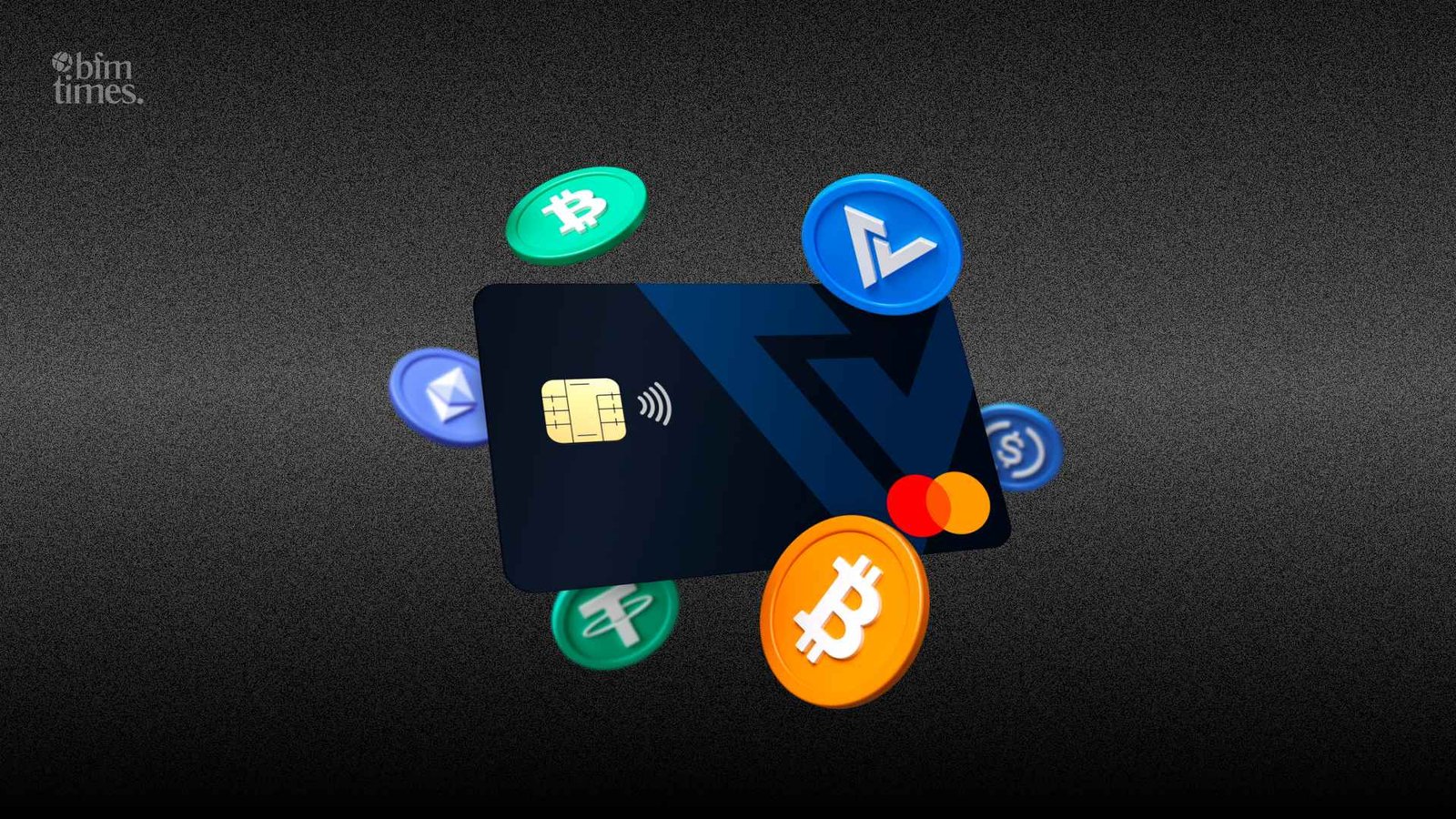
What is a crypto debit card? Simply put, it is a payment card that allows you to pay with cryptocurrency for things you buy every day, just like with a regular debit card. You do not spend money that is directly held in a bank account; rather, you spend a balance in a crypto wallet or exchange account.
This guide will define what a crypto debit card is, the basic functioning of crypto debit cards, the types of crypto debit cards existing, typical fees and risks, and a quick checklist to ensure your use of a crypto debit card.
Related: Crypto Debit Card vs Crypto Credit Card: Which Should You Use?
How Crypto Debit Cards Work: The Payment Flow
You have to watch to see what a crypto debit card is, which happens during checkout.
The majority of crypto debit cards are released in collaboration with big payment networks such as Visa or Mastercard. It implies that they can be accepted anywhere the networks are utilized.
The crypto debit card works in a standard purchase in the following manner:
- You tap, swipe, or insert the card at a merchant.
- The merchant will accept local fiat (e.g., USD, EUR, INR).
- The card issuer will convert your crypto to fiat either immediately upon purchase or for a prepaid amount.
The trader is given fiat, as is the case with an ordinary debit card.
Custodial vs Non-Custodial Cards
It has two common structures:
Custodial (exchange-issued) cards
- Cryptocurrency is stored in a centralized exchange.
- Spending the money will turn crypto into fiat automatically.
- Simpler to use and has counterparty risk.
Non-custodial (wallet-linked) cards
- Attached to a wallet of self-custody.
- You control private keys.
- There is conversion through integrated services.
- Better control, additional responsibility.
Supported Tokens & Common Pitfalls
Not all tokens are supported. Cards typically allow:
- Principal cryptos (BTC, ETH).
- Stablecoins (USDT, USDC)
- Selected platform tokens
Common mistakes:
- Transferring money over the incorrect network (e.g., ERC-20, BEP-20)
- Forgot about the memo/tag of some chains.
- Suppose that all tokens can be converted automatically.
Quick Example: $50 Coffee
Let’s say you buy coffee worth $50:
- The crypto that you have chosen is valued at 2,500 USD per coin.
- You need 0.02 crypto to cover $50.
- The provider charges at the prevailing rate.
- A conversion spread of 1 percent can be used.
- The amount of money that the final crypto deducted could be worth less than $50.50-51.
Precise charges depend on the location and carrier.
This practical example helps clarify what a crypto debit card in real-world use is; it’s essentially a conversion bridge between crypto and traditional payment systems.
Types of Crypto Debit Cards
Understanding the types is essential in any cryptocurrency debit card guide.
| Card Type | How it Works | Key Benefit | Key Risk |
| Prepaid Top-Up | You convert crypto to fiat in advance and load the card | Spending certainty, no price swings during purchase | Must pre-convert; exposure to fees upfront |
| Auto-Convert at POS | Crypto converts instantly during purchase | Convenience, no need to preload | Conversion spread at each transaction |
| Wallet-Linked (Non-Custodial) | Connected to a self-custody wallet with integrated conversion | Full control over funds | More technical setup; potential smart contract risks |
Each version answers what a crypto debit card is slightly differently; some act like prepaid cards, others behave more like dynamic crypto-to-fiat bridges.
Suggested: Coinbase Card vs Crypto.com Card: Which Crypto Card Is Better?
Benefits & Practical Uses
What is a crypto debit card handy for? It is convenient when people are asked.
Common crypto card benefits include:
- Use crypto to make purchases with a card at local shops.
- Move without the exchange of local currency.
- Gain cashback (usually in crypto or platform tokens)
- Simple fiat exit without physical withdrawals.
- Control based on applications (freeze/unfreeze, spending limits)
It is more applicable to the daily lives of people who already have digital investments.
Risks, Fees & What to Watch For
While crypto payment cards may sound convenient, there are real trade-offs.
1. Conversion Spreads
The majority of the cards charge a low percentage markup on exchange rates. A zero spread might be hidden even in zero-fee cards.
2. ATM Limits & Fees
Other providers will have a restricted number of free withdrawals at the ATM every month. Beyond that, fees apply.
3. Volatility Risk
When you use volatile crypto, you can either get a lower price for the conversion or a higher price.
4. Custodial Risk
Your crypto is with a third party with exchange-issued cards. In case of limited access, expenditure ceases.
5. Tax Implications
Depending on the jurisdiction, transferring crypto to a fiat currency can result in a taxable transaction.
6. Unsupported Assets
Not every token works. Not all of these stablecoins or chains can be supported in the area.
Knowing these aspects is what constitutes the real response to what a crypto debit card is beyond the marketing language.
How to Use a Crypto Debit Card Safely
This brief cryptocurrency debit card guide checklist could assist:
- Check out a small initial payment.
- Authenticated tokens and networks.
- Switch on 2FA and card freeze.
- Check clearing spreads and ATMs.
- Be familiar with reward payout currency.
- Keep records for tax reporting.
- Test a small ATM withdrawal in case you are going to use one.
These easy measures minimize the unexpectedness of spending crypto with a card in the real world.
Also Read: Best Crypto Cards in 2026: Top Bitcoin & Crypto Debit Cards Compared
Conclusion
So, what is a crypto debit card? It is a payment card that helps to exchange your cryptocurrency for traditional money to spend it anywhere the major card networks are accepted. It is convenient and rewarding, yet it comes along with charges, volatility, and tax consequences.
When you are thinking of using one, read the terms of the issuer and learn how the crypto debit cards operate, and then use them as a method of spending daily.
Disclaimer: BFM Times acts as a source of information for knowledge purposes and does not claim to be a financial advisor. Kindly consult your financial advisor before investing.
What is a crypto debit card?
A crypto debit card is a payment card that allows users to spend their cryptocurrency for everyday purchases by converting it into fiat at checkout.
How does a crypto debit card work?
A crypto debit card works by linking your crypto wallet to the card and automatically converting crypto into local currency when you make a payment.
Why are crypto debit cards important?
Crypto debit cards make it easier to use cryptocurrency in daily life by enabling payments at regular stores that accept traditional card networks.