




Key Facts
- Zura Kakushadze and Juan Andres Serur have developed a massive reference book of 151 trading strategies, which is not in the traditional finance industry, but in the digital asset industry.
- The article has over 550 mathematical equations, which provide a strict framework for strategies between machine learning and simple arbitrage.
- Cryptocurrencies and other emerging assets are quantitatively integrated as stocks, options, and fixed income, the first of their kind.
- The major portion of the paper is devoted to artificial neural networks, Bayes, and k-nearest neighbors (k-NN) as approaches to price prediction in the modern world.
- The study is a guide to hedge funds and retail “quants” who wish to abandon the practice of gut-feeling trading in favor of systematic, rule-based trading.
Beyond the Hype: Academic Rigor vs. the Wild West of Crypto Trading
The pursuit of a so-called holy grail approach is relentless in the unstable cryptocurrency market, where a single tweet can shift markets by the double digits. A groundbreaking research article by Zura Kakushadze and Juan Andres Serur, titled 151 Trading Strategies, however, is changing the discussion from speculative hype to cold, hard mathematics.
The paper, which was originally published on SSRN and subsequently developed into a full-scale textbook, presents 550 or more mathematical formulas of more than 150 trading styles. Although it includes legacy assets, such as fixed income and real estate, the introduction of cryptocurrencies is a breakthrough in the professionalization of the digital asset class.
The Rise of the Crypto Quant
Over the years, the crypto trading market was controlled by the so-called chartists who applied simple technical analysis (RSI, MACD, and Bollinger Bands). Although these tools are still useful, the Kakushadze-Serur paper states that the next development of alpha is systematic strategies that can be backtested and automated.
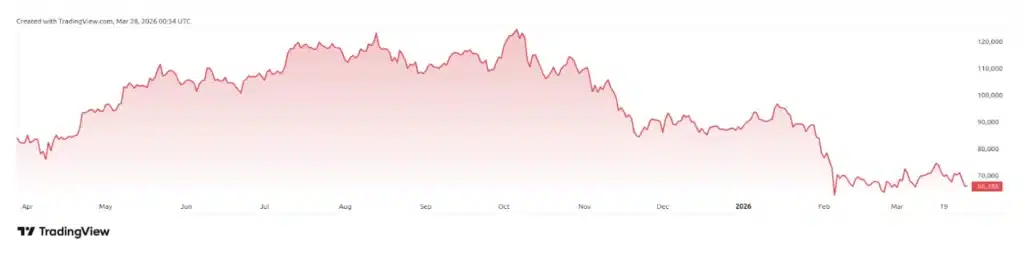
Following the recent highs of Bitcoin (BTC), the search for so-called delta-neutral and market-neutral strategies has exploded. The paper explains how the strategies that are applicable in the FX and equity markets can be transferred to the crypto world.
Neural Networks to Arbitrage
The emphasis on Machine Learning (ML) is one of the most interesting parts of the research to crypto enthusiasts. The authors decompose such complicated algorithms as Artificial Neural Networks and k-nearest neighbors. These ML models are being applied in the crypto industry to recognize regime changes in the market—when a trending market is on the verge of becoming a range-bound one.
The paper also discusses the so-called Miscellany strategies, including energy and inflation-linked trades, for the active trader. As the correlation between Bitcoin and macro indicators such as the Consumer Price Index (CPI) increases, such cross-asset strategies are becoming essential for any serious crypto portfolio.
The “Black Box” Problem
One of the primary goals of Kakushadze’s work is to debunk and dispel the magic behind black-box quantitative strategies. Numerous crypto trading bots sold to retail investors are a mystery. The paper provides the actual source code and mathematical logic behind the trades so that developers can create their own systems from the ground up.
The paper highlights that a strategy is only as good as its backtest. The authors offer a pedagogical method of out-of-sample testing, which provides crypto traders with an opportunity to check whether their strategy is profitable or if they are just lucky enough to be in a bull market.
Context: Why This Matters Now
The timing of this study is essential. With the maturity of the cryptocurrency market, the easy money from simple buy-and-hold strategies is becoming harder to find. Institutional investors such as BlackRock and Fidelity have moved in, and with them come high-frequency trading (HFT) and advanced quant desks.
To compete in this new environment, retail traders and smaller hedge funds must adopt the same mathematical rigor used by the giants. Kakushadze and Serur’s work provides the “alphabet” for this new language of trading. It transforms crypto from a “niche hobby” to a serious part of a diversified, quantitatively-managed portfolio.
Frequently Asked Questions
What is the paper on 151 Trading Strategies?
It is a comprehensive survey of over 150 quantitative trading strategies across all major asset classes, including cryptocurrencies, with detailed mathematical formulas and examples of source code.
Is it possible to apply these strategies to altcoins?
Yes. Although the paper is written in general terms, mathematical models of momentum, mean reversion, and arbitrage can be used extensively in high-liquidity altcoins, such as ETH, SOL, and even certain mid-cap tokens.
Am I required to have a PhD to know these strategies?
The paper is pedagogical in description, although it is heavy in math (550+ formulas). Algebra and a little statistics knowledge are typically sufficient to understand the logic behind most strategies.
Do these come with a money-back guarantee?
No. The authors point out that they are frameworks. The ability to adapt to the changing market conditions, risk management, and execution are the keys to success.
Where can I get the entire paper?
The article is published on SSRN and arXiv, and the extended version is published by Palgrave Macmillan. To get deeper into the crypto quant research and technical analysis, visit our blog and keep informed about the latest news in the sphere of digital finance.
Disclaimer: BFM Times acts as a source of information for knowledge purposes and does not claim to be a financial advisor. Kindly consult your financial advisor before investing.