BFM Times
  • News AI
  • Crypto
    • Crypto Currency
    • Crypto Forecast
    • Crypto Tools
    • Crypto Wallets
    • Exchanges
  • Academy
    • Blockchain
    • Crypto Investing
    • DeFi
    • Web3
  • News
  • AI
  • Finance
  • Top List
    • Top Monthly ICOs
    • Top Monthly Presales
    • Best Crypto to Buy Now: Top 10 Picks
    • Best Crypto Exchanges
    • Crypto Wallets with Built-In Exchanges: Top 5 Picks for 2026
  • Influencers
  • Accelerator
  • Tools
    • Market Live
    • Converter
    • Exchanges
    • Treasuries
    • Token Sale
Reading: Best Crypto Portfolio Trackers for Investors
Share
Advertise With Us
  • Top Monthly ICOs
  • Top Monthly Presales
  • Best Crypto Exchanges
  • Best Crypto to Buy Now
  • Best Altcoins for Long Term Investment
  • Top DEXs for 2026
  • Best Hardware Wallets
Bfm Times
Advertise With Us
  • Crypto
  • Academy
  • News
  • AI
  • Finance
  • Influencers
  • Accelerator
  • News AI
Search
Follow US
  • Home
  • News AI
  • Crypto
  • Academy
  • News
  • AI
  • Finance
  • Top List
  • Accelerator
  • Market Live
  • Converter
  • Exchanges
  • Treasuries
  • Token Sale
© 2026 All Rights Reserved.
BFM Times > Crypto > Crypto Tools > Best Crypto Portfolio Trackers for Investors
CryptoCrypto Tools

Best Crypto Portfolio Trackers for Investors

Manak
Last updated: March 13, 2026 6:19 am
Published: March 13, 2026
Share
Best Crypto Portfolio Trackers in 2026
SHARE

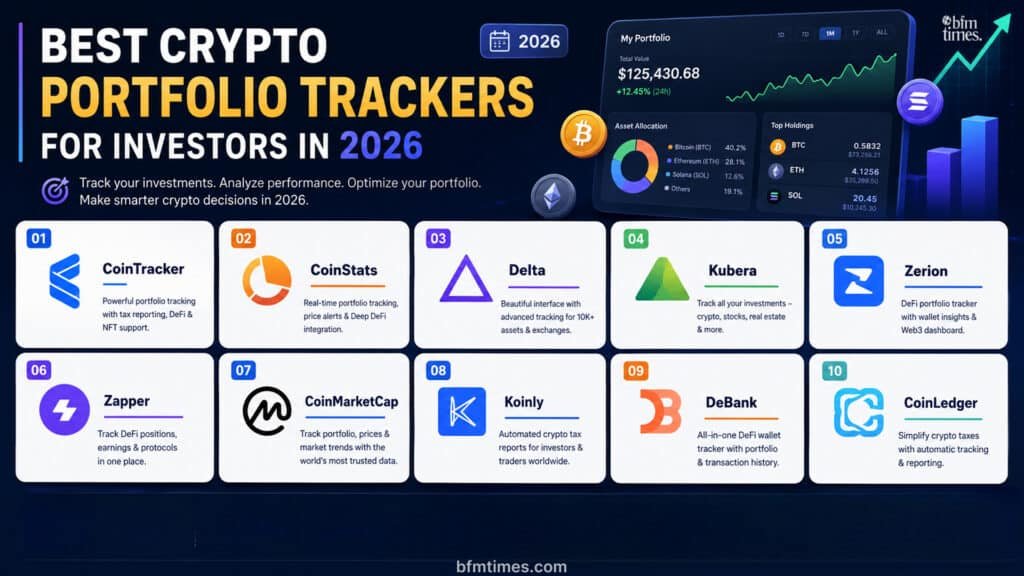
The crypto market has grown way past just the trade of digital coins. Today’s crypto environment includes centralized exchanges, decentralized finance (DeFi) platforms, staking mechanisms, NFTs, Layer-2 networks, and cross-chain bridges. As the ecosystem becomes more complex we see that management and tracking of investments has become a key issue for crypto investors. Portfolio trackers are at the forefront of that which investors use to have visibility, accuracy, and control over their digital assets.

Contents
  • What Is a Crypto Portfolio Tracker?
  • Rising demand for crypto portfolio tracking.
    • Increasing Asset Diversity
    • Multi-Platform Investment Behavior
    • Decentralized Finance Complexity
    • Market Volatility and Risk Management
  • Benefits of a Crypto Portfolio Tracking Tool.
    • Centralized Portfolio Overview
    • Performance Analysis
    • Historical Data and Insights
    • Time Efficiency
    • Improved Financial Discipline
  • Key Features of a Great Crypto Portfolio Tracker.
    • Exchange Integration
    • Wallet Connectivity
    • Multi-Chain Support
    • DeFi and NFT Tracking
    • Custom Analytics and Reporting
  • Overview of Popular Crypto Portfolio Trackers
    • Blockfolio (FTX App)
    • CoinTracker
    • CoinStats
    • Delta Investment Tracker
    • Kubera
    • Zerion
    • Zapper
  • How do different investors use portfolio trackers?
    • Long-Term Investors
    • Active Traders
    • DeFi Participants
    • Diversified Investors
    • Security and Privacy in Portfolio Tracking
    • Security Tips for Crypto Portfolio Trackers.
    • Using Read-Only API Keys
    • Avoiding Platforms That Request Private Keys
    • Enabling Two-Factor Authentication (2FA)
    • Reviewing Data Storage and Privacy Policies
  • Key considerations include:
    • Transaction data is stored for.
    • Choosing Reputable and Well-Established Platforms
  • Challenges and Limitations of Portfolio Trackers
    • Future Developments in Crypto Portfolio Tracking
    • Advanced Multi-Chain and Cross-Chain Support
    • More Accurate NFT Valuation Models
    • AI-Powered Insights and Predictive Analytics
    • Future enhancements may include: 
    • Extended term storage for compliance audits.
    • Greater Focus on Privacy and Decentralization
    • Integration of Traditional Finance into Web3 Services.
  • Conclusion

In a crypto portfolio which investors can use to watch asset values, track transaction history, analyze performance, and see how their investments are doled out across various platforms and blockchains we see that as crypto investing becomes more complex portfolio tracking is not a nice to have but a requirement for in the know decision making.

This article reports on a detailed study of crypto portfolio trackers which also includes their value, key features, which platforms are the most used, security issues and what we may see in the future of this field.

What Is a Crypto Portfolio Tracker?

A crypto portfolio tracker is what you use for digital management of your crypto assets  usually in the form of a mobile app or web based platform. It collects info from exchanges, wallets and blockchain networks to give you an overview of your assets and transactions.

- Advertisement -

Unlike what we see in traditional investment tools, crypto portfolio trackers have to deal with a large variety of transaction types. We see in spot trades, margin trades, token swaps, staking rewards, liquidity pool deposits, governance token distributions, airdrops, and NFT purchases included. Also a good design includes which is to put these in a structure and easy to access format.

By collecting fragmented data portfolio trackers allow investors to see their total exposure, past performance, and present market value.

Rising demand for crypto portfolio tracking.

Increasing Asset Diversity

Today it is common to see crypto portfolios which include dozens of tokens across many blockchains. We see investors put into Bitcoin for the long term value, Ethereum for smart contract play, stablecoins for liquidity, and also various altcoins for speculatively. Manually tracking each asset is a time consuming and often inaccurate task.

Multi-Platform Investment Behavior

Crypto investors often use many different centralized exchanges for trading and also a variety of wallets for DeFi action. Each platform reports info in its own way which in turn makes it hard to get a full picture without a dedicated tracking solution.

Decentralized Finance Complexity

DeFi brings in a layer of extra complexity. We see that in liquidity pools, yield farming, lending protocols, which also include staking contracts that do change at any time. Also we have portfolio trackers that are used to determine yields, to track which assets are locked in and also to watch the return on these activities.

Market Volatility and Risk Management

Cryptocurrency markets are known to see large price swings. With real time information at their fingertips investors are able to evaluate portfolio volatility, rebalance assets, and manage risk better.

Benefits of a Crypto Portfolio Tracking Tool.

Centralized Portfolio Overview

One of the great benefits of a portfolio tracker is that it presents all of your assets in one place. This consolidated view which in turn reduces the need to log into many different platforms and do balance reconciliation.

Performance Analysis

Portfolio performance is reported out in terms of profit and loss across various time frames. Also which in turn allows investors to determine what strategies have worked well and which assets are not performing.

Historical Data and Insights

Access of past price action and transaction info allows investors to study trends, determine entry and exit points, and in turn improve future decisions.

Time Efficiency

Automation does away with manual effort in tracking transactions and balances. This is a great benefit to active traders and DeFi participants.

Improved Financial Discipline

By means of clearly presenting portfolio allocation and exposure trackers foster disciplined investment which in turn reduces impulsive decision making.

Key Features of a Great Crypto Portfolio Tracker.

Exchange Integration

Most portfolio tracking services connect to central exchanges via API keys. We can think of these as automated import of trades, deposits, and withdrawals. Also we have read only access which means the tracker does not have a way to move your funds.

Wallet Connectivity

Blockchain enabled support for wallets which in turn facilitates asset tracking. In the case of DeFi users and long term holders which prefer self custody, wallet based tracking is of great value.

Multi-Chain Support

As blockchain ecosystems grow in size and scope multi chain compatibility is a key issue. Which means that which effective trackers do we have at hand today support large scale networks like Bitcoin, Ethereum, Solana, Binance Smart Chain, Polygon, and Layer-2 solutions.

DeFi and NFT Tracking

Advanced tools which track DeFi positions and NFTs in connected wallets. We see liquidity pool tokens, staking contracts, and NFT collections included.

Custom Analytics and Reporting

Some of the tools we have see to include in depth analysis which may cover asset allocation breaks, performance charts and also include reports which can be downloaded for record keeping.

Overview of Popular Crypto Portfolio Trackers

Blockfolio (FTX App)

Blockfolio saw success in part due to its easy to use interface and mobile first design. We see that they made it very simple for the users to add in their transactions and that they in turn track asset value in real time. Also the app reports back with news updates and price alerts which in turn is very useful for the investors that are looking for that which we may term as instant market info.

Blockfolio’s simple design which in turn is very attractive to beginners that wish to track their portfolio without the complexity.

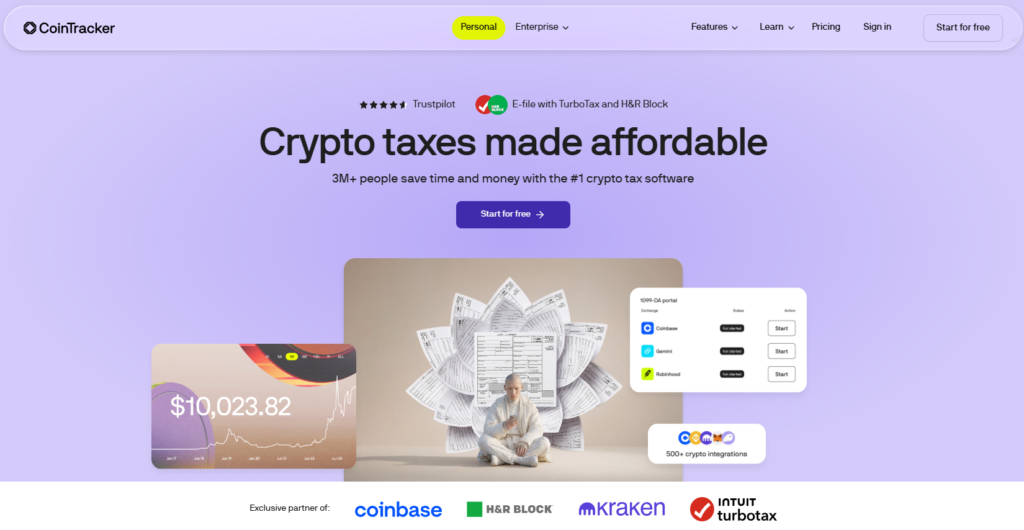
CoinTracker

CoinTracker is a popular choice among investors that require precise transaction history and performance tracking. It connects to many exchanges and wallets and which in turn categorize transactions.

The platform reports on long term portfolio management and compliance. We see that it tracks cost basis, realized and unrealized gains, and historical performance over multiple years.

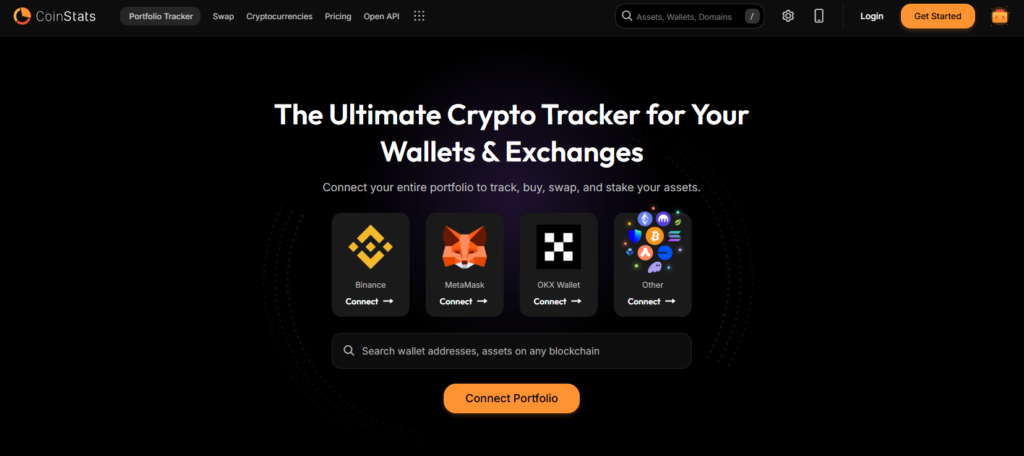
CoinStats

CoinStats provides a full range of tracking options which includes portfolio management and market insights. Users may watch their assets across exchanges and wallets which also brings in analytics, news and alerts.

The platform has a large selection of cryptocurrencies and we present to you metrics which appeal to more active investors.

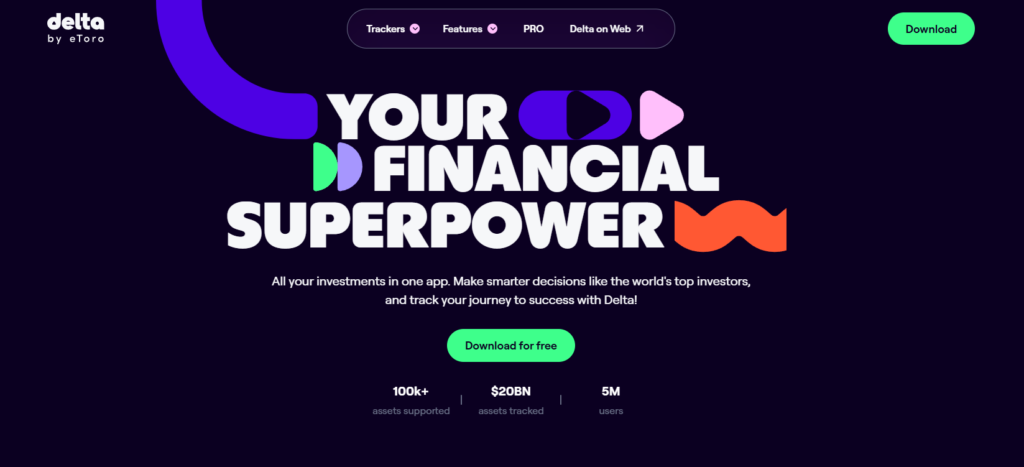
Delta Investment Tracker

Delta is into clean design and intuitive navigation. We present visual representations of portfolio performance, asset allocation, and historical trends.

Delta is a popular choice among investors that prefer easy to use platforms which report data in a clean and understandable way over those which offer in depth analysis or DeFi specific features.

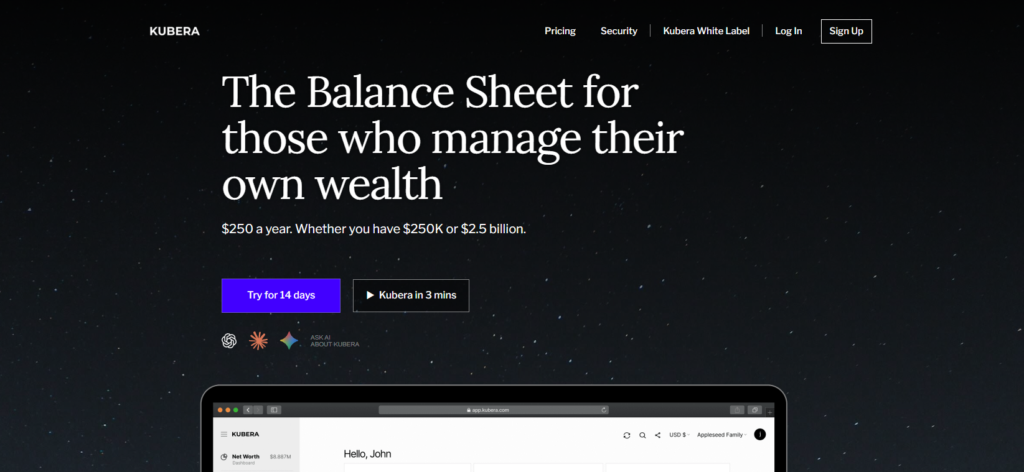
Kubera

Kubera goes beyond crypto by including traditional financial assets on the same platform. This which allows users to see their crypto investments in relation to total net worth.

The platform is for investors that include crypto in a larger investment portfolio instead of looking at it as a stand alone asset class.

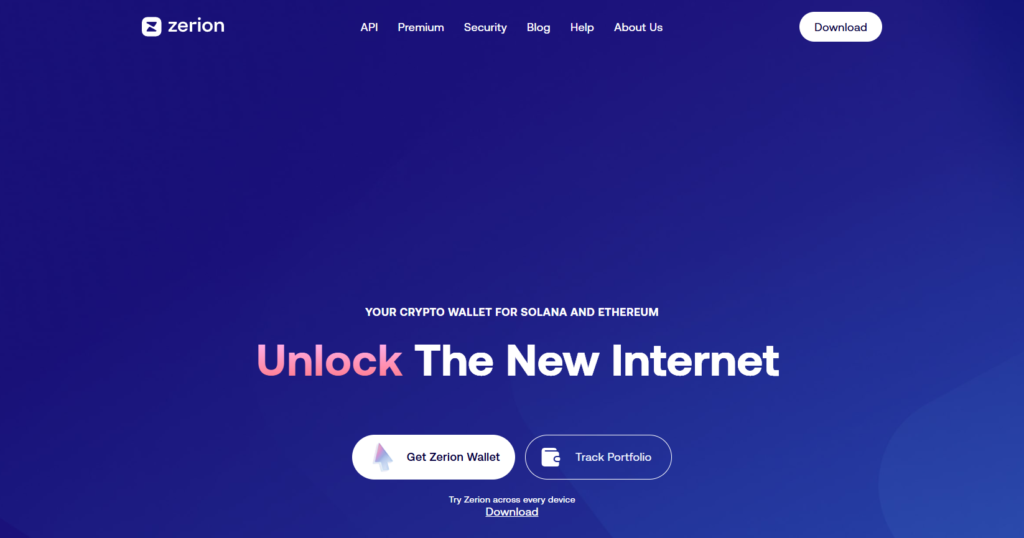
Zerion

Zerion has put forward a platform in the world of Decentralized Finance and on chain action. It connects directly to wallets to bring to light detailed info on DeFi positions, token balances, and transaction history.

The platform is for those that engage in smart contracts and decentralized apps.

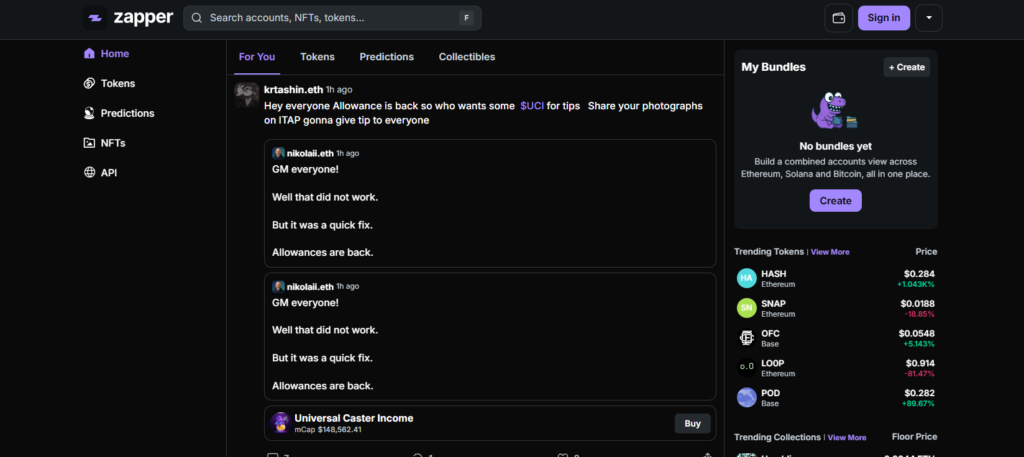
Zapper

Zapper which is very much the go-to tool for this, takes care of DeFi portfolio tracking for you. We are talking here of it’s ability to take in very complex on chain data and present it in a clean easy to use dashboard. Also it supports many blockchains and has features which include monitoring of yield generating assets.

Zapper is a great tool for investors which use to manage liquidity pools and farming strategies across different networks.

How do different investors use portfolio trackers?

Long-Term Investors

Long term investors use portfolio trackers to watch asset allocation, see overall growth of their portfolio, and to avoid frequent trade based on short term market fluctuation.

Active Traders

Traders use trackers for live performance update, profit and loss calculation, and strategy assessment.

DeFi Participants

DeFi users see which assets are locked in, what they are staking for, and what yields to expect from using trackers which in turn helps them to put their funds in the best possible place.

Diversified Investors

Investors in both crypto and traditional assets are into trackers which offer a full financial picture.

Security and Privacy in Portfolio Tracking

Security is of great importance when it comes to the use of any financial tool. As for portfolio trackers they may not hold funds but do access private data.

Security Tips for Crypto Portfolio Trackers.

While in most cases crypto portfolio trackers don’t have direct control over user funds what they do interact with personal financial info like transaction history, balance and wallet addresses. We see that poor security practices put investors at risk of private info breach, or unauthorized access to their accounts. By following proven security best practices we see that these risks may be reduced and in turn have a better secure portfolio tracking.

Using Read-Only API Keys

Many portfolio tracking services interface with central exchanges via API keys. We see that these keys are what which enable the platform to access your account info which may include trades, balance, and transaction history. It is also very important to create read only API keys when you connect your exchange account.

Read only permissions allow the portfolio tracker to see data but out of that they can’t execute trades, withdraw funds, or change account settings. Investors should also check that withdrawal, trading and transfer permissions are turned off before you connect any API key. This also reduces the damage if the API key is ever stolen.

Also users should go back to check API keys and remove access for those which are not in use anymore.

Avoiding Platforms That Request Private Keys

A base tenet of crypto security is that which private keys and recovery phrases must be kept from the public. Also which is true for legitimate portfolio trackers which do not require private keys to operate. Instead they use public wallet addresses or secure connection methods like WalletConnect.

Any platform that requests private keys is at great risk of security breach which is to say that possession of a private key gives full access to assets. We as investors should stay away from such platforms which may also have attractive features. Use of wallet based tracking which is a function of public blockchain data keeps funds fully in the user’s control.

Keeping strict separation between asset custody and portfolio tracking is essential for long term security.

Enabling Two-Factor Authentication (2FA)

Two step authentication we have which goes beyond what a password does. Upon enabling it users must present a second form of identification which may be a mobile auth app or hardware security key.

Portfolio managers which support 2FA put in place better security against unauthorized access in the case of password breach. It is recommended that investors enable 2FA where it is available and to not use email based authentication as the sole method.

Using strong and distinct passwords in association with 2FA decreases account breaches.

Reviewing Data Storage and Privacy Policies

Portfolio tracking services which collect and store sensitive information which in turn makes it important to go over how they handle this info. Investors should look at a platform’s policy on privacy which details what data is collected from them, how it is stored, and if it is shared with third parties.

Key considerations include:

Whether data is protected in transit and at rest.

Transaction data is stored for.

Whether personal info is used for analytics and marketing which is also including sale of that data.

Transparency of how data is handled is a key element of platform reliability and trustworthiness.

Choosing Reputable and Well-Established Platforms

Not all portfolio tracking services are the same. Which which do the best job of establishing themselves as reliable players also tend to put more into infrastructure, audits, and continuous security updates.

Features of a reliable platform are:.

• Clear documentation and security disclosures

• Active development and regular updates

Positive reports from users and industry recognition.

• Responsive customer support

Selecting established platforms which have proven security practices reduces your exposure to operational and technical risks.

Challenges and Limitations of Portfolio Trackers

Despite that which is good about them some portfolio tracking services have issues. Some platforms have trouble with classifying complex DeFi transactions. Also we see that at times they delay in updating data from exchanges or blockchains.

Also in that which regards NFTs and illiquid tokens they may trade at very different values based on sparse market info. Investors are best to use portfolio tracker reports as a tool which to look at trends rather than as a very accurate report.

Future Developments in Crypto Portfolio Tracking

As the crypto space continues to grow in maturity we see portfolio tracking tools also develop along with new tech, regulatory structures, and investor action. At first portfolio trackers were very basic in function mainly doing price watch and balance reporting. But going forward we will see more advanced, in depth, and flexible solutions which adapt to the ever change digital asset space. Below we discuss some of the main trends that will play a role in the evolution of crypto portfolio tracking.

Advanced Multi-Chain and Cross-Chain Support

In the coming years we will see great growth in the area of multi chain support for crypto portfolio tracking. As blockchains grow in number and diversity we are seeing investors put assets into many different networks which includes Ethereum, Bitcoin, Solana, Avalanche, Polygon and also a large number of Layer-2 solutions.

Future portfolio trackers are expected to: 

Automatically identify assets across many chains with a single wallet address.

Track cross chain bridge operations more accurately.

Merge and aggregate balance and performance data from networks which is done automatically.

Present a single dashboard which removes the need to switch between chain specific tools.

This issue is of import as blockchains grow to interact more.

Enhanced DeFi Position Tracking and Yield Analysis.

Decentralized finance is growing in terms of complexity we see the introduction of new protocols, strategies and financial tools at a regular basis. In the future we will see improved DeFi analytics in which:.

Real time liquidity pool positions.

Accurate computation of yields, APRs and APYs.

Visualization of asset lockup and vesting schedules.

Here is a comparison of various DeFi strategies’ performance.

By which DeFi is concerned trackers will have that to clarify things for investors which in turn will see that they are better able to identify risk and improve returns.

More Accurate NFT Valuation Models

NFT’s present a new issue for portfolio tracking which is due to their illiquid and very subjective nature. Also traditional price feeds do not work well for unique digital assets.

Future developments may include: 

Floor price based evaluation which includes rarity metrics.

Integration of NFT marketplaces for real time sales data.

Historical valuation analysis of NFT collections.

Improved classification of NFTs as investments or collectibles.

These improvements will see that investors may better include NFT’s in total portfolio evaluation.

AI-Powered Insights and Predictive Analytics

Artificial intelligence will play an increasing role in portfolio tracking tools. Instead of just presenting past data we may see in the near future, these tools will also present what may be  which we can use to our advantage.

Automated performance reports and trends analysis.

Risk assessment of exposure based on market conditions.

• Portfolio diversification suggestions

Signals from behavior and market based indicators.

AI based tools may help investors to find out inefficiencies and make better informed decisions which don’t require in depth tech knowledge.

Enhanced Tax and Regulatory Compliance Tools

As the global trend of introduction and amendment of cryptocurrency regulations by governments continues, portfolio tracking services are to add to their compliance related features.

Future enhancements may include: 

• Automatic classification of taxable events

• Jurisdiction-specific tax calculations

Integration of our systems with your tax and accounting software.

Extended term storage for compliance audits.

These features are also for investors which are active in many countries or which deal with complex transaction histories.

Greater Focus on Privacy and Decentralization

Privacy issues are a growing issue in crypto. Many users prefer products which put out less info and which also stay away from the central storage of personal data.

Future portfolio trackers may: 

Work with on chain data only which does not require user accounts.

Support local and self run tracking systems.

• Allow anonymous wallet-based tracking

• Implement zero-knowledge or privacy-preserving technologies

Such to see greater alignment of portfolio tracking tools with that of decentralization and user sovereignty.

Integration of Traditional Finance into Web3 Services.

As the crypto market integrates with traditional finance we see that in the future portfolio tracking tools will play a role in connecting Web2 and Web3 finance.

Potential integrations include: 

Bank account and fiat currency tracking.

Portfolio of stocks, ETFs and commodities.

• Web3 identity and authentication systems

Direct engagement with decentralized applications (dApps).

This is the point at which investors will have access to all of their financial tools from one place.

Customizable Dashboards and User Experience Enhancements

In the future portfolio trackers we will see greater personalization. Instead of static dashboards, users will be able to design their own which better suit their preferences and strategies.

Improvements may include: 

• Modular dashboards with customizable widgets

Below are some reworded versions of the original text: – In the strategy space of portfolio views which are long term in nature, DeFi and trading also included – Within the domain of portfolio strategies we have long term, DeFi, trading – Of the various portfolio strategies which we look at in the long term also including DeFi and trading – In our study of portfolio strategies which span the long term we also look at DeFi and trading – Which we look at in the context of long term portfolio strategies also include DeFi and trading.

• Enhanced mobile-first interfaces

• Improved accessibility for non-technical users

Better design of the user experience will see greater adoption of our portfolio tracking.

Real-Time Risk Management and Stress Testing

In some cases we see portfolio trackers that have adopted tools which in the past were the domain of institutional finance like risk modeling and stress testing.

These features could include: 

• Volatility and drawdown analysis

• Scenario modeling for market downturns

• Asset correlation tracking

Alerts for market and funding risks.

Such features would see to it that investors do better at preparing for market uncertainty.

Conclusion

Crypto asset managers have become that which investors use to make sense of the very complex digital asset world we see today. They which to put together info from different platforms and blockchains, analyze performance and use that info to make informed decisions.

While it is true that not all trackers are for every investor, we do see that analysis of individual investor needs and their strategies plays a key role in the selection process. As for what each investor is after  be it simplicity, in depth analytics, coverage of DeFi, or full scale wealth management  portfolio trackers provide great support in the effective management of crypto investments.

Disclaimer: BFM Times acts as a source of information for knowledge purposes and does not claim to be a financial advisor. Kindly consult your financial advisor before investing.

Best Tools to Track Whale Transactions
Chainlink (LINK) Price Prediction (2026-2030)
Best Crypto to Buy Now: Top 10 Picks
Best Exchanges for Crypto Day Trading: Top 7 Platforms in 2026
ICO Guide: How to Participate in ICO Safely
Share This Article
Facebook Email Copy Link Print
Previous Article Crypto Treasury Dashboard – Live Asset & Price Tracker Crypto Treasury Dashboard – Live Asset & Price Tracker
Next Article Best AI Tools for Developer Best AI Tools for Developers
- Advertisement -

Latest Posts

Sujal Interview Michael Saylor_ Bitcoin Giant Meets Rising Creator
Sujal Interview Michael Saylor: Bitcoin Giant Meets Rising Creator
News
Long-Term Profitability of Web3 Gaming Studios
Gaming
Best AI Tools for Developer
Best AI Tools for Developers
AI Tools
Crypto Treasury Dashboard – Live Asset & Price Tracker
Crypto
- Advertisement -
Ad image

You Might Also Like

multi coin wallet
CryptoCrypto Wallets

Best Multi-Coin Wallets for Beginners 2026

February 17, 2026
UEB3
Crypto

Easiest Way to Invest in Crypto with UEB: Crafted by Experts, Gives You Frequent Payouts

January 28, 2026
Polygon
CryptoCrypto Forecast

Polygon (POL) Price Prediction (2026-2030)

January 28, 2026
solana meme coins
CryptoCrypto Currency

Best Solana Meme Coins to Buy in 2026: Top 5 Picks

February 7, 2026

Follow Us on Socials

We use social media to react to breaking news, update supporters and share information

Facebook X-twitter Instagram Linkedin Reddit Pinterest Telegram Youtube
BFM Times

For the Phenomenal Times

bfm-tg-app

Quick Links

  • About Us
  • Privacy Policy
  • Press Release
  • Partners
  • Submit Your Article on BFM Times
  • Events
  • Advertise
  • Jobs
  • Editorial Guidelines
  • Disclaimer
  • Refund and Returns Policy
  • Terms & Conditions
  • Contact Us

Newsletter

You can be the first to find out the latest news and tips about trading, markets...

Please enable JavaScript in your browser to complete this form.
Loading
Ad image

Copyright @ 2026 BFM Times. All Rights Reserved.

© 2026 All Rights Reserved.
Welcome Back!

Sign in to your account

Username or Email Address
Password

Lost your password?