The OpenClaw AI Scam is one of the most controversial AI-meetings of artificial intelligence and crypto speculation that occurred in 2026. What initially began as a quick open-source fairy tale then turned into a case of a pump and dump of a fake token worth 16 million dollars, and the entire OpenClaw Discord outlawed Bitcoin, which created a controversy within the industry.
- Summary Executive Report: The 48-Hour Meltdown
- The Anatomy of the $CLAWD Token Pump and Dump
- Peter Steinberger’s OpenClaw Response and the OpenAI Transition.
- AI Agent Crypto Ban and OpenClaw Discord Bitcoin Ban.
- Security Fallout and Vulnerabilities
- The Bigger AI vs. Crypto Drama
- Can OpenClaw Recover?
- Frequently Asked Questions
- Conclusion: What the OpenClaw AI Scam is Teaching the Industry
- Also Read:
Within less than 48 hours, OpenClaw, an AI agent framework spearheaded by Peter Steinberger, was no longer ranked among the fastest-growing repositories on GitHub but was the center of attention in the AI vs. crypto drama. The scandal attracts focus to the harsh governance, branding, and cybersecurity violations that open-source AI projects must confront now.
Summary Executive Report: The 48-Hour Meltdown
OpenClaw was publicly presented in January 2026, with the name “Clawdbot.” Within a couple of weeks, the project had gained well in excess of 200,000 stars on GitHub; such a rapid expansion curve is extremely difficult to observe in developer communities.
However, in its rebranding on 27/01/2019, OpenClaw AI Scammers took advantage of a critical exploit of abandoned social media handles. The supposed identity of a supposed clawdbot was captured in a few seconds, allegedly by the automated bots using an old Twitter account (since no longer accessible).
On February 22, an imitated Solana token named $CLAWD, purporting to have official links with OpenClaw, appeared. As it was reported by the KuCoin and Cointelegraph coverage, the token reached approximately 16.4 million in market capitalization and then dropped by a significantly greater percentage than 90 after the disavowal of the masses. Source.
This event immediately led to the so-called OpenClaw AI Scam crisis of today.
The Anatomy of the $CLAWD Token Pump and Dump
Brand Hijacking in Less Than 10 Seconds
During the shift in rebranding, the automation tools of fraudsters were used to retake the dormant identity of Clawdbot. This allowed them to:
- Air false advertisements.
- Invent a false token narrative.
- Direct flow towards bogus liquidity pools.
This fast rebrand window depicts that identity lock protection-free rebrands are vulnerable.
$CLAWD Token Pump and Dump Metrics
Blockchain tracking showed:
- Market cap peak: ~$16.4M
- Crash subsequent statement: Dropped by approximately 98 percent in less than one hour.
- Withdrawal of liquidity is typical of classic rug-pull behavior.
According to Forklog, the crypto community has strongly reacted to the idea of Steinberger publicly denying any token affiliation. Source.
This event, as opposed to conventional crypto OpenClaw AI Scams of traders, also affected the AI developers who were not aware of token risk trends.
Peter Steinberger’s OpenClaw Response and the OpenAI Transition.
“I Will Never Do a Coin.”
Peter Steinberger, OpenClaw AI Scam, made a public declaration that he would never release a token and spoke out against the speculative mania of the project. His reaction was quite categorical, and the framework was not associated with Web3 in any manner.
This stance intensified the AI vs. crypto drama.
Clarity was praised by some developers.
Some others suggested that the exploit would have been avoided with improved brand governance.
Move to OpenAI
Soon after the scandal, Steinberger became part of the OpenClaw AI Scam to head its Personal Agents section. This is interpreted by analysts as a step toward more centralized control and orderly governance designs of AI agent development.
He was featured in the Lex Fridman podcast, discussing the dangers of OpenClaw AI Scam autonomy and hypothetical psychology. Source.
AI Agent Crypto Ban and OpenClaw Discord Bitcoin Ban.
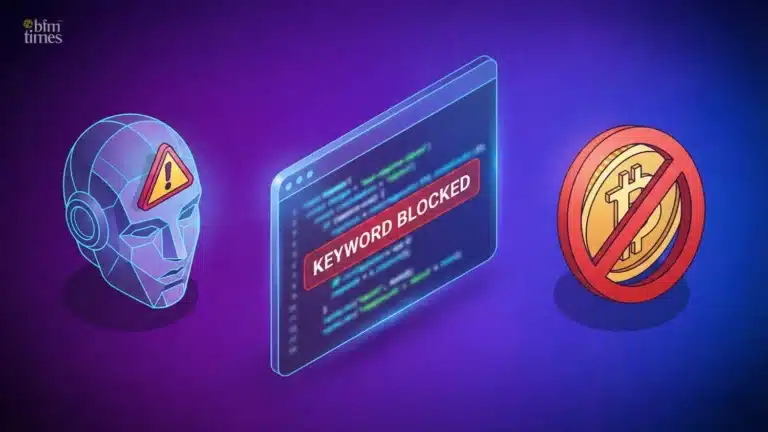
A ban on AI agents’ crypto enforcement within the official community platforms immediately was one of the most debated effects of the OpenClaw AI Scam.
Keywords include the following:
- Bitcoin
- Ethereum
- Blockchain
- Crypto
were said to have been filtered or auto-moderated.
Even technical references like Bitcoin block height that are used to benchmark were also marked by AI Certs reporting. Source
Why the Ban Was Implemented
Three reasons were given by moderators:
- Assuming defense against the reuse of tokens.
- Reducing speculative spam
- Securing new developers against financial fraud.
Nevertheless, critics believe that the prohibition of discussion does not pose a risk; it only pushes the discussions in another direction.
Security Fallout and Vulnerabilities
There were greater structural risks out there, beyond the token crash, as revealed by the OpenClaw AI Scam.
“900+ Malicious ‘Skills”
Security researchers found more than 900 malicious plugins with a design of
- Extract crypto private keys.
- Record web browser session identities.
- Execute remote payloads
This brought up grave questions of Shadow IT in the marketplaces of AI agents.
CVE-2026-25253 Remote Code Execution
Malicious skill packages were able to run arbitrary code on a critical vulnerability. Enterprise companies have also been said to have started blocking OpenClaw AI Scam network traffic until they were patched.
The point is simple: autonomous agent systems need supply chain security models as stringent as traditional software systems.
The Bigger AI vs. Crypto Drama
The OpenClaw AI Scam is not an isolated one. It is a sign of an increasing philosophical rift.
AI advocates emphasize the following:
- Utility
- Automation
- Productivity
According to crypto enthusiasts:
- Decentralized ownership
- Tokenized incentives
- Value capture mechanisms
Once AI projects become fast-trending, token speculation tends to follow, via official promotion or not.
This event can lay a precedent for:
- Better brand lock security.
- Compulsory electronic disclaimers.
- Verified plugin registries
- Regulation by changing AI regulation systems.
Can OpenClaw Recover?
There are three pillars of recovery:
- Security Hardening: Checked releases and scanning of the plugs.
- Community Governance: Public moderation policy.
- Clear Brand Identity: Checked property legal protection.
Properly done, OpenClaw might become an open-source AI case study as much as it became a scandal one, and it will show that open-source AI projects can live through high-velocity exploitation.
Frequently Asked Questions
Is OpenClaw safe?
No, OpenClaw (formerly Clawdbot/Moltbot) is widely regarded as high-risk and not safe for general use because it runs autonomously with broad system access, can be vulnerable to prompt-injection and malware in third-party “skills,” and has prompted bans from major tech firms due to security and privacy concerns.
What are the requirements for Clawdbot (OpenClaw)?
OpenClaw requires local installation with elevated permissions on your device, basic hardware like at least 2 GB RAM (4 GB recommended) to operate comfortably, and technical skills to configure, sandbox, and monitor it safely due to security and access risks.
Conclusion: What the OpenClaw AI Scam is Teaching the Industry
The OpenClaw AI Scam highlights the speed at which brand identity, automation, and speculative markets can hit each other. A 10-sec handle gap had caused a 16M token pump and dump, an OpenClaw Discord Bitcoin ban, and an enduring AI agent crypto ban dispute.
Governance is the most important lesson for open-source builders.
In the case of businesses, it is supply chain security.
The increasing disentanglement of autonomous AI agents and digital asset ecosystems is the case of regulators.
The next fight is not merely technical, as AI structures are going global, but a matter of trust, identity control, and responsible innovation in a world where bots outperform humans.
Also Read:
IMF Endorses Stablecoins after Opposing Them in Dec’24, Is Bitcoin Next in its Endorse List?
Bitcoin Hasn’t Bottomed Yet says Ex JPMorganChase Vice Prez, BitThumb Crisis Worsens
Disclaimer: BFM Times acts as a source of information for knowledge purposes and does not claim to be a financial advisor. Kindly consult your financial advisor before investing.