


Cryptocurrency has grown from an obscure phenomenon to an economic giant, with derivatives trading at the epicenter. The hunt for the best futures trading platform is on, with two giants, Binance and Bybit, being the main contenders. Which of the two is the ultimate champion? This piece offers an easy comparison of Binance vs. Bybit that will give you the answer you need.
- The Rise of Crypto Derivatives
- User Interface and Trading Experience
- Binance vs Bybit Futures: Asset Selection
- Crypto Leverage Comparison
- Binance Futures Fees vs Bybit Fees
- Liquidity and Execution
- Security and Trust
- Mobile App Performance
- Unique Features: Copy Trading and Bots
- Regional Availability and KYC
- Verdict: Which One Should You Choose?
- Conclusion
- Frequently Asked Questions
The Rise of Crypto Derivatives
To fully grasp the Binance vs Bybit comparison, you need to first understand the world of crypto derivatives. With the help of futures, you can bet on the price action of cryptocurrencies such as Bitcoin or Ethereum without owning them. However, the use of leverage increases the potential for earning more, as well as the potential for loss.
Binance, founded in 2017, quickly rose to the top as the largest exchange in the world in terms of trading volumes. Binance Futures has a reputation for having the most pairs available on any futures platform. Bybit, founded in 2018, started off as a nearly exclusive derivatives trading platform. It has since evolved to offer a variety of other services, but its derivatives trading is still its strongest feature.
User Interface and Trading Experience
The first impression a trader gets is the user interface. In the Binance vs. Bybit comparison, the user experience is highly subjective.
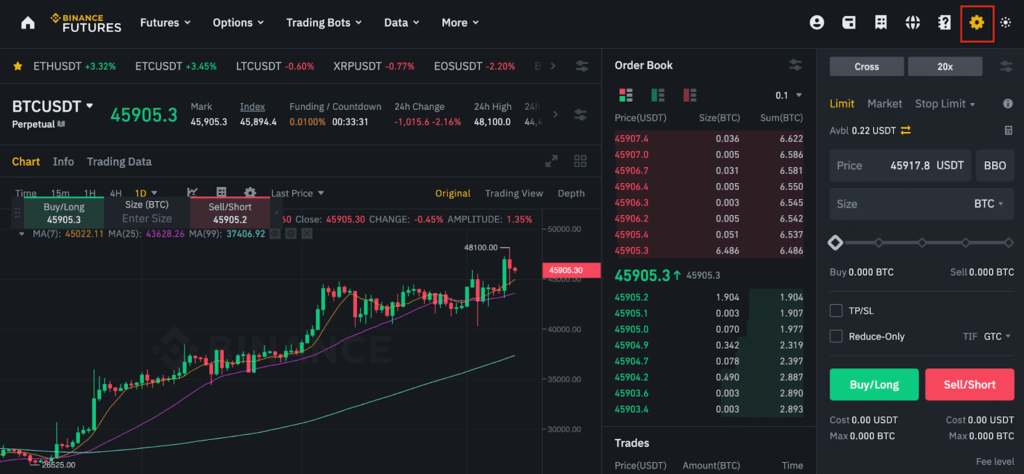
Binance has a very professional-looking interface that, to some extent, looks a bit cluttered for a newbie. Binance is a “super app” that offers a variety of services, ranging from NFTs to savings accounts. The futures tab is just a small part of a massive application. However, to a seasoned trader, the amount of customizability in the charting software, which uses TradingView, and the depth of the order book are second to none.
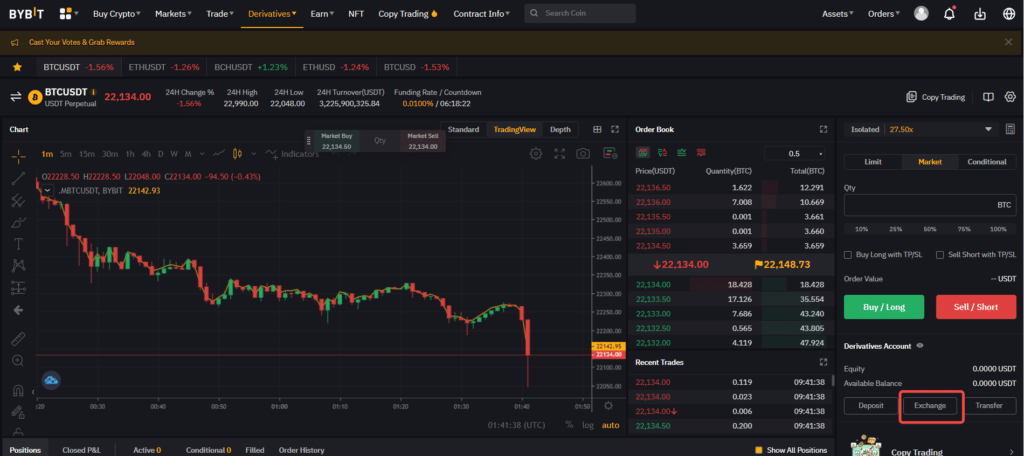
Bybit was designed specifically with derivatives in mind from the very outset. The interface of the platform has been described by many as more intuitive and clean compared to Binance’s.
With the Smart Trading Terminal of Bybit, traders can set both their SL and TP orders with the click of a mouse as they enter a position.
This ease of use is a big part of the reason why many traders rate Bybit as the best futures exchange around, especially for active day traders who need to be able to respond to market changes in milliseconds.
Binance vs Bybit Futures: Asset Selection
When comparing Binance and Bybit, the choice of available assets to trade is a big factor.
In the case of Binance, the exchange currently has the highest number of available futures contracts.
Whether traders wish to trade the big boys like BTC and ETH, or the alt gems like Hoge Finance, Binance has a USDT-margined or a Coin-margined contract available.
This makes Binance the go-to exchange for traders looking to trade a diverse portfolio of dozens of different tokens.
Although Bybit has closed the gap in recent years, the exchange still hasn’t managed to list as many altcoins as Binance.
However, the Perpetual Contracts of Bybit do have every major and mid-cap asset listed, with a focus on quality over quantity to prevent slippage during large price swings.
Crypto Leverage Comparison
When it comes to leverage, the world of crypto is a double-edged sword. When we compare the leverage options provided by Binance and Bybit, we see that both exchanges offer excellent options, though they go about it differently.
On Binance, for instance, you can go as high as 125x for Bitcoin and Ethereum pairs. For other altcoins, the maximum leverage is between 20x and 50x. There is also the Multi-Asset Mode, which allows for the trading of futures using different assets for the margin (e.g., using both USDT and BUSD for the same position).
Bybit offers 100x leverage for its flagship assets, and the most interesting part is the availability of the “Isolated Margin Mode” and “Cross Margin Mode,” both of which can easily be switched between. Bybit is also famous for its leverage system, which has managed to survive the massive volatility swings without the “system overload” that was common on other exchanges. For some, the reliability of the leverage is more important than the maximum leverage that is available.
Binance Futures Fees vs Bybit Fees
If you’re a trader dealing with large volumes, the fees model can be a game-changer. Here’s a brief comparison of Binance Futures fees with Bybit’s fee model.
Binance has a VIP system depending on the trader’s 30-day volume traded, as well as the BNB tokens held by the trader.
Binance Standard fees
- Maker fee: 0.02%
- Taker fee: 0.05%
- BNB discount of 10% if paying with BNB.
Bybit fees model
- Standard Maker Fee: 0.02%
- Standard Taker Fee: 0.055%
- VIP Levels: Substantial rebates available to ‘Pro’ traders who add liquidity.
Overall, the fee models of Binance and Bybit Futures appear to be nearly identical, with the same maker fee of 0.02%. The choice will come down to the practical use of BNB tokens, as holding large amounts of BNB will likely be more cost-effective on Binance.
On the other hand, Bybit offers a ‘Zero Fee’ promo, which, if available, would be a huge bonus to retail traders.
Liquidity and Execution
This is the factor that influences the price at which the order will be executed relative to the actual market price.
Binance: This exchange has the highest volume of trades, which means that the slippage of large orders will be minimal, as the order book remains deep even during large price movements. However, there have been complaints of slight app lag during extreme price movements.
Bybit: This exchange has a highly optimized derivatives engine, which processes up to 100,000 transactions every second. Their focus is on ‘no overloads,’ which means the execution of orders remains smooth even when there are dramatic movements in the price of Bitcoin, which can be a big plus for scalpers using 1-minute or 5-minute charts, even if the taker fees are a little higher.
Security and Trust
Following the series of failures that have been happening on the crypto exchanges, the current top issue is security. Binance has a Secure Asset Fund for Users (SAFU), which is an emergency fund to cover users’ assets in the case of extreme circumstances. Binance also has multi-factor authentication, cold storage of assets, and regular Proof of Reserves audits. Bybit also has a very strict security policy, using a deterministic cold wallet system. Bybit has never had a security breach on its exchange. Binance is also transparent with its Proof of Reserves audits, which allow users to audit the 1:1 reserves of their assets. Binance and Bybit are the safest exchanges in the crypto world, but Binance is also the target of regulatory bodies due to its size.
Mobile App Performance
Today, it’s common for people to use their phones to make trades. Both Binance and Bybit have great mobile applications. While using the Binance app, one can use all of the features available on the desktop platform, including all of the futures features. It’s like a Swiss Army knife! It’s extremely powerful but can also be intimidating at times. There’s a lighter version of the app called ‘Lite’ that doesn’t have futures and requires users to upgrade to Pro if they need derivatives features. Bybit’s app is often praised as having a more mobile-friendly feel and being faster and sleeker, with a great flow from charts to trading. In terms of features and how they’re implemented, if one of their use cases is trading on their phone, Bybit’s app may have an edge in this Binance vs Bybit comparison.
Unique Features: Copy Trading and Bots
In terms of features, both of these platforms have excelled in copy trading and automated trading features. Bybit was one of the first in the cryptocurrency space to offer copy trading and allowed users to browse Master Traders and copy their trades. It’s worth noting that it’s extremely easy to use and popular among people looking to gain exposure to futures but do not necessarily have the time or desire to make all of their own trades. Binance was quick to catch up and offer copy trading of its own with a huge list of people to follow. While Trading Bots and Copy Trading are available on Binance’s platform, their Trading Bots, such as the Grid Trading Bot, are extremely advanced and allow users to set specific price ranges they wish to automate their strategy on.
Also Read: Binance Expands Trading with Gold and Silver Perpetual Futures
Regional Availability and KYC
Another major aspect of the Binance vs Bybit debate is the region in which you are located. Binance has indeed had issues in the US and parts of Europe, although the latter is handled through its separate and limited subsidiary, Binance US. However, in the case of all users, the Know Your Customer (KYC) policy is applicable to gain access to the trading features on the platform. This is the same case with Bybit, which has also incorporated the need to have KYC in place for all users across the globe. These two platforms are not allowed in the US and parts of Europe, but are popular in the international arena.
Verdict: Which One Should You Choose?
Having outlined the key features and the differences in the Binance vs Bybit debate, the question is which one is the better option in the case of the futures trading platforms?
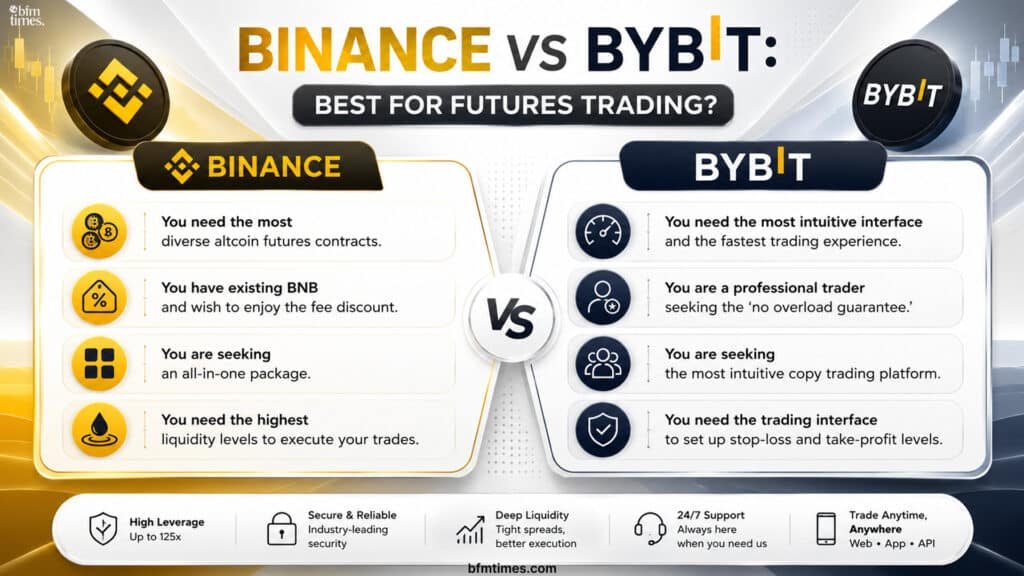
Choose Binance:
- You need the most diverse altcoin futures contracts.
- You have existing BNB and wish to enjoy the fee discount.
- You are seeking an all-in-one package.
- You need the highest liquidity levels to execute your trades.
Choose Bybit:
- You need the most intuitive interface and the fastest trading experience.
- You are a professional trader seeking the ‘no overload guarantee.’
- You are seeking the most intuitive copy trading platform.
- You need the trading interface to set up stop-loss and take-profit levels.
Conclusion
Both Binance and Bybit are industry leaders in their own right, and this is unsurprising given the features and platforms outlined in the article. It is vital to remember that when trading on the Bybit derivatives or Binance futures platforms, the risks of using leverage may result in the loss of your capital. It is vital to remember that the choice between the two platforms is determined by the one that suits your personality as a trader.
Frequently Asked Questions
Which exchange generally offers lower futures trading fees?
Binance typically has slightly lower futures taker fees and larger fee-discount options (e.g., with BNB) than Bybit.
Which platform provides deeper liquidity and broader futures markets?
Binance offers higher liquidity and a larger number of futures markets compared with Bybit.
Which exchange is more focused on advanced derivatives tools?
Bybit is known for its strong derivatives-oriented tools and user-friendly futures trading interface.
Disclaimer: BFM Times acts as a source of information for knowledge purposes and does not claim to be a financial advisor. Kindly consult your financial advisor before investing.