

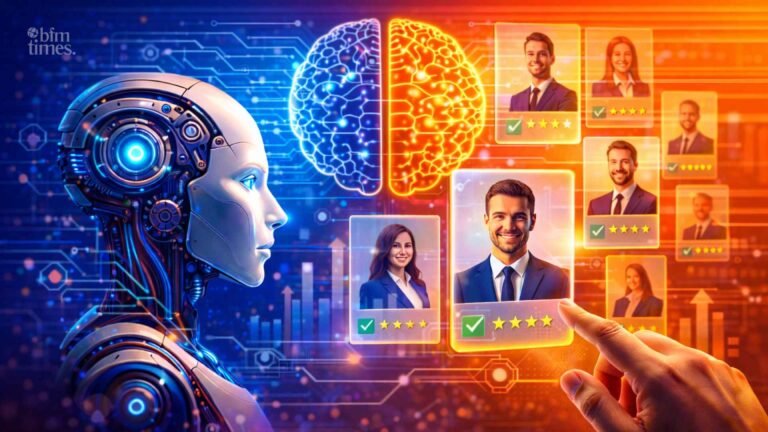
Hiring has quietly undergone a massive shift. What used to be a resume-reading exercise is now a data-driven decision system powered by algorithms, predictive signals, and automation layers. AI in candidate shortlisting is no longer a privilege; it is becoming the foundation of contemporary hiring workflows.
- Shortlisting Candidates Is No Longer a Manual Task
- What Happens When AI Screens a Candidate
- The Shift from Resume Filtering to Intelligent Shortlisting
- How AI Fits into the Modern Recruitment Funnel
- AI Tools Powering Candidate Shortlisting
- Why AI Shortlisting Works Better Than Manual Screening
- The Role of Agentic AI in Candidate Shortlisting
- How Companies Use AI for Shortlisting
- The Human and AI Balance in Hiring Decisions
- Challenges of Using AI in Candidate Shortlisting
- AI Will Predict Hiring Success Before Interviews
- AI Is Redefining Candidate Shortlisting
- Frequently Asked Questions
If you are still counting on manual resume evaluations or pure ATS filtering, your practice is out-of-date. In 2026, it’s about evaluating and prioritizing candidates with the help of intelligent software.
This guide will discuss how top companies use AI for hiring and what the future holds.
Shortlisting Candidates Is No Longer a Manual Task
Recruiters of today do not have 20 or 50 applications; they have 100s or 1000s for one position. Human resume reviewing is just no longer scalable. In fact, it is highly subjective, error-prone, and prone to fatigue or bias of the reviewer.
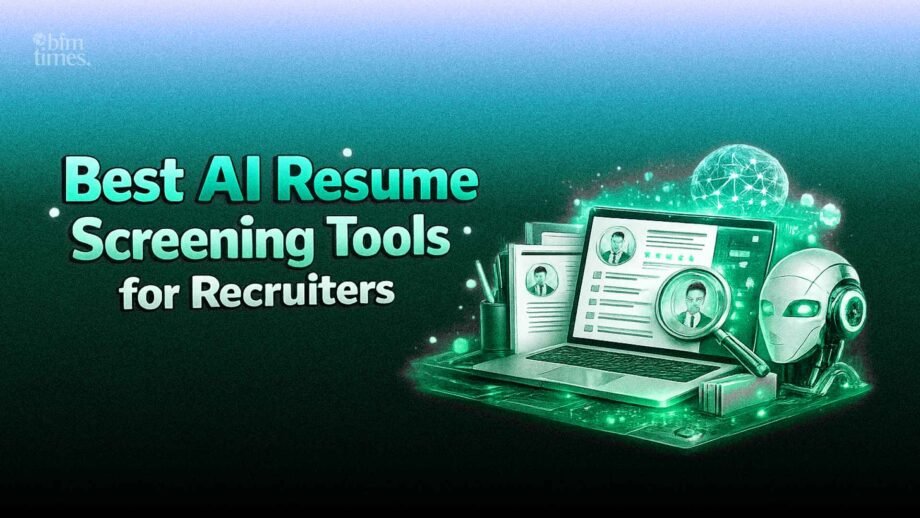
This is precisely where AI in candidate shortlisting changes the game. Unlike traditional resume screening, an AI system processes resumes automatically, filtering, ranking, and sorting candidates in accordance with structured and unstructured data.
Today, modern AI recruitment specifically aims to significantly reduce hiring times, ranging from 30% to 75% or even more, depending on the level of automation. What used to be a process focused on finding “the best fit” becomes a scoring process.
What Happens When AI Screens a Candidate
Not only does AI recognize keywords, but it also analyzes the whole profile. With NLP (Natural Language Processing), candidate screening AI technology analyzes the resume, identifies relevant data, and matches it to the requirements.
However, that is not all that makes today’s candidate selection technology unique. The current technology goes beyond simple skill matching and creates an image of the candidate by:
- Experience progression
- Skill relevance and depth
- Behavioral indicators (in some systems)
- Career trajectory patterns
Every candidate, using advanced AI HR tools, gets scored. The scoring is not a coincidence; it is done by comparing the candidate against successful candidates of the same profile.
What has changed the paradigm in AI in candidate shortlisting for talent? It is not about rejecting unqualified candidates anymore. Now it is about finding high-potential candidates that otherwise could slip through your radar.
The Shift from Resume Filtering to Intelligent Shortlisting
ATS technologies were designed to filter. The system used keyword matching, Boolean searches, and strict criteria. Any resumes that did not use the exact language were often discarded.
Today’s AI flips that logic.
It does not perform simple keyword matches but recognizes the nuances of language. The system understands that “growth marketing” may be synonymous with “performance marketing.” It recognizes transferable skills and adjacent experience.
This is why AI talent acquisition is so valuable.
Modern systems can:
- Predict job success based on historical hiring data
- Analyze how candidates compare to top performers
- Reduce bias by focusing on skills rather than background
And importantly, AI doesn’t work in isolation anymore. It integrates across ATS, CRM, and communication platforms, creating a unified hiring engine.
How AI Fits into the Modern Recruitment Funnel
The recruitment funnel hasn’t disappeared, but it has evolved.
Today’s funnel looks like this: sourcing → screening → shortlisting → interviews → hiring.
AI operates heavily in the early and mid-stages:
- In sourcing, it identifies potential candidates
- In screening, it filters out unqualified profiles
- In shortlisting, it ranks and prioritizes candidates
This is where AI hiring automation becomes highly valuable. It cuts down on effort and improves decision-making.
The key insight here is simple:
AI in candidate shortlisting isn’t just about filtering; it’s about deciding.
It doesn’t just say “yes” or “no.” It tells you who to prioritize first.
AI Tools Powering Candidate Shortlisting
1. Eightfold AI
Eightfold AI’s platform is based on deep-learning algorithms that constantly learn from the outcomes of recruitment. Unlike traditional platforms that only examine resumes, Eightfold AI assesses the trajectory of the candidate’s career, evolution of skills, and suitability for roles. This makes it a powerful tool for predictive recruiting, which focuses on recruiting successful individuals rather than filling positions.
- Best for enterprise-scale hiring
- Strong predictive shortlisting capabilities
- Continuously learns from hiring data
- Limitation: complex setup and onboarding
2. HireVue
The HireVue system integrates resume filtering and video interview evaluation. In addition to analyzing the content of the responses, it takes into account communication skills such as tone, articulation, and body language.
- Best for high-volume hiring
- Combines structured and behavioral data
- Enhances candidate evaluation depth
- Limitation: concerns around bias and fairness
3. SeekOut
SeekOut is the best software tool for recruiting and listing potential passive candidates. SeekOut uses information from several sources to list down candidates using an algorithmic approach. This tool is more effective when it comes to listing niche jobs.
- Strong sourcing and shortlisting capabilities
- Great for passive candidate discovery
- Data-rich candidate profiles
- Limitation: premium pricing
4. Pymetrics
Pymetrics relies on neuroscientific games and artificial intelligence for the evaluation of cognitive and emotional abilities rather than on experience alone. This makes the tool perfectly suitable for assessing cultural fit among candidates.
- Best for behavioral and culture-fit roles
- Uses gamified assessments
- Reduces reliance on resumes
- Limitation: niche applicability
5. HireEZ
HireEZ emphasizes efficiency. It is compatible with the current ATS and includes AI-powered matching and ranking of candidates. For recruiters seeking quick, hassle-free shortlists, this solution is perfect.
- Fast implementation
- Strong candidate matching engine
- Integrates with existing workflows
- Limitation: limited deep analytics
Why AI Shortlisting Works Better Than Manual Screening
Manual screening is inconsistent by nature. Two recruiters reviewing the same resume can arrive at entirely different conclusions. Fatigue, bias, and time pressure all affect decision-making.
This variability is eliminated.
With AI in candidate shortlisting, the evaluation process becomes consistent. In other words, all potential applicants will be assessed on similar grounds. This aspect helps scale recruiting. The issue of speed is equally important. Artificial intelligence processes thousands of applications within seconds. What is more significant, however, is its impact on improving hiring decisions.
Through data-based analysis, candidate screening AI is capable of choosing applicants who fit perfectly into their roles and organizations.
The Role of Agentic AI in Candidate Shortlisting
This area is where things get futuristic and very real.
Agentic AI refers to systems that don’t just assist; they act. These AI agents can execute tasks autonomously within defined workflows.
In recruitment, this means AI can:
- Shortlist candidates automatically
- Schedule interviews
- Send follow-ups
- Update ATS systems
This is the next level of AI hiring automation. While recruiters control the software, the software controls the process. What does it mean? Recruiting is becoming more automated, where human involvement is limited in initial phases. And yes, AI in candidate shortlisting is at the heart of this transition.
How Companies Use AI for Shortlisting
In real hiring environments, AI systems don’t just score candidates; they categorize them.
A typical workflow looks like this:
Candidates are automatically grouped into:
- Shortlisted
- Under review
- Rejected
These decisions are based on skill matching, relevant experience, and predictive scoring models. For instance, a firm recruiting software engineers may leverage AI to assess coding skills, experience with projects, and career trajectory. The candidates meeting the criteria will be immediately shortlisted, while others are filtered out. This is the way the AI recruitment process workflow operates effectively, without sacrificing quality.
The Human and AI Balance in Hiring Decisions
Despite all this automation, AI is not replacing recruiters; it’s augmenting them.
AI takes on the challenging tasks of screening, ranking, and shortlisting. But final decisions still require human judgment.
Recruiters evaluate:
- Cultural fit
- Communication skills
- Team alignment
Combining artificial intelligence and human instinct leads to the best results. In other words, AI in candidate shortlisting works best when it’s part of a hybrid decision-making system, not a standalone solution.
Challenges of Using AI in Candidate Shortlisting
AI is powerful, but it’s not perfect.
The main drawback is the problem of bias. If an AI system encounters any bias in its training data, it will reproduce and even exacerbate it. Such a situation poses many challenges in the field of AI talent acquisition. Another problem is related to transparency. Many AI technologies operate as opaque systems, making it difficult to comprehend their decision-making processes.
Finally, over-reliance on AI technology may become problematic due to over-automation issues.
Key challenges:
- Algorithmic bias
- Lack of transparency
- Candidate trust issues
This is why auditing and ethical AI practices are becoming essential in modern hiring.
AI Will Predict Hiring Success Before Interviews
We’re moving toward a future where interviews might not be the primary evaluation tool.
AI systems are already evolving to predict hiring success using the following:
- Performance data
- Behavioral analytics
- Career trajectory modeling
In advanced cases, candidates are evaluated before they start interacting with the recruiters.
This is how the process of using AI in candidate shortlisting evolves: predictive hiring. Eventually, AI HR tools will conduct full-fledged recruitment processes, from sourcing to onboarding, without any human interference at all.
AI Is Redefining Candidate Shortlisting
AI is not just improving hiring; it’s redefining it.
With faster processing, better accuracy, and data-driven decisions, AI in candidate shortlisting allows recruiters to focus on what truly matters: making the right hiring decisions.
The real shift isn’t about speed; it’s about intelligence.
Because the future of hiring is not about choosing candidates faster, it’s about choosing the right candidates smarter.
Also Read: ML vs AI vs Deep Learning: Key Differences Explained
Frequently Asked Questions
What is AI in candidate shortlisting?
AI in candidate shortlisting refers to using artificial intelligence to evaluate, rank, and prioritize job applicants based on skills, experience, and predictive data models.
How does AI shortlist candidates?
AI analyzes resumes using NLP, matches them with job descriptions, assigns scores, and ranks candidates based on relevance and predicted success.
Is AI better than manual resume screening?
AI is faster, more consistent, and data-driven. However, it works best when combined with human decision-making rather than replacing it entirely.
Can AI reduce hiring bias?
Yes, but only if properly designed and audited. AI can reduce human bias, but it can also inherit biases from training data if not monitored carefully.
What are the best AI tools for shortlisting candidates?
Top tools include Eightfold AI, HireVue, SeekOut, Pymetrics, and HireEZ, each offering different strengths in sourcing, screening, and predictive hiring.