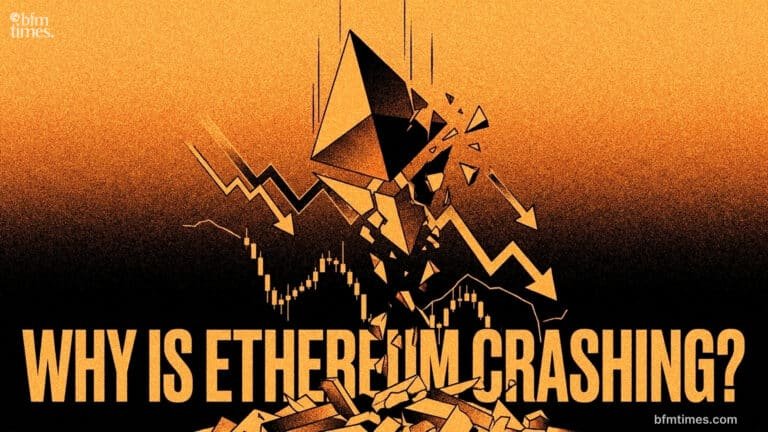
Everybody wants to know the answer to this one, why is Ethereum Crashing? The coin has dropped almost 60% since its peak in August. The ETH had fallen below $1,600 as far back as July 2026. This has been three quarters of losses for the Ethereum. This loss has left even the most long-term holders of the cryptocurrency shocked. They need to know the reason for the Ethereum Crashing. Here are all the reasons in one blog post.
- Why Is Ethereum Crashing So Hard?
- ETF Outflows Are A Key Reason Why Is Ethereum Crashing
- Whale Selling & Heavy Leverage Add Fuel To The Fire
- Layer 2 Growth Is Part Of Why Is Ethereum Crashing Too
- Competition From Faster Chains Adds More Pressure
- Is This Crash Different From Past Ethereum Crashes?
- What Could Help Ethereum Stop Falling?
- Conclusion
Why Is Ethereum Crashing So Hard?
The bigger economy is very important in relation to this crash. The reason for that is because of these high interest rates, which have made it better to invest in bonds compared to coins, taking out money from Ethereum & other cryptocurrencies. Weak employment figures & stubborn inflation have contributed to fears, making investors invest in gold & treasury instead of crypto.
ETF Outflows Are A Key Reason Why Is Ethereum Crashing
There have been many consecutive weeks of consistent outflows of these dedicated Ethereum ETFs. It indicates that there is an extraction of funds from these sources without any inflow. The main purpose behind these investments was to generate consistent demand for the asset. Now, they have become a new channel for selling pressure.
Whale Selling & Heavy Leverage Add Fuel To The Fire
These large holders have moved big amounts of ETH onto exchanges. This move usually signals plans to sell & not hold. These transfers add direct supply pressure during an already weak market. They use heavy leverage which makes the drop even sharper. This leverage forces automatic liquidations once prices break key support levels. The forced selling then pushes prices lower in a fast loop.
Layer 2 Growth Is Part Of Why Is Ethereum Crashing Too
These Layer 2 networks now handle much of Ethereum daily activity. This shift lowers fees paid directly on the main chain. These lower fees mean less ETH gets burned during each transaction. They also weaken the old story of shrinking ETH supply. This change has made ETH act more like a growth bet. The token now depends more on future adoption than instant scarcity.
Competition From Faster Chains Adds More Pressure
The competing blockchain systems such as Solana continue to take more people from Ethereum. Such blockchain platforms offer higher speed & lower costs today. The attraction lies in the fact that people who look for cheap & fast transactions find these options here. The competition slowly eats into the dominant position of Ethereum.
Is This Crash Different From Past Ethereum Crashes?
This crash shares many traits with past Ethereum downturns. These older crashes also mixed macro fear with heavy leverage flushes. They usually ended once selling pressure fully exhausted itself. This pattern gives some hope for a similar future recovery. The timing & size of any rebound still stay uncertain.
What Could Help Ethereum Stop Falling?
This recovery likely needs calmer macro conditions first. These conditions include lower interest rates & steadier inflation data. They also need ETF outflows to slow down or reverse completely. This shift would bring fresh institutional demand back into the market. The Glamsterdam upgrade could also boost confidence if it launches smoothly.
Conclusion
The full answer to why Ethereum crashing involves many overlapping forces. These forces include macro pressure & ETF outflows & heavy leverage. They also include whale selling & tough competition from rival chains. This mix has pushed ETH far below its old all time high. The coin has recovered from major crashes many times before. We believe steady upgrades & calmer markets could support a future rebound. This story is about why Ethereum crashing will keep developing through 2026.
Disclaimer: BFM Times acts as a source of information for knowledge purposes and does not claim to be a financial advisor. Kindly consult your financial advisor before investing.