


Key Insights
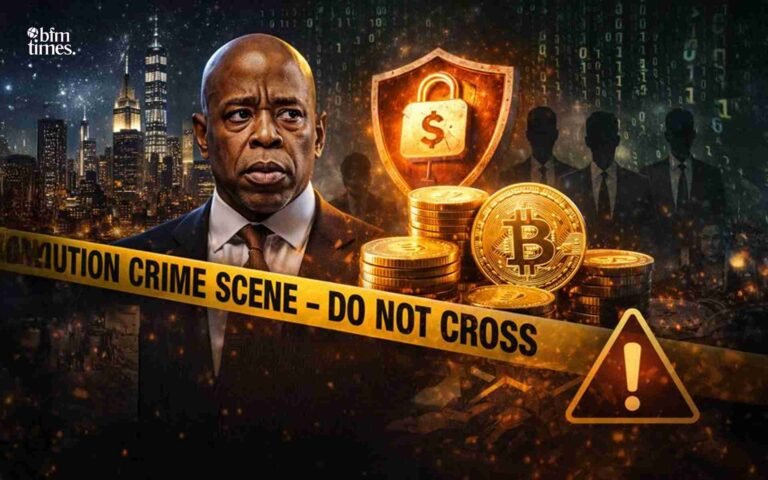
- Eric Adams, the former mayor of New York City, launched the $NYC Token to fight social issues, but faced immediate fraud claims.
- Investors lost millions after a suspected rug pull drained liquidity from the token pool.
- Meanwhile, regulatory changes under the GENIUS Act have moved crypto oversight from the SEC to the CFTC.
Former New York City Mayor Eric Adams recently found himself at the center of a massive crypto scam investigation.
Just weeks after leaving his office, Adams promoted a new digital asset called the NYC Token during a lively press conference in Times Square.
He claimed the coin would fund efforts to fight antisemitism and anti-Americanism. Many people trusted his public image and bought into the project quickly.
And it worked. The market cap of the coin surged to $580 million almost instantly.
Read More: Dubai Bans Privacy Coins Amid New Digital Asset Rules
How the NYC Token Became a Suspected Crypto Scam
Shortly after the coin launched on the Solana network, suspicious activity appeared on the ledger.
A single wallet connected to the token deployment removed $2.5 million in liquidity at the price peak. This move caused the value of the coin to crash by over 80% in less than an hour.
The price plummeted from $0.47 to roughly $0.10 and such an event is commonly known as a rug pull. This kind of crypto scam happens when developers trick investors into putting money into a project, before draining the funds and running off.
Analysts at Bubblemaps tracked 80 million tokens moving to a specific address.
This address provided liquidity on the Meteora exchange. After the initial withdrawal, the person behind the wallet returned only $1.5 million to the pool.
This left a gap of nearly $1 million that had simply vanished. On-chain researchers like Rune said that the total losses for investors could reach $3.4 million.
While the project website calls the coin the public cryptocurrency of the city, the current administration says that it has no ties to it.
Defences Against the Crypto Scam Allegations
Representatives for the former mayor are fighting back against these claims.
Todd Shapiro said that Eric Adams did not move any investor funds. He also insisted that Adams did not profit from the release of the token at all. Shapiro blamed the massive price drop on market volatility.
However, this explanation did not sit well with the crypto community. The NYC Token team previously claimed they were performing liquidity rebalancing to handle high demand. Still, these conflicting stories make many people even more suspicious of a crypto scam taking place behind the scenes.
Adams has a long history of supporting digital assets.
He famously tried to take his mayoral paychecks in Bitcoin during his time in office and once promised to turn New York into a global capital for the industry.
His deep involvement in the space helped convince people that the NYC Token was a safe bet and many investors acted out of a fear of missing out (FOMO).
Some Legal Realities
Proving a crypto scam in court is often a very difficult process for lawyers.
The laws in the crypto space can be muddy at times and John Griffin, a finance professor, noted that pump and dump schemes are illegal.
However, there is currently less appetite to prosecute these cases in the crypto space.
This is further complicated by President Donald Trump’s recent signing of the GENIUS Act.
This new law moved oversight away from the SEC and now, the CFTC handles most crypto matters.
This change treats tokens more like commodities than securities and some experts believe this makes it harder for the government to launch immediate investigations.
Disclaimer: BFM Times acts as a source of information for knowledge purposes and does not claim to be a financial advisor. Kindly consult your financial advisor before investing.