


Overview of the Major Developments
- BlackRock and JPMorgan (through Kinexys, which used to be Onyx) have shifted their interest in blockchain exploration to the development of core financial infrastructure on Ethereum.
- The BUIDL fund of BlackRock has already exceeded $2.1 billion in assets, which indicates the colossal demand for tokenized U.S. Treasuries.
- JPMorgan has changed the name of its Onyx division to Kinexys, with a goal of reaching a transaction volume of $10 billion per day as it increasingly enters the Ethereum ecosystem.
- Since The Merge, Ethereum has become a deflationary asset, with more ETH destroyed than created during periods of high usage, which has radically altered its economic characteristics.
- Experts no longer see Ethereum as a cryptocurrency, but as the infrastructure layer of a $12.5 trillion global repo market and the future of real-world asset (RWA) tokenization.
The Ethereum story has changed from a hypothetical altcoin to the unquestioned foundation of institutional finance in the world. According to a recent interview by industry analysts, the most significant trend in the industry is that the largest asset managers and banks in the world are no longer merely watching crypto; they are actively moving trillions of dollars of traditional assets onto the Ethereum blockchain. The facts are too numerous. The largest asset manager in the world, BlackRock, and the giant of American banking, JPMorgan, both have chosen Ethereum as their asset of choice in the future of money. It is not only a matter of price speculation, but a basic overhaul of the plumbing of the world financial system.
BlackRock’s $2 Billion Statement
The move by BlackRock to venture into the space through its USD Institutional Digital Liquidity Fund (BUIDL) was a point of no return for Wall Street. BUIDL is a tokenized U.S. Treasury and short-duration repo agreement launched on the Ethereum network. By the beginning of 2026, the fund had grown to over $2.1 billion in assets under management (AUM). Through tokenization of these assets, BlackRock enables 24/7 instant settlement, a colossal improvement over the decades-long traditional T+2 (two-day) settlement cycles that have been dictating the financial industry. The tokenization of securities is the so-called next generation of markets, which was famously declared by Larry Fink, the CEO of BlackRock.
JPMorgan: Kinexys: The $10 Billion Daily Target
Whereas BlackRock is a company that specializes in asset management, JPMorgan is transforming payments and collateral. Recently, the bank restructured its blockchain unit from Onyx to Kinexys, which is a more comprehensive approach to digital assets. Since its inception, Kinexys has already transacted more than $3 trillion in total volume. Nevertheless, the new targets of the bank are even higher: it is planned to overcome the volume of transactions per day of more than $10 billion. With Ethereum-compatible infrastructure, JPMorgan is facilitating the so-called programmable money, whereby payments may be automated on the basis of particular conditions, without human intervention.
Why Ethereum? The Infrastructure Logic
A key difference that is brought out in the video interview is that Bitcoin is value storage; Ethereum is application execution. This is the reason why Ethereum is adopted by institutions. It is a programmable platform on which an entire financial system can be run by so-called Smart Contracts. Ethereum is the most popular layer in the entirety of major DeFi protocols, as well as most NFTs and tokenized real-world assets (RWAs). The network is a kind of toll road. Whenever a bank transfers a tokenized bond or a corporation makes a payment across the border, it has to pay a fee in ETH.
The Economic Change after The Merge
One of the key aspects of the institutional appeal is that Ethereum is more sustainable and economical. The network has also been 99 percent more energy efficient since The Merge, which meets the ESG (Environmental, Social, and Governance) criteria of large corporations. Additionally, the burn mechanism of Ethereum has made it a deflationary asset. When there is a high demand, the quantity of ETH destroyed by transaction fees is more than the quantity of new ETH generated. This puts a strain on supply while institutional demand is at an all-time high.
Prospectus: The Moment of 1998
The video analysts indicate that the current holding of ETH is comparable to the holding of the internet infrastructure in 1998. We are at the plumbing stage, whereby the rear part of finance is being recreated. In the coming decade, trillions of dollars of real-world assets, including real estate, will be transferred on-chain, the market predicts. In the case of BlackRock and JPMorgan, there is no doubt that Ethereum is the network that has the security, liquidity, and developer ecosystem to support the future of the global economy.
Market Data & Context
Investors monitor several important indicators within the ecosystem to observe the actual effect of these institutional moves in real-time:
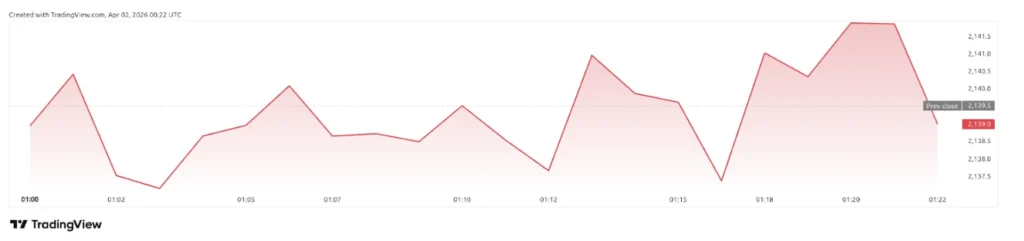
- Ether Price Performance: ETH/USD charts on TradingView are monitored by investors to understand the sentiment of the market and the liquidity level.
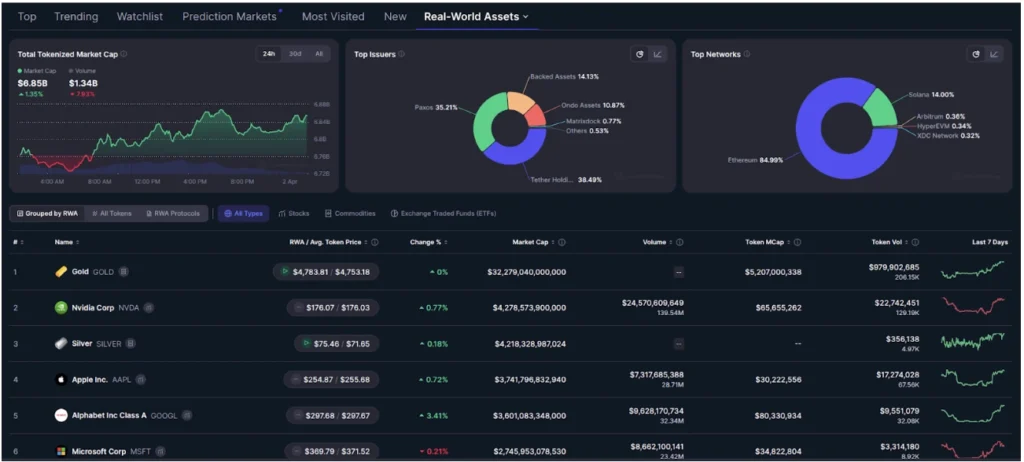
- RWA Growth: Sites such as CoinMarketCap in their RWA Category are used to track the value of tokenized assets.
- Institutional Holdings: On-chain data providers and public filings, such as Dune Analytics, provide insight into the amount of capital flowing into funds such as BUIDL.
Also Read: BlackRock CEO Calls for One Common Blockchain to Tokenize All Global Assets
Frequently Asked Questions
What is the reason why banks are using Ethereum rather than a private blockchain?
Banks usually begin with private versions, but they are shifting to public Ethereum or Layer 2 solutions due to the concentration of liquidity and the users there. A private network is a walled garden, and public Ethereum is the global internet.
What does “Tokenization” actually mean?
Tokenization refers to the act of putting a digital copy of a physical or traditional asset (such as a house or a bond) on the blockchain. This enables the asset to be traded in small fractions, 24/7, and immediately.
Does Ethereum remain institutionally risky?
There is an increase in regulatory transparency. By 2026, most jurisdictions will have developed the structure of digital commodities, and it will be significantly safer to have Ethereum infrastructure in the possession and use of banks.
What is the impact of the Burn on the ETH price?
Each Ethereum transaction burns a minor quantity of ETH, which is permanently removed from the supply. In case the demand for the network (by banks such as JPMorgan) remains high, the supply of ETH decreases, and it can cause an increase in the price.
Disclaimer: BFM Times acts as a source of information for knowledge purposes and does not claim to be a financial advisor. Kindly consult your financial advisor before investing.