
The process of selecting the appropriate crypto exchanges in USA that traders can trust in 2026 is not about the low charges or slick applications. U.S. traders should consider regulation, its presence across states, practices in holding their funds in custody, and platform protection before creating an account. As compliance requirements change, increasingly stringent KYC/AML regulations are enforced, and various exchanges operate under different licenses in different states, the optimal platform is determined by how you trade, what you trade, and where you reside.
- Best Crypto Exchanges in USA at a Glance
- How to choose the best crypto exchange in USA
- Regulated crypto exchanges in USA: what compliance means for U.S. users
- US bitcoin exchanges: top platforms compared
- 1. Coinbase
- 2. Kraken
- 3. Gemini
- 4. Binance.US
- 5. Crypto.com
- 6. Robinhood
- 7. Bitstamp
- 8. eToro
- 9. Gate.US
- 10. BYDFi
- SEC-compliant crypto platforms: what to look for
- Crypto Exchanges in USA: fees, tools & liquidity explained
- Beginner vs. advanced exchanges: Which is right for you?
- How to open and secure your exchange account
- Risks & safety tips for Crypto Exchanges in USA
- Optional Feature Comparison
- Frequently Asked Questions
- What is the safest crypto platform in the US?
- Which crypto exchanges in USA are regulated?
- Which broker is best for crypto trading in the USA?
- Conclusion
This guide includes the best U.S.-available exchanges, which are the most reliable; a fee comparison; a feature comparison; what compliance should look like when it applies to American users; and useful safety tips. It does not matter whether this is your first coin purchase or if you are a serious trader; this article will allow you to make a safe purchase.
Best Crypto Exchanges in USA at a Glance
| Exchange | Regulation / compliance focus | Supported assets | Fees (low/medium) | U.S. availability | Best for |
| Coinbase | Strong U.S. compliance posture | High | Medium | Most states | Beginners, long-term users |
| Kraken | Compliance-first operations | High | Low–Medium | Most states | Active traders |
| Gemini | Regulated, custody-focused | Medium | Medium | Many states | Security-first users |
| Binance.US | U.S.-specific entity | Medium | Low | Limited states | Low-fee spot trading |
| Crypto.com | U.S.-registered operations | High | Medium | Most states | Mobile-first users |
| Robinhood | Brokerage-style compliance | Low | Low | Most states | Simple buying |
| Bitstamp | Long-standing regulated venue | Medium | Low–Medium | Most states | Fiat on/off-ramps |
| eToro | Multi-asset regulated platform | Low–Medium | Medium | Limited states | Social-style trading |
| Gate.US | U.S.-compliant arm of exchange | Medium | Medium | Limited states | Altcoin access |
| BYDFi | U.S.-accessible platform | Medium | Low–Medium | Limited states | Advanced tools |
How to choose the best crypto exchange in USA
The best crypto exchanges in USA would pick the best crypto exchange based on compliance rather than features.
Key factors to compare:
- Regulation and licensing: Determine whether the exchange is legitimate and is subject to the compliance standards of the U.S.
- Security & custody: Seek cold storage, audits, and transparent custody policies as opposed to self-custody.
- Fees: Maker-taker fees, spreads, and withdrawal fees may vary.
- Supported assets: Not all platforms allow tokens to be listed on their platform due to regulatory reasons.
- User experience: Basic applications are available to novices, while complicated order forms are available to traders.
- Ramps/off-ramps: Fiat deposits and withdrawals are reliable in the U.S. market.
Making good decisions minimizes risk, increases the quality of execution, and is cost-effective in the long-term.
Regulated crypto exchanges in USA: what compliance means for U.S. users
In the U.S., it is more important to use a regulated crypto exchanges in USA than in many other areas. Compliance has an impact on all things, including the coins you can trade, as well as the speed with which you can move money.
Typical items on what compliance would involve:
- KYC/AML authentication: Identity verification and monitoring.
- State-by-state licensing: There are a few exchanges that are licensed in fewer states.
- Custody controls: Customer assets segregation and cold storage.
- Audits and reporting: periodic compliance audits and reporting.
Legal risk is minimized, but it narrows features with compliance. In the case of U.S. users, regulated websites tend to be safer, more stable, and less prone to abrupt interruption of the service.
US bitcoin exchanges: top platforms compared
The table below presents prominent US bitcoin exchanges and trading platforms to use by American customers in 2026 based on compliance, security, and usability.
1. Coinbase
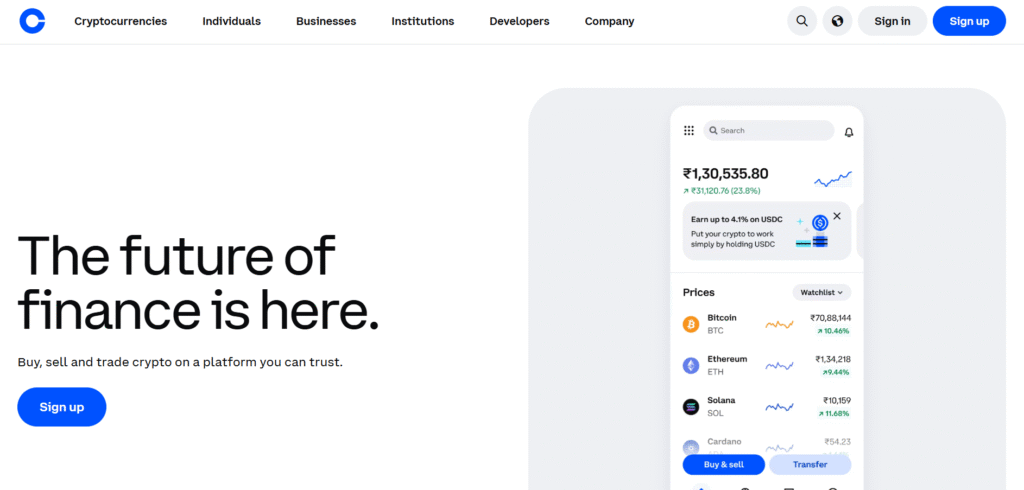
Coinbase is among the oldest American-oriented exchanges, with a very intuitive interface and a good compliance stance. It has activities in the majority of the states and focuses on compliance with regulations.
Security encompasses cold storage of most of the assets and good account protection, such as 2FA and withdrawal approvals. Simple buys attract higher fees compared to advanced trading tools, which cost less when one is an active user. Major pairs are deeply liquid, so large trades are easier.
Best for: Trading stocks, long-term holders.
Limitations: Increased costs of retail; no advanced features without Pro Tools.
For all the details, hit up their official website: https://www.coinbase.com/en-in
2. Kraken
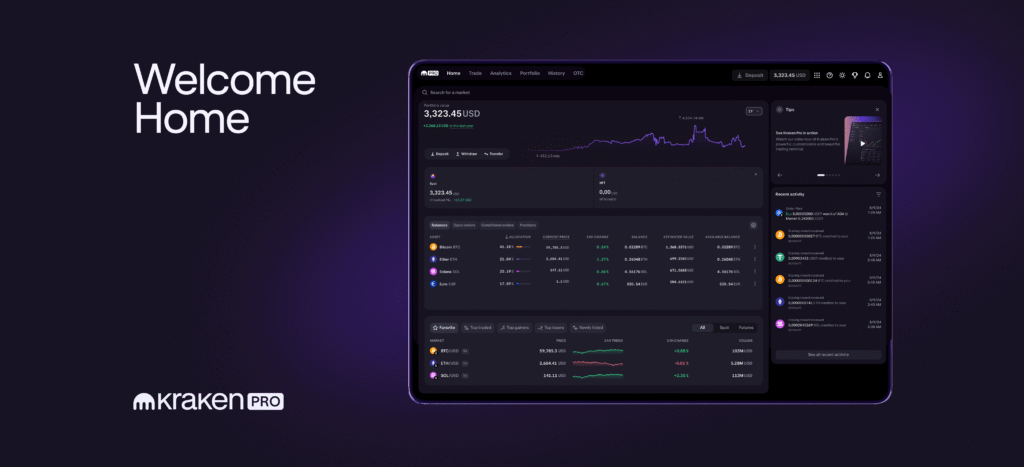
Kraken has been developed to enable users to have more trading functionality without crossing U.S. regulatory borders. It endorses a large portfolio of assets and provides high liquidity for leading pairs.
Custody operations are focused on cold storage and the security of operations. Fee rates are structured such that the more traders one trades with, the lower the fees. There are also order types and risk controls that are of a professional level on the platform.
Best for: Active traders
Limitations: The interface may be confusing to users.
For all the details, hit up their official website: https://www.kraken.com/
3. Gemini
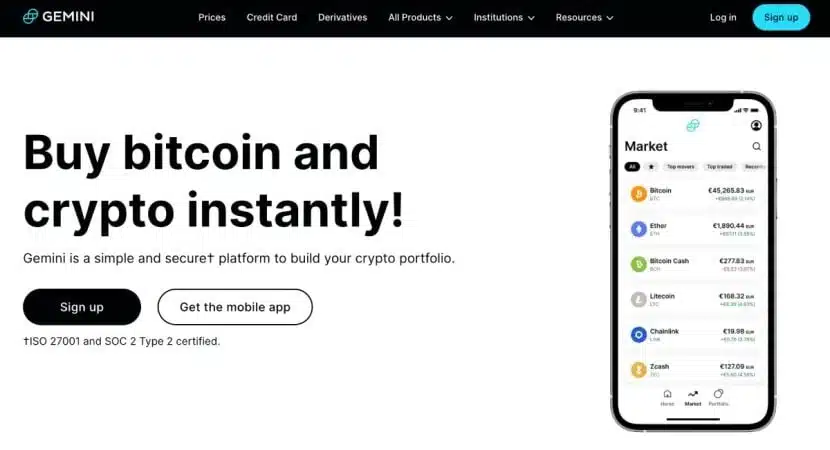
Gemini markets itself as a security-first exchange that has a high compliance culture. It highlights the custodial practices, audits, and transparency in the operations to the U.S. users
The platform hosts fewer assets compared to the international players but concentrates on quality listing and stability. The charges are average, and the liquidity is good in large coins. Gemini offers users flexibility, who favor compliance and asset security rather than diversity.
Best for: Security-conscious users.
Limitations: Smaller token choice.
For all the details, hit up their official website: https://www.gemini.com/
4. Binance.US
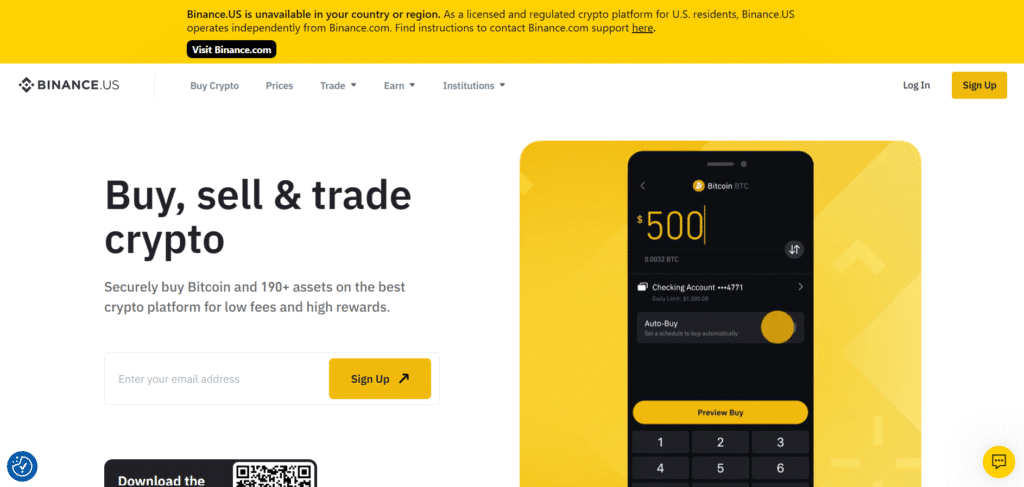
The company Binance US is independent of the global Binance and adheres to the compliance regulations of the United States. It charges competitive spot trading costs and fair liquidity on supported pairs.
Cold storage and normal account security measures are part of security practices. Nevertheless, asset availability and functionality are also smaller than in non-U.S. sites, and state availability is different.
Best for: Low-fee spot trading
Limitations: small states and token sampling.
For all the details, hit up their official website: https://www.binance.us/
5. Crypto.com
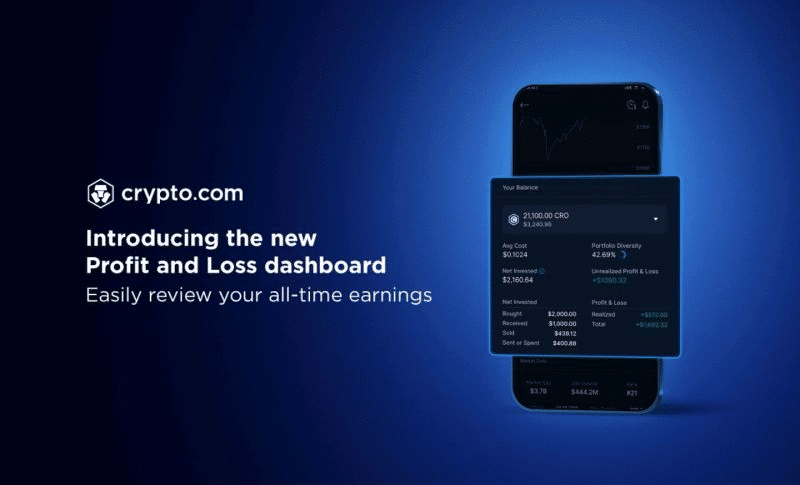
Crypto.com is a mobile-first venture that has fiat on-ramps and a wide asset selection. The American version values compliance and controlled practices.
There are cold storage and in-app security. Fees are mediocre, and liquidity is getting better among key pairs. The application would be suitable for those who like to do everything on the phone.
Best for: Mobile-first users
Limitations: It can be restrictive to the pro trader with an app-first design.
For all the details, hit up their official website: https://crypto.com/
6. Robinhood
Robinhood is coming to crypto on a bigger platform of a brokerage. It is easy to operate, and it is also coupled with conventional financial applications.
The third is centrally managed security and custody, and easily accessible fiat. There are low fees, and there are fewer crypto exchanges in USA functions than full exchanges. Big coins are strong in terms of liquidity.
Best for: Simple buying
Limitations: low resources and trading instruments.
For all the details, hit up their official website: https://robinhood.com/us/en/
7. Bitstamp
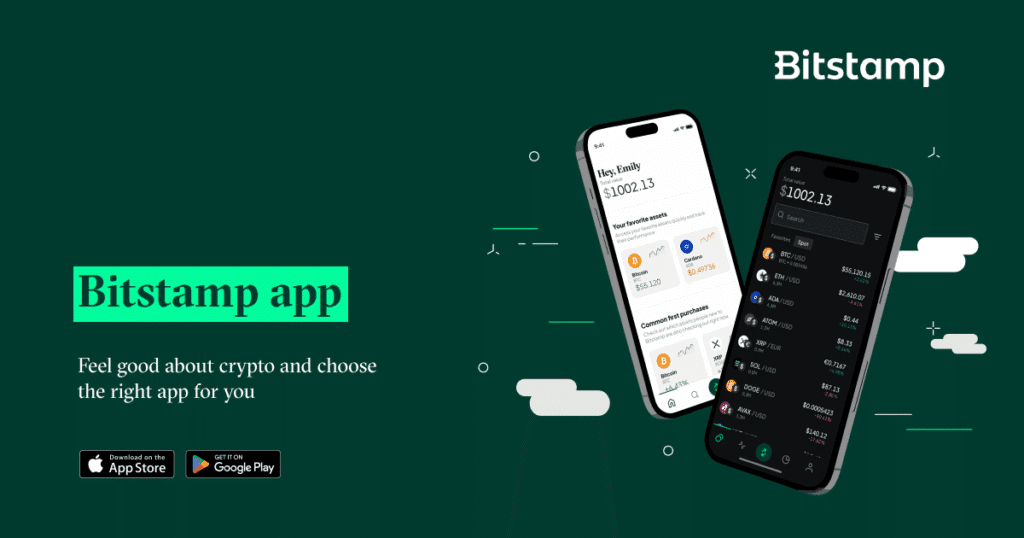
Bitstamp is among the oldest exchanges that have a compliance-first reputation. It provides stable fiat on/off-ramps and stable liquidity on key pairs.
Security is concerned with custody and operational security. Active traders are competitive in terms of fees. The asset diversity is medium, with the focus on well-known coins.
Best for: Fiat on/off-ramps
Limitations: Small asset list compared to new platforms.
For all the details, hit up their official website: https://www.bitstamp.net/
8. eToro

eToro combines cryptocurrency with conventional investments in a social-style trading platform. It is legal in several states in America and is targeted at novices.
Custody and security are centrally handled. Spreads have fees inside them and may be increased for more frequent traders. Major assets have enough liquidity.
Best for: Social-style trading.
Limitations: lesser state availability and reduced sophisticated tools.
For all the details, hit up their official website: https://www.etoro.com/
9. Gate.US
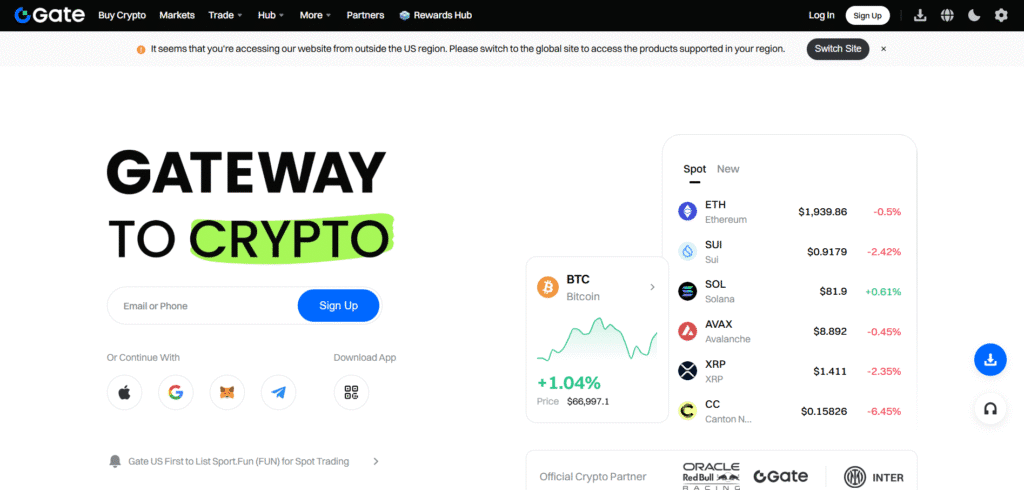
Gate. US is the U.S.-compliant version of a larger brand of exchange that provides individuals with access to a larger range of assets within regulatory parameters.
Standard account protection and cold storage are some security practices. Commission is average, and market depth is pair-specific. Accessibility is low at the state level.
Best for: Altcoin access
Limitations: Highly restricted states; liquidity fluctuates.
For all the details, hit up their official website: https://www.gate.com/en-us
10. BYDFi
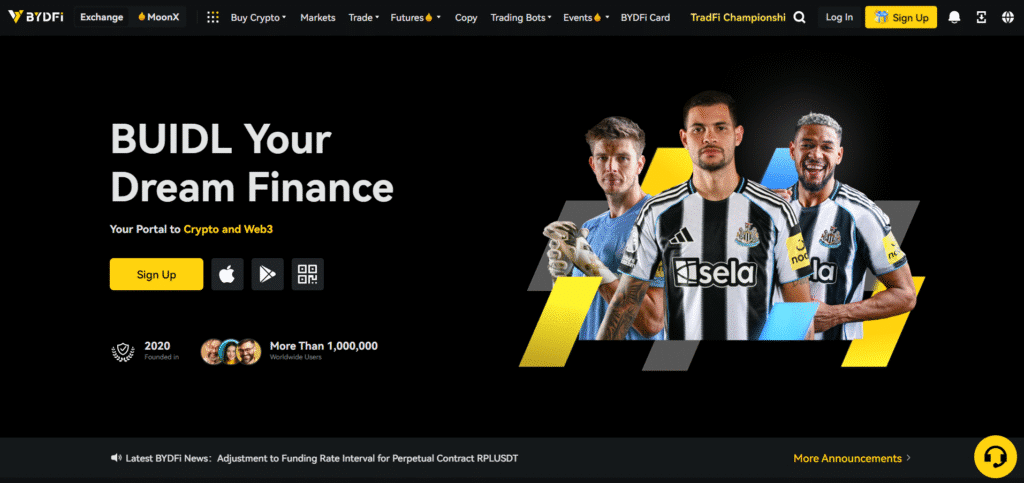
BYDFi offers sophisticated trading capabilities to U.S.-available users, specializing in derivative-type tools where allowed.
Security encompasses platform protection and standard custody protection. Commissions are favorable, and the highest level of liquidity is on major pairs. There are different states of availability based on the type of product.
Best for: Advanced tools
Limitations: Not user-friendly; restricted features.
For all the details, hit up their official website: https://www.bydfi.com/en
SEC-compliant crypto platforms: what to look for
To the end user who wants to use SEC-compliant crypto platforms, it is not merely a logo or a claim, but operational behavior.
Indications of greater compliance:
- Clear U.S. entity structure
- Open listing standards of assets
- Regular enforcement of KYC/AML.
- Periodic updates and disclosures of the platform.
- Clear custody vs. self-custody policies.
Adherence minimizes regulatory risk and disruptions in service, particularly within the U.S. environment, where it is actively enforced and developing.
Crypto Exchanges in USA: fees, tools & liquidity explained
The user of crypto trading USA can find varying cost structures based on the design of the platform.
Key concepts:
- Spot vs. advanced trading: Simple buys are more expensive; pro interfaces are is less expensive.
- Maker-taker fees: Reduced charges on giving liquidity.
- Liquidity: The greater the liquidity, the narrower the spreads and the execution.
- Types of orders: limit, market, stop-loss, and advanced orders.
- Fiat deposits: Missed opportunities are minimized by faster on-ramps.
It is better to select an exchange that has good liquidity and clear fees to enhance the quality of execution and cost efficiency in the long term.
Beginner vs. advanced exchanges: Which is right for you?
Beginner-friendly platforms
- Simple UI
- Guided buying
- Fewer order types
- Higher fees
Advanced platforms
- Professional trading interfaces.
- Lower maker–taker fees
- More control over execution
- Steeper learning curve
Get used to simple tools first and then upgrade them to advanced tools as you gain experience.
How to open and secure your exchange account
- Create account: A strong and unique password is to be used.
- Check identity: Finalize KYC/AML.
- Enable 2FA: Application authentication.
- Secure withdrawals: Secure withdrawals.
- Small transfer test: Check that it is all functioning.
- Use self-custody for long-term holds: Move assets in cold storage.
This method decreases account takeover and custody risks.
Risks & safety tips for Crypto Exchanges in USA
- Phishing: Add official websites to the bookmarks.
- Risk of custody: Withdrawals can be frozen.
- Changes in regulations: state changes in features.
- Overexposure: It is not advisable to keep everything on a single platform.
- Operational risk: Idleness in volatility.
Take as many precautions as possible and keep long-term holdings in self-custody.
Optional Feature Comparison
| Exchange | Spot trading | Staking (if available) | Mobile app | Advanced tools | Fiat on-ramps |
| Coinbase | Yes | Limited | Yes | Yes | Yes |
| Kraken | Yes | Limited | Yes | Yes | Yes |
| Gemini | Yes | Limited | Yes | Moderate | Yes |
| Binance.US | Yes | Limited | Yes | Moderate | Yes |
| Crypto.com | Yes | Limited | Yes | Moderate | Yes |
Frequently Asked Questions
What is the safest crypto platform in the US?
One of the safest platforms of crypto exchanges in USA is Kraken, known for its strong security infrastructure and compliance with U.S. regulatory expectations.
Which crypto exchanges in USA are regulated?
Regulated crypto exchanges in USA include Gemini, Coinbase, Binance.US, Kraken, and bitFlyer USA that comply with federal and state rules for digital asset services.
Which broker is best for crypto trading in the USA?
Some of the best brokers for crypto exchanges in USA are Kraken, Coinbase, Gemini, and mainstream brokers like eToro and Plus500, offering regulated trading access.
Conclusion
The crypto exchanges in USA will be right, and users will choose based on regulation, balance, security, liquidity, and usability in 2026. There exists no perfect platform. Novices can use user-friendly, easy-to-use applications, while active traders use more advanced applications with lower fees. Regulated operations, good custody practices, and trusted fiat on-ramps should always be a priority.
Disclaimer: BFM Times acts as a source of information for knowledge purposes and does not claim to be a financial advisor. Kindly consult your financial advisor before investing.