Pointwise Summary
- Bitcoin is replacing institutional capital in gold since the Iran-Israel dispute is disrupting traditional banking access in the Middle East.
- The US Dollar is in its worst performance cycle since 2017, and inflationary pressures are pushing investors to digital scarcity.
- Chainalysis reports a colossal increase in Iranians transferring funds to self-custody and foreign exchanges to evade the vulnerabilities of the domestic infrastructure.
- The shutdown of physical stock markets in Dubai and Abu Dhabi during the first strikes demonstrated the benefit of Bitcoin as a 24/7 financial rail without borders.
- Traders are bypassing commodity markets to trade oil-related contracts in record volumes through decentralized finance (DeFi) platforms such as Hyperliquid.
Abstract: The Decoupling of 2026: Why Geopolitics and Fiat Erosion are Driving Bitcoin into the Mainstream Reserve.
By March 28, 2026, the world financial environment is undergoing a change that few analysts had imagined would occur at such a pace. The increasing tension between the United States, Israel, and Iran has not only become a geopolitical crisis but has also become the biggest stress test to the modern financial system. As the US Dollar Index (DXY) remains in the doldrums due to the aggressive rate cuts and the change of trade policies, a different story is being told. Cryptocurrency is no longer a speculative asset, but a survival necessity, both for state actors and individual citizens, for the first time in history.
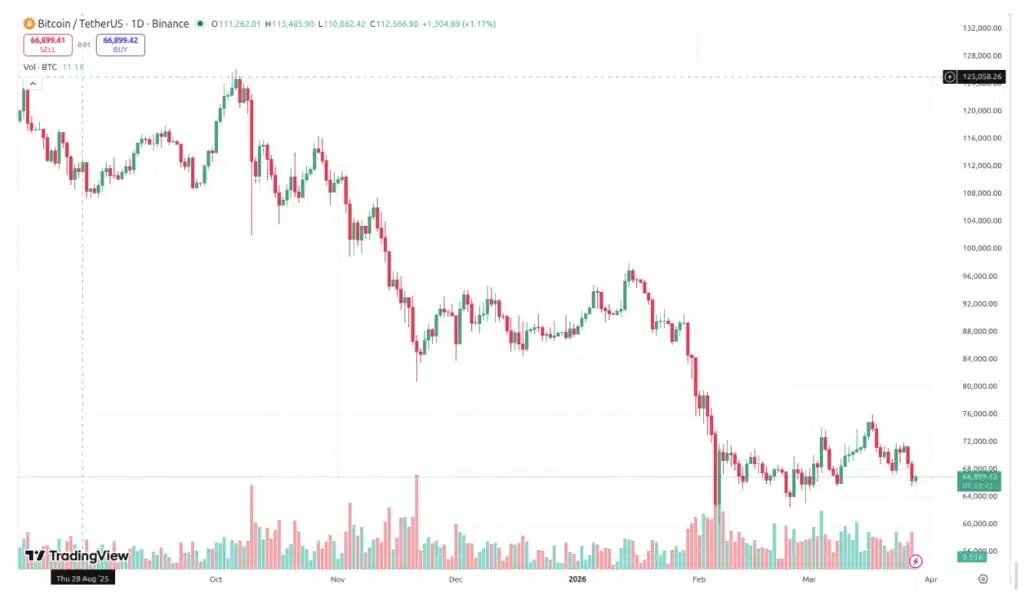
The first wave of the conflict at the end of February resulted in a plunge of Bitcoin (BTC) to a price of $63,255. But the recovery was rapid and instructive. The digital gold market was not closed, as the physical exchanges in the Middle East closed their doors. Bitcoin and Ethereum started to beat the S&P 500 and U.S Treasuries by March 12. According to JPMorgan analysts, there was a recent safe-haven-like demand for Bitcoin that even surpassed gold and silver. Gold ETFs experienced nearly 11 billion outflows in the first three weeks of March, whereas Bitcoin funds experienced net inflows of 1.3 billion.
This is a change that is based on the realities of war. To expatriates and citizens of Dubai, Abu Dhabi, and Tehran, the capacity to cross a border with a phrase is more useful than physical gold or a bank balance that might be frozen by sanctions or systemic collapse. Chainalysis reports that the Iranians have transferred billions into self-custody wallets, no longer using the local exchanges such as Nobitex that have previously been targets of cyberattacks.
At the same time, the US Dollar is undergoing a melting ice cube situation. The greenback’s purchasing power is dwindling at an alarming rate that has compelled even conservative wealth managers to consider digital assets. The DXY is at a complicated stage in which its historical negative relationship with Bitcoin has broken. Bitcoin is no longer moving opposite to the global liquidity flows when the dollar is on the increase, but rather, it is following it. This decoupling is a good indication that institutional capital treats Bitcoin as a strategic reserve asset, a digital form of a sovereign bond, but without the burden of government debt.
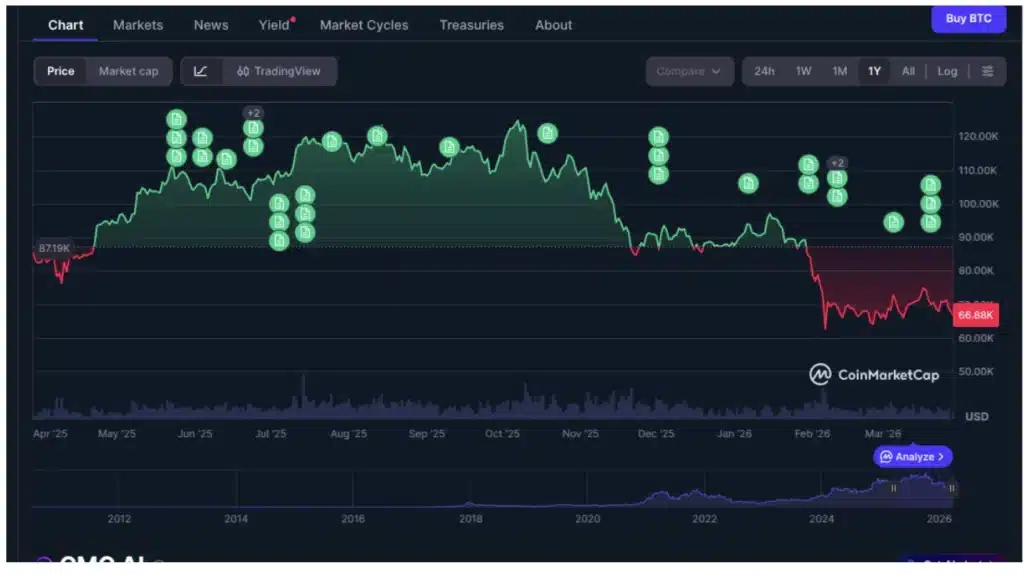
Retail HODLers are not the only ones who have adopted it. According to on-chain data, these rails are also utilized by state-backed entities. The Islamic Revolutionary Guard Corps (IRGC) is said to have received more than half of the value from Iranian crypto services in late 2025, through stablecoins to circumvent the SWIFT system to sell oil and buy military equipment. This crypto weaponization by both sides of the conflict demonstrates that the technology has become so mature that it is now a necessity of national security.
The Convergence: Geopolitical Shifts and Technical Maturity
The current situation is a product of several macro trends. With the 2024 halving of Bitcoin, the quantity of new coins was reduced by a large percentage, and the supply-demand ratio was broken when institutional spot ETFs entered the international market. The Iran war was the trigger, as it made the market players choose between a devaluing fiat currency and a mathematically limited digital asset.
It has also been solidified by the launch of the so-called Agentic Commerce, where AI agents conduct transactions using USDC in the form of nanopayments without human intervention. These are decentralized protocols, and this implies that trade is not halted even in the face of the war. In February 2026, prediction markets like Polymarket registered the largest volumes of crypto-betting on the result of the conflict, with a record of $425 million a day, which confirms the fact that information and value cannot be separated in the digital age.
Also Read: Bitcoin Gains as Trump Pauses Iran Strikes & Markets Breathe Again
Frequently Asked Questions
Is Bitcoin a haven in a war?
The historical evidence of the 2026 Iran war indicates yes. Although it is volatile at first, its 24/7 access and transportability make it superior to physical assets and traditional banking in case of instability in the region.
So why is the US Dollar losing value even in the face of the conflict?
The fact that US debt levels have been at an all-time high, that federal rate cuts are supposed to boost the slowing economy, and that the current administration has caused a change in trade preferences has undermined the global supremacy of the dollar.
Is it possible to prevent the use of crypto by people in times of war?
It is extremely difficult. Although the governments may penalize certain transactions, peer-to-peer transactions, and self-custody wallets are not centrally controlled, and thus they are not easily affected by government decree.
What is the impact of the Iran war on the Ethereum price?
Ether has demonstrated even greater institutional accumulation than Bitcoin over the past few weeks, with 6.3 billion dollars of smart money flowing into derivatives. It is also being regarded as the financial layer of the new economy.
What is the “debasement trade”?
It is the strategy of purchasing limited resources (such as Bitcoin or Gold) to secure wealth against the decline of fiat currencies due to money printing by central banks and inflation.
Disclaimer: BFM Times acts as a source of information for knowledge purposes and does not claim to be a financial advisor. Kindly consult your financial advisor before investing.