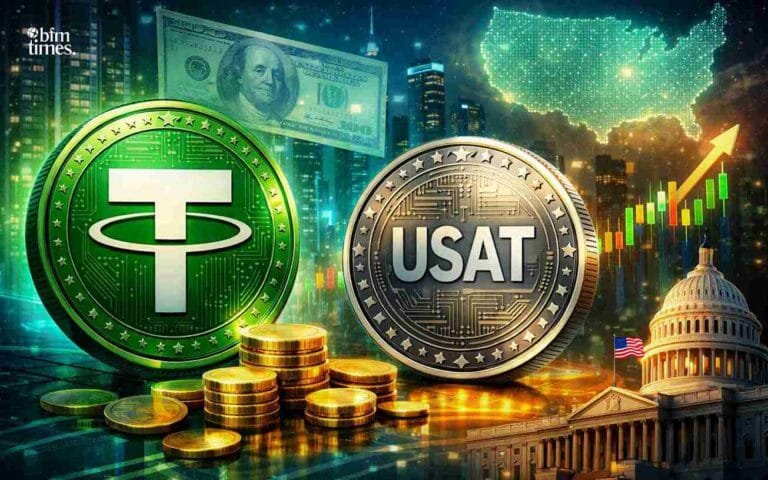
Tether USAT stablecoin launched in September as a fully US-compliant digital dollar under the GENIUS Act framework, operating through Tether America with federal oversight, monthly audits, and reserves limited to cash and short-term Treasuries. The new stablecoin addresses institutional barriers preventing US adoption of offshore USDT while allowing the original Tether token to continue serving global markets without regulatory conflicts.
Key insights
- Tether has now launched USAT as a U.S.-focused stablecoin under new federal rules.
- Tether is launching a new stablecoin because the GENIUS Act forced a clear split between USDT and USAT.
- Tether is targeting institutions and creators with a compliant structure.
The September launch of Tether’s it was a major change for one of crypto’s most powerful companies. For years, Tether stayed outside the United States financial system and that approach worked well for global markets.
However, new laws within the US have changed the situation and Tether it has now entered the scene as a fully domestic stablecoin built for US rules.
Tether USAT Emerges From a Changing Climate
Tether USAT did not appear by chance. United States lawmakers passed the GENIUS Act in July, and the law created the first clear federal framework for stablecoins used in payments.
The GENIUS Act also sets strict standards showing that stablecoin issuers must operate as U.S. entities. Moreover, Banking partners must hold federal charters and reserves must match supply at a one-to-one ratio.
The GENIUS Act also covers audits and requires stablecoin issuers to publish monthly reviews from independent firms registered with US regulators.
These rules reshaped the stablecoin market overnight, but Tether’s USDT does not fit perfectly inside the framework.
This is because USDT comes from an offshore company and its reserves include assets beyond cash and short-term Treasuries.
Because of this, Tether USAT became the answer.
Why Tether USAT Needs To Coexist With USDT
Tether does not see flaws in USDT, as the stablecoin remains the most used stablecoin worldwide. Traders rely on it and remittance flows depend on it, while emerging markets use it daily.
However, USDT carries several legal clauses within the US, and considering how banks, pension funds and payment firms need legal clarity, it solves these issues without changing USDT.
In summary, USDT and USAT are complementary stablecoins, rather than competitors under the same issuer.
How Tether USAT Fixes US Market Barriers
Three main barriers kept USDT out of US institutions.
The first is jurisdiction. USDT operates offshore and many American firms cannot touch assets beyond US legal reach. Because of this, Tether USAT operates through Tether America, based in Charlotte, North Carolina.
The second is with reserves, as USDT holds Bitcoin, gold and secured loans alongside Treasuries. US payment rules ban those assets, and Tether USAT holds only cash and short-term Treasuries.
The last is audits. Tether has faced years of criticism over attestations instead of full audits. However, on the other hand, Tether USAT runs monthly independent audits from the start.
The Architecture Behind Tether USAT
Tether did not build this alone. Instead, it formed partnerships to ensure compliance and trust.
Tether America acts as the domestic issuer and former White House advisor Bo Hines leads the operation. This leadership choice indicates a strong policy focus, especially with Anchorage Digital as part of the mix.
As a federally chartered crypto bank, Anchorage issues the stablecoin and connects it to US regulators.
In all, USAT was not created to replace USDT. Instead, it is a GENIUS-compliant alternative to the world’s most popular stablecoin.
Disclaimer: BFM Times acts as a source of information for knowledge purposes and does not claim to be a financial advisor. Kindly consult your financial advisor before investing.