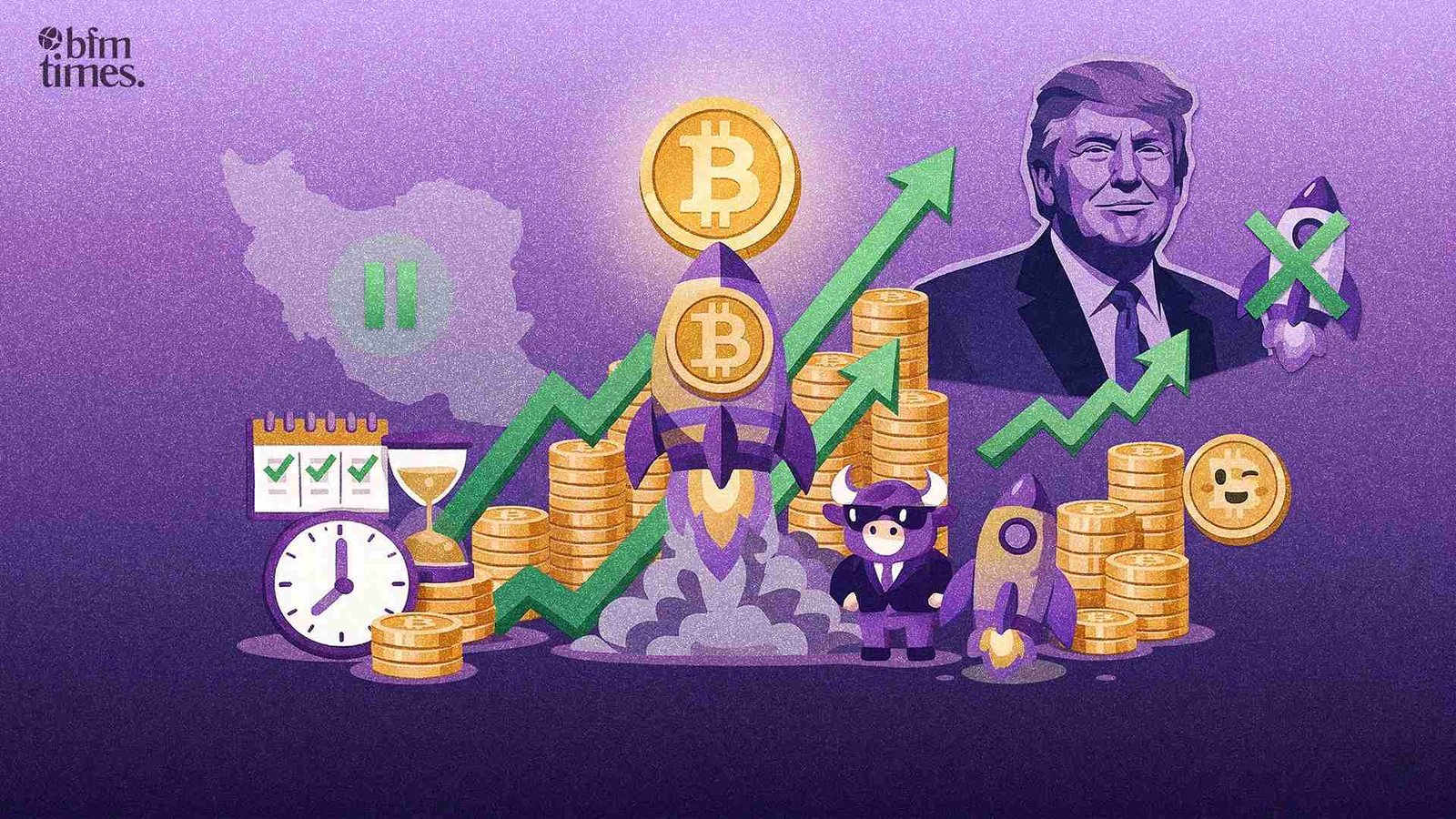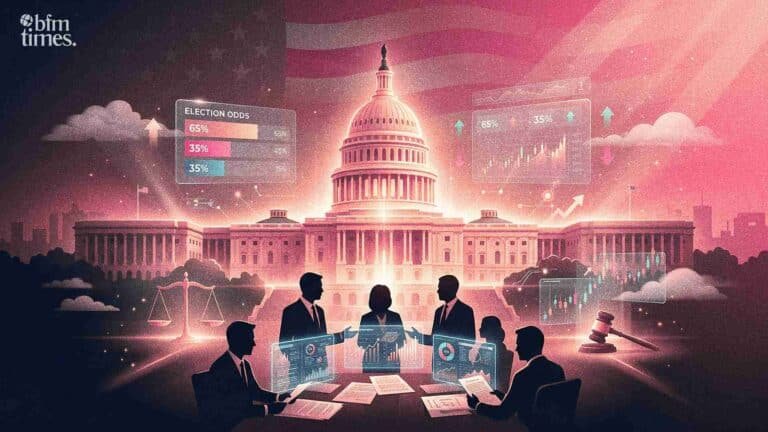
- In early 2026, U.S. lawmakers presented several bills that aim at Political Prediction Trading.
- Projected market volume of $44B (2025) powered by Kalshi and Polymarket.
- Among the important bills are the PREDICT Act 2026, the DEATH BETS Act, and the Event Contract Enforcement Act.
- Targets: a ban on insider trading, threats to national security, and tougher Commodity Futures Trading Commission supervision.
- Implausible: 2024 court decision in Kalshi vs. CFTC diluting regulatory oversight.
- Impact: Transition of the DeFi-like betting to the financial infrastructure of regulation.
The Big Question: What is Political Prediction Trading and Why It Matters Now.
Political Prediction Trading is a type of financial agreement involving events in which traders wager on such events as elections, political changes, or any geopolitical occurrences. These markets spread their wings due to the fact that they tend to do better than the polls since they combine real-time sentiment.
- The Big Question: What is Political Prediction Trading and Why It Matters Now.
- Who Drives The 2026 Control Push?
- When and Where the Legal Shift Started.
- The Reason Why Governments View Political Prediction Trading as Risky.
- The New Laws And How It Will Transform The Industry.
- Outlook: Political Prediction Trading in the future.
- Macro Narrative: Tracing the roadmap of DeFi Experiment to Regulated Asset Class.
- Signal Signs of Institutional Adoption.
- Risk Analysis: What Can Go Wrong.
- Case Study: Kalshi vs. CFTC and its Aftermath.
- Professional Opinion: Future of Prediction Markets.
- Conclusion: A Momentous Time to Predict Trading in Politics.
- Frequently Asked Questions
As per academic studies of the University of Chicago, prediction markets may be more correct than conventional forecasting in high-information settings. Nevertheless, their fast development has revealed essential defects, in particular, when traders might possess privileged political or institutional information.
The increase in the volume of Political Prediction Trading, which has now reached over $44 billion in 2025, has made these platforms systemic financial participants, and regulators are responding.
Who Drives The 2026 Control Push?
Political Prediction Trading is being put under crackdown by the support of the U.S. congress which is bipartisan in nature.
Predict Act 2026 lawmakers claim that:
- No elected official must make a profit off of the outcomes that he or she can control.
Likewise, the proponents of the DEATH BETS Act, through the legislature, cautioned:
- Markets that are associated with violence or death pose unacceptable moral hazards and vulnerability to national security.
This is a new beginning where Political Prediction Trading ceases to be considered as experimental but as a regulated type of financial risk.
When and Where the Legal Shift Started.
The push to regulation is connected to the case of Kalshi vs. CFTC of 2024, in which courts restricted the powers of the Commodity Futures Trading Commission to prevent election betting.
The ruling was a legalization of the elements of Political Prediction Trading in the U.S., and it spawned an explosion in activity in both centralized and decentralized markets.
Congress reacted with a law in 2026 to take back the control which signals a global precedent that would likely affect other jurisdictions such as the EU and India.
The Reason Why Governments View Political Prediction Trading as Risky.
The major problem is information asymmetry.
In Political Prediction Trading, the insiders may be insiders of politicians, regulators, or related parties, and may:
- Commerce on non-public policy decisions.
- Betting on the results of influence.
- Control low-liquidity markets to make them conform to the public perception.
The Event Contract Enforcement Act is a clear expression of authority to stop contracts based on a threat to national security or democratic integrity, and transforms a new vision of Political Prediction Trading at the international level.
The New Laws And How It Will Transform The Industry.
The political prediction trading has essentially changed by the new legislative framework:
- Platforms Mandatory compliance (KYC/AML).
- Prohibition of insider activity (politicians, officials)
- Strict control of suspicious trades.
- Greater regulatory authority of regulators.
Name an exchange, such as Polymarket is already incorporating monitoring technology, and Kalshi is also complying with more stringent standards.
This shift reflects the shift of crypto, as an unregulated innovation, to organized financial ecosystems.
Outlook: Political Prediction Trading in the future.
| Scenario | Regulatory Outcome | Market Impact | Probability |
| Full Regulation | CFTC gains strong control | Institutional adoption rises | 60% |
| Partial Ban | Sensitive contracts restricted | Innovation shifts offshore | 25% |
| Fragmented Rules | State-level divergence | Market inefficiencies | 15% |
Macro Narrative: Tracing the roadmap of DeFi Experiment to Regulated Asset Class.
The direction of Political Prediction Trading is quite similar to the initial crypto markets.
Initially:
- Permissionless
- Borderless
- Innovation-driven
Now:
- Compliance-heavy
- Institutionally monitored
- Legally defined
This change would imply that Political Prediction Trading would become an accepted asset class, just like in the derivatives or options markets.
Signal Signs of Institutional Adoption.
Political Prediction Trading has institutional interest that is perpetrated even under the pressure of regulations.
According to the data published by the Brookings Institution, the regulated prediction markets may enhance policy forecasting and economic planning.
Further, event contracts are also being pursued by hedge funds as other data instruments, particularly with geopolitical risk hedging.
Risk Analysis: What Can Go Wrong.
Political Prediction Trading has structural risks in spite of regulation:
- Thin liquidity markets Market manipulation.
- Arbitrage on regulation through offshore.
- Ethical issues relating to outcome-based incentives.
- Insider Data Mining.
These dangers underscore the reasons as to why governments are not likely to wholly liberalize Political Prediction Trading in the near future.
Case Study: Kalshi vs. CFTC and its Aftermath.
The case of Kalshi vs. CFTC transformed the whole political forecasting landscape.
- The case decision was in favor of innovation.
- Sparked off speedy growth in the market.
- Compelled Congress to interfere legislatively.
This is one of the patterns in fintech:
Innovation leaves regulation behind until systemic risks arise.
Professional Opinion: Future of Prediction Markets.
According to economist Justin Wolfers, it was observed:
Prediction markets are great things unless the participants are in charge of the results.
This observation summarizes the main conflict surrounding the issue of Political Prediction Trading, the trade-off between informational efficiency and ethics.
Conclusion: A Momentous Time to Predict Trading in Politics.
The year 2026 is likely to be remembered as the one when Political Prediction Trading has finally moved out of the speculative arena, becoming a regulated financial market.
To the crypto traders and institutional investors, this is a message:
- Regulation is inevitable
- Winners will be characterized by compliance.
- Innovation will still be limited.
Political Prediction Trading has a future, but it should not be in evading regulation.
Frequently Asked Questions
What is Political Prediction Trading?
Political Prediction Trading involves betting on outcomes of political events like elections or policies using event-based financial contracts.
Why is the US regulating Political Prediction Trading in 2026?
To prevent insider trading, protect democratic integrity, and address national security risks linked to sensitive event-based markets.
How will new laws impact platforms like Kalshi and Polymarket?
They will need stricter compliance, surveillance systems, and may face limits on certain types of political event contracts.
Disclaimer: BFM Times acts as a source of information for knowledge purposes and does not claim to be a financial advisor. Kindly consult your financial advisor before investing.