- Crypto markets saw a rout yesterday because of shifting macroeconomic policies, failed trade talks, geopolitical tensions, and a lack of retail investor confidence.
- U.S.-China talks seem to have landed in a topsy-turvy situation where the fate of other countries trading with these two also hangs in the balance.
- Conflict in Iran and Russia doesn’t seem to have any near-term end, causing disruption in the global oil supply.
- Further liquidity crisis in the markets might not come to an end in the near future, despite a pro-Trump Fed Chairman, because of rising inflation (3.3% last month).
Markets Snap Gaining Streak, Upto 5% Losses in Major Cryptos
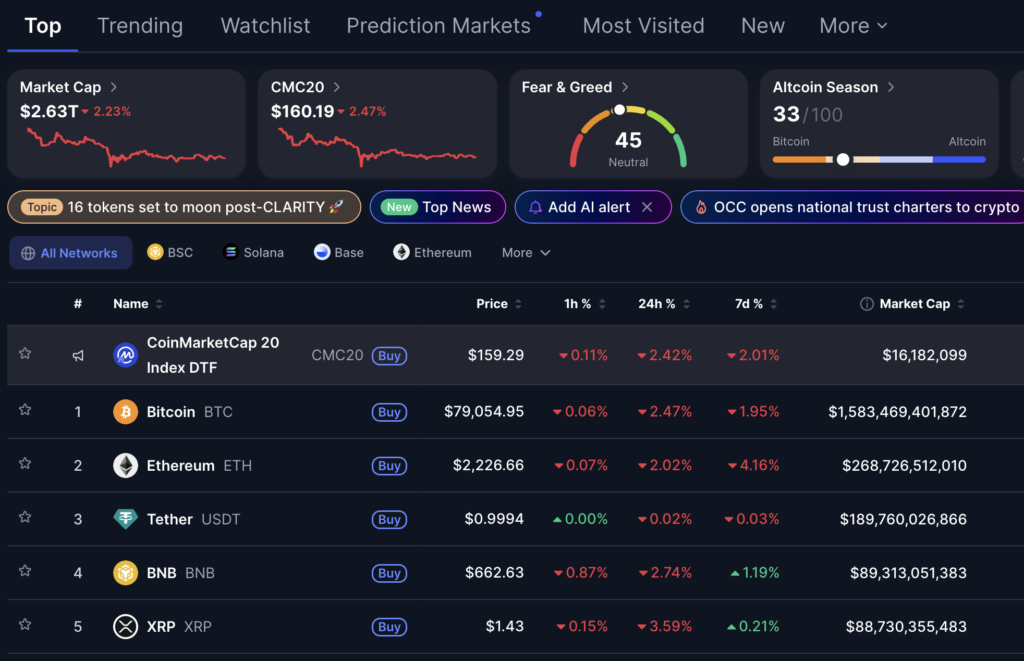
Crypto markets have seen a major crash in top cryptocurrencies in the last 48 hours due to worsening economic conditions, such as a lack of liquidity, uncertainty in global tensions, and the impact on major commodities such as grains and fuel.
Bitcoin, which had crossed $80k a few days ago, came crashing down to $79k. Ethereum also crashed towards $2200. There was a net loss of 2.33% to the crypto market cap in the last 24 hours at press time. We had previously predicted this crash due to the liquidity crisis in the markets.
Factors Causing Trouble for Crypto Markets
Macroeconomic Factors in the US
There is a worsening liquidity crisis in the crypto markets due to high inflation, which sucks away the buying power of investors, and high interest rates, which prevent the addition of new capital into the economy.
The US, the largest crypto market in terms of investment power, has seen inflation rise to 3.3% over the last month. High inflation raises prices, leaving less money to invest in assets like cryptocurrencies.
On the other hand, the high interest rates (currently 3.75% EFFR) have caused a liquidity crisis in financial markets, as bonds and other fixed-income assets tend to yield higher returns in such scenarios. This, in turn, sucks away the liquidity from volatile markets like cryptocurrency.
Geopolitical Tensions
Global Tensions in Iran and Russia-Ukraine have not subsided despite multiple attempts to engage in peace talks.
The truce period in the Iran-Israel-US conflict ended on April 22 last month without any fruitful or confidence-building outcome. This region accounts for 25% of the global fuel supply, causing upto 50% spike in fuel prices all over the world.
The Ukraine-Russia conflict, on the other hand, has been dragging on for years without any meaningful change on the ground. These two countries account for 30% of the global wheat supply, which has caused a spike in food prices.
Disclaimer: BFM Times acts as a source of information for knowledge purposes and does not claim to be a financial advisor. Kindly consult your financial advisor before investing.