Key Insights
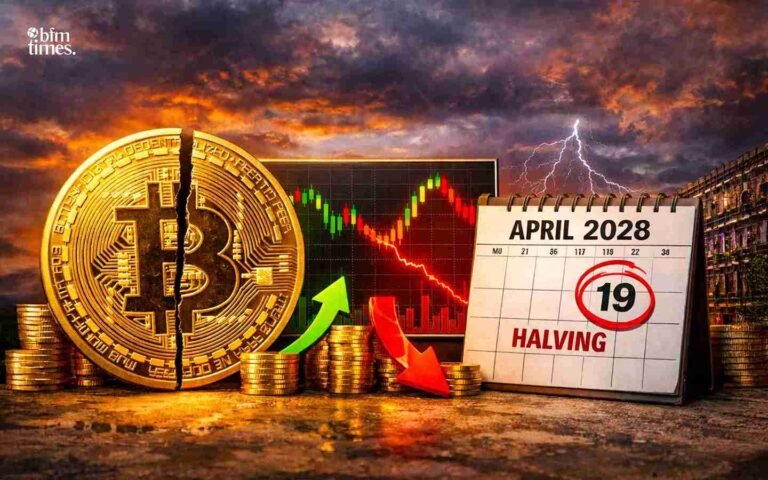
- The 2028 Bitcoin Halving is expected to reduce the block reward to 1.5625 BTC.
- Annual inflation for Bitcoin will also likely drop to 0.4% after the event.
- Institutional demand through ETFs may create a massive supply shortage by 2028.
Bitcoin is moving toward its biggest milestone in the next few years. The next halving in 2028 is expected to change several fundamental things about how the network functions.
This event happens every four years, and it is a hard-coded rule that makes sure the supply of Bitcoin remains limited.
Unlike paper money, no central bank can print more Bitcoin and the 2028 event will be the fifth time this has happened since the network started in 2009.
Also Read: Bitcoin Brings Smart Contract to its Blockchain, Two Rival Factions Compete to Create its Framework
The Mechanics of the 2028 Bitcoin Halving Event
Bitcoin has an internal clock, and this clock runs on blocks, not seconds.
Bitcoin counts the time for every 210,000 blocks it creates. The time taken to create this collection of blocks is roughly four years, and when this happens, it cuts the amount of new coins given to miners in half.
This process is a Bitcoin Halving and currently, miners receive 3.125 BTC for every block they secure. However, when the network reaches block height 1,050,000, that reward will drop again to 1.5625 BTC.
This change means that the daily production of coins will fall from 450 BTC to only 225 BTC. The yearly inflation rate will sit around 0.4%, which is much lower than the inflation rate of gold.
When this happens, it will officially become the scarcest asset in human history. The reduction in supply tends to lead to higher prices if demand stays the same or grows.
Investors also watch these cycles closely because each previous halving led to massive growth.
For example, in 2012, the price of BTC was only $12. By 2020, it had reached $8,800 during the halving month.
The next halving in 2028 will happen in a much larger market and because its market cap has now grown to trillions of dollars, price moves might be slower.
Still, the underlying math is the same and investors can expect an almost guaranteed increase in price after the fact.
Institutional Demand and the 2028 Bitcoin Halving
The upcoming cycle is different from the early years of crypto.
In the past, the market moved based on the activities of retail investors. Now, however, giant firms have taken an interest and are leading the way.
By the time 2028 arrives, Spot Bitcoin ETFs will have been active for four years.
In essence, Bitcoin speculators are currently seeing a “liquidity black hole” form. Wall Street firms are buying coins faster than miners can produce them and when the 2028 halving cuts the supply in half again, this gap will widen.
Sovereign wealth funds might even start holding Bitcoin in their reserves.
Global debt is another factor to consider. Many countries are currently struggling with high debt levels and they often devalue their currencies to manage these debts.
However, Bitcoin offers an escape from this cycle because it has a terminal supply of 21 million coins. This means that nobody can inflate it, and its “digital gold” narrative will likely strengthen as we approach 2028.
Mining and the Future Fee Economy
Miners are the backbone of the network, but the 2028 Bitcoin Halving presents a challenge for them. When the block reward drops, their revenue also drops.
This means that only the most efficient miners will survive this.
Smaller companies are expected to exit the economy as larger ones take over. These companies will likely use renewable energy or waste gas to keep energy fees low.
However, for the network to stay safe, transaction fees must eventually replace block rewards.
Price Prediction for the Fifth Epoch
There is no surefire way to predict prices, especially in a market like Bitcoin.
However, we can look at historical trends before making decisions. After the peak of the current cycle (that started in 2024), Bitcoin may enter a quiet period.
It could form a floor somewhere around $90,000 and $110,000 this year, where major corporations will start to accumulate.
As the next halving event nears, the market might see a pre-halving rally.
By April 2028, prices could trade between $180,000 and $250,000. However, the real excitement typically starts months after the supply cut.
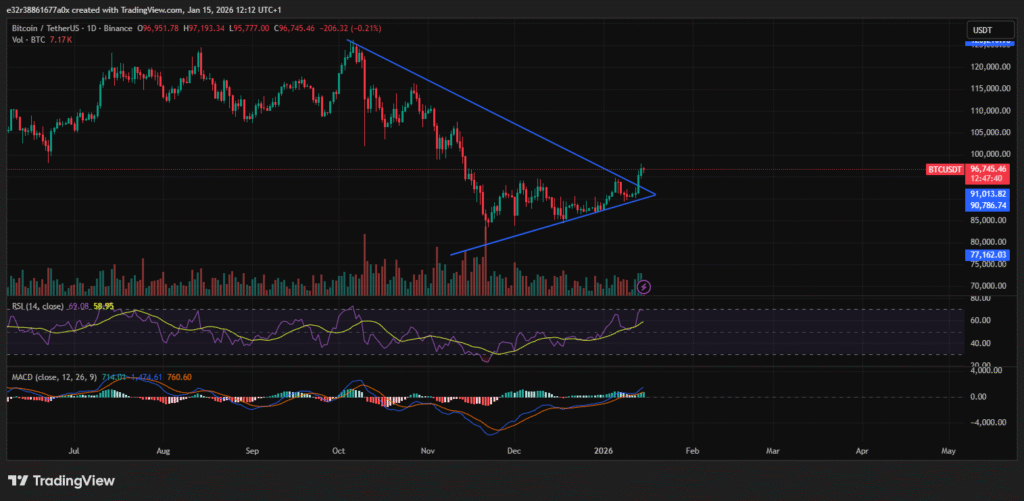
Bitcoin still has a long way to go before the next halving | source: TradingView
In all, the peak of this fifth cycle will likely happen in 2029 and even conservative estimates show a price of $350,000.
More aggressive models point to $500,000 or more and this “might” only happen if a major country (like the US, China or Russia) adds Bitcoin to its central bank.
Disclaimer: BFM Times acts as a source of information for knowledge purposes and does not claim to be a financial advisor. Kindly consult your financial advisor before investing.