

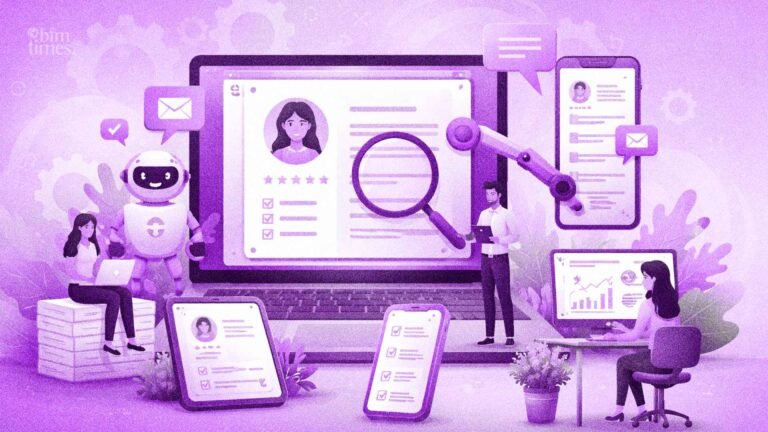
HR teams are no longer just managing people they’re functioning more like operating systems. HR in 2026 is vastly different from three years ago, and the change is not superficial. Gone are the days when HR was an administrative function bogged down by bureaucracy. In today’s world, HR departments don’t merely “manage people” anymore; they control workflows, systems, and data throughout the entire employee life cycle, with the power of HR automation technology powered by HR automation tools using AI.
- What “HR Automation Using AI” Actually Means Today
- Where AI Is Replacing Manual Work in HR
- Top HR Automation Tools Using AI in 2026
- Talent Acquisition & Recruiting
- HR Service & Employee Experience
- HRMS & Payroll Automation
- Onboarding & Engagement
- Process Automation & AI Tools
- How AI Is Connecting the Entire HR Lifecycle
- The Hidden Advantage: HR Teams Become Strategic
- Challenges of HR Automation Using AI
- Choosing the Right HR Automation Tools Using AI
- Autonomous HR Systems
- HR Automation Is Not Optional Anymore
- Frequently Asked Questions
Think about how recruiting a new hire used to work before all these advancements of AI HR tools: tedious manual review of resumes, incessant back-and-forth email exchanges, and chaotic interview scheduling. Modern AI HR automation tools now envision the inefficiencies that occurred during employee onboarding, payroll processing, answering employee questions, and performance management. AI has addressed this issue.
It’s no longer just about efficiency it’s about capacity. With AI-powered HR software, companies can manage hiring, streamline onboarding, handle payroll, and respond to employee queries all at the same time. The result? HR transforms into a dynamic, analytics-powered department that constantly evolves to avoid issues.
What “HR Automation Using AI” Actually Means Today
HR automation is often seen as simply replacing manual tasks with workflows, but that was just the first stage. HR automation tools using AI in 2026 are more advanced; they not only automate but also think, predict, and decide.
Modern software now incorporates multiple layers of intelligence. Generative AI creates job descriptions and internal correspondence. Conversational AI manages employees’ inquiries and interviews candidates. Predictive analytics discovers workforce needs, turnover risks, and competency gaps. All these solutions create intelligent HR ecosystems rather than standalone tools.
The real shift is this: HR automation is no longer just about completing tasks; it’s about making decisions. Today’s AI recruitment tools don’t just scan CVs; they rank candidates based on their likelihood of success. HR workflow automation goes beyond sending triggered emails; it adjusts processes in real time based on employee behavior. That’s what sets apart the new generation of AI-powered HR tools.
Where AI Is Replacing Manual Work in HR
AI has taken over an entire layer of HR processes without reducing the manpower involved in those processes, but by redefining them. For example, machines now handle all the scanning, matching, and shortlisting in recruitment, which used to take humans much longer.
Employee support has been transformed in a similar manner, where employees can directly engage with AI chatbots that provide them with immediate answers to their queries. Payroll, previously a risky process that entailed several manual steps, is now a completely automated one, including checks for compliance and errors.
Key automation areas include:
- Candidate screening and ranking
- Onboarding workflows and task automation
- Employee support via AI chatbots
- Performance tracking and feedback systems
This area is where HR automation tools using AI create the most visible impact by removing friction from everyday operations.
Top HR Automation Tools Using AI in 2026
Talent Acquisition & Recruiting
1. Paradox
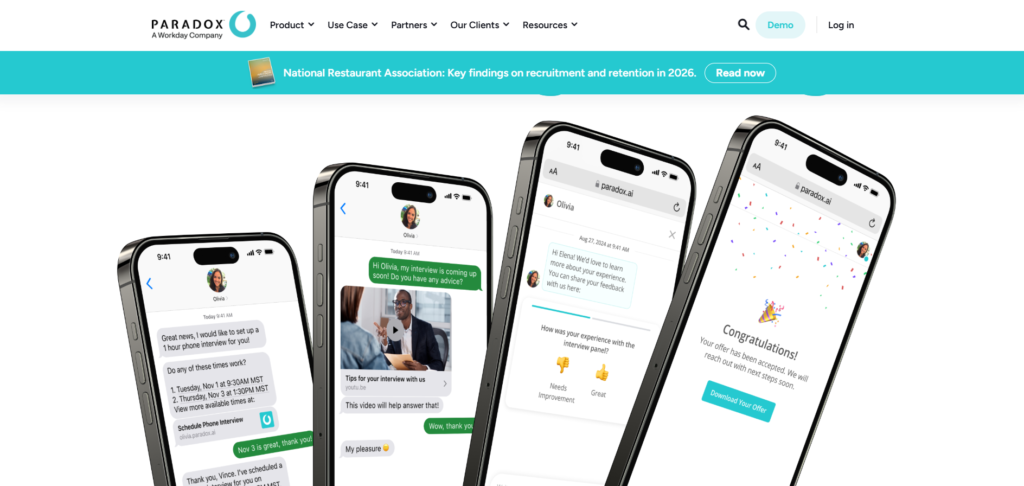
Paradox and its conversational AI assistant, Olivia, have revolutionized high-volume recruitment. Rather than making applicants go through the same stringent process of applying, Olivia converses with them, addresses their questions, and sets up interviews all on its own, thus resulting in fewer dropouts and much faster recruitment cycles. This technique has become one of the best uses of HR automation tools using AI because it operates 24/7 without human bottlenecks.
- Best for: Large-scale hiring
- Strength: Real-time candidate engagement
- Advantage: Fully automated scheduling
- Limitation: Limited deep analytics
2. Eightfold AI
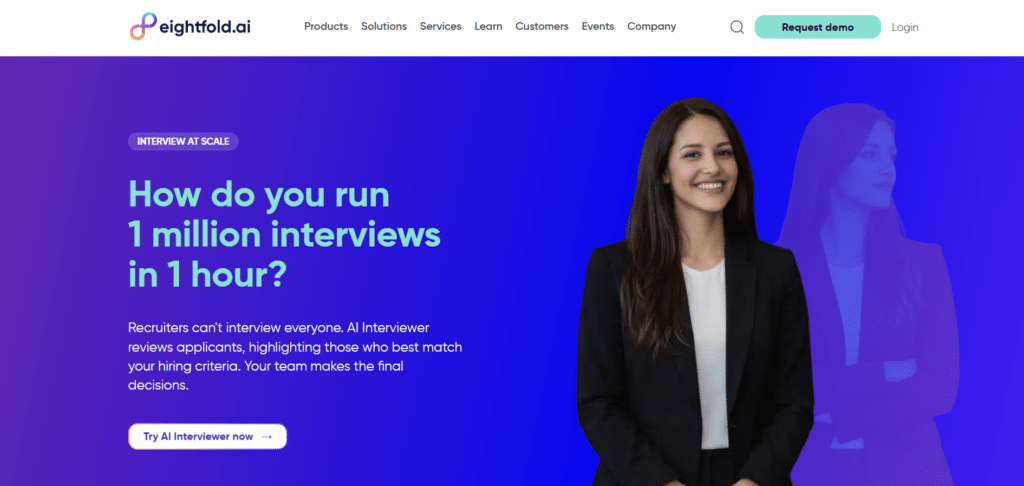
Eightfold AI is more than recruitment; it is all about talent intelligence. It leverages deep learning algorithms to identify the right people for the job according to their abilities, potential, and prospects. The most striking thing about Eightfold AI is its ability to predict. Among AI HR automation tools, this one stands out for enterprises aiming to build long-term workforce strategies.
- Best for: Enterprise hiring
- Strength: Predictive talent insights
- Advantage: Skill-based matching
- Limitation: Complex implementation
3. HireVue
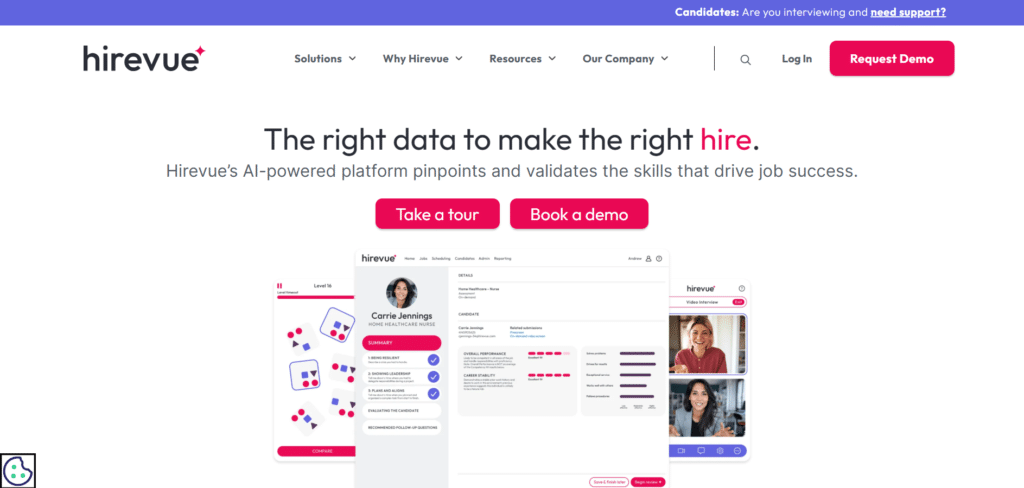
HireVue brings AI into the interview process itself, and it analyzes video interviews to evaluate communication skills, tone, and behavioral patterns. This adds a layer of consistency to candidate evaluation, reducing human bias in some cases but also raising new concerns about algorithmic. Still, it’s a strong example of AI recruitment automation in action.
- Best for: Enterprise screening
- Strength: Automated interview analysis
- Advantage: Scalable evaluation
- Limitation: Bias concerns
4. Workable
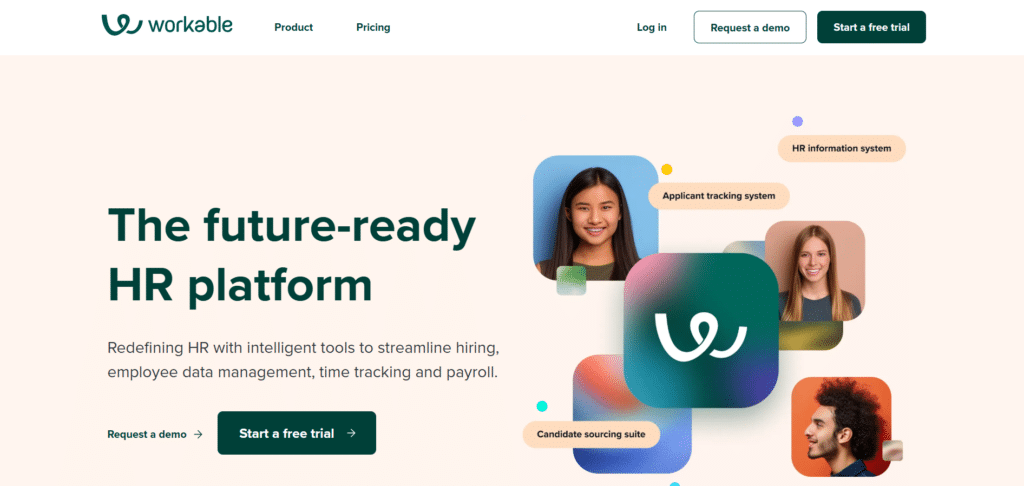
Workable is built for speed and usability. It uses AI to generate job descriptions, screen resumes, and manage hiring pipelines in one place. While it doesn’t go as deep as enterprise platforms, it’s one of the most accessible HR automation tools using AI for startups and mid-sized businesses.
- Best for: SMB hiring
- Strength: Easy automation setup
- Advantage: End-to-end hiring pipeline
- Limitation: Limited advanced AI depth
HR Service & Employee Experience
1. Leena AI
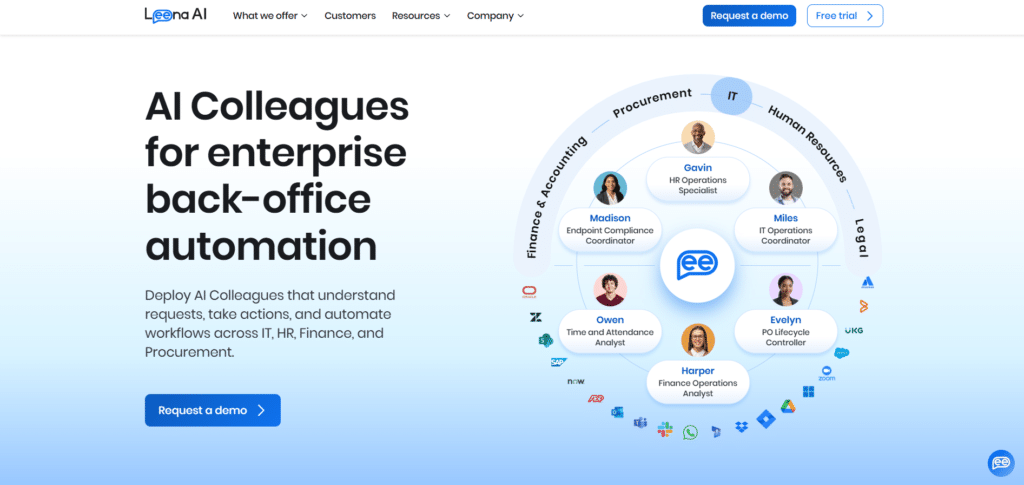
Leena AI acts as a virtual HR helpdesk. Employees can ask questions about policies, leaves, payroll, and more and get instant responses. It reduces HR workload significantly by handling repetitive queries. As part of the broader ecosystem of AI HR tools, it improves employee experience without increasing HR headcount.
- Best for: Employee support
- Strength: Instant query resolution
- Advantage: Reduces HR tickets
- Limitation: Limited complex workflows
2. Moveworks
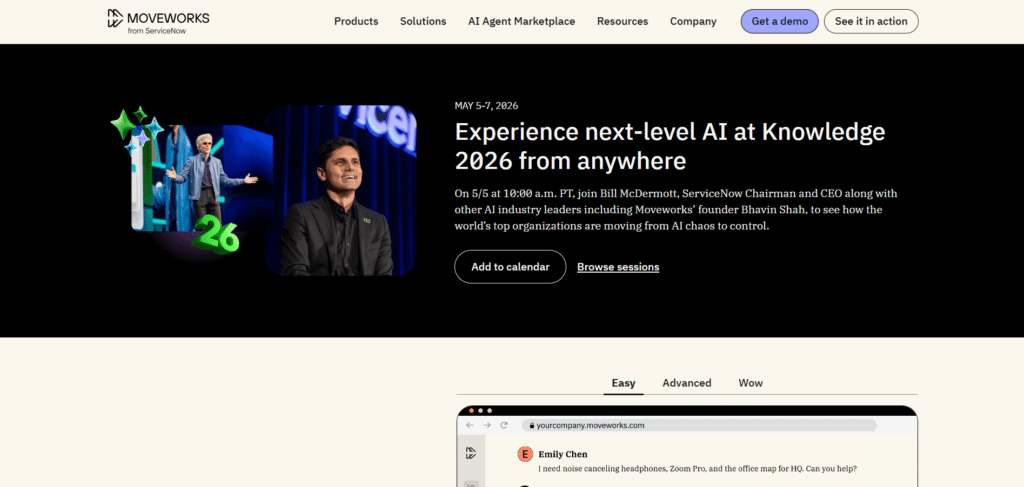
Moveworks advances the automation of employee support. By initiating workflows across systems, it not only responds to inquiries but also resolves problems. For instance, it can automatically handle requests, update records, and reset passwords. This makes it one of the most advanced HR workflow automation solutions available today.
- Best for: Enterprise HR
- Strength: End-to-end issue resolution
- Advantage: Deep system integration
- Limitation: High cost
3. Lattice
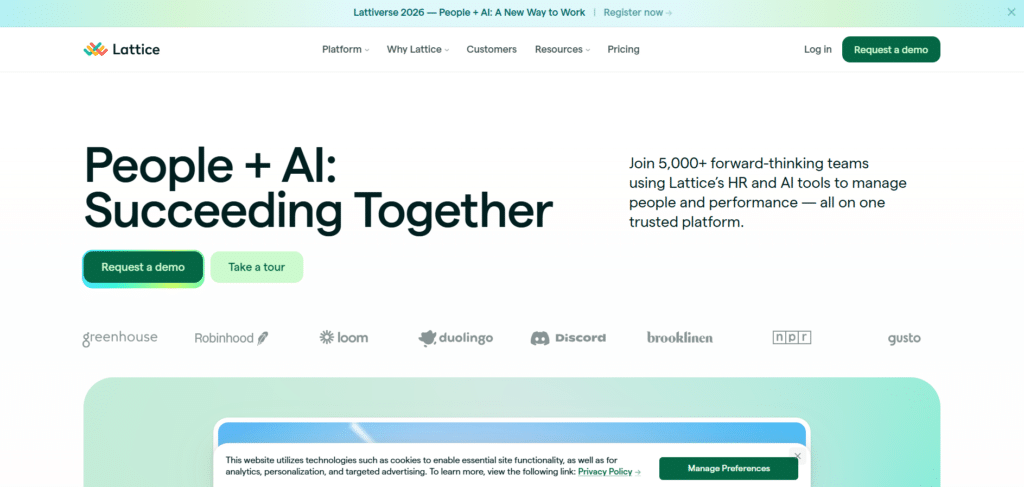
Lattice prioritizes employee engagement and performance management. It measures performance trends, tracks feedback, and offers useful insights using artificial intelligence. It allows for ongoing performance monitoring in place of yearly evaluations. Lattice is essential to growth and retention in the field of HR automation tools using AI.
- Best for: Engagement and performance
- Strength: Continuous feedback systems
- Advantage: Data-driven insights
- Limitation: Narrow use case
HRMS & Payroll Automation
1. Rippling
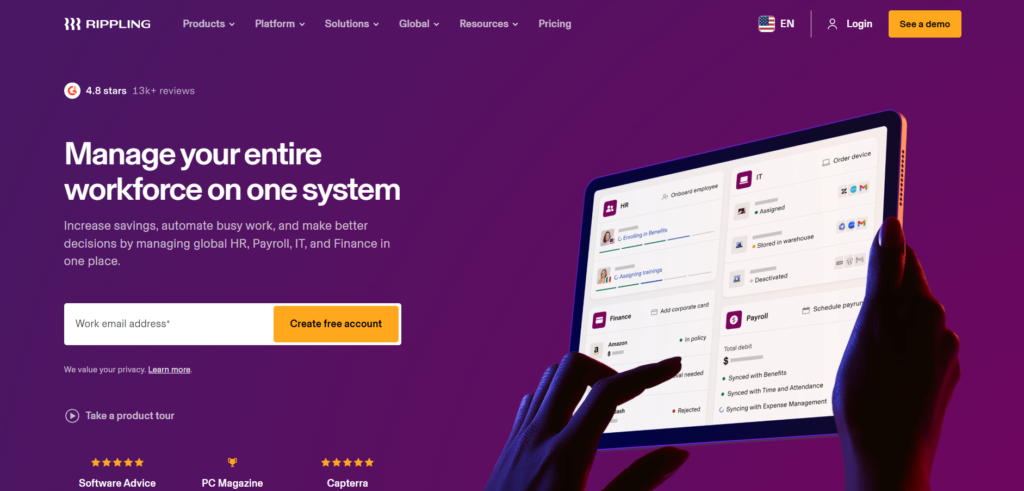
Rippling combines HR, IT, and payroll into a single system. What makes it powerful is its automation layer, onboarding, payroll processing, compliance, and device management all happen seamlessly. It’s one of the most complete HR software AI platforms available, especially for companies looking to centralize operations.
- Best for: Full HR automation
- Strength: Unified platform
- Advantage: Strong compliance automation
- Limitation: Premium pricing
2. Gusto
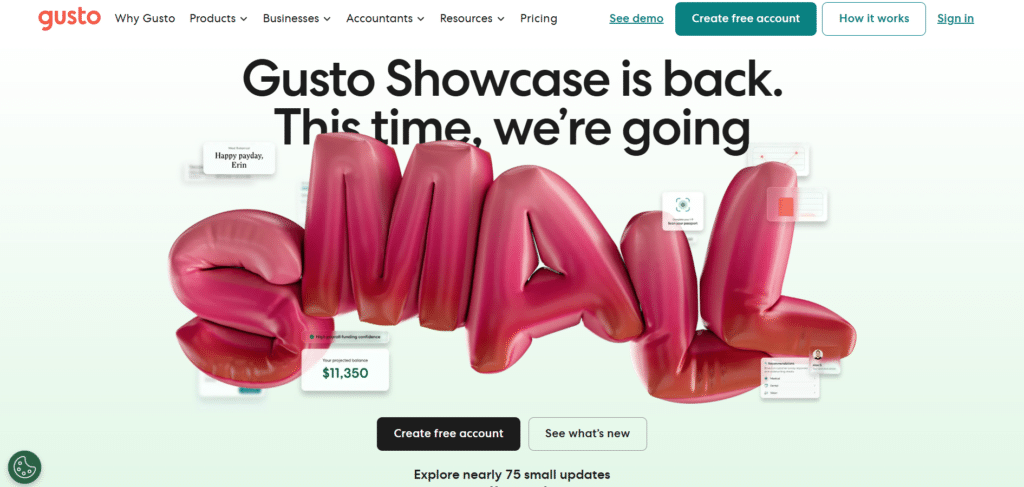
The Gusto platform makes payroll and HR services easy to manage for small enterprises. The AI assistant named Gus aids in automating payroll procedures, tax payments, and employee benefits. Although it is less complicated than enterprise solutions, Gusto works efficiently for organizations looking for AI HR automation tools.
- Best for: Small businesses
- Strength: Payroll automation
- Advantage: Easy to use
- Limitation: Limited scalability
3. Zimyo
Zimyo emphasizes analytics-powered HR solutions. This approach merges information from payroll, attendance, and HR personnel to derive actionable insights that can guide HR teams in their decision-making process. Zimyo is highly suited for medium-sized organizations that wish to incorporate HR automation tools using AI.
- Best for: Mid-sized companies
- Strength: HR analytics
- Advantage: Data-driven decisions
- Limitation: Limited global presence
Onboarding & Engagement
1. Enboarder
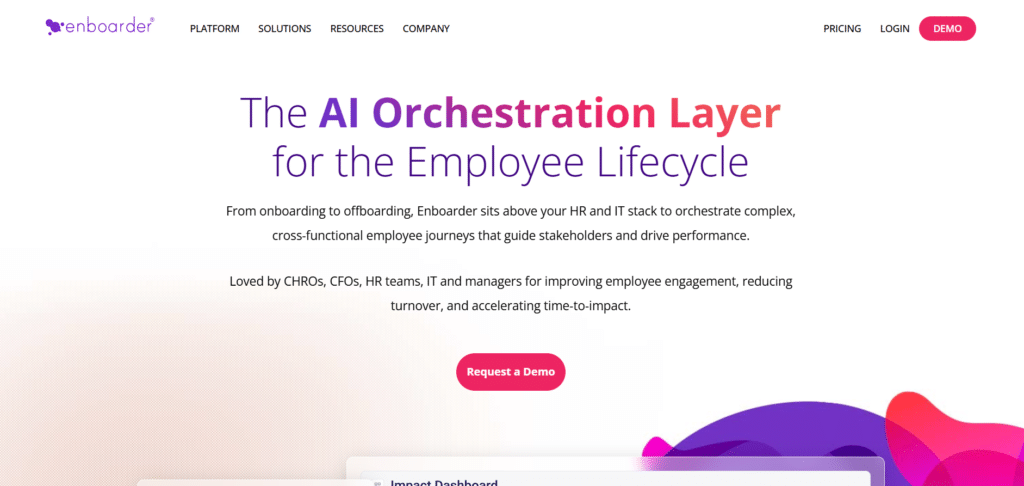
Enboarder transforms onboarding into a personalized journey. Instead of static checklists, it creates dynamic workflows tailored to each employee. This improves engagement and reduces early attrition, making it a valuable addition to modern AI HR tools.
- Best for: Onboarding
- Strength: Personalized experiences
- Advantage: Improved engagement
- Limitation: Limited automation depth
2. Empuls
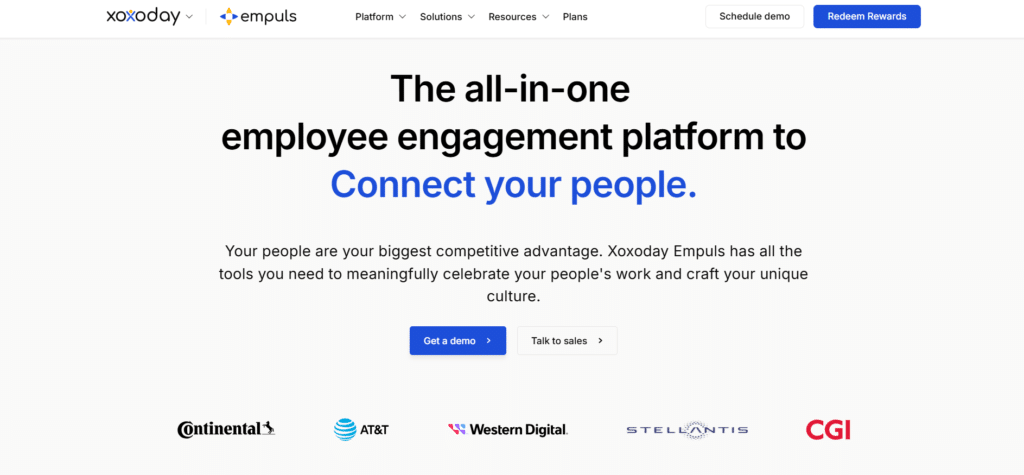
Empuls is concerned with culture and engagement. It reviews employee responses, recognizes high performers, and assists in creating more conducive workplaces. While immediate ROI may not be evident, its significance in developing retention programs is undeniable.
- Best for: Engagement
- Strength: Feedback analysis
- Advantage: Culture building
- Limitation: Indirect ROI
Process Automation & AI Tools
1. Zapier
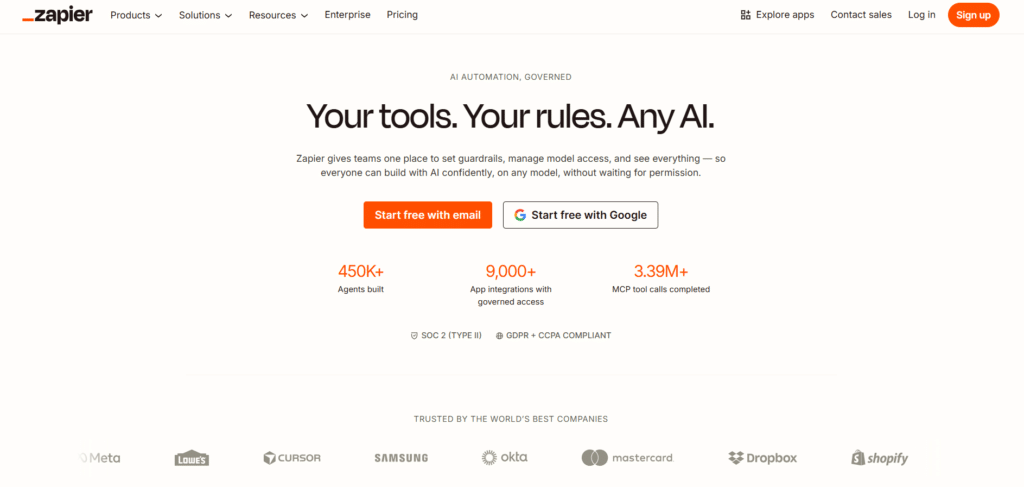
Zapier integrates disparate HR systems and facilitates process automation between them. Although it was not designed for HR purposes, it is highly effective when it comes to integrating systems. For many implementations, Zapier becomes the engine of HR workflow automation.
- Best for: Process automation
- Strength: Tool integration
- Advantage: No-code workflows
- Limitation: Not HR-specific
2. UiPath
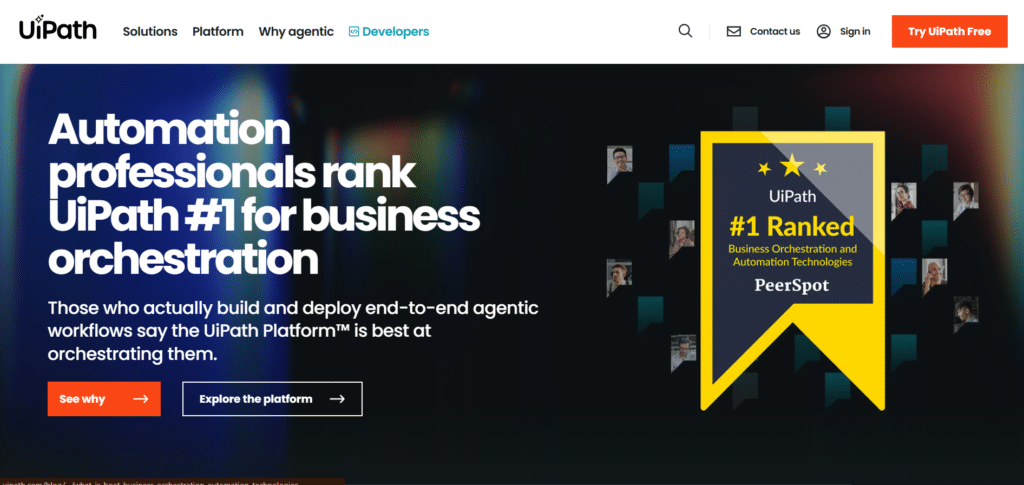
UiPath brings robotic process automation (RPA) into HR. It handles repetitive tasks like data entry, document processing, and compliance checks. For large organizations, it’s one of the most scalable HR automation tools using AI.
- Best for: Large enterprises
- Strength: Task automation
- Advantage: High scalability
- Limitation: Technical complexity
3. ChatGPT
ChatGPT is becoming popular as an HR copilot. It writes job postings, helps draft emails, develops policies, and even aids in the preparation of interviews. Although it needs supervision by a human, it is certainly among the most versatile AI HR tools available.
- Best for: Content and communication
- Strength: Versatility
- Advantage: Fast content generation
- Limitation: Needs supervision
How AI Is Connecting the Entire HR Lifecycle
In 2026, the biggest shift won’t come from individual technologies, but from how seamlessly they work together. HR automation tools using AI will stop being used in isolation. The recruitment platform connects to onboarding technology; employee information is transferred from HR tools to performance management tools; and insights gathered about employee engagement inform employee retention policies.
These functions are all connected in a continuous cycle recruitment, onboarding, employee engagement, and retention. Each step guides the next step in this process. The role of AI becomes that of the glue connecting these steps through smooth data transfers.
The Hidden Advantage: HR Teams Become Strategic
As AI handles repetitive tasks, HR professionals don’t become less relevant; they evolve and adapt to more strategic roles. They stop chasing approvals and managing payroll and begin thinking about culture and organizational strategy. These are the true benefits of automated HR automation tools using AI.
In other words, HR managers now get an opportunity to concentrate on strategic initiatives, including workforce planning, leadership development, and creating a wonderful experience for employees. AI workplace tools streamline HR operations by automating tasks like onboarding, communication, and performance tracking.
Challenges of HR Automation Using AI
In spite of the merits associated with using AI technology in the field of human resources management, there are certain issues. Data security is among them, since the technology requires processing confidential personal information about employees. There may be difficulties when integrating various technologies. Too much automation poses a threat as well.
Key challenges include the following:
- Bias in AI algorithms
- High implementation costs
- Adoption resistance within teams
Choosing the Right HR Automation Tools Using AI
Choosing the right tools isn’t about having the most features it’s about finding the right fit. Companies need to evaluate their size, hiring volume, and operational complexity before investing in HR automation tools using AI. A startup doesn’t need enterprise-level predictive analytics, while a large organization cannot rely on basic tools.
Integration is another critical factor. Tools must work together seamlessly to create a unified system. Without that, automation can actually increase complexity instead of reducing it. AI recruitment platforms help automate candidate sourcing, screening, and shortlisting, making hiring faster and more efficient.
Autonomous HR Systems
The next phase of HR automation is autonomy. AI agents will not just assist; they will manage entire HR processes independently. Algorithms will increasingly drive decisions, from workforce planning to performance management.
Predictive workforce planning will become standard. Systems will identify hiring needs before they arise. Employee risks will be flagged early. Entire HR functions will operate with minimal human intervention, powered by advanced HR software AI.
This doesn’t eliminate HR; it elevates it. Humans will focus on strategy, while AI handles execution.
HR Automation Is Not Optional Anymore
The shift is already happening. Companies that adopt HR automation tools using AI are building faster, smarter, and more resilient organizations. Those who don’t risk falling behind do so not because they lack talent, but because they lack systems. AI trends in 2026 are centered around smarter automation, deeper integration, and systems that can make real-time decisions. In HR, this means tools that not only handle tasks but also improve hiring, engagement, and workforce planning through data-driven insights.
The future of HR is not about managing people manually; it’s about building intelligent systems that support them at scale.
Also Read: Best AI Tools for Legal Drafting in 2026
Frequently Asked Questions
What are HR automation tools that use AI?
These are platforms that use artificial intelligence to automate HR tasks like hiring, onboarding, payroll, and employee support while also providing insights and predictions.
How does AI improve recruitment?
AI improves recruitment by automating resume screening, ranking candidates, scheduling interviews, and predicting candidate success.
Are AI HR tools suitable for small businesses?
Yes, tools like Gusto and Workable are designed specifically for small and mid-sized businesses with simpler workflows.
What are the risks of using AI in HR?
The main risks include data privacy issues, algorithmic bias, and over-automation that reduces human interaction.
Will AI replace HR jobs?
No, AI will not replace HR roles but will transform them. HR professionals will focus more on strategy and decision-making rather than administrative tasks.