Key Insights
- Fork Release: Bitcoin developer Paul Sztorc and LayerTwo Labs released a new hard fork called “eCash” that will begin functioning in August 2026.
- Token Distribution: The owners of the Bitcoin will receive tokens equal to their balances in eCash at a one-to-one ratio.
- Wealth Redistribution: The plan of redistributing Satoshi Nakamoto’s 1.1 million BTCs to the system was abandoned after being opposed by the community.
- Functional Goals: The proposed fork will feature “Drivechains” (BIP-300 & BIP-301), enabling the integration of Layer 2 properties, including privacy and smart contracts, into the Bitcoin blockchain.
- Reaction: The initial plan was denounced as “theft” and has been replaced by a new plan that does not touch Satoshi’s original coins.
Bizarre Plan: The Great Bitcoin Fissure of 2026
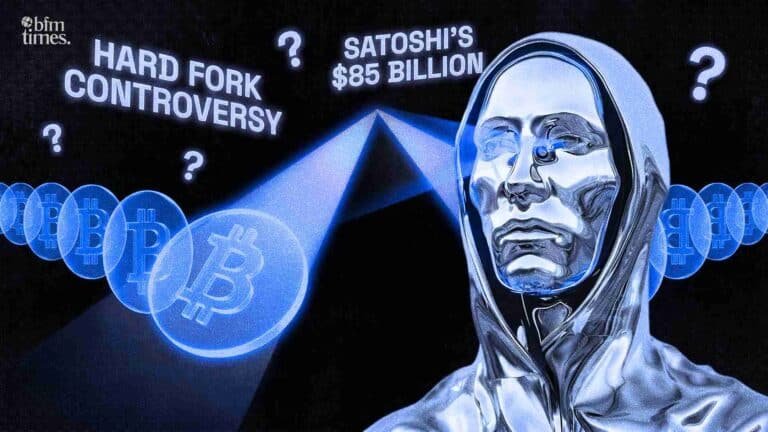
In an announcement that has left the cryptocurrency community reeling, LayerTwo Labs CEO Paul Sztorc has proposed a hard fork of Bitcoin. Dubbed eCash, the new chain is among the most ambitious proposals to reboot the world’s biggest cryptocurrency. Bitcoin has faced many forks, including the 2017 Bitcoin Cash (BCH) fork, but this latest proposal is a sensitive matter: redistributing Satoshi Nakamoto’s wealth.
eCash is a Layer 1 platform that mirrors the structure of the original Bitcoin, but enables features long proposed but never implemented: Drivechains. Sidechains provide for massive scaling and programmability, including the exclusivity of platforms such as Ethereum, while benefiting from Bitcoin’s security.
The Airdrop Mechanism and the Satoshi Conflict
The project involves a 1:1 airdrop. All users who hold Bitcoin at the time of the snapshot (likely to be block 964,000) will receive an equivalent amount of eCash. So, if a user held 4.19 BTC, they would gain 4.19 eCash tokens.
But Sztorc’s “Revised Proposal” recently sent out shows a dramatic change. The initial proposal was to “manually reassign” almost half of the 1.1 million Bitcoin held by Satoshi Nakamoto to early adopters and a development fund. This fund is worth some $85 billion at today’s spot price of nearly $77,000.
Sztorc proposed this to fund infrastructure development without VC funding. “Hard forks have an unfinanceable problem,” Sztorc wrote. Sztorc explained that by redistributing coins that have not been used for more than 15 years, they could “unfreeze” the supply to support the new venture.
Seething Opposition and “Revised” Plan
The idea of confiscating coins was immediately denounced by Bitcoin maximalists. Prominent commentators, such as Peter McCormack, condemned the proposal as “theft” and a betrayal of the network’s history.
“Satoshi didn’t pre-mine Bitcoin,” said Tomer Strolight. “No one is stopping a dev from fork the code, but this is an inside project with coin theft.”
In response, Sztorc issued a revised proposal. In this “Revised Proposal”, the old lost coins and Satoshi’s genesis blocks are left alone. Instead, the network is prioritising a “clean” airdrop to users and is searching for other sources of funding for its seven proposed Layer 2 sidechains, including privacy layers and quantum-resistant layers.
Technical Advancements: Post the Block Size War
The technology behind eCash is based on two Bitcoin Improvement Proposals (BIPs): BIP-300 and BIP-301. These proposals use “Drivechains” to enable miners to merge-mine sidechains. This will allow eCash to grow to serve hundreds of millions of users through sidechains. Miners receive additional earnings with minimal additional hardware investment, making it more economically viable, developers claim. In contrast to the 2017 “Block Size War”, eCash is severing its ties with the “Bitcoin” name to prevent brand confusion.
Market Position and History
The eCash announcement comes at a time of heightened concerns about Bitcoin’s scalability and the “Quantum Threat”. A recent report points out that old Pay-to-Public-Key (P2PK) addresses, such as Satoshi’s, will be susceptible to a future quantum attack. This has led to a question: Should Bitcoin quarantine these coins or not? The eCash fork offers an experiment. Sztorc’s ledger that treats “dead” coins differently, gives the market an option. If the market prefers a network where “dead” money is mobilised, eCash may be used. If it is considered a violation of trust, eCash may end up in the graveyard of forks.
As August 2026 nears, LayerTwo Labs is creating “Coin Splitter” tools to enable people to claim eCash safely without losing their Bitcoin.
Bitcoin Prices and the Market (April 2026)
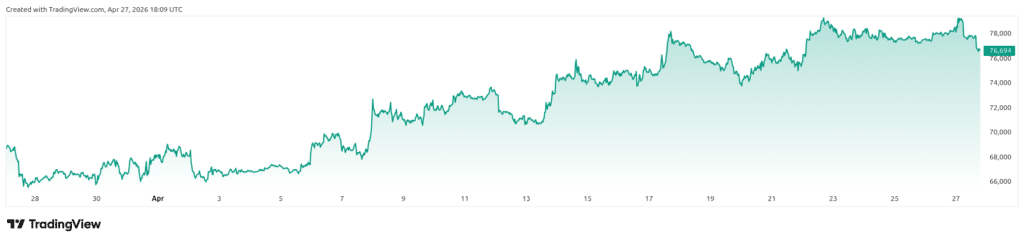
2026 has been a year of price swings. Bitcoin peaked at $108,000 in 2024 and has since corrected. The price has now stabilized in April 2026 and is recovering, above $75,000.
The eCash project has mixed acceptance. Traders can make a quick buck from the 1:1 airdrop, which delivers “free value”, but ultimately the network needs to attract miners. For now, the “Original Ledger” is the digital store of value, and the eCash plan a crucial experiment in digital property rights.
Disclaimer: BFM Times acts as a source of information for knowledge purposes and does not claim to be a financial advisor. Kindly consult your financial advisor before investing.