


Key Isights
- A New Consensus: The documentary, “Finding Satoshi”, states that cryptographers Hal Finney and Len Sassaman shared the pseudonym, Satoshi Nakamoto.
- Role Division: Finney and Sassaman are the main authors of the C++ code and whitepaper, respectively, with Finney also doing the public communications, according to investigators.
- Linguistic Evidence: Forensic linguistic examination of the Bitcoin whitepaper demonstrates that the patterns are in line with the known writing style of Sassaman, such as the particular usage of British English, even though he has American origins.
- The Marathon Alibi: Evidence indicates that Satoshi was online at the same time Hal Finney was running a marathon, which confirms the hypothesis that the account was being run by a second individual.
- Market Impact: The price of Bitcoin is still volatile, with the community still digesting the most believable unmasking attempt in more than a decade.
Finding Satoshi: New Documentary States that Bitcoin was Co-created by Hal Finney and Len Sassaman
Investigative Staff April 24, 2026.
The seventeen year long mystery of who Satoshi Nakamoto is has taken a dramatic turn with the release of the world wide known Finding Satoshi. The documentary, directed by Tucker Toooly and Matthew Miele, is the culmination of a four year long investigation that employed the use of private investigators, data scientists, and forensic linguists to arrive at the conclusion that has rocked the cryptocurrency world: that Satoshi Nakamoto was not an individual, but a collaboration between two iconic cypherpunks, Hal Finney and Len Sassaman.
The movie, released April 22, 2026, is no longer about the suspects that are frequently referenced in such cases. Although the names such as Adam Back and Nick Szabo are discussed, the documentary offers what many experts are terming as the most empirical argument to date of a joint creation.
THE CODER and the Communicator
The core of the Finding Satoshi theory is a split of labor between two men who both worked at PGP (Pretty Good Privacy) under Phil Zimmermann. The Coder is a software developer at PGP named Hal Finney, who was the first individual to ever be sent a Bitcoin transaction. The movie states that Finney had the technical skill to design the Bitcoin protocol in C++, a language the documentary states he wrote in to keep his identity secret by not writing in his typical programming language.
But the investigation reached a dead end in examining the online activity of Satoshi. Technical logs and emails indicated that Satoshi Nakamoto was often active when Hal Finney was proven to be unavailable, and most notably, during the 2009 Santa Barbara International Marathon.
Based on the fact that it is impossible to be in two places at the same time, Jameson Lopp, co-founder of Casa, said in an interview to produce the film that it was highly unlikely that Satoshi and Hal were the same person.
Here, the Communicator is introduced by Len Sassaman. The person who handled the Satoshi persona on forums and through email, with Finney working on the backend, is introduced as Sassaman, a brilliant cryptographer and privacy advocate who committed suicide in 2011. The fact that Sassaman died at a time when Satoshi Nakamoto officially declared that he had moved on to other things and never spoke again is quite interesting.
Forensic and Linguistic Smoking Guns
The documentary is based on the efforts of Alyssa Blackburn, a data scientist at Baylor College of Medicine. Blackburn examined the digital rhythm of Satoshi, studying the time of posting, mining, and silence of the creator. Her results indicate that there were only two people in the cypherpunk circle that matched the rhythmic profile of Satoshi: Finney and Sassaman.
The film linguistically refers to the use of both British and American English in the whitepaper of Bitcoin. Sassaman was an American but resided in Belgium during the time and pursued his PhD at KU Leuven. His constant exposure to European academic norms would be the reason behind the particular linguistic telltale of the white paper.
Moreover, investigators cited a two-month break in 2008 during which Finney committed zero work at PGP Corp. His boss, Will Price, proposes that it was during this time that Finney was secretly completing the Bitcoin genesis block.
Community Response And The Market
The response from the cryptocurrency community has been mixed but passionate. Brian Armstrong, CEO of Coinbase, commended the documentary for being “the most thoughtful take on this mystery so far.” In contrast, Blockstream CEO Adam Back has shown his skepticism. Back believes that there are still elements missing in the data related to the time zones that the Finney-Sassaman theory cannot fully explain, such as Sassaman’s timeline for his PhD studies in Belgium. As mentioned in Back’s recent post, “the documentary ruled out very early anyone in Europe due to the time of the forum posts,” thus it is unlikely for Sassaman to be the person doing the communicating if he was in a different time zone.
However, despite the skepticism towards the documentary, the market has responded with characteristic volatility. Market players have watched the “Satoshi Wallets” containing over 1.1 million Bitcoin with keen interest due to concerns about how their movement after revelation could potentially affect the price action.
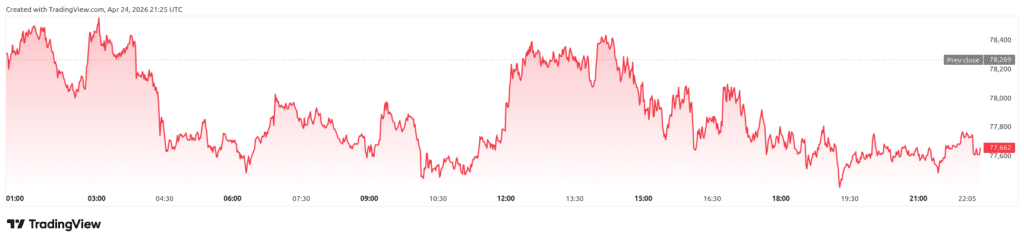
BTC Price Chart | Source: TradingView
The Heritage of the Cypherpunks
In order to comprehend the gravity of the claims made in the book Finding Satoshi, one has to refer to the historical context of the cypherpunk movement of the 1990s and the early 2000s. It was a collective of activists and programmers who thought that social and political change was possible by means of cryptography.
THE Philosophical Foundation
Both Len Sassaman and Hal Finney were very much entrenched in this culture. Reusable Proof of Work (RPOW) by Finney was a direct precursor to the technology employed in Bitcoin. Sassaman was an upholder of the Mixmaster remailer software and a staunch supporter of online privacy.
The documentary claims that their cooperation was the final incarnation of the cypherpunk ethos: a financial freedom tool that was anonymously created. The joint pseudonym allowed them to make sure that the network would not be brought down by a single point of failure, whether it was legal, physical, or personal.
THE Final Silence
The tragedy of the theory of the Finding Satoshi is that both men are no longer here to prove or disprove the claims. Len Sassaman died in July 2011, aged 31. Hal Finney died in August 2014 after a public battle with ALS.
The movie ends with a heart-rending interview with the widow of Hal, Fran Finney. Although she has already made it clear that Hal was merely a fan of Bitcoin, her words in the documentary are more subtle, admitting that her husband had the skills and the desire to have been one of the founding team members.
The identity of Satoshi Nakamoto is officially unknown as of April 2026, but the evidence provided in Finding Satoshi has been successful in making the search more focused than any investigation in blockchain history. The documentary has managed to make the code that transformed the world human, whether the community accepts this dual identity as a fact or still pursues the hunt.
Also Read: NYT Names Adam Back as Satoshi Nakamoto: The Evidence
Disclaimer: BFM Times acts as a source of information for knowledge purposes and does not claim to be a financial advisor. Kindly consult your financial advisor before investing.