The financial world is full of tools that help people to manage their money & grow wealth. It sometimes becomes difficult to understand these tools without a clear guide. One of the most powerful & widely used tools in finance is an option. The option is a contract that provides the buyer the right to buy or sell an asset at a set price before a fixed date. It does not force the buyer to complete the deal. This blog covers what is an option along with its basics & examples & benefits & risks in full detail.
- What is an Option in Finance?
- What are The Two Main Types of Options?
- What are the Real-World Examples of Options?
- What are the Key Benefits of Options?
- What are the Risks of Options Every Investor Must Know?
- What is the difference between the Options in Stocks & the Options in Crypto
- Who Should Use Options?
- Conclusion
What is an Option in Finance?
The option is a financial contract between two parties. It gives one party the right but not the obligation to buy or sell an underlying asset. The underlying asset can be a stock & a commodity & a currency or a crypto token. The price at which the deal is made is called the strike price & the date by which the option must be used is called the expiry date. The person who buys the option has to pay a fee to the seller called the premium.
What are The Two Main Types of Options?
The two main types of options are:
- Call Option
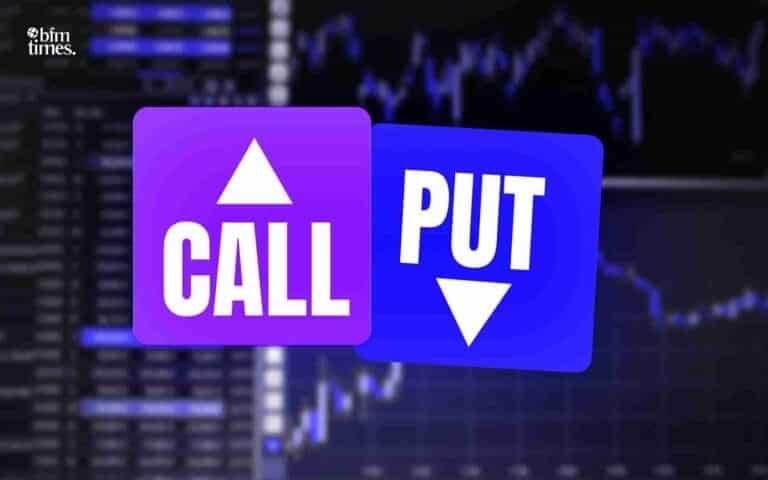
The call option provides the buyer the right to buy an asset at the strike price before its expiry. It is used when the buyer thinks that the price of the asset will rise. The buyer has to pay a premium to lock in the lower strike price today. It becomes profitable when the market price goes above the strike price. The seller of a call option earns the premium but takes on the risk of selling it at a much lower price. This type of option is the most common entry point for new investors learning what is an option.
- Put Option
The put option provides the buyer the right to sell an asset at the strike price before its expiry. It is used when the buyer believes that the price of the asset will fall. The buyer profits when the market price drops below the strike price. This type of option acts as a form of insurance against falling asset values. The seller of a put option earns the premium & agrees to buy the asset at the strike price if the buyer exercises the contract. These two option types together form the foundation of all the options trading strategies.
What are the Real-World Examples of Options?
Call Option Example
Let us assume that the current market price for a stock is $50. The buyer opts to purchase a call option with a strike price of $55 & the premium amount being $3. The market price for the stock goes up to $70 prior to its expiry date. In order to make money, he exercises his right & purchases the stock at $55. The difference amounts to $12 for each share.
Put Option Example
Let us assume that the price of a stock is currently $80. The investor buys a put option with strike price $75 and a premium cost of $4. Due to the fall in stock price, it is now $55 before expiry date. Now, the investor decides to exercise his options and sell the stock at $75. The gain for the investor would be $75 – $55 – $4, which amounts to $16 per share.
What are the Key Benefits of Options?
The option contract offers several powerful advantages to the traders & the investors:
- Limited risk for buyers: The buyer is only gonna lose the premium paid at most.
- Leverage: The option controls a large position with a small upfront cost.
- Flexibility: The option can be used for speculation & hedging & income generation.
- Portfolio protection: The put option acts like an insurance for a stock portfolio.
- Income generation: Selling the options allows investors to earn premium income regularly.
- Access to more markets: The option gives exposure to assets without owning them directly.
What are the Risks of Options Every Investor Must Know?
The option also carries a lot of real risks that must be understood clearly before trading:
- Time decay: The value of an option falls every day as the expiry date gets closer.
- Complexity: The option strategies can be very difficult for the beginners to understand fully.
- Premium loss: The buyer can lose the entire premium if the option expires out of the money.
- Volatility risk: The sudden changes in market volatility can quickly change the value of an option.
- Seller risk: The seller of an option faces potentially unlimited losses on a call option.
- Liquidity risk: Some options have very low trading volume making it hard to exit a position.
What is the difference between the Options in Stocks & the Options in Crypto
The idea of option is now applicable not only to stocks but also to crypto. Stock options form one of the biggest financial markets in the world. On the other hand, the crypto options market has been rising quite fast, especially when it comes to the Bitcoin & Ethereum options, which take up most of the volumes in that market. One crucial difference between the two forms of investment lies in volatility, which is a lot bigger in the crypto market. The premiums are thus bigger as well.
Who Should Use Options?
The option is suitable for a wide range of market participants:
- The Investors who want to protect existing stock or crypto holdings from price drops.
- The Traders who want to profit from short-term price moves with limited capital.
- The Income seekers who sell covered call options in order to earn regular premium income.
- The Experienced traders who use complex multi-leg option strategies for higher returns.
Conclusion
Option is among the most versatile instruments of finance today. They provide investors with the right to purchase or sell certain securities at pre-set prices without any requirement for them to do so. This blog post explains the concept, the examples, the advantages, & the risks of options, thus offering an all-around view on what is an option. An option can be used for protecting an investment portfolio, generating profits, & applying leverage simultaneously. One needs to learn about the risks involved in option trading thoroughly. Knowing what is an option will serve you as an excellent basis for your future development in the area of finance.